In this paper, the design and development of a novel Fast-Field Cycling (FFC) Nuclear Magnetic Resonance (NMR) relaxometer’s electromagnet is described. This magnet is tailored to increase the relaxometers’s usability, by increasing its portability capacities. It presents a compact toroidal shaped iron core, allowing to operate in a field range of 0 to 0.21 T, with high field homogeneity (less than 800 ppm in a volume of ≈ 0.57 cm3 ), low power consumption and reduced losses (about 40W). The simulation software COMSOL Multiphysics® is used to characterize the induced magnetic field, the heating and the cooling effects. The proposed optimized layout constitutes an innovative solution for FFC magnets.
The performance of FFC-NMR power supplies is evaluated not only considering the technique requirements but also comparing efficiencies and power consumption. Since the characteristics of FFC-NMR power supplies depend on the power circuit topology and on the control solutions, the control design is a core aspect for the development of new FFC systems. A new hybrid solution is described that allows controlling the power of semiconductors by switches (ON/OFF mode) or as a linear device. The approach avoids over-design of the power supply and makes it possible to implement new low power solutions constituting a novel design by joining a continuous match between the ON/OFF mode and the linear control of the power semiconductor devices.
Consumer devices are increasing in sophistication and autonomy, but the security of these devices is often under-studied. Some of these systems provide a Natural Language User Interface (NLUI) in order to better communicate with users. Most of these users are not trained in cyber analysis. Cyber attacks on these devices could have safety ramifications that we refer to as cybersafety. In this paper, we analyze the cybersafety of an off-the shelf robotic vacuum cleaner using an approach based on the System Theoretic Process Analysis (STPA) technique. The analysis includes an explicit modeling of the NLUI and of the threats on it using a control loop. We use a scenario to demonstrate how a sophisticated attack on the NLUI can be emulated, and how an untrained user is able to detect such an attack.
This article considers the ways that explainable AI can be used to help secure human-interactive robots. To do so, we acknowledge that robots interact with a variety of people. For example, some people may operate robots that perform tasks in their homes or offices, while other people may be tasked with defending robots from potential attackers. We describe how explainable AI can be used to help the human operators of robots appropriately calibrate the trust they have in their systems, and we demonstrate this through an implementation. We also describe a novel generalizable human-in-the-loop framework based on control loops to characterize and explain attacks on robots to a robot defender. We explore the utility of such a framework through an analysis of its application in the incident management process, applied to robots. This framework allows formal definition of explainability, and the necessary condition for explainability in robots. The overarching goal of this article is to introduce the application of explainability for security of robotics as a novel area of research, therefore, we also discuss several open research problems we uncovered while applying explainable AI to security of robots.
Intelligent agents that are confronted with novel concepts in situated environments will need to ask their human teammates questions to learn about the physical world. To better understand this problem, we need data about asking questions in situated task-based interactions. To this end, we present the Human-Robot Dialogue Learning (HuRDL) Corpus - a novel dialogue corpus collected in an online interactive virtual environment in which human participants play the role of a robot performing a collaborative tool-organization task. We describe the corpus data and a corresponding annotation scheme to offer insight into the form and content of questions that humans ask to facilitate learning in a situated environment. We provide the corpus as an empirically-grounded resource for improving question generation in situated intelligent agents.
Dialogue agents that interact with humans in situated environments need to manage referential ambiguity across multiple modalities and ask for help as needed. However, it is not clear what kinds of questions such agents should ask nor how the answers to such questions can be used to resolve ambiguity. To address this, we analyzed dialogue data from an interactive study in which participants controlled a virtual robot tasked with organizing a set of tools while engaging in dialogue with a live, remote experimenter. We discovered a number of novel results, including the distribution of question types used to resolve ambiguity and the influence of dialogue-level factors on the reference resolution process. Based on these empirical findings we: (1) developed a computational model for clarification requests using a decision network with an entropy-based utility assignment method that operates across modalities, (2) evaluated the model, showing that it outperforms a slot-filling baseline in environments of varying ambiguity, and (3) interpreted the results to offer insight into the ways that agents can ask questions to facilitate situated reference resolution.
We perform a corpus analysis to develop a representation of the knowledge and reasoning used to interpret indirect speech acts. An indirect speech act (ISA) is an utterance whose intended meaning is different from its literal meaning. We focus on those speech acts in which slight changes in situational or contextual information can switch the dominant intended meaning of an utterance from direct to indirect or vice-versa. We computationalize how various contextual features can influence a speaker’s beliefs, and how these beliefs can influence the intended meaning and choice of the surface form of an utterance. We axiomatize the domain-general patterns of reasoning involved, and implement a proof-of-concept architecture using Answer Set Programming. Our model is presented as a contribution to cognitive science and psycholinguistics, so representational decisions are justified by existing theoretical work.
The fast field cycling (FFC) experimental technique allows to overcome a technical difficulty associated with the nuclear magnetic resonance (NMR) signal-to-noise ratio (SNR) at low frequency spin-lattice relaxation measurements when using conventional NMR spectrometers. Constituting a step forward than the classical analog approaches, in this paper, a digital control system for an FFC-NMR relaxometer power supply was developed. The hardware and software were designed to allow for the modulation of the Zeeman field as required by this technique. Experimental results show that under digital control the system performs fast transitions between the high and low magnetic flux density levels, i.e., the switching times obtained are in the millisecond range, and, assures a good stability of the field during the steady states. Comparative proton relaxometry measurements in two compounds (liquid crystal 5CB and ionic liquid [BMIM]BF4) were made to assess the digital control system performance.
Resolving Indirect Speech Acts (ISAs), in which the intended meaning of an utterance is not identical to its literal meaning, is essential to enabling the participation of intelligent systems in peoples' everyday lives. Especially challenging are those cases in which the interpretation of such ISAs depends on context. To test a system's ability to perform ISA resolution we need a corpus, but developing such a corpus is difficult, especialy given the contex-dependent requirement. This paper addresses the difficult problems of constructing a corpus of ISAs, taking inspiration from relevant work in using corpora for reasoning tasks. We present a formal representation of ISA Schemas required for such testing, including a measure of the difficulty of a particular schema. We develop an approach to authoring these schemas using corpus analysis and crowdsourcing, to maximize realism and minimize the amount of expert authoring needed. Finally, we describe several characteristics of collected data, and potential future work.
Turn-entry timing is an important requirement for conversation, and one that spoken dialogue systems largely fail at. In this paper, we introduce a computational framework based on work from Psycholinguistics, which is aimed at achieving proper turn-taking timing for situated agents. The approach involves incremental processing and lexical prediction of the turn in progress, which allows a situated dialogue system to start its turn and initiate actions earlier than would otherwise be possible. We evaluate the framework by integrating it within a cognitive robotic architecture and testing performance on a corpus of task-oriented human-robot directives. We demonstrate that: 1) the system is superior to a non-incremental system in terms of faster responses, reduced gap between turns, and the ability to perform actions early, 2) the system can time its turn to come in immediately at a transition point or earlier to produce several types of overlap, and 3) the system is robust to various forms of disfluency in the input. Overall, this domain-independent framework can be integrated into various dialogue systems to improve responsiveness, and is a step toward more natural, human-like turn-taking behavior.
We describe an approach to generating explanations about why robot actions fail, focusing on the considerations of robots that are run by cognitive robotic architectures. We define a set of Failure Types and Explanation Templates, motivating them by the needs and constraints of cognitive architectures that use action scripts and interpretable belief states, and describe content realization and surface realization in this context. We then describe an evaluation that can be extended to further study the effects of varying the explanation templates.
We present a conceptual foundation and empirical framework for modeling cognitive complexity in cyber range event operating environments. Definitions of key concepts, such as cognitive complexity, task difficulty, and Blue Team cognitive workload, are informed by the literature of human factor engineering. This is followed by an approach to assessing cognitive complexity as experienced by a Blue Team in a given cyber range event operating environment, and a validation of that assessment method.
We present an annotation scheme that captures the structure and content of task intentions in situated dialogue where humans instruct robots to perform novel action sequences and sub-sequences. This representation identifies patterns and structural differences between human-human and human-robot communications. We find that humans engage in more dialogue about updating beliefs with other humans, while they are significantly more direct in their intentions with robots, incrementally instructing physical actions. Additionally, humans talk significantly less about plans with robots compared to other humans.
We present a set of capabilities allowing an agent planning with moral and social norms represented in temporal logic to respond to queries about its norms and behaviors in natural language, and for the human user to add and remove norms directly in natural language. The user may also pose hypothetical modifications to the agent's norms and inquire about their effects.
This paper describes an innovative solution for the power supply of a fast field cycling (FFC) nuclear magnetic resonance (NMR) spectrometer considering its low power consumption, portability and low cost. In FFC cores, the magnetic flux density must be controlled in order to perform magnetic flux density cycles with short transients, while maintaining the magnetic flux density levels with high accuracy and homogeneity. Typical solutions in the FFC NMR literature use current control to get the required magnetic flux density cycles, which correspond to an indirect magnetic flux density control. The main feature of this new relaxometer is the direct control of the magnetic flux density instead of the magnet current, in contrast with other equipment available in the market. This feature is a great progress because it improves the performance. With this solution it is possible to compensate magnetic field disturbances and parasitic magnetic fields guaranteeing, among other possibilities, a field control below the earth magnetic field. Experimental results validating the developed solution and illustrating the real operation of this type of equipment are shown.
We present an approach to generating natural language justifications of decisions derived from norm-based reasoning. Assuming an agent which maximally satisfies a set of rules specified in an object-oriented temporal logic, the user can ask factual questions (about the agent's rules, actions, and the extent to which the agent violated the rules) as well as "why" questions that require the agent comparing actual behavior to counterfactual trajectories with respect to these rules. To produce natural-sounding explanations, we focus on the subproblem of producing natural language clauses from statements in a fragment of temporal logic, and then describe how to embed these clauses into explanatory sentences. We use a human judgment evaluation on a testbed task to compare our approach to variants in terms of intelligibility, mental model and perceived trust.
It is predicted to the near future that electric vehicle (EV) charging systems will have an important impact on the electric infrastructures. Thus, in order to contribute to a sustainable world, the use of renewable energy sources (RES) will play an important role to generate the required energy to the EVs. However, in order to optimize the global electrical efficiency, the RES should be placed as near as possible to the EVs charging systems. On the other hand, to provide stability to the system, energy storage systems, such as batteries and supercapacitors should also be considered. Under this context, this paper presents an EV charging system supported by RES and a storage system (supercapacitors and batteries). It will be presented the management of the storage systems, as well, an overall controller to stabilize the DC voltage bus. Several modes of the charging system operation will be presented. It also be presented results of the overall system showing the effectiveness of the proposed algorithms.
We present a method for generating realistic-looking emails for multi-agent simulations, motivated by the needs of cyber ranges. Our approach uses a distributed model of email threads which represents communication graphs learned from an email corpus. This explainable model uses a template-based generation system, also learned from an email corpus. Social network analysis measures are used to compare system-generated with human-generated email data. This generation system enables more rapid implementation of novel scenarios unrelated to the original corpus.
This paper describes aspects of the implementation of a digital control system to be used in a Fast Field Cycling (FFC) Nuclear Magnetic Resonance relaxometer (NMR). This technique is very demanding from the point of view of experimental equipment requiring a modulation of the magnetic flux density, and that, the magnetic flux density cycles between homogeneous, steady-state regimes, with switching times within 1–3 ms for most experiments with soft materials. The main purpose of this paper is the development of a digital control system capable of modulating the Zeeman field of a FFC-NMR relaxometer. The developed embedded system is replacing the analog controller currently used in the main power supply of FFC equipment. This is accomplished with the use of a Microchip dsPIC microcontroller and implementing some additional filters and driving on-chip peripherals to interface with sensors and power electronic devices. The software and hardware were designed to allow fast transitions as required in a FFC-NMR measurement. The experimental results show that transitions between the high polarization field and a low relaxation field are successfully realized fulfilling the FFC-NMR specifications.
An agent-based model of a socio-technical system is built by modifying the components of an existing model from a different domain. This includes adapting an agent decision-making and communication model, a task workflow model, and a performance model. The goal is to enable the modeling of scenarios related to critical infrastructure system failures for use in computer security simulations. This scenario models the non-intentional complex system failure which resulted in the 2003 Northeast Blackout, focusing on the people, tools, and organizations involved. The adapted model formalizes and explains the Blackout's causes, and transforms them into a security scenario. An agent-based framework allows us to implement the model and perform multiple iterations of the simulation. We study features of the output, and conduct experiments adjusting the assignment of tasks to increase the system's robustness to failure.
 Duarte M. Sousa合作论文数Instituto Superior Técnico/DEEC AC-Energia, CIEEE - TU Lisbon24
 David R Traum合作论文数Department of Computer Science, University of Southern California;Institute for Creative Technologies, University of Southern California18
 E. Margato合作论文数Centro de Electrotecnia e Electrónica Industrial, ISEL R. Conselheiro Emídio Navarro 1, 1950-062 Lisboa, Portugal13
 Matthias Scheutz合作论文数Human-Robot Interaction Laboratory, Department of Computer Science, School of Engineering, Tufts University9
 Jose Maia合作论文数7
 Gil D. Marques合作论文数Instituto Superior Tecnico, University of Lisbon7
 Anton Leouski合作论文数Department of Computer Science, Viterbi School of Engineering, University of Southern California;Institute for Creative Technologies, University of Southern California;Centers for Creative Technologies, University of Southern California7
 José Sebastião合作论文数Center of Physics and Engineering of Advanced Materials, Instituto Superior Tecnico, Universidade Técnica de Lisboa;Departamento de Física, Instituto Superior Técnico, Universidade Técnica de Lisboa6Susan Robinson合作论文数5Ravenna Thielstrom合作论文数4
 Felix Gervits合作论文数Tufts University4
 Ron Artstein合作论文数Thomas Lord Department of Computer Science, Viterbi School of Engineering, University of Southern California;Institute for Creative Technologies, Viterbi School of Engineering, University of Southern California4
 Dumisizwe Bhembe合作论文数4
 Carolyn Penstein Rose合作论文数Human-Computer Interaction Institute, School of Computer Science, Carnegie Mellon University;Language Technologies Institute, School of Computer Science, Carnegie Mellon University4
 Jillian Gerten合作论文数4
 Bilyana Martinovski合作论文数Institute for Creative Technologies & Information Science;Institute;University of Southern California4
 Sudeep Gandhe合作论文数Institute for Creative Technologies;University of Southern California;Institute for Creative Technologies, University of Southern California4
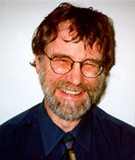 Kurt Vanlehn合作论文数School of Computing, Informatics and Decision Systems Engineering, Ira A. Fulton Schools of Engineering, Arizona State University;Global Institute of Sustainability and Innovation, Julie Ann Wrigley Global Futures Laboratory, Arizona State University;Learning Research and Development Center, University of Pittsburgh3
 Matthew Marge合作论文数Carnegie Mellon University3
 Gordon Briggs合作论文数Human-Robot Interaction Laboratory, Tufts University3
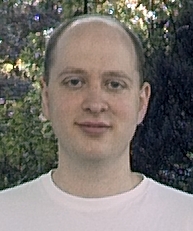 David Devault合作论文数University of Southern California3
 Vitor Fernão Pires合作论文数3
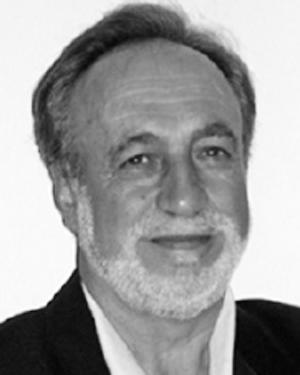 João Santana合作论文数2
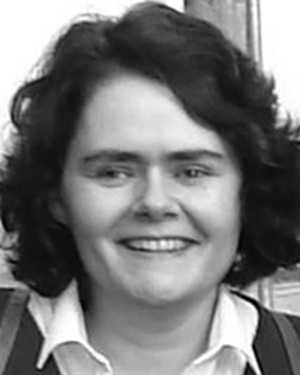 Sonia F Pinto合作论文数2Alexander Tsuetaki合作论文数2bruno pereira合作论文数2
 Meia Chita-Tegmark合作论文数Tufts University2
 Daniel Kasenberg合作论文数Tufts University2
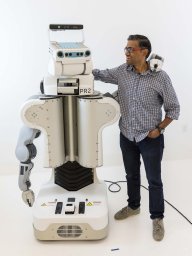 Vasanth Sarathy合作论文数Tufts University2
 Casimiro, C.合作论文数2
 Silva Vitor合作论文数2
 Shrikanth (Shri) S. Narayanan合作论文数Signal Analysis and Interpretation Laboratory, Ming Hsieh Department of Electrical and Computer Engineering, Viterbi School of Engineering, University of Southern California;Google;Behavioral Signal Technologies, Inc.2Hua Ai合作论文数2Dusan Jan合作论文数USC Institute for Creative Technologies2Suresh Damodaran合作论文数Department of Pharmaceutical Technology, Jadavpur University2
 Ashish Vaswani合作论文数Essential AI2Douglas Stetson合作论文数1
 Carlos Santos Silva合作论文数1Christopher Degni合作论文数1goncalo pimpao合作论文数1rafaela henriques合作论文数1Kevin B. Bush合作论文数MIT, Lincoln Lab, Cyber Phys Syst, 244 Wood St, Lexington, MA 02173 USA1
 Daniel Hannon合作论文数1Stephanie Siler合作论文数1
 Nuno Grilo合作论文数1
 Carlos Silvestre合作论文数Instituto Superior Tecnico|Institute for Systems and Robotics1
 Panayiotis (Panos) Georgiou合作论文数Behavioral Informatics Center, University of Southern California;Apple1
 Kallirroi Georgila合作论文数Thomas Lord Department of Computer Science, Viterbi School of Engineering, University of Southern California;Institute for Creative Technologies, University of Southern California1
 Nuno Carolino合作论文数Estação Zootécnica Nacional - Instituto Nacional de Investigação Agrária1




