Improved boron (B) tolerance has been an objective of barley breeding programs in regions where B toxicity occurs. Traits associated with B tolerance have been mapped on chromosomes 2H and 4H and it has been proposed that these be used for marker assisted selection for B tolerance. However, there has been little or no improvement in yield using this strategy. This study examined the reasons for the small yield differences among different lines of barley that differ in B tolerance. Experiments used backcross lines derived from crosses between the B-tolerant landrace Sahara 3771 and two adapted recurrent parents, Sloop and VB9104. Lines with different combinations of the Sahara 3771 alleles on chromosomes 2H and 4H were grown over three growing seasons at sites where barley is prone to B toxicity. Grain yields of the backcross lines were similar to or lower than those of the recurrent parents despite showing differences in the expression of B toxicity symptoms and in B concentration in vegetative tissue. There were few significant differences in grain yield among the backcross lines. Variation in dry matter production among the backcross lines in each of the three growing seasons was unrelated to shoot B concentrations while grain yield was correlated with shoot B concentration only among the backcross lines of VB9104 in one season. In this case the yield loss was 4% per 10 mg kg(-1) increase in shoot B concentration. Variation in shoot B concentration and yield across seasons was much greater than that observed among the different barley lines. Reduced B accumulation was associated with higher shoot sodium concentration among the Sloop backcross lines. The results suggest that yield gains from selection based largely on B exclusion and symptoms expression may be small and strongly affected by site and seasonal effects. In the regions where other soil constraints, such as soil salinity and micronutrient deficiencies are also important, reducing B uptake alone may have little effect on yield if these other soil properties are also limiting yields.
Malt wort fermentability is dependent on an adequate supply of the essential nutrients required by yeast. The barley and malt factors affecting this supply of nutrients are not well understood. This study used two doubled haploid populations (Arapiles x Franklin, TR251 x HB345), the latter with a hulless barley parent, to investigate effects of barley and malt quality on fermentability. Populations were grown and malted at different locations resulting in a broad range in malt quality with significant differences in extract, modification and enzyme levels. Fermentability, as indicated by apparent attenuation limit and ethanol levels, also showed significant differences among samples. Modification was the most important factor for good fermentability. There appeared to be several different mechanisms by which modification affected fermentability. High viscosities, slow starch release during mashing, increased glucose supply from better beta-glucan breakdown and increased free amino nitrogen levels all affected fermentability. Effects of starchdegrading enzymes on fermentability became more significant in better modified malts with alpha-amylase showing stronger effects than diastatic power. The poorer fermentability of hulless barley malt was predominately due to low levels of alpha-amylase, although. free amino nitrogen also appeared to be an important factor.
Selection for malting quality traits is a major breeding objective for barley breeding programs. With molecular markers linked to loci affecting these traits, this selection can be undertaken at an earlier stage of the breeding program than is possible using conventional tests. Quantitative trait loci (QTLs) associated with malting quality traits were mapped in 2 populations derived from parents with elite malting quality. Progeny from an Arapiles/Franklin population grown in 4 environments and an Alexis/Sloop population grown in 5 environments were tested for grain protein percentage, alpha-amylase activity, diastatic power, hot water extract, wort viscosity, wort beta-glucan, beta-glucanase, and free alpha-amino acids. QTL analysis was performed using a one-stage approach, which allowed for modelling of spatial variation in the field, and in each phase of the malting quality analysis in the laboratory. QTLs for malting quality traits were detected on all chromosomes and for both populations. Few of these QTLs were significant in all of the environments, indicating that QTL x environment interactions were important. There were many coincident QTLs for traits that are expected to be related such as diastatic power and alpha-amylase activity, wort beta-glucan and wort viscosity and for some traits that are not expected to be related such as hot water extract and malt viscosity.
Until recently, genetic mapping in cereals has been exclusively applied to populations derived from simple crosses. Genetic studies are now targeting broader population structures to take advantage of association mapping and whole genome analysis techniques. This paper presents a study of a Doubled Haploid (DH) population derived from the complex cross, Chieftan/Barque//Manley/VB9104, which is a significant departure from conventional mapping population structures. The population has been extensively phenotyped for malt quality and adaptation characteristics, through evaluation as a mainstream breeding population within the SA Barley Improvement Program (SABIP). Of the 841 (DH) lines, 837 lines were evaluated in double row trials, with 350 individuals promoted to stage one, 70 individuals to stage two and 10 individuals to stage three. One line (WI3408) has subsequently progressed to pilot scale malting and brewing trials, with potential for commercial release. Using high throughput technology the stage one DH lines (350) were extensively screened with fluorescently labelled simple sequence repeats (SSRs) based on their association with the traits of interest for this population. There was a 60% rate of polymorphism between one or more parents. In total, 200 SSRs were assayed and analysed using both Gene Flow and Gene Mapper data bases.
Spring radiation frost is a major abiotic stress in southern Australia, reducing yield potential and grain quality of barley by damaging sensitive reproductive organs in the latter stages of development. Field-based screening methods were developed, and genetic variation for reproductive frost tolerance was identified. Mapping populations that were segregating for reproductive frost tolerance were screened and significant QTL identified. QTL on chromosome 2HL were identified for frost-induced floret sterility in two different populations at the same genomic location. This QTL was not associated with previously reported developmental or stress-response loci. QTL on chromosome 5HL were identified for frost-induced floret sterility and frost-induced grain damage in all three of the populations studied. The locations of QTL were coincident with previously reported vegetative frost tolerance loci close to the vrn-H1 locus. This locus on chromosome 5HL has now been associated with response to cold stress at both vegetative and reproductive developmental stages in barley. This study will allow reproductive frost tolerance to be seriously pursued as a breeding objective by facilitating a change from difficult phenotypic selection to high-throughput genotypic selection.
The versatility of mixed model procedures in investigating large, unbalanced sets of genotype by environment data is illustrated on an historic set of yields from a South Australian oat evaluation program. Information on specific genotypic traits is included in the analysis in order to isolate unexplained genotype by environment interaction.
A genetic linkage map consisting of 211 molecular markers has been generated using a doubled- haploid population derived from a cross between the Australian barley variety Clipper and the Algerian landrace Sahara 3771. The map was used in subsequent trait mapping studies to locate the genes conferring boron tolerance and cereal cyst nematode resistance from Sahara 3371 and to map several plant type and developmental genes. Closely linked markers to the trait loci have been identified and are now being widely implemented in Australian breeding programs.
The barley mapping population Mundah × Keel was devised to characterise and map chromosome regions associated with improved growth and grain yield on sandy soils of low fertility. A low level of polymorphism between the parents proved problematic for the construction of a detailed linkage map of this population. Despite this, significant quantitative trait loci (QTLs) for specific traits were detected, providing an insight into the probable chromosome regions associated with sand adaptation. In addition, this population is being employed to identify loci associated with the expression of traits for moisture stress and frost tolerance, and resistance to spot form of net blotch and leaf scald.
SSR markers closely linked to 18 loci that control 16 important barley traits were assessed for their applicability in Australian barley breeding programs. A panel of 40 genotypes routinely used by the South Australian Barley Improvement Program (SABIP) was used to examine the usefulness of these SSR markers for marker assisted selection (MAS). The success of monitoring a trait locus from donor to recipient lines ranged from 10 to 98%, depending on the marker. SSRs with a high polymorphic information content (PIC) value were found to be the most useful for application in MAS. The assessment also indicated that SSRs derived from genomic sequences were more successful for MAS than those designed from expressed sequence tags. A total of 130 SSR markers were screened among 2 panels of Australian barley genotypes to determine which markers would be the most useful for discriminating Australian germplasm. PIC values generated by this screening were also compared with those generated using a panel of European barley genotypes. Using ordinary correlations (parametric), rank correlations (non-parametric), and partial correlations (multi-variate), a strong association was found between the 2 Australian panels, but no or weak correlation was observed between the 2 Australian panels and the European dataset. It can therefore be concluded that PIC values generated by SSR markers screened with European genotypes cannot be used to predict the usefulness of an SSR marker for discriminating Australian genotypes. From PIC values generated in this study, 36 SSR markers have been selected for the discrimination of Australian genotypes. These markers all show high and/or consistent PIC values among Australian and European barley genotypes.
Barley kernel discoloration (KD) leads to substantial annual loss in value through downgrading and discounting of malting barley. KD is a difficult trait to introgress into elite varieties as it is controlled by multiple genes and strongly influenced by environment and maturity. As the first step towards marker assisted selection for KD tolerance, we mapped quantitative trait loci (QTLs) controlling KD measured by grain brightness [Minolta L; (Min L)], redness (Min a), and yellowness (Min b) in 7 barley populations. One to 3 QTLs were detected for grain brightness in various populations, and one QTL could account for 5–31% of the phenotypic variation. The QTL located around the centromere region of chromosome 2H was consistently detected in 6 of the 7 populations, explaining up to 28% of the phenotypic variation. In addition, QTLs for grain brightness were most frequently identified on chromosomes 3H and 7H in various populations. Australian varieties Galleon, Chebec, and Sloop contribute an allele to increase grain brightness on chromosome 7H in 3 different populations. A major gene effect was detected for grain redness. One QTL on chromosome 4H explained 54% of the phenotypic variation in the Sloop/Halcyon population, and was associated with the blue aleurone trait. A second QTL was detected on the long arm of chromosome 2H in 3 populations, accounting for 23–47% of the phenotypic variation. The major QTLs for grain yellowness were mapped on chromosomes 2H and 5H. There were strong associations between the QTLs for heading date, grain brightness, and yellowness. The molecular markers linked with the major QTLs should be useful for marker assisted selection for KD.
Six doubled haploid barley populations (Alexis × Sloop, Chebec × Harrington, Arapiles × Franklin, Patty × Tallon, Tallon × Kaputar, and Sloop × Halcyon) and a recombinant inbred population (WI2875-1 × Alexis) were assessed for response to selected pathotypes of the barley leaf rust pathogen, Puccinia hordei, at the seedling growth stage. Resistance genes were postulated for the parents of each population based on their reaction to selected pathotypes. In most cases, the resistance genes postulated in the cultivars were validated by QTL mapping analyses of the progeny populations. The resistance genes detected and mapped were Rph2, Rph3, Rph4, Rph12, and Rph19. The chromosomal locations of these 5 genes were consistent with previous reports, with Rph2 mapping near to the centromere on the short arm of chromosome 5H, Rph4 mapping to chromosome 1H, Rph12 mapping to the long arm of chromosome 5H, and Rph3 and Rph19 mapping ~30 cM apart on the long arm of chromosome 7H.
Grain weight and size are traits important to malting and feed barley. Understanding the determinants of grain weight and size, especially under stressful growing environments, will aid breeding efforts to improve these traits. The determinants of grain weight and size are discussed in relation to the pre- and post-anthesis periods of barley development. Genetic mapping of the loci influencing grain weight and size has provided a fundamental understanding of these traits, and a summary of mapped quantitative trait loci (QTLs) from Australian and international mapping populations is presented. The influence of developmental loci on grain weight and size QTLs, approaches to discovering non-developmentally related loci, and prospects for a marker assisted selection approach to improving grain weight and size are discussed.
YLM, a codominant polymerase chain reaction (PCR) marker linked to Yd2 , could substantially improve the precision and efficiency of barley yellow dwarf virus (BYDV) resistance breeding. The aim of this study was to assess the effectiveness of YLM in a marker-assisted introgression programme and to quantify associations between the presence of Yd2 and other agronomic and quality traits. The Yd2 gene was introgressed into a BYDV-susceptible background through two cycles of marker-assisted backcrossing. BC2 F-2 -derived lines, either carrying or not carrying the YLM allele associated with resistance, were compared in the presence and absence of BYDV. The YLM marker was shown to be effective in the introgression of Yd2 . Lines carrying the YLM allele associated with resistance produced significantly fewer leaf symptoms and showed a reduction in yield loss when infected with BYDV. There were no deleterious effects associated with the introgression of Yd2 on grain yield, grain size or malting quality. The implications of marker-assisted selection for Yd2 on barley improvement are discussed.
Quantitative trait loci (QTLs) associated with resistance to net blotch and their chromosomal locations were determined from analyses of doubled haploid progeny of Alexis/Sloop, Arapiles/Franklin, Sloop/Halcyon, and recombinant inbred lines of Sloop-sib/Alexis. Five QTLs on chromosomes 2H, 3H, and 4H were found to be associated with seedling resistance to the net form of net blotch. In Arapiles/Franklin and Alexis/Sloop populations, 4 significant QTLs explaining 9–17% of the variation in net blotch resistance were detected on 2H and 3H. A major locus, QRpts4L accounting for 64% of the variation in infection type, was detected on 4H in the Sloop/Halcyon population. In Sloop/Halcyon, 2 microsatellite markers, EBmac0906 and GMS089, and AFLP marker P13/M50-108, co-segregated and detected maximum variability for net blotch resistance as revealed by bootstrap analysis. EBmac0906 and Bmac0181 were validated in F2 progeny of an Ant29/Halcyon population and reliably predicted phenotypes of 93% of lines resistant and susceptible to net blotch. These markers may be used within breeding programs to select alleles favourable for net blotch resistance derived from Halcyon.
A genetic map of barley with 224 AFLP and 39 simple sequence repeat (SSR) markers was constructed using a doubled haploid (DH) mapping population from a cross between the varieties Tallon and Kaputar. Linkage groups were assigned to individual barley chromosomes using the published map locations of the SSR markers as reference points. This genetic map was used to identify markers with linkage to agronomic, disease, and quality traits in barley. The population, which comprised 65 lines, was tested in a range of environments across Australia. Quantitative trait loci (QTLs) analyses were performed using software packages MapMaker, MapManager, and Qgene. Significant associations with markers were found for several traits. Grain yield showed significant association with regions on chromosomes 2H, 3H, and 5H over a range of sites throughout Australia. Regions on chromosomes 2H and 3H explained 30% and 26% of variation in lodging, respectively. Among quality traits, diastatic power was associated with regions on chromosomes 1H, 2H, and 5H (R2 = 37%). Hot water extract was associated with a region on chromosome 6H and a marker not assigned to a chromosome (R2 = 45%). There were also environment-specific QTLs for the traits analysed. The markers identified here present an opportunity for marker assisted selection of lines for these traits in barley breeding programs.Mapping and QTL analysis of Tallon × Kaputar
 S. J. Logue合作论文数15
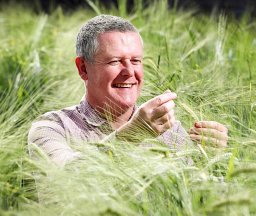 K. J. Chalmers合作论文数ARC Special Research Centre for Basic and Applied Plant Molecular Biology, University of Adelaide15
 Peter Langridge合作论文数School of Agriculture, Food and Wine, University of Adelaide;CropTraits14
 Helen Collins合作论文数13S. P. Jefferies合作论文数12Jason Konrad Eglinton合作论文数School of Agriculture and Wine;University of Adelaide;School of Agriculture and Wine, University of Adelaide12A. Karakousis合作论文数11S. Roumeliotis合作论文数10
 David Bruce Moody合作论文数9J. M. Kretschmer合作论文数7Rcm Lance合作论文数7Stewart Coventry合作论文数7
 Mehmet Cakır合作论文数Biotechnology Centre, Murdoch University7S. Manning合作论文数6P. Lim合作论文数6G. J. Platz合作论文数6
 Chengdao Li (李承道)合作论文数Zhejiang University;Huazhong Agricultural University;School of Veterinary and Life Sciences, Murdoch University;Division of Agriculture and Food, Department of Primary Industries and Regional Development's, Government of Western Australia5
 Harsh Raman合作论文数NSW Department of Primary Industries and NSW Agricultural Genomics Centre, Wagga Wagga Agricultural Institute5BJ Read合作论文数5JF Panozzo合作论文数4Glenn McDonald合作论文数School of Agriculture, Food and Wine, the University of Adelaide4
 Brian R Cullis合作论文数Centre for Biometrics and Data Science in Sustainable Primary Industries, National Institute Applied Statistics Research Australia;School of Mathematics and Applied Statistics, Faculty of Engineering and Information Sciences, University of Wollongong4David Poulsen合作论文数4PJ Eckermann合作论文数4CR Grime合作论文数3Wjr Boyd合作论文数3
 Robert Park合作论文数School of Life and Environmental Sciences, Faculty of Science, The University of Sydney3
 David Evans合作论文数Department of Biological and Medical Sciences, Oxford Brookes University2
 Colleen Hunt合作论文数2P. Warner合作论文数2
 John Lewis合作论文数Carleton University2
 Diane Mather合作论文数School of Agriculture, Food and Wine, Faculty of Sciences, Engineering and Technology, University of Adelaide2Kerrie L. Willsmore合作论文数2
 Hugh Wallwork合作论文数2N. R. Long合作论文数2J. L. Reinheimer合作论文数2A. K. M. R. Islam合作论文数2Mgk Jones合作论文数1KJ Young合作论文数1
 Mohammad Reza Jalal Kamali合作论文数1J. P.E. Cheong合作论文数1shuzhen men合作论文数1J. P. Gustafson合作论文数1a tarr合作论文数1K. J. Williams合作论文数1P. A. Davies合作论文数1
 Yingjuan Ma合作论文数Department of Earth, Planetary, and Space Sciences, College of Physical Sciences, University of California, Los Angeles1
 Robert Henry合作论文数University of Queensland1
 Brendon James King合作论文数South Australian Water Corporation1




