We report on a flexible current sensor development employing direct-write printing and additive manufacturing techniques. The integrated current sensor unit incorporates sensing, data processing & storage, and in-field calibration capabilities. A combination of direct-write printing technique and low-temperature curable metallic ink is used to print Ag wires around a $12.5-\boldsymbol{\mu} \mathbf{m}$-thick permalloy film. The overall thickness of the polyimide substrate and permalloy sheet remains well-below $500\ \boldsymbol{\mu} \mathbf{m}$ enabling wrap-around sensor functionality. Fused deposition modeling (FDM) additive manufacturing is used to build custom parts for sensor mounting, encapsulation, and an in-field calibration unit using heat and chemical-resistant thermoplastic which responds well to mechanical stress. In the present configuration, the integrated current sensor unit can be powered through USB or 4 AAA batteries to allow data collection and sensor calibration in the field. The flexible current sensor employing a continuous sheet of the permalloy exhibited a well-behaved signal output response at peak current levels exceeding 15A and in the applied ac frequency range of 60 Hz–10 kHz. Overall, the combination of direct-write printing, thin permalloy material, and additive manufacturing technique shows promise for the development of a reconfigurable low-cost current sensor that can be deployed in large numbers at locations of interest to avail the cost and energy-saving opportunities in industrial/commercial and residential applications.
Significant energy savings can be achieved by operating heating, ventilation, and air conditioning control systems with indoor occupancy measurement information. This paper presents a novel plug-and-play occupancy sensing method which will enable temporal minimization of building energy consumption to meet building usage behavior without privacy concerns. The proposed wireless occupancy sensing platform is based on long-wave infra-red (LWIR) focal-plane arrays (FPAs), or thermal imagers, that detect thermal energy rather than visible light. We developed an advanced sensor package consisting of multiple thermal imagers with low-cost optical enhancements to increase field of view and increase sensitivity to occupant detection (filtering building clutter). These imagers can be coupled with radio frequency and ultrasonic-based radar to enhance data collection at key occupant zone boundaries to improve accuracy. Standard filtering and estimation techniques from the image processing and computer vision communities are introduced to overcome the accuracy issues suffered by traditional PIR based sensing, especially when occupants remain relatively still. Accurate low-level counting of individuals can be achieved with minimal impact on privacy. The proposed occupancy detection method can work as a retrofit to enable real-time understanding of the building operational state and usage behavior. Sensor data obtained from real test building zones was used to test the efficacy of the method.
This paper reports a 24x57 correlation filter system for object tracking applications. While digital interfacing of the input and output data enabled a standard and flexible way of communication with pre-and post-processing digital blocks, the multiply-accumulate (MAC) operations were performed in the analog domain to save power and area. The proposed system utilizes non-volatile floating-gate memories to store filter coefficients. The chip was fabricated in a 0.13-mu m CMOS process and occupies 3.23 mm(2) of silicon area. The system dissipates 388.4 mu W of power at a throughput of 11.3 kVec/s, achieving an energy efficiency of 25.2 pJ/MAC. Experimental results for a custom filter designed to detect vehicles are presented.
Steganography is an important technique for information hiding in any digital object. Steganography technique is the science that includes communicating secret information in an appropriate digital multimedia cover objects such as audio, video and image files. The main objective of steganography is to hide the existence of the embedded data. Steganography technique has improved the security of existing data hiding techniques by the outstanding development in computational power. Objectives of steganography are Undetectability, robustness and capacity of the concealed data, these key factors that separate it from related techniques like cryptography and watermarking. This paper delivers a survey on digital images steganography and covering its fundamental concepts. The development of image steganographic methods in spatial representation, in JPEG format and also discuss the recent development in the field of image steganography. Specific generally used approaches for increasing steganographic security are summarized and significant research developments are also discussed.
This paper deals with the forensic problem of determining whether a document has been scanned and re-printed, as opposed to being the original printout. We consider two cases: (i) the adversary did no deliberate alteration of the contents of the document between the scanning and the second printing; (ii) the adversary carries out one or more deliberate alterations to the document, such as changing a date, name, or dollar amount. In the latter case, we also want to determine the locations of the alteration(s). We would like the document to inherently carry the evidence of its own originality and of any illicit alterations that can be carried out. We first present a framework to determine document originality based on an existing embedding scheme for laser printed documents. We follow up with an adaptation to this framework of techniques from combinatorial group testing.
In today's digital world securing different forms of content is very important in terms of protecting copyright and verifying authenticity. One example is watermarking of digital audio and images. We believe that a marking scheme analogous to digital watermarking but for documents is very important. There currently exist techniques to secure documents such as bank notes using paper watermarks, security fibers, holograms, or special inks. There are a number of applications in which it is desirable to be able to identify the technology, manufacturer, model, or specific unit that was used to print a given document even if the printer in question does not make use of these existing security devices to explicitly identify itself. It would be useful to achieve the same or a better level of protection without the use of any additional devices or technologies. Two strategies are proposed for printer identification based upon examination of a printed document. The first strategy is passive. It involves characterization of the printer by finding features in the printed document that are intrinsic to that particular printer, model, or manufacturer's products. The second strategy is active. It involves the embedding of an extrinsic signature into a printed page. This signature can be generated by modulating the process parameters of the printer mechanism to encode identifying information such as the printer serial number and date of printing. It is shown that good separation between printers is achievable using gray-level co-occurrence based texture features obtained from text documents. Experiments using ten printers and a support vector machine classifier show very low classification error even between printers with the same electromechanical structure. The technique is also shown to work for various font sizes, font types, paper types, and printer age. The features are observed to migrate with the age of the consumables indicating that it may be possible to estimate the age of the consumables at the time of printing. In addition, the intrinsic nature of the features makes it difficult to obscure or remove them without physically modifying the printer itself. Combining both texture features and banding features it is possible to identify a printer under several attack scenarios. A coding technique for embedding extrinsic signatures in text documents is presented. Both time and frequency domain signaling and detection schemes are investigated. It is shown that better performance is achieved using a time domain signaling scheme with a correlation detector due to the limited length of text character edges. It is also shown that by treating the document as a communication channel, a coding technique allowing approximately 3600 bits in a full page of 12 point text is achievable with a 7.74% bit error rate. By using the data hiding technique described above, a counterfeit and tamper detection method based on combinatorial group testing is developed and investigated. The low error rate achievable by the data hiding system allows reliable determination of document authenticity and the location of tampered data within a document. From results of previous work a printer dot model is proposed to simulate the printing of cluster-dot halftone patterns. It has been shown that the original parameters chosen for that model do not adequately represent vertical edges in saturated regions such as text. Estimating the parameters by minimizing the error between the simulated and experimental edge profiles and edge sharpness for both the left and right edges provides values that more accurately represent the actual edge with and without embedded signals.
Several methods exist for printer identification from a printed document. We have developed a system that performs printer identification using intrinsic signatures of the printers. Because an intrinsic signature is tied directly to the electromechanical properties of the printer, it is difficult to forge or remove. In previous work we have shown that intrinsic signatures are capable of solving the problem of printer classification on a restricted set of printers. In this paper we extend our previous work to address the problem of forensic printer identification, in which a document may or may not belong to a known set of printers. We propose to use a Euclidean distance based metric in a reduced feature space. The reduced feature space is obtained by using sequential feature selection and linear discriminant analysis.
Contrary to popular opinion, the use of paper in our society will not disappear any time during the foreseeable future. In fact, the use of paper continues to grow rather than decline. It is certainly true that as individuals, we may be printing less than we used to. And the role of paper has been transformed from the archival record of a document to a convenient and aesthetically appealing graphical user interface. The use of paper is now intimately linked to the electronic systems that capture, process, transmit, generate, and reproduce textual and graphical content. Paper can be thought of as an interface between humans and the digital world. If this interface is not secure, the entire system becomes vulnerable to attack and abuse. Although paper is read by humans in the same way that it has been for millennia, and has had the same fundamental form and composition for almost that long as well, the technologies for printing and scanning documents and capturing their content have evolved tremendously, especially during the last twenty years. This has moved the capability to generate printed documents from the hands of a select few to anyone with access to lowcost scanners, printers, and personal computers. It has greatly broadened the opportunities for abuse of trust through the generation of fallacious documents and tampering with existing documents, including the embedding of messages in these documents.
Several methods exist for printer identification from a printed document. We have developed a system that performs printer identification using intrinsic signatures of the printers. Because an intrinsic signature is tied directly to the electromechanical properties of the printer, it is difficult to forge or remove. These signatures are shown to be robust against several attacks models. In addition we have developed methods for embedding information into a text document using extrinsic signatures. Using these techniques we have been able to embed over 12kbits of information imperceptibly into a page of 12-point text.
Several methods exist for printer identification from a printed document. We have developed a system that performs printer identification using intrinsic signatures of the printers. Because an intrinsic signature is tied directly to the electromechanical properties of the printer, it is difficult to forge or remove. There are many instances where existance of the intrinsic signature in the printed document is undesireable. In this work we explore texture based attacks on intrinsic printer identification from text documents. An updated intrinsic printer identification system is presented that merges both texture and banding features. It is shown that this system is scable and robust against several types of attacks that one may use in an attempt to obscure the intrinsic signature.
In today's digital world securing different forms of content is very important in terms of protecting copyright and verifying authenticity. One example is watermarking of digital audio and images. We believe that a marking scheme analogous to digital watermarking but for documents is very important. In this paper we describe the use of laser amplitude modulation in electrophotographic printers to embed information in a text document. In particular we describe an embedding and detection process which has the capability to embed 14 bits into characters that have a left vertical edge. For a typical 12 point document this translates to approximately 12000 bits per page.
Many emergency response units are currently faced with restrictive budgets that prohibit their use of advanced technology-based training solutions. Our work focuses on creating an affordable, mobile, state-of-the-art emergency response training solution through the integration of low-cost, commercially available products. The system we have developed consists of tracking, audio, and video capability, coupled with other sensors that can all be viewed through a unified visualization system. In this paper we focus on the video sub-system which helps provide real time tracking and video feeds from the training environment through a system of wearable and stationary cameras. These two camera systems interface with a management system that handles storage and indexing of the video during and after training exercises. The wearable systems enable the command center to have live video and tracking information for each trainee in the exercise. The stationary camera systems provide a fixed point of reference for viewing action during the exercise and consist of a small Linux based portable computer and mountable camera. The video management system consists of a server and database which work in tandem with a visualization application to provide real-time and after action review capability to the training system.
Contrary to popular opinion, the use of paper in our society will not disappear during the foreseeable future. In fact, paper use continues to grow rather than decline. It is certainly true that as individuals, we may be printing less than we used to. And the role of paper has been transformed from the archival record of a document to a convenient and aesthetically appealing graphical user interface. The use of paper is now intimately linked to the electronic systems that capture, process, transmit, generate, and reproduce textual and graphic content. Paper can be thought of as an interface between humans and the digital world. If this interface is not secure, the entire system becomes vulnerable to attack and abuse. Although paper is read by humans in the same way that it has been for millennia and has had the same fundamental form and composition for almost that long, the technologies for printing and scanning documents and capturing their content have evolved tremendously, especially during the last 20 years. This has moved the capability to generate printed documents from the hands of a select few to anyone with access to low-cost scanners, printers, and personal computers. It has greatly broadened the opportunities for abuse of trust through the generation of fallacious documents and the tampering with existing documents, including the embedding of messages in these documents.
We present a framework for forensic identification of RF devices using specially designed probe signals. This framework applies to a broad range of devices. Probe signals, device models, feature selection and classifier design are described, and experimental results are given to verify our approach.
Given the wide use of Radio Frequency (RF) devices for applications ranging from data networks to wireless sensors, it is of interest to be able to characterize individual devices to verify compliance with FCC Part 15 rules. In an effort to characterize these types of devices we have developed a system that utilizes specially designed probe signals to elicit a response from the device from which unique characteristics can be extracted. The features that uniquely characterize a device are referred to as device signatures or device fingerprints. We apply this approach to RF devices which employ different bandpass filters, and construct training based classifiers which are highly accurate. We also introduce a model-based framework for optimal detection that can be employed to obtain performance limits, and to study model mismatch and probe optimization.
When traveling in a region where the local language is not written using the Roman alphabet, translating written text (e.g., documents, road signs, or placards) is a particularly difficult problem since the text cannot be easily entered into a translation device or searched using a dictionary. To address this problem, we are developing the "Rosetta Phone," a handheld device (e.g., PDA or mobile telephone) capable of acquiring a picture of the text, identifying the text within the image, and producing both an audible and a visual English interpretation of the text. We started with English, as a developement language, for which we achieved close to 100% accuracy in identifying and reading text. We then modified the system to be able to read and translate words written using the Arabic character set. We currently achieve approximately 95% accuracy in reading words from a small directory of town names.
Many emergency response units are currently faced with restrictive budgets which prohibit their use of technology both in training and in real-world situations. Our work focuses on creating an affordable, mobile, state-of-the-art emergency response test-bed through the integration of low-cost, commercially available products. We have developed a command, control, communications, surveillance and reconnaissance system that will allow small-unit exercises to be tracked and recorded for evaluation purposes. Our system can be used for military and first responder training providing the nexus for decision making through the use of computational models, advanced technology, situational awareness and command and control. During a training session, data is streamed back to a central repository allowing commanders to evaluate their squads in a live action setting and assess their effectiveness in an after-action review. In order to effectively analyze this data, an interactive visualization system has been designed in which commanders can track personnel movement, view surveillance feeds, listen to radio traffic, and fast-forward/rewind event sequences. This system provides both 2-D and 3-D views of the environment while showing previously traveled paths, responder orientation and activity level. Both stationary and personnel-worn mobile camera video feeds may be displayed, as well as the associated radio traffic.
This paper describes methods for forensic characterization of scanners and printers. This is important in verifying the trust and authenticity of data and the device that created it. An overview of current forensic methods, along with current improvements of these methods is presented. Near-perfect identification of source scanner and printer is shown to be possible using these techniques.
 Edward J. Delp合作论文数Elmore Family School of Electrical and Computer Engineering, College of Engineering, Purdue University;The Center for Education and Research in Information Assurance and Security, Purdue University43
 Jan P. Allebach合作论文数Elmore Family School of Electrical and Computer Engineering, Purdue University30
 George T. C. Chiu (邱祚之)合作论文数School of Mechanical Engineering, Purdue University23
 Pei-Ju Chiang合作论文数Sch Mech Engn, Purdue Univ19
 Nitin Khanna合作论文数School of Electrical and Computer Engineering14
 Gazi N. Ali合作论文数10Pj Chiang合作论文数8Osman Arslan合作论文数6
 Sungjoo Suh合作论文数Samsung Electronics Co., LTD.6
 Maria V. Ortiz Segovia合作论文数Purdue University5Deen King-Smith合作论文数4Saul B Gelfand合作论文数2
 David Ebert合作论文数Department of Electrical & Computer Engineering, College of Engineering, University of Arizona2Timothy F. Collins合作论文数2
 Teja Kuruganti合作论文数Oak Ridge National Laboratory2C. Chiu合作论文数2George T.合作论文数2Ajith M. Kamath合作论文数1Stefan Thiemert合作论文数1N. Morimoto合作论文数1stephen m killough合作论文数1Karsten Borowka合作论文数1Michael Biermann合作论文数1claude s fillion合作论文数1
 Syed Ali Raza Jafri合作论文数1Rm Kumontoy合作论文数1ashok mariappan合作论文数1
 Peixing Liu合作论文数1
 Yongchao Yu合作论文数1
 Rui Yang合作论文数1Yun Q Shi合作论文数1Gaurav Sharma合作论文数1Kun Qian合作论文数1
 Nasir Memon合作论文数Department of Computer Science and Engineering, Polytechnic Institute, Tandon School of Engineering, New York University;Center for Cybersecurity, Polytechnic Institute, Tandon School of Engineering, New York University1
 Ross Maciejewski合作论文数School of Computing and Augmented Intelligence, Arizona State University;Center for Accelerating Operational Efficiency, Department of Homeland Security Center of Excellence, Arizona State University1
 Shriphani Palakodety合作论文数Onai1
 Eric Kee合作论文数Adobe1
 Mohsen Judy合作论文数ECE Dept., K.N. Toosi Univ. of Technol.;c;ECE Dept., K.N. Toosi Univ. of Technol.1
 Tomáš Pevný合作论文数Artificial Intelligence Center, Department of Computer Science, Faculty of Electrical Engineering, Czech Technical University in Prague1
 Poore, N.合作论文数1
 David Fugate合作论文数1
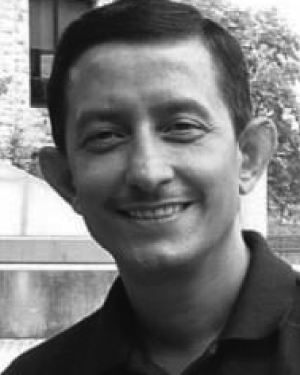 Joshi Pooran C合作论文数united states army research laboratory1
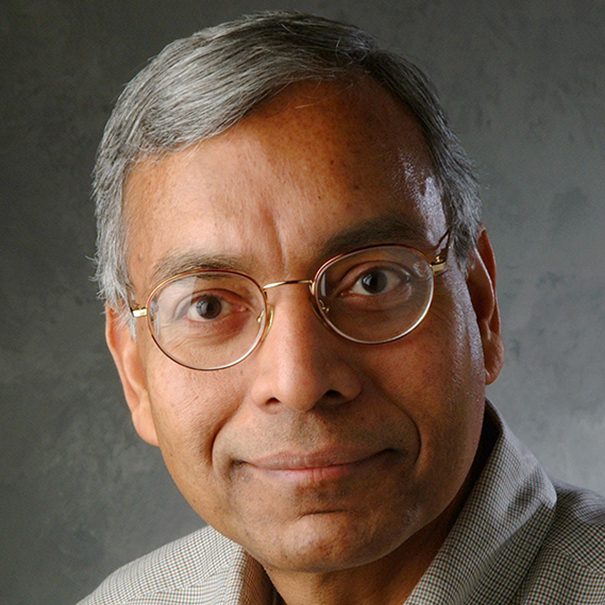 Anil K. Jain (阿尼尔·库马尔·贾恩)合作论文数Department of Computer Science & Engineering, College of Engineering, Michigan State University1
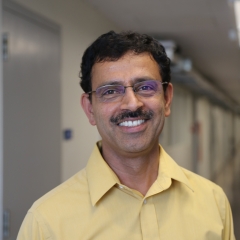 B.S. Manjunath合作论文数Center for Bio-image Informatics, University of California, Santa Barbara;Vision Research Lab, University of California, Santa Barbara;Center for Multimodal Big Data Science and Healthcare, University of California, Santa Barbara;Department of Electrical and Computer Engineering, The Robert Mehrabian College of Engineering, University of California, Santa Barbara1Jun Yu合作论文数1
 Jessica Fridrich合作论文数Department of Electrical and Computer Engineering, T. J. Watson School of Applied Science and Engineering, Binghamton University1
 Teddy Furon合作论文数Inria1Miroslav Goljan合作论文数Department of Electrical and Computer Engineering, Binghamton University1
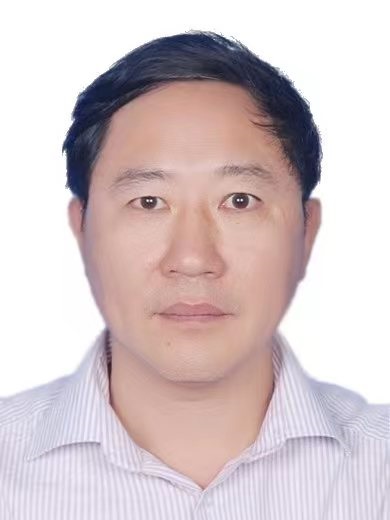 Jiwu Huang (黄继武)合作论文数Shenzhen Key Laboratory of Media Security, College of Electronics and Information Engineering, Shenzhen University1




