In this paper, we describe artistic practices with the webbased music making tool Playsound.space held over the last two years since the inception of the platform. After completing a first design phase, which is documented in previous publications, Playsound has been regularly used by the first author as her main musical instrument to perform in live improvisation contexts. The tool proved to be especially useful during the quarantine period due to Covid-19 in Brazil, by enabling the musician (i) to take part in performances with other musicians through online gatherings, and (ii) to compose solo pieces from home leveraging crowdsourced sounds. We review these endeavours and provide a critical analysis exploring some of the benefits of online music making and related challenges yet to tackle. The use of Playsound “in vivo”, in real artistic practices outside the laboratory, has enabled us to uncover playing strategies and user interface improvements which can inform the design of similar web-based music making tools.
I n this article we discuss unique free software-based digital infrastructures and networks that were developed in Brazilian communities, presenting situated models of resistance. We will discuss the background of the networks and characterize their practice and infrastructure, that are largely under-studied. The analysis we pursue highlights the importance of minorized decentralized technological practices that convey integral organizational models opposing capitalist hegemony. In order to describe the intersection of these alternatives in the Brazilian context, we will mobilize a feminist epistemology which considers necessary principles of “intra-action” (Barad 2007) across heterogeneous sociotechnical spaces. We will describe how different projects intersect, among them: Baobáxia, “a rota os Baobas” an eventually connected network, that can exist both on the larger internet and disconected from it, as a local local network, which nodes are located in quilombolas communities; “Metareciclagem”a collective of Brazilian technologists promoting the “up-cycling” of discarded computing technologies and their usage for artistic expression through “Gambiarra” (“makeshift”) re-appropriations; and another political articulation of the reflection about the appropriation of digital technologies that has given rise to an international network and practices which are identified by activists and artists as “Technoshamanism.” The role and place of digital activism in the Brazilian context is uniquely tied to specific needs of the communities at a moment in time. This led to unique examples of construction of what we have called “singular technologies”, we mean: "intentional and contextual technologies, developed specifically by a community to respond to their specific context." In Brazil, they emerge from a decolonial position and cultural narrative re-appropriation, supported by a benevolent policy. This brings us in the conclusion to qualify the construction of singular technologies that stem from the need to characterize daily practice by citizen groups that deploy their successful institutional arrangements and affordances under the radar and outside the competency of traditional institutions. These concepts do not try to define any tangible essence, but rather articulate social dynamics of the studied groups. We will qualify these social dynamics as the unique relation that technological processes emerge from.
This paper describes the development and evaluation of the online music making tool Playsound.space, an open platform leveraging Freesound Creative Commons audio content. After discussing the interface which relies on semantic queries and spectrogram representations, we introduce new features aiming to enhance participation and creativity support. This includes a multi-user chat system providing language translation, and a Web Audio player enabling real-time sound editing and time-stretching. We present evaluations for live performance and soundscape composition sketching. Throughout our reflections, we provide directions for future artistic and pedagogical applications that can benefit the design of other ubiquitous music systems.
This paper presents initial steps towards the design of an embedded system for body-centric sonic performance. The proposed prototyping system allows performers to manipulate sounds through gestural interactions captured by textile wearable sensors. The e-textile sensor data control, in real-time, audio synthesis algorithms working with content from Audio Commons, a novel web-based ecosystem for re-purposing crowd-sourced audio. The system enables creative embodied music interactions by combining seamless physical e-textiles with web-based digital audio technologies.
This paper analyzes communication patterns occurring in the online chat of the "Open Band" system for participatory live music performance. In addition, to act as a multi-user messaging tool, the chat system also serves as a control interface for the sonification of textual messages from the audience. Open Band performances were presented at various festivals and conferences since 2016. Its web-based platform enables collective "sound dialogues" that are open to everyone regardless of musical skills. Drawing on interactive participatory art and networked music performance, the system aims to provide engaging social experiences in co-located music-making situations. We collected data from four public performances including over 3,000 anonymous messages sent by audiences. We present the design of the system and then analyze the semantic content of messages using thematic and statistical analyses. Findings show how different sonification mechanisms alter the nature of the communication between participants who articulate between linguistic and musical self-expression.
Playsound is a simple and intuitive web-based tool for music composition based on sounds from Freesound, an online repository of diverse audio content with Creative Commons licenses. In this paper, we present an approach based on Semantic Web technologies to provide recommendations to Playsound users. A Semantic Web of Things architecture is outlined, showing loosely coupled, independent software agents interoperating by means of a semantic publish/subscribe platform and a set of ontologies to describe agents, audio contents, input/output of audio analytics tools and recommendations. Preliminary tests confirm that the designed architecture adapts well to environments where services can be discovered and seamlessly orchestrated on the fly, resulting in a dynamic workflow.
Playsound.space is a web-based tool to search for and play Creative Commons licensed-sounds which can be applied to free improvisation, experimental music production and soundscape composition. It provides a fast access to about 400k non-musical and musical sounds provided by Freesound, and allows users to play/loop single or multiple sounds retrieved through text based search. Sound discovery is facilitated by use of semantic searches and sound visual representations (spectrograms). Guided by the motivation to create an intuitive tool to support music practice that could suit both novice and trained musicians, we developed and improved the system in a continuous process, gathering frequent feedback from a range of users with various skills. We assessed the prototype with 18 non musician and musician participants during free music improvisation sessions. Results indicate that the system was found easy to use and supports creative collaboration and expressiveness irrespective of musical ability. We identified further design challenges linked to creative identification, control and content quality.
Open Band is a web-based platform for collective "sound dialogues" designed to provide audiences with empowering experiences through music. The system draws on interactive participatory art and networked music performance by engaging participants in a sonic web "agora" in collocated and/or remote gatherings, regardless of musical level. In this paper, we present our artistic intent grounded in Eco's concept of Open Works and the initial design of a web-based open environment that supports social musical interactions. Interaction operates by means of a multi-user live chat system that renders textual messages into sounds. Feedback gathered across several public participatory performances was overall positive and we identified further design challenges around personalization, crowd dynamic and rhythmic aspects.
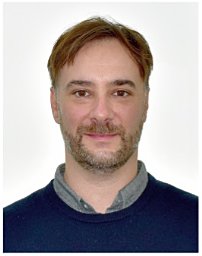 Mathieu Barthet合作论文数Laboratoire de Mécanique et d'Acoustique8
 Fábio Goródscy合作论文数3
 Alessia Milo合作论文数Queen Mary Univ London, London, England2
 Miguel Ceriani合作论文数Sapienza University of Rome2
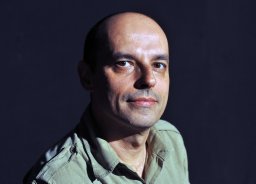 Fernando Iazzetta合作论文数Departamento de Música;USP ), Universidade de São Paulo;USP ), Universidade de São Paulo2
 Luca Turchet合作论文数Medialogy, Aalborg University Copenhagen2
 Antonio Deusany De Carvalho Junior合作论文数2
 Fabio Viola合作论文数Univ Bologna, Bologna, Italy1
 Sophie Skach合作论文数Queen Mary University of London1
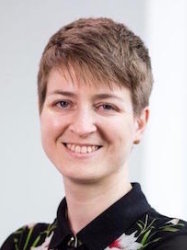 Rebecca Stewart合作论文数Dyson School of Design Engineering, Faculty of Engineering, Imperial College London1
 Janis Sokolovskis合作论文数1
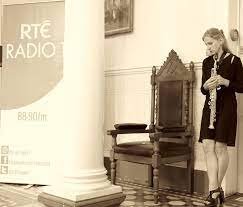 Franziska Schroeder合作论文数Sonic Arts Research Centre, Queen’s University Belfast1
 György Fazekas合作论文数Centre for Digital Music, Queen Mary University of London1
 Anna Xambo合作论文数Institute of Education1




