This study explores the prediction of airfoil self-noise through Deep Learning whilst focusing more specifically on the so-called turbulent boundary layer trailing edge (TBL-TE) noise. To this end, a predictive model relying on a Deep Neural Network (DNN) is developed, being then trained using an experimental database of TBL-TE noise signatures previously acquired by NASA. The DNN is favorably benchmarked against the test results, demonstrating its superiority over a popular semi-empirical prediction tool, i.e., the BPM model from NASA. Special attention is paid to the sensitivity of the DNN towards its architecture and/or its training extent. All in all, the DNN proves robust and accurate, reproducing faithfully the TBL-TE noise signatures with an average error of about 1.5 similar to 2.5 dB in terms of Sound Pressure Level. Special attention is also paid to sensitivity of the DNN towards the composition of its training dataset, whose consistency is enforced by clustering all datapoints belonging to an identical test configuration. This allows evaluating how far the model constitutes a true prediction tool, i.e., can extrapolate the experimental database instead of merely interpolating it through overfitting. Finally, the sensitivity of the DNN towards its training data is further explored to tentatively discriminate which quantities constituting the experimental database may contribute more significantly to the correct prediction of the noise signatures and - by extension - to their underlying physical mechanisms.
Aerodynamic drag is often used as a proxy for fuel consumption in aircraft design. However, the aeroacoustic byproduct of airfoil design, such as trailing-edge noise (TEN), is yet to be considered in aircraft applications, despite its inclusion in wind turbine designs. To explore the impact of TEN in airfoil design for aircraft, we establish a mission-based aerodynamic shape optimization framework. A surrogate-based detailed flight mission analysis (that can simulate a flight mission from takeoff to landing) is incorporated into the optimization framework to obtain realistic flight conditions during takeoff and landing—which are important to assess TEN metrics—and calculate accurate fuel consumption, where both are used to evaluate the objective function. To assess its effectiveness, we compare the results against those of the conventional single-point optimization. Not surprisingly, the mission-based optimization simultaneously reduces fuel consumption and TEN, while the single-point optima (performed at the low Mach region) reduce TEN at the expense of higher fuel consumption. This is due to the tradeoff between aerodynamic performance in the transonic region and aeroacoustic performance in the low Mach region, which cannot be properly analyzed without including flight mission analysis in the optimization loop.
We define a new type of graph of a group with reference to the descending endomorphisms of the group. A descending endomorphism of a group is an endomorphism that induces a corresponding endomorphism in every homomorphic image of the group. We define the undirected (directed) descending endomorphism graph of a group as the undirected (directed) graph whose vertex set is the underlying set of the group, in which there is an undirected (directed) edge from one vertex to another if the group has a descending endomorphism that maps the former element to the latter. We investigate some basic properties of these graphs and show that they are closely related to power graphs. We also determine the descending endomorphism graphs of symmetric, dihedral, and dicyclic groups.
Contribution: A multidisciplinary computational framework to support undergraduate engineering education is introduced. It is posed as an open-source tool that students can use to understand and apply computational methods commonly required in engineering problems. Background: This framework development is motivated by past experiences of teaching courses as segregated disciplines within an aerospace engineering curriculum. Reviewing pedagogical approaches shows that current university practices do not adequately emphasize or demonstrate the importance of interdisciplinary relationships. This framework is also motivated by the apparent need for engineering graduates to study these relationships by learning computational engineering via programming, in which proficiency is becoming increasingly important for their future careers. Intended Outcomes: 1) To effectively teach multidisciplinary engineering concepts to students via the integration of cross-disciplinary content from various courses and 2) To improve computational and programming literacy among undergraduate students in engineering studies. Application Design: A multidisciplinary design optimization approach is adopted to develop a framework called Multidisciplinary Aircraft Design Education (MADE), which provides functionalities for studying engineering disciplines within a computational programming environment. MADE makes the related course contents more accessible and intuitive to students by using reactive computational notebooks in lectures, tutorials, and assignments. Findings: MADE is assessed based on the learning outcomes and feedback from undergraduate students of two courses within an aerospace engineering curriculum. These assessments indicate an improved understanding of multidisciplinary concepts and their applications via computational programming, as reflected in the positive responses from the students.
A descending endomorphism of a group is an endomorphism that induces a corresponding endomorphism in every homomorphic image of the group. Descending endomorphisms of Abelian groups are power maps, and, in particular, those of finite Abelian groups as well as non-torsion Abelian groups are universal power endomorphisms. In this article, we compute all descending endomorphisms of some families of non-Abelian groups, namely (i) symmetric groups, (ii) direct products of symmetric groups, (iii) dihedral groups, (iv) direct products of dihedral groups, (v) Hamiltonian groups and (vi) dicyclic groups.
More often than not, airlines use aircraft in operating scenarios beyond their optimal design conditions, which negatively affects their performance characteristics. These effects are statistically reflected in flight operational data, which are indirectly constrained by air transportation management as well as aircraft design. In this research, we develop a data-enhanced methodology for modeling dynamic flight simulations of aircraft to enable accurate estimation of performance parameters. The relevant flight phases and constraints of these simulations are determined by employing supervised machine learning on the flight data. The methodology is demonstrated by simulating flights across representative short-, medium-, and long-haul sectors using data shared by our airline partner. We compare the fuel burn and flight time calculation results with those from the Bréguet range and endurance equations, from an available open-source flight performance model, and from the reference data for validation. The developed dynamic flight simulation model is designed in such a way to enable accurate flight performance analysis even when high-fidelity force analyses and control models are absent, which is common in preliminary design frameworks. This will further enable incorporating flight data into aircraft design processes.
Amphibious aircraft designers face challenges to improve takeoffs and landings on both water and land, with water-takeoffs being relatively more complex for analyses. Reducing the water-takeoff distance via the use of hydrofoils was a subject of interest in the 1970s, but the computational power to assess their designs was limited. A preliminary computational design framework is developed to assess the performance and effectiveness of hydrofoils for amphibious aircraft applications, focusing on the water-takeoff performance. The design framework includes configuration selections and sizing methods for hydrofoils to fit within constraints from a flying-boat amphibious aircraft conceptual design for general aviation. The position, span, and incidence angle of the hydrofoil are optimized for minimum water-takeoff distance with consideration for the longitudinal stability of the aircraft. The analyses and optimizations are performed using water-takeoff simulations, which incorporate lift and drag forces with cavitation effects on the hydrofoil. Surrogate models are derived based on 2D computational fluid dynamics simulation results to approximate the force coefficients within the design space. The design procedure is evaluated in a case study involving a 10-seater amphibious aircraft, with results indicating that the addition of the hydrofoil achieves the purpose of reducing water-takeoff distance by reducing the hull resistance.
Amphibian aircraft design comprises complex design challenges in addition to those from general aviation. The hull/float design consists of time- and cost-expensive operations, both experimentally and computationally, due to the complex nature of hydrodynamic analysis for the takeoff and landing stages. In this paper, the results of resistance and wave tests conducted on a planing hull from the NACA Technical Note 2481 (TN-2481) at Shanghai Jiao Tong University's Multifunction Towing Tank facility are presented and compared to results obtained via computational fluid dynamics using a volume-of-fluid method. The results obtained by these two methods will eventually be used to construct a surrogate model to analyse the water-takeoff performance of an amphibian aircraft designed with this hull, in comparison with present methods.
 Rhea Liem合作论文数Department of Mechanical and Aerospace Engineering, School of Engineering, The Hong Kong University of Science and Technology6
 Vinay Madhusudanan合作论文数manipal institute of technology2
 G. Sudhakara合作论文数Manipal Acad Higher Educ, Manipal Inst Technol2
 Stephane Redonnet合作论文数Department of Mechanical and Aerospace Engineering, School of Engineering, The Hong Kong University of Science and Technology2
 Yuan Lyu合作论文数1
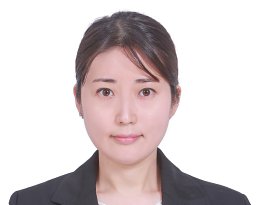 Dajung Kim合作论文数1
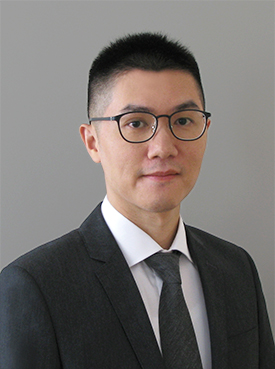 Larry Li (李建邦)合作论文数Department of Mechanical and Aerospace Engineering, School of Engineering, The Hong Kong University of Science and Technology1
 Ye Li (李晔)合作论文数Department of Ocean Science and Engineering, Southern University of Science and Technology1




