We show that the metaproblem for coset-generating polymorphisms is NP-complete, answering a question of Chen and Larose: given a finite structure, the computational question is whether this structure has a polymorphism of the form (x,y,z) ↦ x y^-1 z with respect to some group; such operations are also called coset-generating, or heaps. Furthermore, we introduce a promise version of the metaproblem, parametrised by two polymorphism conditions Σ_1 and Σ_2 and defined analogously to the promise constraint satisfaction problem. We give sufficient conditions under which the promise metaproblem for (Σ_1,Σ_2) is in P and under which it is NP-hard. In particular, the promise metaproblem is in P if Σ_1 states the existence of a Maltsev polymorphism and Σ_2 states the existence of an abelian heap polymorphism – despite the fact that neither the metaproblem for Σ_1 nor the metaproblem for Σ_2 is known to be in P. We also show that the creation-metaproblem for Maltsev polymorphisms, under the promise that a heap polymorphism exists, is in P if and only if there is a uniform polynomial-time algorithm for CSPs with a heap polymorphism.
Straight-line programs are a central tool in several areas of computer science, including data compression, algebraic complexity theory, and the algorithmic solution of algebraic equations. In the algebraic setting, where straight-line programs can be interpreted as circuits over algebraic structures such as semigroups or groups, they have led to deep insights in computational complexity. A key result by Babai and Szemeredi (1984) showed that finite groups afford efficient compression via straight-line programs, enabling the design of a black-box computation model for groups. Building on their result, Fleischer (2019) placed the Cayley table membership problem for certain classes (pseudovarieties) of finite semigroups in NPOLYLOGTIME, and in some cases even in FOLL. He also provided a complete classification of pseudovarieties of finite monoids affording efficient compression. In this work, we complete this classification program initiated by Fleischer, characterizing precisely those pseudovarieties of finite semigroups that afford efficient compression via straight-line programs. Along the way, we also improve several known bounds on the length and width of straight-line programs over semigroups, monoids, and groups. These results lead to new upper bounds for the membership problem in the Cayley table model: for all pseudovarieties that afford efficient compression and do not contain any nonsolvable group, we obtain FOLL algorithms. In particular, we resolve a conjecture of Barrington, Kadau, Lange, and McKenzie (2001), showing that the membership problem for all solvable groups is in FOLL.
Fix a finite group G. We study the computational complexity of counting problems of the following flavor: given a group Γ, count the number of homomorphisms Γ→ G. Our first result establishes that this problem is #𝖯-hard whenever G is a non-abelian group and Γ is provided via a finite presentation. We give several improvements showing that this hardness conclusion continues to hold for restricted Γ satisfying various promises. Our second result, in contrast, shows that if G is class 2 nilpotent and Γ= π_1(M^3) for some input 3-manifold triangulation M^3, then there is a polynomial time algorithm. The difference in complexity is explained by the fact that 3-manifolds are close enough to being Eilenberg-MacLane spaces for us to be able to solve the necessary group cohomological obstruction problems efficiently using the given triangulation. A similar polynomial time algorithm for counting maps to finite, class 2 nilpotent G exists when Γ is itself a finite group encoded via a multiplication table.
Friedl and Löh (2021, Confl. Math.) prove that testing whether or not there is an epimorphism from a finitely presented group to a virtually cyclic group, or to the direct product of an abelian and a finite group, is decidable. Here we prove that these problems are 𝖭𝖯-complete. We also show that testing epimorphism is 𝖭𝖯-complete when the target is a restricted type of semi-direct product of a finitely generated free abelian group and a finite group, thus extending the class of virtually abelian target groups for which decidability of epimorphism is known. Lastly, we consider epimorphism onto a fixed finite group. We show the problem is 𝖭𝖯-complete when the target is a dihedral groups of order that is not a power of 2, complementing the work on Kuperberg and Samperton (2018, Geom. Topol.) who showed the same result when the target is non-abelian finite simple.
A connected undirected graph is called geodetic if for every pair of vertices there is a unique shortest path connecting them. It has been conjectured that for finite groups, the only geodetic Cayley graphs are odd cycles and complete graphs. In this article we present a series of theoretical results which contribute to a computer search verifying this conjecture for all groups of size up to 1024. The conjecture is also verified for several infinite families of groups including dihedral and some families of nilpotent groups. Two key results which enable the computer search to reach as far as it does are: if the center of a group has even order, then the conjecture holds (this eliminates all 2-groups from our computer search); if a Cayley graph is geodetic then there are bounds relating the size of the group, generating set and center (which significantly cuts down the number of generating sets which must be searched).
The membership problem for an algebraic structure asks whether a given element is contained in some substructure, which is usually given by generators. In this work we study the membership problem, as well as the conjugacy problem, for finite inverse semigroups. The closely related membership problem for finite semigroups has been shown to be PSPACE-complete in the transformation model by Kozen (1977) and NL-complete in the Cayley table model by Jones, Lien, and Laaser (1976). More recently, both the membership and the conjugacy problem for finite inverse semigroups were shown to be PSPACE-complete in the partial bijection model by Jack (2023). Here we present a more detailed analysis of the complexity of the membership and conjugacy problems parametrized by varieties of finite inverse semigroups. We establish dichotomy theorems for the partial bijection model and for the Cayley table model. In the partial bijection model these problems are in NC (resp. NP for conjugacy) for strict inverse semigroups and PSPACE-complete otherwise. In the Cayley table model we obtain general L-algorithms as well as NPOLYLOGTIME upper bounds for Clifford semigroups and L-completeness otherwise. Furthermore, by applying our findings, we show the following: the intersection non-emptiness problem for inverse automata is PSPACE-complete even for automata with only two states; the subpower membership problem is in NC for every strict inverse semigroup and PSPACE-complete otherwise; the minimum generating set and the equation satisfiability problems are in NP for varieties of finite strict inverse semigroups and PSPACE-complete otherwise.
The Constant Degree Hypothesis was introduced by Barrington et. al. (1990) to study some extensions of $q$-groups by nilpotent groups and the power of these groups in a certain computational model. In its simplest formulation, it establishes exponential lower bounds for $\mathrm{AND}_d \circ \mathrm{MOD}_m \circ \mathrm{MOD}_q$ circuits computing AND of unbounded arity $n$ (for constant integers $d,m$ and a prime $q$). While it has been proved in some special cases (including $d=1$), it remains wide open in its general form for over 30 years. In this paper we prove that the hypothesis holds when we restrict our attention to symmetric circuits with $m$ being a prime. While we build upon techniques by Grolmusz and Tardos (2000), we have to prove a new symmetric version of their Degree Decreasing Lemma and apply it in a highly non-trivial way. Moreover, to establish the result we perform a careful analysis of automorphism groups of $\mathrm{AND} \circ \mathrm{MOD}_m$ subcircuits and study the periodic behaviour of the computed functions. Finally, our methods also yield lower bounds when $d$ is treated as a function of $n$.
In this paper we investigate computational properties of the Diophantine problem for spherical equations in some classes of finite groups. We classify the complexity of different variations of the problem, e.g., when G is fixed and when G is a part of the input. When the group G is constant or given as multiplication table, we show that the problem always can be solved in polynomial time. On the other hand, for the permutation groups S_n (with n part of the input), the problem is NP-complete. The situation for matrix groups is quite involved: while we exhibit sequences of 2-by-2 matrices where the problem is NP-complete, in the full group GL(2,p) (p prime and part of the input) it can be solved in polynomial time. We also find a similar behaviour with subgroups of matrices of arbitrary dimension over a constant ring.
We consider the problem of computing high-quality Euclidean shortest paths amidst obstacles on a large scale. By transferring and adapting speed-up techniques from the road network setting, we are able to compute source target paths for problem instances with several million obstacle vertices within few milliseconds after moderate preprocessing. We show experimentally that for small instances where optimal solutions are easily available on average our computed paths are less than 0.3% longer than the optimum. For large instances a new lower-bounding technique shows that on average our computed paths are less than 2% longer than the optimum paths. We compare our approach with the current state-of-the-art on problem instances derived from the OpenStreetMap project.
The power word problem for a group G \documentclass[12pt]{minimal} \usepackage{amsmath} \usepackage{wasysym} \usepackage{amsfonts} \usepackage{amssymb} \usepackage{amsbsy} \usepackage{mathrsfs} \usepackage{upgreek} \setlength{\oddsidemargin}{-69pt} \begin{document}$$\varvec{G}$$\end{document} asks whether an expression u 1 x 1 & ctdot; u n x n \documentclass[12pt]{minimal} \usepackage{amsmath} \usepackage{wasysym} \usepackage{amsfonts} \usepackage{amssymb} \usepackage{amsbsy} \usepackage{mathrsfs} \usepackage{upgreek} \setlength{\oddsidemargin}{-69pt} \begin{document}$$\varvec{u_1<^>{x_1} \cdots u_n<^>{x_n}}$$\end{document} , where the u i \documentclass[12pt]{minimal} \usepackage{amsmath} \usepackage{wasysym} \usepackage{amsfonts} \usepackage{amssymb} \usepackage{amsbsy} \usepackage{mathrsfs} \usepackage{upgreek} \setlength{\oddsidemargin}{-69pt} \begin{document}$$\varvec{u_i}$$\end{document} are words over a finite set of generators of G \documentclass[12pt]{minimal} \usepackage{amsmath} \usepackage{wasysym} \usepackage{amsfonts} \usepackage{amssymb} \usepackage{amsbsy} \usepackage{mathrsfs} \usepackage{upgreek} \setlength{\oddsidemargin}{-69pt} \begin{document}$$\varvec{G}$$\end{document} and the x i \documentclass[12pt]{minimal} \usepackage{amsmath} \usepackage{wasysym} \usepackage{amsfonts} \usepackage{amssymb} \usepackage{amsbsy} \usepackage{mathrsfs} \usepackage{upgreek} \setlength{\oddsidemargin}{-69pt} \begin{document}$$\varvec{x_i}$$\end{document} binary encoded integers, is equal to the identity of G \documentclass[12pt]{minimal} \usepackage{amsmath} \usepackage{wasysym} \usepackage{amsfonts} \usepackage{amssymb} \usepackage{amsbsy} \usepackage{mathrsfs} \usepackage{upgreek} \setlength{\oddsidemargin}{-69pt} \begin{document}$$\varvec{G}$$\end{document} . It is a restriction of the compressed word problem, where the input word is represented by a straight-line program (i.e., an algebraic circuit over G \documentclass[12pt]{minimal} \usepackage{amsmath} \usepackage{wasysym} \usepackage{amsfonts} \usepackage{amssymb} \usepackage{amsbsy} \usepackage{mathrsfs} \usepackage{upgreek} \setlength{\oddsidemargin}{-69pt} \begin{document}$$\varvec{G}$$\end{document} ). We start by showing some easy results concerning the power word problem. In particular, the power word problem for a group G \documentclass[12pt]{minimal} \usepackage{amsmath} \usepackage{wasysym} \usepackage{amsfonts} \usepackage{amssymb} \usepackage{amsbsy} \usepackage{mathrsfs} \usepackage{upgreek} \setlength{\oddsidemargin}{-69pt} \begin{document}$$\varvec{G}$$\end{document} is uNC 1 \documentclass[12pt]{minimal} \usepackage{amsmath} \usepackage{wasysym} \usepackage{amsfonts} \usepackage{amssymb} \usepackage{amsbsy} \usepackage{mathrsfs} \usepackage{upgreek} \setlength{\oddsidemargin}{-69pt} \begin{document}$$\varvec{\textsf{uNC}<^>{1}}$$\end{document} -many-one reducible to the power word problem for a finite-index subgroup of G \documentclass[12pt]{minimal} \usepackage{amsmath} \usepackage{wasysym} \usepackage{amsfonts} \usepackage{amssymb} \usepackage{amsbsy} \usepackage{mathrsfs} \usepackage{upgreek} \setlength{\oddsidemargin}{-69pt} \begin{document}$$\varvec{G}$$\end{document} . For our main result, we consider graph products of groups that do not have elements of order two. We show that the power word problem in a fixed such graph product is AC 0 \documentclass[12pt]{minimal} \usepackage{amsmath} \usepackage{wasysym} \usepackage{amsfonts} \usepackage{amssymb} \usepackage{amsbsy} \usepackage{mathrsfs} \usepackage{upgreek} \setlength{\oddsidemargin}{-69pt} \begin{document}$$\varvec{\textsf{AC} <^>0}$$\end{document} -Turing-reducible to the word problem for the free group F 2 \documentclass[12pt]{minimal} \usepackage{amsmath} \usepackage{wasysym} \usepackage{amsfonts} \usepackage{amssymb} \usepackage{amsbsy} \usepackage{mathrsfs} \usepackage{upgreek} \setlength{\oddsidemargin}{-69pt} \begin{document}$$\varvec{F_2}$$\end{document} and the power word problems of the base groups. Furthermore, we look into the uniform power word problem in a graph product, where the dependence graph and the base groups are part of the input. Given a class of finitely generated groups C \documentclass[12pt]{minimal} \usepackage{amsmath} \usepackage{wasysym} \usepackage{amsfonts} \usepackage{amssymb} \usepackage{amsbsy} \usepackage{mathrsfs} \usepackage{upgreek} \setlength{\oddsidemargin}{-69pt} \begin{document}$$\varvec{\mathcal {C}}$$\end{document} without order two elements, the uniform power word problem in a graph product can be solved in AC 0 [ C = L UPowWP ( C ) ] \documentclass[12pt]{minimal} \usepackage{amsmath} \usepackage{wasysym} \usepackage{amsfonts} \usepackage{amssymb} \usepackage{amsbsy} \usepackage{mathrsfs} \usepackage{upgreek} \setlength{\oddsidemargin}{-69pt} \begin{document}$$\varvec{\textsf{AC} <^>0[\textsf{C}_=\textsf{L} <^>{{{\,\textrm{UPowWP}\,}}(\mathcal {C})}]}$$\end{document} , where UPowWP ( C ) \documentclass[12pt]{minimal} \usepackage{amsmath} \usepackage{wasysym} \usepackage{amsfonts} \usepackage{amssymb} \usepackage{amsbsy} \usepackage{mathrsfs} \usepackage{upgreek} \setlength{\oddsidemargin}{-69pt} \begin{document}$$\varvec{{{\,\textrm{UPowWP}\,}}(\mathcal {C})}$$\end{document} denotes the uniform power word problem for groups from the class C \documentclass[12pt]{minimal} \usepackage{amsmath} \usepackage{wasysym} \usepackage{amsfonts} \usepackage{amssymb} \usepackage{amsbsy} \usepackage{mathrsfs} \usepackage{upgreek} \setlength{\oddsidemargin}{-69pt} \begin{document}$$\varvec{\mathcal {C}}$$\end{document} . As a consequence of our results, the uniform knapsack problem in right-angled Artin groups is NP \documentclass[12pt]{minimal} \usepackage{amsmath} \usepackage{wasysym} \usepackage{amsfonts} \usepackage{amssymb} \usepackage{amsbsy} \usepackage{mathrsfs} \usepackage{upgreek} \setlength{\oddsidemargin}{-69pt} \begin{document}$$\varvec{\textsf{NP}}$$\end{document} -complete. The present paper is a combination of the two conference papers (Lohrey and Wei ss 2019b, Stober and Wei ss 2022a). In Stober and Wei ss (2022a) our results on graph products were wrongly stated without the additional assumption that the base groups do not have elements of order two. In the present work we correct this mistake. While we strongly conjecture that the result as stated in Stober and Wei ss (2022a) is true, our proof relies on this additional assumption.
We investigate the constant-depth circuit complexity of the Isomorphism Problem, Minimum Generating Set Problem (MGS), and Sub(qasi)group Membership Problem (Membership) for groups and quasigroups (=Latin squares), given as input in terms of their multiplication (Cayley) tables. Despite decades of research on these problems, lower bounds for these problems even against depth-2 AC circuits remain unknown. Perhaps surprisingly, Chattopadhyay, Toran, and Wagner (FSTTCS 2010; ACM Trans. Comput. Theory, 2013) showed thatQuasigroup Isomorphism could be solved by AC circuits of depth O (log log n) using O (log(2)n) nondeterministic bits, a class we denote there exists(log2n) FOLL. We narrow this gap by improving the upper bound for these problems to quasiAC(0), thus decreasing the depth to constant. In particular, we show that Membership can be solved in NTIME( polylog(n)) and use this to prove the following: MGS for quasigroups belongs to there exists(log2n)for all(logn) NTIME(polylog(n))subset of quasiAC(0). Papadimitriou and Yannakakis (J. Comput. Syst. Sci., 1996) conjectured that this problem was there exists log(2n)P-complete; our results refute a version of that conjecture for completeness under quasiAC(0) reductions unconditionally, and under polylog-space reductions assuming EXP not equal PSPACE. It furthermore implies that this problem is not hard for any class containing Parity. The analogous results concerning Parity were known forQuasigroup Isomorphism (Chattopadhyay, Toran, & Wagner, ibid.) and Membership for groups (Fleischer, Theory Comput. 2022), though not for MGS. MGS for groups belongs to AC(1) (L). Our AC(1) (L) bound improves on the previous, very recent, upper bound of P (Lucchini & Thakkar, J. Algebra, 2024). Our quasiAC(0) upper bound is incomparable to P, but has similar consequences to the above result for quasigroups. Quasigroup Isomorphism there exists(log2n) AC(0) (DTISP(polylog(n), log(n))), which is contained in quasiAC(0). As a consequence of this result and previously known AC(0) reductions, this implies the same upper bound for the Isomorphism Problems for: Steiner triple systems, pseudo-STS graphs, Latin square graphs, and Steiner (t,t + 1)-designs. This improves upon the previous upper bound for these problems, which was there exists(log2) L-n boolean AND there exists(log2) (FOLL)-F-n subset of quasiFOLL (Chattopadhyay, Toran, & Wagner, ibid.; Levet, Australas. J. Combin. 2023). As a strong contrast, we showthat MGS for arbitrary magmas is NP-complete. Our results suggest that understanding the constant-depth circuit complexity may be key to resolving the complexity of problems concerning (quasi)groups in the multiplication table model.
The power word problem for a group G asks whether an expression u1x1⋯unxn, where the ui are words over a finite set of generators of G and the xi binary encoded integers, is equal to the identity of G. It is a restriction of the compressed word problem, where the input word is represented by a straight-line program (i.e., an algebraic circuit over G). We start by showing some easy results concerning the power word problem. In particular, the power word problem for a group G is uNC1-many-one reducible to the power word problem for a finite-index subgroup of G. For our main result, we consider graph products of groups that do not have elements of order two. We show that the power word problem in a fixed such graph product is AC0-Turing-reducible to the word problem for the free group F2 and the power word problems of the base groups. Furthermore, we look into the uniform power word problem in a graph product, where the dependence graph and the base groups are part of the input. Given a class of finitely generated groups C without order two elements, the uniform power word problem in a graph product can be solved in AC0[C=LUPowWP(C)], where UPowWP(C) denotes the uniform power word problem for groups from the class C. As a consequence of our results, the uniform knapsack problem in right-angled Artin groups is NP-complete. The present paper is a combination of the two conference papers (Lohrey and Weiß 2019b, Stober and Weiß 2022a). In Stober and Weiß (2022a) our results on graph products were wrongly stated without the additional assumption that the base groups do not have elements of order two. In the present work we correct this mistake. While we strongly conjecture that the result as stated in Stober and Weiß (2022a) is true, our proof relies on this additional assumption.
The power word problem for a group G asks whether an expression u1x1⋯unxn, where the ui are words over a finite set of generators of G and the xi binary encoded integers, is equal to the identity of G. It is a restriction of the compressed word problem, where the input word is represented by a straight-line program (i.e., an algebraic circuit over G). We start by showing some easy results concerning the power word problem. In particular, the power word problem for a group G is uNC1-many-one reducible to the power word problem for a finite-index subgroup of G. For our main result, we consider graph products of groups that do not have elements of order two. We show that the power word problem in a fixed such graph product is AC0-Turing-reducible to the word problem for the free group F2 and the power word problems of the base groups. Furthermore, we look into the uniform power word problem in a graph product, where the dependence graph and the base groups are part of the input. Given a class of finitely generated groups C without order two elements, the uniform power word problem in a graph product can be solved in AC0[C=LUPowWP(C)], where UPowWP(C) denotes the uniform power word problem for groups from the class C. As a consequence of our results, the uniform knapsack problem in right-angled Artin groups is NP-complete. The present paper is a combination of the two conference papers (Lohrey and Weiß 2019b, Stober and Weiß 2022a). In Stober and Weiß (2022a) our results on graph products were wrongly stated without the additional assumption that the base groups do not have elements of order two. In the present work we correct this mistake. While we strongly conjecture that the result as stated in Stober and Weiß (2022a) is true, our proof relies on this additional assumption.
In 1962 Ore initiated the study of geodetic graphs. A graph is called geodetic if the shortest path between every pair of vertices is unique. In the subsequent years a wide range of papers appeared investigating their peculiar properties. Yet, a complete classification of geodetic graphs is out of reach. In this work we present a program enumerating all geodetic graphs of a given size. Using our program, we succeed to find all geodetic graphs with up to 25 vertices and all regular geodetic graphs with up to 32 vertices. This leads to the discovery of two new infinite families of geodetic graphs.
Power circuits have been introduced in 2012 by Myasnikov, Ushakov and Won as a data structure for non-elementarily compressed integers supporting the arithmetic operations addition and (x,y) ↦ x· 2^y . The same authors applied power circuits to give a polynomial time solution to the word problem of the Baumslag group, which has a non-elementary Dehn function. In this work, we examine power circuits and the word problem of the Baumslag group under parallel complexity aspects. In particular, we establish that the word problem of the Baumslag group can be solved in NC — even though one of the essential steps is to compare two integers given by power circuits and this, in general, is shown to be P -complete. The key observation is that the depth of the occurring power circuits is logarithmic and such power circuits can be compared in NC .
It is a long-standing open question to determine the minimum number of comparisons $S(n)$ that suffice to sort an array of $n$ elements. Indeed, before this work $S(n)$ has been known only for $n\leq 22$ with the exception for $n=16$, $17$, and $18$. In this work, we fill that gap by proving that sorting $n=16$, $17$, and $18$ elements requires $46$, $50$, and $54$ comparisons respectively. This fully determines $S(n)$ for these values and disproves a conjecture by Knuth that $S(16) = 45$. Moreover, we show that for sorting $28$ elements at least 99 comparisons are needed. We obtain our result via an exhaustive computer search which extends previous work by Wells (1965) and Peczarski (2002, 2004, 2007, 2012). Our progress is both based on advances in hardware and on novel algorithmic ideas such as applying a bidirectional search to this problem.
We give lower bounds on the complexity of the word problem for a large class of non-solvable infinite groups that we call strongly efficiently non-solvable groups. This class includes free groups, Grigorchuk's group, and Thompson's groups. We prove that these groups have an NC1-hard word problem and that for some of them (including Grigorchuk's group and Thompson's groups) the compressed word problem (which is equivalent to the circuit evaluation problem) is PSPACE-complete.
We construct an automaton group with a PSPACE-complete word problem, proving a conjecture due to Steinberg. Additionally, the constructed group has a provably more difficult, namely EXPSPACE-complete, compressed word problem and acts over a binary alphabet. Thus, it is optimal in terms of the alphabet size. Our construction directly simulates the computation of a Turing machine in an automaton group and, therefore, seems to be quite versatile. It combines two ideas: the first one is a construction used by D’Angeli, Rodaro and the first author to obtain an inverse automaton semigroup with a PSPACE-complete word problem and the second one is to utilize a construction used by Barrington to simulate Boolean circuits of bounded degree and logarithmic depth in the group of even permutations over five elements.
 Stefan Edelkamp合作论文数Artificial Intelligence Center, Faculty of Electrical Engineering, Czech Technical University in Prague8
 Alexei Miasnikov合作论文数Department of Mathematical Sciences, Schaefer School of Engineering & Science, Stevens Institute of Technology6
 Florian Stober合作论文数5Markus Lohrey合作论文数University of Leipzig;Institute for Computer Science5
 Volker Diekert合作论文数Institute of Formal Methods of Computer Science, Faculty of Computer Science, Electrical Engineering and Information Technology, University of Stuttgart5Caroline Mattes合作论文数3
 Piotr Kawałek合作论文数3
 Murray Elder合作论文数3
 M. Rosenthal合作论文数Electronics Laboratory, Swiss Federal Institute of Technology (ETH),3
 Jacek Krzaczkowski合作论文数3Svetla Vassileva合作论文数Champlain Coll St Lambert, Dept Math, St Lambert, PQ, Canada2Jan Philipp Wächter合作论文数Inst Formale Methoden Informat, Univ Stuttgart2
 Adam Piggott合作论文数2
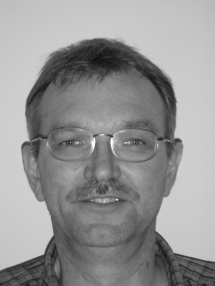 Paweł M. Idziak合作论文数Faculty of Mathematics and Computer Science
Jagiellonian University2
Paweł M. Idziak合作论文数Faculty of Mathematics and Computer Science
Jagiellonian University2 Amin Mazloumian合作论文数ETH Zurich2Axel Schneewind合作论文数1Daniel Koch合作论文数1Felix Weitbrecht合作论文数1
 Funda Gul合作论文数1Figelius Michael合作论文数1Michael Levet合作论文数Dept Comp Sci & Engn, Univ South Carolina1Claudius Proissl合作论文数1
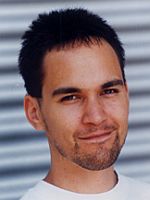 Stefan Funke合作论文数Algorithmics Group, Institut für Formale Methoden der Informatik, University of Stuttgart1
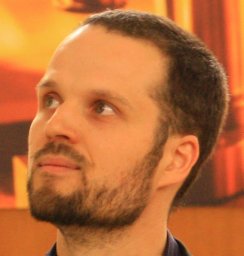 Manuel Bodirsky合作论文数École Polytechnique1
 Laurent Bartholdi合作论文数Institut de Mathématiques B (IMB), École Polytechnique Fédérale de Lausanne (EPFL)1
 Amr Elmasry合作论文数Computer Science Department, Alexandria University1Jyrki Katajainen合作论文数Department of Computing;University of Copenhagen
Leader of the Performance Engineering Laboratory1
Amr Elmasry合作论文数Computer Science Department, Alexandria University1Jyrki Katajainen合作论文数Department of Computing;University of Copenhagen
Leader of the Performance Engineering Laboratory1 Javier Aramayona合作论文数1
 Heiko Dietrich合作论文数School of Mathematics, Faculty of Science, Monash University1Youming Qiao合作论文数1
 Joshua A. Grochow合作论文数Santa Fe Institute1
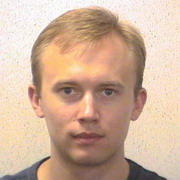 Alexander Ushakov合作论文数Schaefer School of Engineering & Science
Mathematical Sciences1Lukas Fleischer合作论文数1
Alexander Ushakov合作论文数Schaefer School of Engineering & Science
Mathematical Sciences1Lukas Fleischer合作论文数1 Sebastian Wild合作论文数Fachbereich Informatik, Technische Universität Kaiserslautern1
 Géraud Sénizergues合作论文数Laboratoire Bordelais de Recherche en Informatique, Université Bordeaux 11




