Photoexcitation can induce novel states in materials that are inaccessible in equilibrium, a recent example being the light-induced charge density wave (CDW) observed in LaTe_3. Here, we investigate this transient CDW using infrared-pump x-ray-probe scattering at a free-electron laser, with high momentum and time resolution. We find that the transient CDW Bragg peak is broad in reciprocal space, indicating a highly disordered state. The ordering wavevector of the transient state is different from the equilibrium orders that develop in this class of materials - the transient peak appears near (2/7, 0, 0) reciprocal lattice units, whereas the equilibrium a order and c order occur at ≈ (5/7, 0, 0) and (0, 0, 2/7), respectively. The transient CDW is therefore distinct from the equilibrium a order, differing in the relative phase of the CDW displacement between the two equivalent nearly-square Te-Te nets in the conventional unit cell. Our work highlights how photoexcitation can access states with no equilibrium analog, and how x-ray scattering can provide microscopic insight into such elusive phases.
Recent works have suggested that transient suppression of a charge density wave (CDW) by an ultra-short excitation can lead to an inversion of the CDW phase. We experimentally investigate the dynamics of the CDW in K_0.3MoO_3 by time resolved x-ray diffraction after excitation with optical pulses. Our results indicate a transient inversion of the CDW phase close to the surface that evolves into a highly disordered state in less than one picosecond. Numerical simulations solving the Ginzburg-Landau equation including disorder from strong pinning defects reproduce our main observations. Our findings highlight the critical role of disorder in schemes for coherent control in condensed matter systems.
The hard X-ray beamline (Aramis) of the Swiss free-electron laser (SwissFEL) has been in user operation since the end of 2017 and its performance has been continuously monitored and enhanced over the past eight years. From the beginning, spontaneous radiation has been utilized to monitor the behavior of its 13 individual undulator modules: the pointing direction of the electron beam in each module, their alignment relative to the electron beam, and the calibration of their magnetic field strength (K calibration). This article introduces the methods employed at the Aramis beamline to optimize performance using spontaneous radiation, traces the evolution of these improvements, and highlights the recently achieved record performance.
The tender X-ray (2.0-4.0 keV) region provides access to the K-edges of light- and mid-Z elements that are central to catalysis, energy materials and soft condensed matter, but direct single-shot spectral diagnostics in this range are technically challenging. Ruled gratings typically offer limited resolving power, while scattering-based approaches suffer from low efficiency in an on-line geometry. We demonstrate that a bent-crystal spectrometer on the SwissFEL Aramis beamline can be adapted to provide indirect single-shot spectral diagnostics for tender X-ray operation by measuring the natural third harmonic of 2.1 and 2.5 keV self-amplified spontaneous emission pulses at 6.3 and 7.5 keV, respectively. The scaled third-harmonic spectra reproduce the bandwidth obtained from independent monochromator scans of the fundamental, yielding a relative bandwidth of ΔE/E ≃ 3.1‰ at 2.5 keV. An autocorrelation analysis of 2400 shots gives an upper limit on the instrumental resolution better than 6 × 10⁻⁵ at 7.5 keV. The two-dimensional spectral images further reveal the transverse-mode structure and provide sensitive real-time feedback for optimizing free-electron laser performance in the tender X-ray regime.
This paper presents the time-resolved X-ray photoelectron spectroscopy (TR-XPS) setup at the Swiss Free-Electron Laser (SwissFEL) Maloja endstation for investigating the ultrafast dynamics of gas-phase molecules with site-specificity. As a...
We demonstrate a versatile platform for high-power attosecond soft X-ray pulse generation with polarization and photon energy control at the SwissFEL free-electron laser. An isolated high-current spike embedded within a long electron-beam pedestal emits soft X-ray pulses with single-spike spectra and multi-electronvolt bandwidths in the tunable magnetic fields of Apple-X undulators. Demonstrated pulse parameters include a photon energy range of 450–1070 eV, circular as well as linear polarization, and pulse energies from tens to above hundred microjoules. By tuning the longitudinal slice-dependent transverse electron beam orbit we can rapidly switch between attosecond and few femtosecond pulse length. By exploiting magnetic chicanes in the undulator line we can produce two-colour pulse pairs with tunable delay or increase the pulse energy beyond 200 µJ through multi-stage amplification schemes. High-resolution longitudinal phase-space measurements and start-to-end simulations in addition to spectral measurements provide consistent evidence for attosecond-scale pulse durations. This unique combination of high pulse energy and polarization control of attosecond-scale soft X-ray pulses enables the element-specific investigations of spin and chiral dynamics on the natural time scale of electron motion.
We present a series of novel X-ray imaging systems designed specifically for the soft X-ray energy range, optimized for operation in ultra-high-vacuum environments and compactness. These systems achieve micrometre-level spatial resolution with high collection efficiency of visible light by using high numerical aperture optics. Comprehensive characterization of the systems' response was performed, including linearity assessments and X-ray sensitivity measurements, across X-ray photon densities ranging from 1 nJ m−2 to 10−4 nJ m−2. The imaging system was employed for caustic measurements to characterize the X-ray focal spot and to demonstrate its capabilities. Finally, grating interferometry was used to measure the wavefront distortion, yielding a pitch resolution as fine as 3.1 µm. These results underscore the system's potential for high-resolution soft X-ray imaging and wavefront characterization applications.
The reactivity towards C-H bond activation of alkanes with transition metals is determined by the ability of the metal to donate and withdraw electron density in due proportion. Manipulating this reactivity in a controlled way is difficult, because the hypothesized metal-alkane charge-transfer interactions are challenging to access experimentally. Using time-resolved X-ray spectroscopy, we track the charge-transfer interactions in a C-H activating Rh complex and reveal changes in oxidation state as well as valence-orbital energies and character from femtosecond Rh-alkane bond formation to nanosecond C-H bond cleavage. Our X-ray spectroscopic signatures reflect how alkane-to- metal donation determines metal-alkane bond stability and how metal-to-alkane back-donation facilitates C-H bond cleavage by oxidative addition. The ability to dissect charge-transfer interactions on an orbital-level provides new opportunities for manipulating reactivity for C-H activation with transition metals.
Aramis, the hard-X-ray undulator line at the free-electron laser SwissFEL at the Paul Scherrer Institute, has been in user operation at full beam energy since the end of 2018. After steady improvements of the performance until 2022, it proved difficult to maintain the achieved performance level in recent years. Now, after a systematic re-alignment and recalibration of the undulator line and a subsequent optimization of all relevant machine parameters, we have reached a new record photon pulse energy of 1 mJ at 12 keV photon energy. This contribution describes the steps taken and lessons learned to achieve and maintain this high level of performance.
The Soft X-ray Free Electron Laser ATHOS at SwissFEL came into operation at the end of 2019 together with a variable line space grating monochromator. The beamline alternatively distributes the FEL-beam to two end stations namely Maloja and Furka. A third end station, Diavolezza, is currently under construction and will be available in 2026. This article presents the current status of the beamline instrumentation and first commissioning results in the Maloja and Furka branches.
Nonequilibrium states of quantum materials can exhibit exotic properties and enable unprecedented functionality and applications. These transient states are inherently inhomogeneous, characterized by the formation of topologically protected structures, requiring nanometer spatial resolution on femtosecond timescales to resolve their evolution. Using ultrafast total x-ray scattering at a free electron laser and a sophisticated scaling analysis, we gain unique access to the dynamics on the relevant mesoscopic lengthscales. Our results provide direct evidence that ultrafast excitation of LaTe_3 leads to formation of topological vortex strings of the charge density wave. These dislocations of the charge density wave exhibit anomalous, subdiffusive dynamics, slowing the equilibration process, providing rare insight into the nonequilibrium mesoscopic response in a quantum material. Our findings establish a general framework to investigate properties of topological defects, which are expected to be ubiquitous in nonequilibrium phase transitions and may arrest equilibration and enhance competing orders.
Photochemically prepared transition-metal complexes are known to be effective at cleaving the strong C-H bonds of organic molecules in room temperature solutions. There is also ample theoretical evidence that the bidirectional charge-transfer between an incoming alkane C-H group and the transition metal is the decisive interaction in the C-H activation reaction. What is missing, however, are experimental methods to directly probe these interactions in order to reveal what determines reactivity of intermediates and the rate of the reaction. Here, we propose metal specific and time-resolved valence-to-core resonant inelastic X-ray scattering (VtC-RIXS) at the transition metal L-edge as a method to provide a full account of the evolution of metal-alkane interactions during transition-metal mediated C-H activation reactions. For the model system cyclopentadienyl rhodium dicarbonyl (CpRh(CO)2), we demonstrate with a combination of experiment and quantum chemical simulation how the Rh-centered valence-excited final states probed with VtC-RIXS directly reflect changes in donation and back-donation between the alkane C-H group and the transition metal as the reaction proceeds via its intermediates. Following the initial photo-triggered CO dissociation, we find substantial reduction in charge donation onto the metal and the resulting stabilization of metal-centered states as the alkane coordinates to the Rh center in a σ-complex intermediate. C-H bond cleavage in the final oxidative addition step is instead characterized by a substantial increase in back-donation as the new Rh-hydrogen and Rh-carbon bonds are formed. We benchmark and validate our simulations against experimental steady-state measurements. With our study, we predict the key spectral fingerprints for future time-resolved experiments of C-H activation reactions with CpRh(CO)2 and related compounds.
X-ray free-electron lasers (FELs) are powerful photon sources offering a wide wavelength range, subfemtosecond pulse duration, and high brightness. Most x-ray FELs are based on self-amplified spontaneous emission (SASE). SASE-FEL radiation has excellent transverse but only limited longitudinal coherence, with power and spectral profiles consisting of multiple randomly distributed spikes. In this Letter, we present the first experimental demonstration of mode-locked SASE, which generates periodic trains of phase-locked subfemtosecond pulses, thus providing an x-ray analog of the optical frequency comb. Our approach combines the mode-coupled SASE scheme, where magnetic chicanes between the undulator modules of the FEL increase the coherence of the output radiation, and an external optical laser that restricts the FEL amplification to periodic and short regions of the electron bunch. The work relies on evidence in the frequency and time domains for photons and electrons, respectively, and will benefit investigations of ultrafast dynamics as well as coherent spectroscopy, and enable new types of experiments requiring phase-correlated x-ray pulses.
We propose, using simulated RIXS signatures, a way of spectroscopically accessing the “two-way” charge transfer interactions between the C–H bond and the metal during C–H activation, thereby verifying and motivating orbital correlation diagrams.
X-ray free-electron lasers (FELs) are modern research tools with applications in multiple scientific fields. Standard x-ray FEL pulses are produced by the self-amplified spontaneous emission (SASE) mechanism. SASE-FEL pulses have high power, short duration, and excellent transverse coherence but exhibit poor temporal coherence with power and spectral profiles consisting of multiple randomly distributed spikes. Here, we present the demonstration of two modes that enhance the temporal coherence of SASE-FEL radiation: mode-coupled and high-brightness SASE. Both schemes are based on delaying the electron beam with magnetic chicanes placed between the undulator modules of the FEL facility. First, we show the generation of frequency combs with tunable peak separation via the mode-coupled SASE scheme. Second, we present a proof-of-principle demonstration of the high-brightness SASE mechanism, producing FEL pulses with a bandwidth reduction up to a factor of 3 with respect to standard SASE pulses. The demonstration was done at Athos, the soft x-ray beamline of SwissFEL, for photon energies between 500 and 600 eV. Our work will benefit current applications and may open up new research areas requiring frequency combs or narrow bandwidths.
To fully exploit ultra-short X-ray pulse durations routinely available at X-ray free-electron lasers to follow out-of-equilibrium dynamics, inherent arrival time fluctuations of the X-ray pulse with an external perturbing laser pulse need to be measured. In this work, two methods of arrival time measurement were compared to measure the arrival time jitter of hard X-ray pulses. The methods were photoelectron streaking by a THz field and a transient refractive index change of a semiconductor. The methods were validated by shot-to-shot correction of a pump–probe transient reflectivity measurement. An ultimate shot-to-shot full width at half-maximum error between the devices of 19.2 ± 0.1 fs was measured.
Use of THz photoelectron streaking as an arrival time-tool is presented. Complexities in calibration of the THz field as well as high fidelity, single shot photoelectron spectra giving rise to sources of errors is discussed.
 Eduard Prat合作论文数15
 Sven Reiche合作论文数Department Large Research Facilities, Paul Scherrer Institut15
 Christopher Milne合作论文数European XFEL14Frank Van Mourik合作论文数EPFL13
 John W G Tisch合作论文数Department of Physics, Faculty of Natural Sciences, Imperial College London12
 Tobias Witting合作论文数Max-Born-Institut Für Nichtlineare Optik Und Kurzzeitspektroskopie12
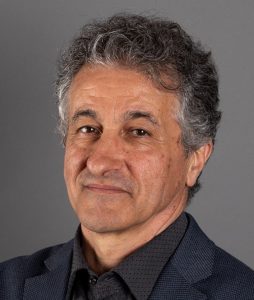 Majed Chergui合作论文数Laboratoire de Spectroscopie Ultrarapide, Faculty of Basic Sciences, Ecole Polytechnique Fédérale de Lausanne;Lausanne Centre for Ultrafast Science, Faculty of Basic Sciences, Ecole Polytechnique Fédérale de Lausanne12
 Philipp Dijkstal合作论文数11
 Marco Calvi合作论文数Photon Science Division, Paul Scherrer Institute11Deng Yunpei合作论文数11
 Cirelli Claudio合作论文数Dept Phys, Swiss Fed Inst Technol11
 Roman Mankowsky合作论文数Paul Scherrer Institute11Thomas Schietinger合作论文数11
 Gregor Knopp合作论文数11
 Jon Marangos合作论文数Department of Physics, Faculty of Natural Sciences, Imperial College London11
 William Okell合作论文数Blackett Lab, Univ London Imperial10Svetina Cristian合作论文数Elettra Sincrotrone Trieste10Didier Voulot合作论文数9Andre Al Haddad合作论文数Ecole Polytech Fed Lausanne, Lab Spectroscopie Ultrarapide, ISIC FSB, CH-1015 Lausanne, Switzerland9Follath Rolf合作论文数9
 Luc Patthey合作论文数9Andreas Dax合作论文数9
 Pavle Juranic合作论文数Laboratory for Advanced Spectroscopy and X-ray Sources, Center for Photon Science, Paul Scherrer Institute9
 Henrik Till Lemke合作论文数Laboratory for Condensed Matter, Center for Photon Science, Paul Scherrer Institute9Philip J. M. Johnson合作论文数8Serhane Zerdane合作论文数CNRS, Univ Rennes8Christoph Kittel合作论文数8
 Nicole Hiller合作论文数Paul Scherrer Inst8
 Christoph Bostedt合作论文数Laboratory for Ultrafast X-ray Sciences, Ecole Polytechnique Federale de Lausanne;Laboratory for Synchrotron Radiation and Femtochemistry, Paul Scherrer Institut8Martin Huppert合作论文数8Eugenio Ferrari合作论文数8Dmitry Ozerov合作论文数Paul Scherrer Institute8
 Carlo Vicario合作论文数Istituto Nazionale di Fisica Nucleare;Laboratori Nazionali di Frascati;Istituto Nazionale di Fisica Nucleare, Laboratori Nazionali di Frascati8a trisorio合作论文数7José Ojeda合作论文数7
 Paul Beaud合作论文数Paul Scherrer Institut7
 U. Flechsig合作论文数7
 Edoardo Baldini合作论文数Department of Physics, College of Natural Sciences, University of Texas at Austin6Mathias Sander合作论文数6Bill Pedrini合作论文数6
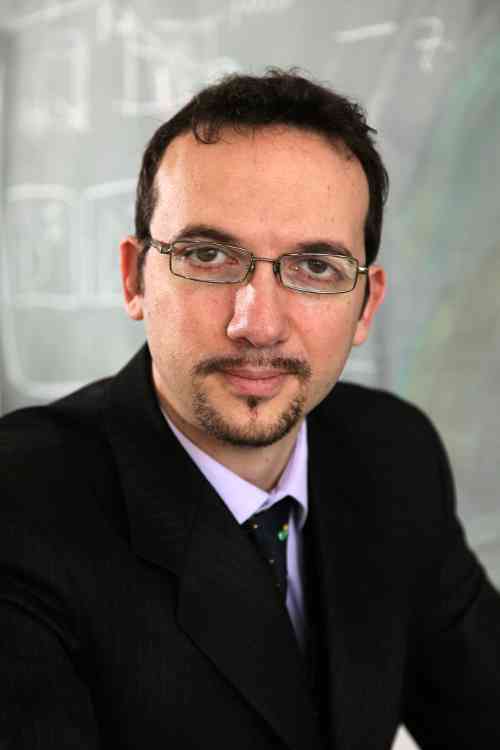 Fabrizio Carbone合作论文数Laboratory for Ultrafast Microscopy and Electron Scattering, École Polytechnique Fédérale Lausanne6
 Andreas Mann合作论文数6
 Kirsten Schnorr合作论文数Max-Planck-Institut für Kernphysik, 69117, Heidelberg, Germany.6
 Wach Anna合作论文数6
 Thomas Justus Schmidt合作论文数Center for Energy and Environmental Sciences, Paul Scherrer Institute;ETH Zürich6
 Steven Lee Johnson合作论文数6F Frank合作论文数5
 Giulia F. Mancini合作论文数Univ Colorado, JILA, 440 UCB, Boulder, CO 80309 USA5
 Urs Staub合作论文数Paul Scherrer Inst, Swiss Light Source5




