Artificial Neural Network (ANN) is a supervised learning nonlinear complex model. This characteristic enables ANN to be used in nonlinear system modeling and classification applications. This research work proposed a technique called Wavelet Neural Network (WNN), and in the hidden layers of WNN, Morlet and Mexican are used as an activation function. During the processing, the WNN gets stuck in the local minimum causing slow convergence. For evaluating such kinds of problems, numerous algorithms have been tried and used. Consequently, this proposed research work used a novel meta-heuristic search technique called Accelerated Particle Swarm Optimization (APSO) algorithm combined with the WNN. Due to the effective convergence and fast searching toward an optimal solution, the APSO algorithm is used. In the proposed APSOWNN algorithm, APSO searches for the best sub-search solution. In conclusion, this model is assessed on the basis of total of three different datasets like the 4-bit OR, 7-bit Parity and IRIS benchmark classification problems, and its efficiency is equated with criterion methods such like Wavelet Back Propagation Neural Network (WBPNN), Artificial Bee Colony Wavelet Neural Network (ABCWNN) and WNN. Finally, from the results of simulation, it has been concluded that the proposed algorithm’s performance is much better, as compared to the state-of-the-art algorithms in terms of mean square error.(MSE) and accuracy.
Image denoising is a vital pre-processing phase, used to refine the image quality and make it more informative. Many image-denoising algorithms have been proposed with their own pros and cons. This paper presents a comprehensive study of the median filter and its different variants to reduce or remove the impulse noise from gray scale images. These filters are compared with respect to their functionality, time complexity and relative performance. For performance evaluation of the existing algorithms, extensive MATLAB based simulations have been carried out on a set of images. For benchmarking the relative performance, we have used Peak Signal to Noise Ratio (PSNR), Root Mean Square Error (RMSE), Universal Image Quality Index (UQI), Structural Similarity Index (SSIM) and Edge-strength Similarity (ESSIM) as quality assessment metrics. The Extended median filter (EMF) and Modified BDND are best in terms of relative statistical ratios and pleasant visual results where IAMF is having the best time complexity among existing algorithms.
Sustainable Cloud Computing is the modern era’s most popular technology. It is improving daily, offering billions of people sustainable services. Currently, three deployment models are available: (1) public, (2) private, and (3) hybrid cloud. Recently, each deployment model has undergone extensive research. However, relatively little work has been carried out regarding clients’ adoption of sustainable public cloud computing (PCC). We are particularly interested in this area because PCC is widely used worldwide. As evident from the literature, there is no up-to-date systematic literature review (SLR) on the challenges clients confront in PCC. There is a gap that needs urgent attention in this area. We produced an SLR by examining the existing cloud computing models in this research. We concentrated on the challenges encountered by clients during user adoption of a sustainable PCC. We uncovered a total of 29 obstacles that clients confront when adopting sustainable PCC. In 2020, 18 of the 29 challenges were reported. This demonstrates the tremendous threat that PCC still faces. Nineteen of these are considered critical challenges to us. We consider a challenge a critical challenge if its occurrence in the final selected sample of the paper is greater than 20%. These challenges will negatively affect client adoption in PCC. Furthermore, we performed three different analyses on the critical challenges. Our analysis may indicate that these challenges are significant for all the continents. These challenges vary with the passage of time and with the venue of publication. Our results will assist the client’s organization in understanding the issue. Furthermore, it will also help the vendor’s organization determine the potential solutions to the highlighted challenges.
Classification is a common problem in various fields of life, and the key challenging task in data mining. The primary objective of the classification process is to classify the given dataset in a defined class label for all data. Many research papers widely used classification in the medical sector. Various researches have been carried out to classify medical data using different techniques, such as High Order Neural Network (HONN) combined with Back-Propagation Neural Network (BPNN) as a learning algorithm. Due to the increased data complexity, the back-propagation algorithm faced problems of slow convergence. The Back-Propagation (BP) using the gradient descent technique has the possibility of getting stuck in local minima. So, the BP algorithm may cause difficulties in finding the global minima of the error function. This paper proposed a high-order Functional Link Neural Network (FLNN). The proposed FLNN model is integrated with a metaheuristic-based searching algorithm called Accelerated Particle Swarm Optimization (APSO). The performance of the proposed Accelerated Particle Swarm Optimization Functional Link Neural Network (APSOFLNN) model is validated with various medical datasets and compared to traditional techniques such as Accelerated Particle Swarm Optimization Functional Link Back-Propagation (APSOFLBP), and Artificial Bee Colony Functional Link Neural Network (ABCFLNN). The simulation results showed that the proposed APSOFLNN algorithm for the used benchmarked datasets shows good results in terms of the mean square error (MSE) and accuracy in comparison to the traditional techniques.
Flying Ad hoc Network (FANET) presents various challenges during communication due to the dynamic nature of network and ever-changing topology. Owing to high mobility, it is difficult to ensure a well-connected network and link stability. Thus, flying nodes have a higher chance of becoming disconnected from the network. In order to overcome these discrepancies, this work provides a well-connected network, reducing the number of isolated nodes in FANETs utilizing the depth of machine learning by taking inspiration from biology. Every biological species is innately intelligent and has strong learning ability. Moreover, they can also learn from existing active events and can take decision based on previous experience. There may be some unusual events such as attack of predator or when it may become isolated from the rest of the community. This ability helps them to maintain connectivity and concentrate on target. In this work, we take inspiration from dragonflies, which provide novel swarming behaviors of dynamic swarming and static swarming. The nodes in FANETs learn from the dragonflies and use this learning to search for a neighbor, ensuring connectivity. Moreover, to avoid collision and establish larger coverage area, they employ separation and alignment. In case a drone is isolated, it strives to become part of the network using machine learning (ML) via the dragonfly algorithm (DA). The proposed scheme results in larger coverage area with reduced number of isolated drones. This improves the connectivity in FANETs adding to the network intelligence via learning through DA, allowing communication despite the complexity of mobility and dynamic network topology.
An exact analysis of heat transfer past an infinite inclined plate that applies arbitrary shear stress to the fluid with Newtonian heating is presented, The fluid is considered electrically conducting and passing through a porous medium, The influence of thermal radiation in the enerh'Y equations is also considered, General solutions of the problem are obtained in closed form using the Laplace transform technique, They satisfy the governing equations, initial and boundary conditions and can set up a huge number of exact solutions correlatives to various fluid motions, The effects of various parameters on velocity and temperature profiles are shown graphically and discussed in details.
 Abdullah Khan合作论文数Institute of Business and Management Science, Agricultural University Peshawar3
 Muhammad Imran合作论文数Univ Agr, Inst Comp Sci & Informat Technol2
 Fasee Ullah合作论文数Dept. of Comput. Sci., City Univ. of Sci. & Inf. Technol.;c;Dept. of Comput. Sci., City Univ. of Sci. & Inf. Technol.2
 Javed Bangash合作论文数2
 Asfandyar Khan合作论文数2
 Muhammad Ishaq合作论文数IQRA National University Peshawar2
 Muhammad Asim合作论文数1Junaid Bukhari合作论文数1
 Kashif Nazar合作论文数Dept Math, COMSATS Univ Islamabad1
 Anwar Shah合作论文数1
 Shahzad Hameed合作论文数Dept Elect, Quaid I Azam Univ1Naveen Tiwari合作论文数1HUA Qiaozhi (花俏枝)合作论文数1Ahmed Alghamdi合作论文数1Gaurav Mishra合作论文数1
 Sultan Alshamrani合作论文数Taif Univ, Coll Comp & Informat Technol, Dept Informat Technol, POB 11099, At Taif 21944, Saudi Arabia1
 M. Irfan Uddin合作论文数Kohat Univ Sci & Technol, Inst Comp, Kohat, Pakistan1
 Saima Anwar Lashari合作论文数Fac. of Comput. Sci. & Inf. Technol., Univ. Tun Hussein Onn Malaysia;c;Fac. of Comput. Sci. & Inf. Technol., Univ. Tun Hussein Onn Malaysia1
 Sheeraz Ahmed合作论文数1
 Qurratul-Ain Minhas合作论文数1
 Atif Khan合作论文数1
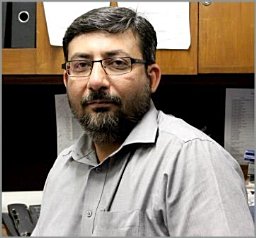 Md. Imran Ahmed合作论文数Global University Bangladesh1
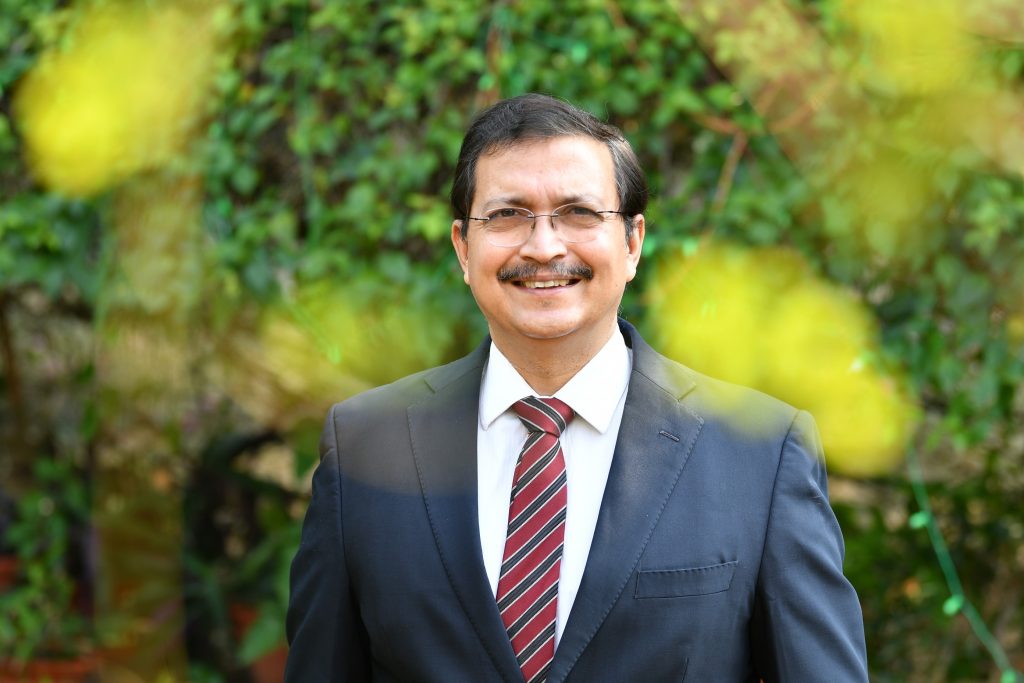 Sachchida N. Tripathi合作论文数Dept Civil Engn, Indian Inst Technol1
 Ilyas Khan合作论文数Basic Engineering Sciences Department, College of Engineering, Majmaah University1Sharidan Shafie合作论文数UTM1
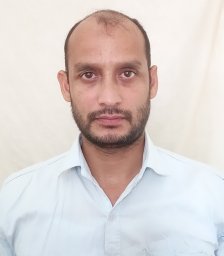 Dinesh Nath合作论文数1
 B. K. Sapra合作论文数Safety and Environment Group;Bhabha Atomic Research Centre;Safety and Environment Group, Bhabha Atomic Research Centre1
 Manish Joshi合作论文数Department of Computer Science, North Maharashtra University, Jalgaon, India1
 Jahangir Sarwar Khan合作论文数Department of Surgery, Holy Family Hospital1




