Algorithms for computational imaging and computer vision are rapidly evolving, and hardware must follow suit: the next generation of image signal processors (ISPs) must be "programmable" to support new algorithms created with high-level frameworks. In this work, we compare flexible ISP architectures, using applications written in the Darkroom image processing language. We target two fundamental architecture classes: programmable in time, as represented by SIMD, and programmable in space, as typified by coarse grain reconfigurable array architectures (CGRA).We consider several optimizations on these two base architectures, such as register file partitioning for SIMD, bus based routing and pipelined wires for CGRA, and line buffer variations. After these optimizations on average, CGRA provides 1.6x better energy efficiency and 1.4x better compute density versus a SIMD solution, and 1.4x the energy efficiency and 3.1x the compute density of an FPGA. However the cost of providing general programmability is still high: compared to an ASIC, CGRA has 6x worse energy and area efficiency, and this ratio would be roughly 10x if memory dominated applications were excluded.
Specialized image signal processors (ISPs) exploit the structure of image processing pipelines to minimize memory bandwidth using the architectural pattern of line-buffering, where all intermediate data between each stage is stored in small on-chip buffers. This provides high energy efficiency, allowing long pipelines with tera-op/sec. image processing in battery-powered devices, but traditionally requires painstaking manual design in hardware. Based on this pattern, we present Darkroom, a language and compiler for image processing. The semantics of the Darkroom language allow it to compile programs directly into line-buffered pipelines, with all intermediate values in local line-buffer storage, eliminating unnecessary communication with off-chip DRAM. We formulate the problem of optimally scheduling line-buffered pipelines to minimize buffering as an integer linear program. Finally, given an optimally scheduled pipeline, Darkroom synthesizes hardware descriptions for ASIC or FPGA, or fast CPU code. We evaluate Darkroom implementations of a range of applications, including a camera pipeline, low-level feature detection algorithms, and deblurring. For many applications, we demonstrate gigapixel/sec. performance in under 0.5mm(2) of ASIC silicon at 250 mW (simulated on a 45nm foundry process), real-time 1080p/60 video processing using a fraction of the resources of a modern FPGA, and tens of megapixels/sec. of throughput on a quad-core x86 processor.
 Mark Horowitz合作论文数Department of Electrical Engineering, Stanford University;Department of Computer Science, School of Engineering, Stanford University2
 John Brunhaver合作论文数1noy cohen合作论文数Department of Electrical Engineering, Stanford University1
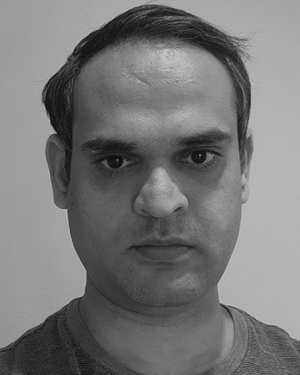 Nikhil Bhagdikar合作论文数Stanford University1
 Jonathan Ragan-Kelley合作论文数Computer Science & Artificial Intelligence Lab, Schwarzman College of Computing, Massachusetts Institute of Technology;Department of Electrical Engineering & Computer Science, Massachusetts Institute of Technology1Steven Bell合作论文数1
 James Hegarty合作论文数Pixar Animation Studios, Stanford University1
 Zachary Devito合作论文数Meta AI1
 Stephen Richardson合作论文数Stanford University1
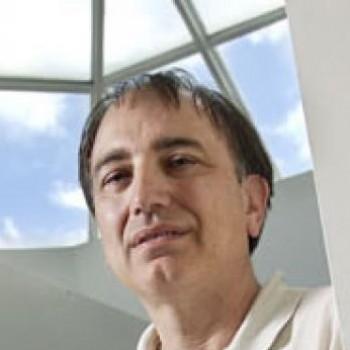 Pat Hanrahan合作论文数Department of Computer Science, School of Engineering, Stanford University;Department of Electrical Engineering, School of Engineering, Stanford University;Computer Graphics Laboratory, Stanford University;Institute for Computational and Mathematical Engineering, Stanford University1
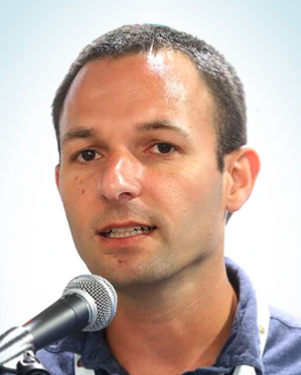 Shahar Kvatinsky合作论文数Andrew and Erna Viterbi Faculty of Electrical and Computer Engineering, Technion – Israel Institute of Technology1
 Ardavan Pedram合作论文数Department of Electrical Engineering, Stanford University;NVIDIA1




