High school students learn the basic voltaic and electrolytic cell concepts during their last year prior to entering an undergraduate teacher-education science degree. During the 4 years of university, students complete a sequence of topics designed to build on conceptual understanding presented in previous years. At the end of their degrees, graduating students are expected to have developed a comprehensive understanding of the subject that they are required to teach. In this research, we designed and developed a 12-item diagnostic instrument which addressed 10 propositional content knowledge statements based on the grade 12 chemistry curriculum that will be taught. In this cross-section study, 50 grade 12 high school students and 216 preservice chemistry teacher education undergraduates in years 1–4 responded to the Electrochemistry Conceptual Test (ECT) consisting of 12 two-tier multiple-choice items. The instrument was content validated by authors and peers prior to administration and when implemented had a Cronbach alpha reliability coefficient of 0.64. Overall, the students across years possessed basic knowledge about electrochemical cells but frequently were unable to explain their knowledge. While the grand mean trend in understanding electrochemistry concepts from high school through university study did show some improvement, the mean scores remained relatively low, and the year group means per item showed no such trend exacerbated by items having varying levels of difficulty. Based on this research, the lack in understanding about electrochemical concepts suggests that instruction in high school and ongoing university chemistry education faces ongoing challenges.
The ultimate aim of this research was to explore the contribution of teacher preparedness or readiness (in terms of their academic background, confidence in teaching science and career satisfaction) towards the achievement in science among Malaysian and Singaporean eighth-graders. The TIMSS 2011 international assessment of student achievement at the eighth grade comprises written tests together with sets of questionnaires that gather information on the educational and social contexts for achievement in science. The TIMSS 2011 science achievement scale was used to gauge Grade 8 students’ science achievement. Confidence in Teaching Science Scale and Teacher Career Satisfaction Scale was used to explore science teachers’ confidence in teaching science and career statisfaction, respectively. Data were obtained from 5,733 Malaysian students and 5,927 Singaporean students who participated in the TIMSS 2011 study using two-stage random sample design.Higher science achievement among Singaporean eighth grade students was related to teachers having more teaching experience, being confident in science teaching, and being satisfied with careers . However, these findings were not evident in Malaysia. The findings of such a research may help science educators and policy makers to identify and nurture the strong learning prerequisites of early adolescents in different education systems. Keywords: confidence in teaching science, career satisfaction, science achievement, TIMSS, teacher preparation
The purpose of this research was to investigate an efficient method to assess year 8 (age 13–14) students’ conceptual understanding of heat and temperature concepts. Two different types of instruments were used in this study: Type 1, consisting of multiple-choice items with open-ended justifications; and Type 2, consisting of two-tier multiple-choice items. Each of the instruments was administered to two separate cohorts of 173 and 143 year 8 students of similar achievement. The findings indicated that the students were better able to show their understanding in the two-tier multiple-choice items. Hence, based on this investigation, two-tier multiple-choice items may be more suitable for evaluating year 8 students’ understanding of science concepts.
This paper presents the effects of a cognitive acceleration program in mathematics classes on Tongan students’ achievements, motivation and self-regulation. Cognitive Acceleration in Mathematics Education (CAME) is a program developed at King’s College and implemented worldwide with the aim of improving students’ thinking skills, mathematics performance and attitudes. The first author adapted the program materials to Tongan educational context and provided support to participating teachers for 8 months. This study employed a quasi-experimental design with 219 Year 8 students as the experimental group and 119 Year 8 students as the comparison group. There were a significant differences in the mean scores between the pre-test and post-test of the three instruments that were employed in the study, indicating that learning mathematics under the CAME program had a positive effect on levels of students’ self-regulation, motivation and mathematics achievement. Students also reported changes to the ways they learn mathematics.
This study investigated the understanding of science process skills (SPS) of 329 science teachers from 52 primary schools selected by random sampling. The understanding of SPS was measured in terms of conceptual and operational aspects of SPS using an instrument called the Science Process Skills Questionnaire (SPSQ) with a Cronbach's alpha reliability of 0.88. The findings showed that the teachers' conceptual understanding of SPS was much weaker than their practical application of SPS. The teachers' understanding of SPS differed by their teaching qualifications but not so much by their teaching experience. Emphasis needs to be given to both conceptual and operational understanding of SPS during pre-service and in-service teacher education to enable science teachers to use the skills and implement inquiry-based lessons in schools.
TIMSS routinely presents very powerful evidence showing that students with more positive motivation toward learning science have substantially higher achievement. The results from TIMSS 2011 are consistent with previous assessments. This study explored the predictive effects of motivation toward learning science on science achievement among Malaysian and Singaporean eighth graders who participated in the TIMSS 2011. In this study, students' interest in and liking of learning science, students' understanding about the importance and the usefulness of the science subject, and students' self-confidence or self-concept in their ability to learn science were measured. Secondary data of the study were obtained from 5,733 Malaysian students and 5,927 Singaporean students who participated in the TIMSS 2011. The results of the present study indicated that eighth-graders' liking and valuing of learning science were positively associated with Malaysian and Singaporean Grade 8 students' science achievement.
Studies have shown that resources are crucial for improving schooling, perhaps even more so in developing countries than in economically developed countries, where adequate school structures and material resources may be taken for granted. Recent research reviews suggest that computer use continues to grow in mathematics and science instruction, and that it can positively affect students’ mathematics and science achievement. Hence, the most successful schools tend to have students that are relatively economically affluent and speak the language of the instruction. Successful schools also are likely to have better working conditions and facilities as well as more instructional materials. The ultimate goal of this study is to investigate the contribution of school resources towards the achievement in science among Malaysian and Singaporean eighth-graders. Data were obtained from 5,733 Malaysian students and 5,927 Singaporean students who participated in the TIMSS 2011.
Background: Enhancing students' metacognitive abilities will help to facilitate their understanding of science concepts.Purpose: The study was designed to conduct and evaluate the effectiveness of a repertoire of interventions aimed at enhancing secondary school students' metacognitive capabilities and their achievements in science.Sample: A class of 35 Year 9 students participated in the study.Design and methods: The study involved a pre-post design, conducted by the first author as part of the regular designated science programme in a class taught by him.In order to enhance the students' metacognitive capabilities, the first author employed clearly stated focused outcomes, engaging them in collaborative group work, reading scientific texts and using concept mapping techniques during classroom instruction. The data to evaluate the effectiveness of the metacognitive interventions were obtained from pre- and post-test results of two metacognitive questionnaires, the Metacognitive Support Questionnaire (MSpQ) and the Metacognitive Strategies Questionnaire (MStQ), and data from interviews. In addition, pre-test and post-test scores were used from a two-tier multiple-choice test on Light.Results: The results showed gains in the MSpQ but not in the MStQ. However, the qualitative data from interviews suggested high metacognitive capabilities amongst the high- and average-achieving students at the end of the study. Students gains were also evident from the test scores in the Light test.Conclusion: Although the quantitative data obtained from the Metacognitive Strategies Questionnaire did not show significant gains in the students' metacognitive strategies, the qualitative data from interviews suggested positive perceptions of students' metacognitive strategies amongst the high- and average-achieving students. Data from the Metacognitive Support Questionnaire showed that there were significant gains in the students' perceptions of their metacognitive support implying that the majority of the students perceived that their learning environment was oriented towards the development of their metacognitive capabilities. The effect of the metacognitive interventions on students' achievement in the Light test resulted in students displaying the correct declarative knowledge, but quite often they lacked the procedural knowledge by failing to explain their answers correctly.
Using a quantitative case study design, the Acids-Bases Chemistry Achievement Test (ABCAT) was developed to evaluate the extent to which students in Malaysian secondary schools achieved the intended curriculum on acid-base concepts. Responses were obtained from 260 Form 5 (Grade 11) students from five schools to initially create the two-tier multiple-choice items. After pilot testing, the final version of the ABCAT consisting of 19 items, 10 multiple-choice items and nine two-tier multiple-choice items, was administered to 304 students in Form 4 (Grade 10) from seven secondary schools when 12 alternative conceptions were identified by at least 10% of the students. Of these alternative conceptions, three were displayed by less than 15% of students. The two-tier multiple-choice items had a slightly higher internal consistency reliability (Cronbach’s alpha) of 0.54 than the multiple-choices items with a value of 0.42. The data from the study suggest that the ABCAT has shown the extent to which the teaching has reduced the incidence of students’ scientifically inappropriate understandings; for example, in nine of the 19 items, no alternative conceptions were displayed by the students.
This study investigated the understanding of diffusion, osmosis and particle theory of matter concepts among 192 pre-service science teachers in Saudi Arabia using a 17-item two-tier multiple-choice diagnostic test. The data analysis showed that the pre-service teachers' understanding of osmosis and diffusion concepts was mildly correlated with their understanding of particle theory. We also identified 18 common alternative conceptions in these topics. The findings suggest that greater time and attention needs to be invested in the teaching of particle theory for Saudi pre-service teachers to ensure their scientific understanding of diffusion and osmosis concepts, so that they can help students understand the concepts better.
The purpose of this study was to review the extant literature on chemical equilibrium research in high school chemistry. The review involved understanding of the nature of chemical equilibrium, particularly about chemical reactions not going to completion, the reversibility of chemical reactions and the idea of dynamic equilibrium. Associated with these understandings was the derivation of the Equilibrium Law and the significance of the equilibrium constant followed by the use of Le Chatelier’s Principle including the limitations of this principle. The review then focused on the common alternative conceptions associated with the chemical equilibrium concept. The study next considered these features in the Malaysian context. For this purpose, the researchers formulated an instructional program relevant to the Malaysian Higher School Certificate curriculum that was implemented over 11 hours with 56 high-achieving students in Year 12 from a private secondary school. To evaluate students’ understanding of chemical equilibrium concepts after instruction the Chemical Equilibrium Conceptual Test-1 (CECT-1) was administered after instruction. The test consisted of 10 two-tier multiple-choice items that were adapted from previously developed questionnaires. The results indicated very limited understanding of the relevant concepts. The total scores in the CECT-1 ranged from 0 to 9 (out of a maximum score of 10) with a mean score of 5.04. Less than 50% of students correctly answered five of the 10 items. The findings suggest the need for teachers to address students’ preconceptions about chemical equilibrium concepts and use appropriate strategies to enable students to acquire scientifically acceptable understandings.
The efficacy of problem-based learning (PBL) in an analytical chemistry laboratory course was studied using a programme that was designed and implemented with 20 students in a treatment group over 10 weeks. Data from 26 students in a traditional analytical chemistry laboratory course were used for comparison. Differences in the creative thinking ability of students in both the treatment and control groups were evaluated before and at the end of the implementation of the programme, using the Torrance Tests of Creative Thinking. In addition, changes in students' self-regulated learning skills using the Self-Regulated Learning Interview Schedule (SRLIS) and their self-evaluation proficiency were evaluated. Analysis of covariance showed that the creative thinking ability of the treatment group had improved statistically significantly after the PBL course (p<0.001) compared to that of the students in the comparison group. PBL was shown to have a positive effect on creative thinking ability. The SRLIS test showed that students in the treatment group used self-regulated learning strategies more frequently than students in the comparison group. According to the results of the self-evaluation, students became more positive and confident in problem-solving and group work as the semester progressed. Overall, PBL was shown to be an effective pedagogical instructional strategy for enhancing chemistry students' creative thinking ability, self-regulated learning skills and self-evaluation.
Grades 10 and 11 students’ (N=172) understanding of particle theory concepts was assessed using the Particle Theory Diagnostic Instrument (PTDI), consisting of 11 two-tier multiple-choice items in a pretest–posttest design after implementing an intervention instructional programme. The intervention programme involving eight lessons of about 45-min duration each included teacher demonstrations and student practical activities followed by class discussions to explain students’ observations. The 11 items assessed understanding in three key conceptual categories: (1) intermolecular spacing in matter (CC1), (2) the influence of intermolecular forces on changes of state (CC2), and (3) diffusion in liquids and gases (CC3), using a quantitative methodology. There was a statistically significant improvement in overall mean scores among students from the pretest (M=4.08, SD=1.79) to the posttest [M=6.04, SD=2.49, t (171)=10.10, p<0.001]. However, the students did not display a good understanding about the concepts in the three conceptual categories: only 30.8% of students correctly answered all four items in CC1, 7.0% correctly answered all three items in CC2, and 16.3% correctly answered all four items in CC3.
The purpose of this study was to investigate the levels of energy literacy among 276 Form 2 (Grade 8) Malaysian students as no similar study has been previously conducted in the country, as well as the contribution of students' energy-related knowledge and attitudes on their energy-related behaviors. This was a non-experimental quantitative research using the sample survey method to collect data by using the 'Energy Literacy Questionnaire' (ELQ). Independent samples t-test, Pearson product-moment correlation, and multiple linear re-gressions were used to analyse the data. The study found that levels of energy literacy were relatively low suggesting that the implemented curriculum had failed to meet the specifica-tions of the intended curriculum that emphasises the relevance of energy-related issues to students' everyday life experiences. The authors suggest that there is a need to emphasise the importance of a context-based curriculum specifying criteria that embrace broad energy literacy with benchmarks related not just to science-related energy content but also recog-nizing the importance of practical energy-related knowledge, decision making skills, value judgments, ethical and moral dimensions, and issues of personal responsibility related to energy resource development and consumption in Malaysia.
This study integrated cooperative learning methods in classroom instruction to investigate the effects on achievement and conceptual change in matter concepts involving 70 fifth grade students after 10 weeks of instruction. Data obtained from the administration of two achievement tests indicated that there were significant differences between the pre-test and post-test mean scores on the Matter Unit Test as well as on the Matter Diagnostic Test. Since the notion of status is fundamental to the Conceptual Change Model (Posner, Hewson, Strike & Gertzog, 1982) this study also investigated the students' ability to determine the status of their own conceptions. Analysis of the students' use of written descriptors provided varied evidence of their ability to use technical language (intelligible, plausible, or fruitful) and effectively determine the status of their own conceptions.
In view of the current debate in Malaysia about the teaching of science and mathematics in English, a qualitative study was undertaken involving a purposeful sampling of three non-physics teachers to ascertain how well equipped they were with the necessary pedagogical content knowledge relating to the teaching of the topic of ‘heat energy’ in the second language (i.e., English) to cater to the needs of Year 10 students of diverse interests and abilities in the subject. Data were obtained using video recordings from 10 classroom observations of the teaching and learning of the following topics/concepts: (1) thermal equilibrium, (2) heat capacity, (3) specific heat capacity, (4) latent heat, (5) specific latent heat, and (6) Boyle’s Law, Charles’ Law and the Pressure Law. This video analysis was triangulated using data from interviews with the three teachers. The findings revealed that the teachers possessed a variety of instructional strategies to teach the concepts in English and displayed commendable ingenuity to further facilitate student understanding by explaining in the Malay language when students experienced difficulty, while at the same time insisting that students used the appropriate English terms. In addition, when not familiar with certain physics apparatus, the teachers opted for simulations of the relevant experiments. As a result, the study has introduced a new component to PCK, i.e., the role of a second language in teaching science.
This study was conducted with 330 Form 4 (grade 10) students (aged 15 – 16 years) who were involved in a course of instruction on electrolysis concepts. The main purposes of this study were (1) to assess high school chemistry students’ understanding of 19 major principles of electrolysis using a recently developed 2-tier multiple-choice diagnostic instrument, the Electrolysis Diagnostic Instrument (EDI), and (2) to assess students’ confidence levels in displaying their knowledge and understanding of these electrolysis concepts. Analysis of students’ responses to the EDI showed that they displayed very limited understanding of the electrolytic processes involving molten compounds and aqueous solutions of compounds, with a mean score of 6.82 (out of a possible maximum of 17). Students were found to possess content knowledge about several electrolysis processes but did not provide suitable explanations for the changes that had occurred, with less than 45 % of students displaying scientifically acceptable understandings about electrolysis. In addition, students displayed limited confidence about making the correct selections for the items; yet, in 16 of the 17 items, the percentage of students who were confident that they had selected the correct answer to an item was higher than the actual percentage of students who correctly answered the corresponding item. The findings suggest several implications for classroom instruction on the electrolysis topic that need to be addressed in order to facilitate better understanding by students of electrolysis concepts.
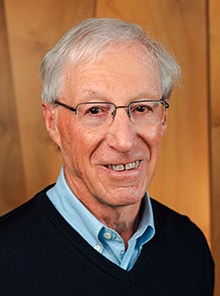 David Treagust合作论文数School of Education, Curtin University;Faculty of Humanities, Curtin University38
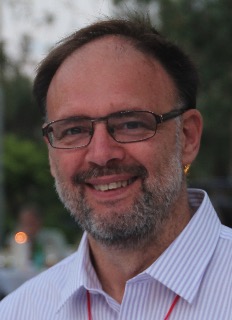 Mauro Mocerino合作论文数School of Molecular and Life Sciences, Curtin University;Faculty of Science and Engineering, Curtin University8
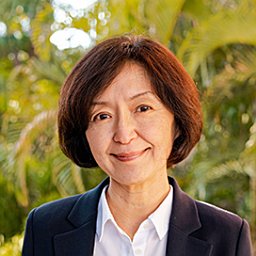 Mihye Won合作论文数6
 Yoon Fah Lay合作论文数Universiti of Malaysia Sabah5
 Lilia Bt. Halim合作论文数Centre of STEM Enculturation, Faculty of Education, Universiti Kebangsaan Malaysia;Jabatan Perkaedahan dan Amalan, Fakulti Pendidikan, Universiti Kebangsaan Malaysia4
 Mageswary A/P Karpudewan合作论文数School of Educational Studies, Universiti Sains Malaysia4
 Sri Rahayu合作论文数3
 Ahmad Nurulazam合作论文数School of Educational Studies, University of Science Malaysia3
 Hye-Eun Chu合作论文数Science and Mathematics Education Centre, Curtin University of Technology3heojeong yoon合作论文数2ae ja woo合作论文数2
 Daniel Kim Chwee Tan合作论文数National Institute of Education, Nanyang Technological University2
 Masakazu Kita合作论文数2
 Eng Tek Ong合作论文数2
 Thiam Seng Koh合作论文数Ministry of Education Education Technology Division Singapore Singapore2Suhadi Ibnu合作论文数Faculty of Mathematics & Science, State University of Malang2Jazilah Othman合作论文数2Benny H. W. Yung合作论文数1
 Alexander Kauertz合作论文数1Francis Wagaba合作论文数1chweehoon khoo合作论文数1
 Muhd Ibrahim Muhamad Damanhuri合作论文数Sultan, Idris Education University1
 Edy Hafizan Mohd Shahali合作论文数Universiti Kebangsaan Malaysia1
 Shaljan Areepattamannil合作论文数Faculty of Education, Queen’s University1
 Irene Poh-Ai Cheong合作论文数1Julianne Crowley合作论文数1
 Khar Thoe Ng合作论文数1Bruce Waldrip合作论文数Curtin University of Technology1




