A search is reported for charge-parity D$^0$ $\to$ K$^0_\mathrm{S}$K$^0_\mathrm{S}$ $CP$ violation in D$^0$ $\to$ K$^0_\mathrm{S}$K$^0_\mathrm{S}$ decays, using data collected in proton-proton collisions at $\sqrt{s}$ = 13 TeV recorded by the CMS experiment in 2018. The analysis uses a dedicated data set that corresponds to an integrated luminosity of 41.6 fb$^{-1}$, which consists of about 10 billion events containing a pair of \b hadrons, nearly all of which decay to charm hadrons. The flavor of the neutral D meson is determined by the pion charge in the reconstructed decays D$^{*+}$ $\to$ D$^0\pi^+$ and D$^{*-}$ $\to$ D$^0\pi^-$. The D$^0$ $\to$ K$^0_\mathrm{S}$K$^0_\mathrm{S}$ $CP$ asymmetry in D$^0$ $\to$ K$^0_\mathrm{S}$K$^0_\mathrm{S}$ is measured to be $A_{CP}$( K$^0_\mathrm{S}$K$^0_\mathrm{S}$) = (6.2 $\pm$ 3.0 $\pm$ 0.2 $\pm$ 0.8)%, where the three uncertainties represent the statistical uncertainty, the systematic uncertainty, and the uncertainty in the measurement of the D$^0$ $\to$ K$^0_\mathrm{S}$K$^0_\mathrm{S}$ $CP$ asymmetry in the D$^0$ $\to$ K$^0_\mathrm{S}\pi^+\pi^-$ decay. This is the first D$^0$ $\to$ K$^0_\mathrm{S}$K$^0_\mathrm{S}$ $CP$ asymmetry measurement by CMS in the charm sector as well as the first to utilize a fully hadronic final state.
Introduction During the early stages of the COVID-19 pandemic, hospitals prioritized the availability of ventilators, anesthesia personnel, hospital beds, and personal protective equipment; consequently, widespread recommendations were made to postpone or cancel all elective procedures [1,2]. Determination of what was considered “elective” in urology was ill-defined, though there was consensus by international and European urologic societies that the “lowest priority” tier of procedures included those for functional and reconstructive urology, urogynecology, infertility, and prosthetic surgery [3,4]. Though these are indicated for benign conditions, the long-term impact of remaining under-treated is unknown. No data in the existing literature describe the effect of prosthetic surgery cancelations on patient outcomes during the COVID-19 pandemic. Objective To determine the primary reasons for cancelation of penile prosthetic implantation during the COVID-19 pandemic and to assess subsequent patient outcomes. Methods In this retrospective cohort study, all male patients ≥18 years old scheduled for implantation of a penile prosthesis at our institutions during a 2-year span (1/1/20 to 1/1/22) were eligible for inclusion. Data were abstracted from Epic with ICD-10 and CPT codes for erectile dysfunction and penile prostheses, respectively. Information collected about patients included age, ethnicity, marital status, SHIM score, prior penile implant status, prostate cancer history and therapy, initial date of surgery, cardiac/medical clearance status, cancelation status and cause, whether surgery was rescheduled, and if the surgery ultimately occurred. Crude and adjusted associations between factors related to cancellations were assessed using binary logistic regression and summarized as odds ratio (OR) along with 95% confidence intervals (CI). All statistical analyses were performed using SPSS 28.0.1. Results Of the 284 patients that met inclusion criteria, 77 (27.1%) had their surgeries canceled; of those, 33 (42.9%) were later rescheduled, with 31 (93.9%) ultimately undergoing the procedure. There was no significant difference in the average age or SHIM score of those who were and were not canceled. Only 9 (11.7%) of the cancelations were ordered by the hospital, with 4 (5.2%) canceled because of the restriction on elective procedures and 4 (5.2%) due to patients testing positive for COVID. 68 (88.3%) of the cancelations were at the behest of patients; 3 (3.9%) elected not to undergo surgery during the pandemic. The remaining 65 (84.4%) canceled for a variety of reasons, including not getting a pre-procedure UA or COVID test. Patients who did not receive cardiac/medical clearance were three times more likely to cancel (OR 3.04; 95% CI = 1.72-5.37; P<0.001). This association remained statistically significant after adjusting for insurance status (OR 2.32; 95% CI = 1.24-4.34; P=0.009). Conclusions Our data revealed that most cancelations of penile prosthetic implantations during COVID-19 were patient-instigated, with few cancelations due to COVID-19 infection or reluctance to have surgery during the pandemic. Most cancelations appeared secondary to difficulties with pre-procedure labs/testing, likely to have been an indirect consequence of the COVID-19 pandemic. Severely limited availability of PCP or lab appointments caused patients increased difficulty obtaining the necessary testing before surgery. Nevertheless, many of the canceled patients were able to reschedule, with nearly all ultimately undergoing the procedure. Disclosure Any of the authors act as a consultant, employee or shareholder of an industry for: Boston Scientific, Rigicon, Coloplast, Baxter.
The B_{c}^{+} meson is observed for the first time in heavy ion collisions. Data from the CMS detector are used to study the production of the B_{c}^{+} meson in lead-lead (Pb-Pb) and proton-proton (pp) collisions at a center-of-mass energy per nucleon pair of sqrt[s_{NN}]=5.02 TeV, via the B_{c}^{+}→(J/ψ→μ^{+}μ^{-})μ^{+}ν_{μ} decay. The B_{c}^{+} nuclear modification factor, derived from the Pb-Pb-to-pp ratio of production cross sections, is measured in two bins of the trimuon transverse momentum and of the Pb-Pb collision centrality. The B_{c}^{+} meson is shown to be less suppressed than quarkonia and most of the open heavy-flavor mesons, suggesting that effects of the hot and dense nuclear matter created in heavy ion collisions contribute to its production. This measurement sets forth a promising new probe of the interplay of suppression and enhancement mechanisms in the production of heavy-flavor mesons in the quark-gluon plasma.
Synthetic biology is an emerging discipline of science, at the intersection of biology, engineering, and chemistry that involves redesigning organisms to have new phenotypes and customized abilities. While synthetic biology seems to have originated from genetic engineering, over the years, it has matured as well as diverged from it. It involves not just the transfer of genes from one or cell to another creating some variants, it also involves the assembly of an altogether novel organism or cell created part by part by the assembly of individual components of the desired function in a logical fashion. In this minireview, we will explore this new discipline and its possible applications and future promises to serve the humanity
A 56 year old female patient belonging to American Society of Anaesthesiologists Physical Status (ASA-PS) 1 underwent emergency laparoscopic appendectomy.Surgery was uneventful.After reversal of the neuromuscular blockade and extubation, patient sustained acute upper airway obstruction due to laryngospasm and developed negative pressure pulmonary oedema, which resolved after a period of about 15 hours of mechanical ventilation.
In past few years, face synthesis has become a topic of central interest to the research community. It involves several aspects like kinship verification age regression and age estimation. In this paper, we have briefly summarized recently used approaches for the facial aging and kinship models. The authors have reviewed the different datasets that were beneficial in the previous research works. This survey provides direction to future research possibilities and helps the reader analyze different models adopted up to date. Further study in this area can yield better techniques that can withstand real-world limitations.
The first measurement of the dependence of $\\gamma\\gamma \\to \\mu^{+}\\mu^{-}$ production on the multiplicity of neutrons emitted very close to the beam direction in ultraperipheral heavy ion collisions is reported. Data for lead-lead interactions at $\\sqrt{s_\\mathrm{NN}} =$ 5.02 TeV, with an integrated luminosity of approximately 1.5 nb$^{-1}$, were collected using the CMS detector at the LHC. The azimuthal correlations between the two muons in the invariant mass region 8 $\\lt m_{\\mu\\mu} \\lt$ 60 GeV are extracted for events including zero, one, or at least two neutrons detected in the forward pseudorapidity range $|\\eta| \\lt$ 8.3. The back-to-back correlation structure from leading-order photon-photon scattering is found to be significantly broader for events with a larger number of emitted neutrons from each nucleus, corresponding to interactions with a smaller impact parameter. This observation provides a data-driven demonstration that the average transverse momentum of photons emitted from relativistic heavy ions has an impact parameter dependence. These results provide new constraints on models of photon-induced interactions in ultraperipheral collisions. They also provide a baseline to search for possible final-state effects on lepton pairs caused by traversing a quark-gluon plasma produced in hadronic heavy ion collisions.
A measurement is presented of electroweak (EW) production of a W boson in association with two jets in proton-proton collisions at s = 13 Te . The data sample was recorded by the CMS Collaboration at the LHC and corresponds to an integrated luminosity of 35.9 fb - 1 . The measurement is performed for the l ν jj final state (with l ν indicating a lepton-neutrino pair, and j representing the quarks produced in the hard interaction) in a kinematic region defined by invariant mass m jj \u003e 120 Ge and transverse momenta p T j \u003e 25 Ge . The cross section of the process is measured in the electron and muon channels yielding σ EW ( W jj ) = 6.23 ± 0.12 (stat) ± 0.61 (syst) pb per channel, in agreement with leading-order standard model predictions. The additional hadronic activity of events in a signal-enriched region is studied, and the measurements are compared with predictions. The final state is also used to perform a search for anomalous trilinear gauge couplings. Limits on anomalous trilinear gauge couplings associated with dimension-six operators are given in the framework of an effective field theory. The corresponding 95% confidence level intervals are - 2.3 c W W W / Λ 2 2.5 Te - 2 , - 8.8 c W / Λ 2 16 Te - 2 , and - 45 c B / Λ 2 46 Te - 2 . These results are combined with the CMS EW Zjj analysis, yielding the constraint on the c W W W coupling: - 1.8 c W W W / Λ 2 2.0 Te - 2 .
Events with no charged particles produced between the two leading jets are studied in proton-proton collisions at
The $CP$-violating weak phase $\phi_\mathrm{s}$ and the decay width difference $\Delta\Gamma_\mathrm{s}$ between the light and heavy B$^0_\mathrm{s}$ mass eigenstates are measured with the CMS detector at the LHC in a sample of 48500 reconstructed B$^0_\mathrm{s}\to$ J$/\psi\, \phi$(1020) $\to \mu^+\mu^-$K$^+$K$^-$ events. The measurement is based on a data sample corresponding to an integrated luminosity of 96.4 fb$^{-1}$, collected in proton-proton collisions at $\sqrt{s} =$ 13 TeV in 2017-2018. To extract the values of $\phi_\mathrm{s}$ and $\Delta\Gamma_\mathrm{s}$, a time-dependent and flavor-tagged angular analysis of the $ \mu^+\mu^-$K$^+$K$^-$ final state is performed. The analysis employs a dedicated tagging trigger and a novel opposite-side muon flavor tagger based on machine learning techniques. The measurement yields $\phi_\mathrm{s} = -$11 $\pm$ 50 (stat) $\pm$ 10 (syst) mrad and $\Delta\Gamma_\mathrm{s} =$ 0.114 $\pm$ 0.014 (stat) $\pm$ 0.007 (syst) ps$^{-1}$, in agreement with the standard model predictions. When combined with the previous CMS measurement at $\sqrt{s} =$ 8 TeV, the following values are obtained: $\phi_\mathrm{s} = -$21 $\pm$ 45 mrad, $\Delta\Gamma_\mathrm{s} =$ 0.1073 $\pm$ 0.0097 ps$^{-1}$, a significant improvement over the 8 TeV result.
Central exclusive and semiexclusive production of [see pdf] pairs is measured with the CMS detector in proton-proton collisions at the LHC at center-of-mass energies of 5.02 and 13TeV. The theoretical description of these nonperturbative processes, which have not yet been measured in detail at the LHC, poses a significant challenge to models. The two pions are measured and identified in the CMS silicon tracker based on specific energy loss, whereas the absence of other particles is ensured by calorimeter information. The total and differential cross sections of exclusive and semiexclusive central [see pdf] production are measured as functions of invariant mass, transverse momentum, and rapidity of the [see pdf] system in the fiducial region defined as transverse momentum [see pdf] and pseudorapidity [see pdf] . The production cross sections for the four resonant channels , [see pdf] , , and are extracted using a simple model. These results represent the first measurement of this process at the LHC collision energies of 5.02 and 13TeV.
The strong Coulomb field created in ultrarelativistic heavy ion collisions is expected to produce a rapidity-dependent difference ($\Delta v_2$) in the second Fourier coefficient of the azimuthal distribution (elliptic flow, $v_2$) between $\mathrm{D}^0$ ($\mathrm{\bar{u}c}$) and $\overline{\mathrm{D}}^0$ ($\mathrm{u\bar{c}}$) mesons. Motivated by the search for evidence of this field, the CMS detector at the LHC is used to perform the first measurement of $\Delta v_2$. The rapidity-averaged value is found to be $\langle\Delta v_2 \rangle =$ 0.001 $\pm$ 0.001 (stat) $\pm$ 0.003 (syst) in PbPb collisions at $\sqrt{s_\mathrm{NN}} =$ 5.02 TeV. In addition, the influence of the collision geometry is explored by measuring the $\mathrm{D}^0$ and $\overline{\mathrm{D}}^0$ mesons $v_2$ and triangular flow coefficient ($v_3$) as functions of rapidity, transverse momentum ($p_\mathrm{T}$), and event centrality (a measure of the overlap of the two Pb nuclei). A clear centrality dependence of prompt $\mathrm{D}^0$ meson $v_2$ values is observed, while the $v_3$ is largely independent of centrality. These trends are consistent with expectations of flow driven by the initial-state geometry.
A search for a light pseudoscalar Higgs boson (a) decaying from the 125 GeV (or a heavier) scalar Higgs boson (H) is performed using the 2016 LHC proton-proton collision data at √ s = 13 TeV, corresponding to an integrated luminosity of 35.9 fb − 1 , collected by the CMS experiment. The analysis considers gluon fusion and vector boson fusion production of the H, followed by the decay H → aa → µµττ , and considers pseudoscalar masses in the range 3.6 < m a < 21 GeV. Because of the large mass difference between the H and the a bosons and the small masses of the a boson decay products, both the µµ and the ττ pairs have high Lorentz boost and are collimated. The ττ reconstruction efficiency is increased by modifying the standard technique for hadronic τ lepton decay reconstruction to account for a nearby muon. No significant signal is observed. Model-independent limits are set at 95% confidence level, as a function of m a , on the branching fraction ( B ) for H → aa → µµττ , down to 1.5 ( 2.0 ) × 10 − 4 for m H = 125 ( 300 ) GeV. Model-dependent limits on B ( H → aa ) are set within the context of two Higgs doublets plus singlet models, with the most stringent results obtained for Type-III models. These results extend current LHC searches for heavier a bosons that decay to resolved lepton pairs and provide the first such bounds for an H boson with a mass above 125 GeV.
Two related searches for phenomena beyond the standard model (BSM) are performed using events with hadronic jets and significant transverse momentum imbalance. The results are based on a sample of proton-proton collisions at a center-of-mass energy of 13 Te , collected by the CMS experiment at the LHC in 2016-2018 and corresponding to an integrated luminosity of 137 fb - 1 . The first search is inclusive, based on signal regions defined by the hadronic energy in the event, the jet multiplicity, the number of jets identified as originating from bottom quarks, and the value of the kinematic variable M T 2 for events with at least two jets. For events with exactly one jet, the transverse momentum of the jet is used instead. The second search looks in addition for disappearing tracks produced by BSM long-lived charged particles that decay within the volume of the tracking detector. No excess event yield is observed above the predicted standard model background. This is used to constrain a range of BSM models that predict the following: the pair production of gluinos and squarks in the context of supersymmetry models conserving R-parity, with or without intermediate long-lived charginos produced in the decay chain; the resonant production of a colored scalar state decaying to a massive Dirac fermion and a quark; or the pair production of scalar and vector leptoquarks each decaying to a neutrino and a top, bottom, or light-flavor quark. In most of the cases, the results obtained are the most stringent constraints to date.
AbstractCentral exclusive and semiexclusive production of "Equation missing" pairs is measured with the CMS detector in proton-proton collisions at the LHC at center-of-mass energies of 5.02 and 13TeV. The theoretical description of these nonperturbative processes, which have not yet been measured in detail at the LHC, poses a significant challenge to models. The two pions are measured and identified in the CMS silicon tracker based on specific energy loss, whereas the absence of other particles is ensured by calorimeter information. The total and differential cross sections of exclusive and semiexclusive central "Equation missing" production are measured as functions of invariant mass, transverse momentum, and rapidity of the "Equation missing" system in the fiducial region defined as transverse momentum "Equation missing" and pseudorapidity "Equation missing". The production cross sections for the four resonant channels "Image missing" , "Equation missing", "Image missing" , and "Image missing" are extracted using a simple model. These results represent the first measurement of this process at the LHC collision energies of 5.02 and 13TeV.
Results of the Model Unspecific Search in CMS (MUSiC), using proton-proton collision data recorded at the LHC at a centre-of-mass energy of 13 TeV, corresponding to an integrated luminosity of 35.9 fb$^{-1}$, are presented. The MUSiC analysis searches for anomalies that could be signatures of physics beyond the standard model. The analysis is based on the comparison of observed data with the standard model prediction, as determined from simulation, in several hundred final states and multiple kinematic distributions. Events containing at least one electron or muon are classified based on their final state topology, and an automated search algorithm surveys the observed data for deviations from the prediction. The sensitivity of the search is validated using multiple methods. No significant deviations from the predictions have been observed. For a wide range of final state topologies, agreement is found between the data and the standard model simulation. This analysis complements dedicated search analyses by significantly expanding the range of final states covered using a model independent approach with the largest data set to date to probe phase space regions beyond the reach of previous general searches.
 Vipin Bhatnagar合作论文数Department of Physics, Panjab University140
 Christopher Tully合作论文数Department of Physics, Princeton University140
 Andrew Askew合作论文数Department of Physics, College of Arts and Sciences, Florida State University138
 Todd Adams合作论文数Department of Physics, College of Arts and Sciences, Florida State University128
 Emanuela Barberis合作论文数College of Science, Northeastern University128
 Andreas B. Meyer合作论文数Deutsches Elektronen-Synchrotron;Hamburg University125
 Alice L. Bean合作论文数Department of Physics & Astronomy, College of Liberal Arts & Sciences, University of Kansas125
 Yuri Gershtein合作论文数Department of Physics and Astronomy, School of Arts and Sciences, Rutgers University125
 Sudhir Malik合作论文数Department of Physics, University of Puerto Rico-Mayaguez124
 M. Titov合作论文数123
 Eduard De La Cruz Burelo合作论文数Physics Department, Centro de Investigacion y de Estudios Avanzados del IPN122
 Pedro Galli Mercadante合作论文数Centro de Ciências Naturais e Humanas, Universidade Federal do ABC121
 Carlos Avila合作论文数118
 Ulrich Heintz合作论文数Department of Physics, Brown University117
 Greg Landsberg合作论文数Department of Physics, Brown University117Fabrice Couderc合作论文数Particle Physics Division, CEA Paris-Saclay115
 Chandrashekhara M. Bhat合作论文数Fermi National Accelerator Laboratory115R. Demina合作论文数113
 Boos Eduard Ernstovich合作论文数Department of Expiremental High Energy Physics, Skobeltsyn Institute of Nuclear Physics, Lomonosov Moscow State University112H. Thomas Diehl合作论文数Fermilab111
 Yurii Maravin合作论文数Department of Physics, Kansas State University;Abastumani Astrophysical Observatory, Ilia State University109T. Ferbel合作论文数107A. Grohsjean合作论文数107
 Pedro Ferreira da Silva合作论文数European Organization for Nuclear Research105R. Granier De Cassagnac合作论文数Laboratoire Leprince-Ringuet, Ecole Polytechnique, IN2P3-CNRS, Palaiseau, France105
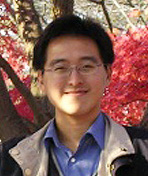 Kai-Feng Chen (陳凱風)合作论文数Department of Physics, National Taiwan University105
 Luiz Mundim合作论文数Instituto de Física Armando Dias Tavares, Universidade do Estado do Rio de Janeiro;Departamento de Física Nuclear e Altas Energias, Universidade do Estado do Rio de Janeiro104
 Philip S. Baringer合作论文数Department of Physics & Astronomy, College of Liberal Arts & Sciences, University of Kansas101
 Md Naimuddin合作论文数Department of Physics and Astrophysics, University of Delhi;European Organization for Nuclear Research100
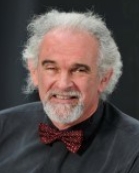 Paul Kyberd合作论文数College of Engineering, Design and Physical Sciences, Brunel University London100G. Alverson合作论文数99
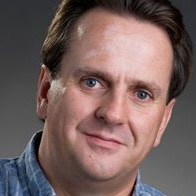 Marco Verzocchi合作论文数Fermi National Accelerator Laboratory97
 Meenakshi Narain合作论文数Brown University97
 Neeti Parashar合作论文数Center for High Energy Physics, Purdue University Northwest;Department of Chemistry and Physics, Purdue University Northwest95L. Uvarov合作论文数95
 Ia Iashvili合作论文数Department of Physics, College of Arts and Sciences, University at Buffalo95
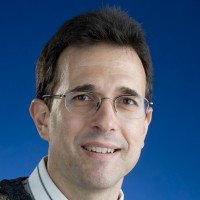 V. Daniel Elvira合作论文数Particle Physics Division, Fermi National Accelerator Laboratory93
 Bob Hirosky合作论文数Department of Physics, University of Virginia92
 Ken Bloom合作论文数Department of Physics and Astronomy, College of Arts and Sciences, University of Nebraska-Lincoln92Gelio A. Alves合作论文数Centro Brasileiro de Pesquisas Fisicas, Rio de Janeiro, Brazil92V. Gavrilov合作论文数91P. Bargassa合作论文数Laboratório de Instrumentação e Física Experimental de Partículas, Lisboa, Portugal91H Prosper合作论文数90
 F. Blekman合作论文数Vrije Universiteit Brussel90
 Marta Felcini合作论文数School of Physics, University College Dublin;CERN90
 Andre Sznajder合作论文数Instituto de Fisica, Departamento de Física Nuclear e Altas Energias, Universidade do Estado do Rio de Janeiro89Bhawna Gomber合作论文数saha institute of nuclear physics89
 Frank Geurts合作论文数Department of Physics and Astronomy, Rice University;T.W. Bonner Laboratory, Rice University89
 Suyong Choi合作论文数Department of Physics, College of Science, Korea University88




