We study a generalization of the asymmetric simple inclusion process (ASIP) on a periodic one-dimensional lattice, where the integers in the particles rates are deformed to their t-analogues. We call this the (q, t, θ ) ASIP, where q is the asymmetric hopping parameter and θ is the diffusion parameter. We show that this process is a misanthrope process, and consequently the steady state is independent of q. We compute the steady state, the one-point correlation and the current in the steady state. In particular, we show that the single-site occupation probabilities follow a beta-binomial distribution at t=1 . We compute the two-dimensional phase diagram in various regimes of the parameters (t, θ ) and perform simulations to justify the results. We also show that a modified form of the steady state weights at t 1 satisfy curious palindromic and antipalindromic symmetries. Lastly, we define an enriched process at t=1 and θ an integer which projects onto the (q, 1, θ ) ASIP and whose steady state is uniform, which may be of independent interest.
We study an n-species t-PushTASEP, an integrable long-range stochastic process, on a one-dimensional periodic lattice with inhomogeneities x_1,…,x_L and arbitrary capacity l at each lattice site. The Markov matrix is identified with an alternating sum of commuting transfer matrices over all fundamental representations of U_t(sl_n+1). Stationary probabilities are expressed in a matrix product form involving a fusion of quantized corner transfer matrices for the strange five-vertex model introduced by Okado, Scrimshaw, and the second author. The resulting partition function, which serves as the normalization factor of the stationary probabilities, is obtained from the l=1 case by a finite plethystic substitution of length l.
The misanthrope process is an interacting particle system where particles move between neighbouring sites with hop rates depending only on the number of particles at the departure and arrival sites. Motivated by a discretised version of the Hammersley–Aldous–Diaconis process, we introduce a partially asymmetric long range misanthrope process (PALRMP) on a finite one-dimensional lattice with periodic boundary conditions where particles can move between sites that are not necessarily neighbours, as long as there are no particles in between the departure and arrival sites. In this model, each site ℓ has an inhomogeneous rate parameter x_ℓ associated to it, and the hop rate of a particle moving from site k to site ℓ depends upon the parameter associated to the target site x_ℓ, the direction the particle moves, and the number of particles at sites k and ℓ. We also consider the homogeneous PALRMP, where all the x_ℓ's are 1. We find necessary and sufficient conditions on the hop rates under which the stationary distribution is of factorised form for both the PALRMP and the homogeneous PALRMP, as well as the extreme variants, namely the ones where the particle motion is totally asymmetric (TALRMP) and symmetric (SLRMP). As an illustrative example, we study in detail the discrete Hammersley–Aldous–Diaconis process.
The Tsetlin library is a random shuffling process on permutations of n letters, where each letter i can be interpreted as a book; book i is brought to the front of the bookshelf with an assigned probability x_i. We define a q-deformation of the Tsetlin library by replacing the symmetric group action on permutations by the action of the type A Iwahori-Hecke algebra. We compute the stationary distribution and spectrum of this Markov chain by relating it to a Markov chain on complete flags over the finite field vector space 𝔽_q^n and applying techniques from semigroup theory. We also generalize the q-Tsetlin library to words (with repeated letters), and compute its stationary distribution and spectrum.
The well known bunkbed conjecture about percolation on finite graphs is now resolved; Gladkov, Pak and Zimin, building upon work of Hollom, have constructed a counterexample. We revisit this conjecture and study it in the broader context of the class of random cluster measures. We show that the major partial (positive) results on the bunkbed conjecture can also be proved for all random cluster measures, including the results for complete graphs, complete bipartite graphs, and the case when p ↑ 1. The arboreal gas measure for forests is another limit of the random cluster measure for which we conjecture the inequality to be true and provide proofs in special cases. We identify a setting where the conjecture does hold, that of “almost spanning tree measures”. A further analysis leads to intriguing correlation inequalities that complement Rayleigh's inequalities for spanning tree measures.
We revisit factorizations of classical characters under various specializations, some old and some new. We first show that all characters of classical families of groups twisted by odd powers of an even primitive root of unity factorize into products of characters of smaller groups. Motivated by conjectures of Prasad and Wagh (Manuscr. Math. 2022), we then observe that certain specializations of Schur polynomials factor into products of two characters of other groups. We next show, via a detour through hook Schur polynomials, that certain Schur polynomials indexed by staircase shapes factorize into linear pieces. Lastly, we consider classical and universal characters specialized at roots of unity. One of our results, in parallel with Schur polynomials, is that universal characters take values only in {0, ± 1, ± 2} at roots of unity.
It is a longstanding open problem to find a bijection exchanging area and bounce statistics on Dyck paths. We settle this problem for an exponentially large subset of Dyck paths via an explicit bijection. Moreover, we prove that this bijection is natural by showing that it maps what we call bounce-minimal paths to area-minimal paths. As a consequence of the proof ideas, we show combinatorially that a path with area a and bounce b exists if and only if a path with area b and bounce a exists. We finally show that the number of distinct values of the sum of the area and bounce statistics is the number of nonzero coefficients in Johnson's q-Bell polynomial.
We study a multispecies t -PushTASEP system on a finite ring of n sites with site-dependent rates x_{1},\ldots,x_{n} . Let \lambda=(\lambda_{1},\ldots,\lambda_{n}) be a partition whose parts represent the species of the n particles on the ring. We show that, for each composition \eta obtained by permuting the parts of \lambda , the stationary probability of being in state \eta is proportional to the ASEP polynomial F_{\eta}(x_{1},\ldots,x_{n}; q,t) at q=1 ; the normalising constant (or partition function) is the Macdonald polynomial P_{\lambda}(x_{1},\ldots,x_{n};q,t) at q=1 . Our approach involves new relations between the families of ASEP polynomials and of nonsymmetric Macdonald polynomials at q=1 . We also use multiline diagrams , showing that a single jump of the PushTASEP system is closely related to the operation of moving from one line to the next in a multiline diagram. We derive symmetry properties for the system under permutation of its jump rates, as well as a formula for the current of a single-species system.
We investigate the recently introduced inhomogeneous n-species t-PushTASEP, a longrange stochastic process on a periodic lattice. A Baxter-type formula is established, expressing the Markov matrix as an alternating sum of commuting transfer matrices over all the fundamental representations of Ut(bsln+1). This superposition acts as an inclusion-exclusion principle, selectively extracting the sequential particle transitions characteristic of the PushTASEP, while canceling forbidden channels. The homogeneous specialization connects the PushTASEP to ASEP, showing that the two models share eigenstates and a common integrability structure.
We study an interacting particle process on a finite ring with L sites with at most K particles per site, in which particles hop to nearest neighbors with rates given in terms of t-deformed integers and asymmetry parameter q, where t > 0 and q >= 0 are parameters. This model, which we call the (q, t) asymmetric simple K-exclusion process (ASEP), reduces to the usual ASEP on the ring when K = 1 and to a model studied by Schutz and Sandow (Phys. Rev. E, 1994) when t = q = 1 . This is a special case of the misanthrope process and as a consequence, the steady state does not depend on q and is of product form, generalizing the same phenomena for the ASEP. What is interesting here is the steady state weights are given by explicit formulas involving t-binomial coefficients, and are palindromic polynomials in t. Interestingly, although the (q, t) K-ASEP does not satisfy particle-hole symmetry, its steady state does. We analyze the density and calculate the most probable number of particles at a site in the steady state in various regimes of t. Lastly, we construct a two-dimensional exclusion process on a discrete cylinder with height K and circumference L which projects to the (q, t) K-ASEP and whose steady state distribution is also of product form. We believe this model will serve as an illustrative example in constructing two-dimensional analogues of misanthrope processes. Simulations are attached as ancillary files.
In a previous part of this work, we gave a new tableau formula for the modified Macdonald polynomials $\widetilde{H}_{\lambda}(X;q,t)$, using a weight on tableaux involving the queue inversion (quinv) statistic. In this paper we establish a link between these combinatorial objects and a class of multispecies totally asymmetric zero-range processes (mTAZRP) on a ring, with site-dependent jump-rates. We construct a Markov chain on the space of tableaux of a given shape, which projects to the mTAZRP, and whose stationary distribution can be expressed in terms of quinv-weighted tableaux. We deduce that the mTAZRP has a partition function given by the modified Macdonald polynomial $\widetilde{H}_{\lambda}(X;1,t)$, and we obtain interesting symmetry properties of the mTAZRP probabilities under permutation of the jump-rates between the sites. We explore a number of interesting special cases of the mTAZRP, and give explicit formulas for particle densities and correlations of the process purely in terms of modified Macdonald polynomials.
For a positive integer $t \geq 2$, the $t$-core of a partition plays an important role in modular representation theory and combinatorics. We initiate the study of $t$-cores of partitions contained in an $r \times s$ rectangle. Our main results are as follows. We first give a simple formula for the number of partitions in the rectangle that are themselves $t$-cores and compute its asymptotics for large $r,s$. We then prove that the number of partitions inside the rectangle whose $t$-cores are a fixed partition $\rho$ is given by a product of binomial coefficients. Finally, we use this formula to compute the distribution of the $t$-core of a uniformly random partition inside the rectangle extending our previous work on all partitions of a fixed integer $n$ (Ann. Appl. Prob. 2023). In particular, we show that in the limit as $r,s \to \infty$ maintaining a fixed aspect ratio, we again obtain a Gamma distribution with the same shape parameter $\alpha = (t-1)/2$ and rate parameter $\beta$ that depends on the aspect ratio.
Fix $t \geq 2$. We first give an asymptotic formula for certain sums of the number of $t$-cores. We then use this result to compute the distribution of the size of the $t$-core of a uniformly random partition of an integer $n$. We show that this converges weakly to a gamma distribution after dividing by $\sqrt{n}$. As a consequence, we find that the size of the $t$-core is of the order of $\sqrt{n}$ in expectation. We then apply this result to show that the probability that $t$ divides the hook length of a uniformly random cell in a uniformly random partition equals $1/t$ in the limit. Finally, we extend this result to all modulo classes of $t$ using abacus representations for cores and quotients.
The monopole-dimer model is a signed variant of the monomer-dimer model which has determinantal structure. We extend the monopole-dimer model for planar graphs (Math. Phys. Anal. Geom., 2015) to Cartesian products thereof and show that the partition function of this model can be expressed as a determinant of a generalised signed adjacency matrix. We then show that the partition function is independent of the orientations of the planar graphs so long as the orientations are Pfaffian. When these planar graphs are bipartite, we show that the computation of the partition function becomes especially simple. We then give an explicit product formula for the partition function of three-dimensional grid graphs a la Kasteleyn and Temperley--Fischer, which turns out to be fourth power of a polynomial when all grid lengths are even. Finally, we generalise this product formula to $d$ dimensions, again obtaining an explicit product formula. We conclude with a discussion on asymptotic formulas for the free energy and monopole densities.
We give combinatorial proofs of two multivariate Cayley–Hamilton type theorems. The first one is due to Phillips (Amer. J. Math., 1919) involving 2k matrices, of which k commute pairwise. The second one regards the mixed discriminant, a matrix function which has generated a lot of interest in recent times. Recently, the Cayley–Hamilton theorem for mixed discriminants was proved by Bapat and Roy (Comb. Math. and Comb. Comp., 2017). We prove a Phillips-type generalization of the Bapat–Roy theorem involving 2nk matrices, where n is the size of the matrices, among which nk commute pairwise. Our proofs generalize the univariate proof of Straubing (Disc. Math., 1983) for the original Cayley–Hamilton theorem in a nontrivial way, and involve decorated permutations and decorated paths.
We study an interacting particle process on a finite ring with $L$ sites with at most $K$ particles per site, in which particles hop to nearest neighbors with rates given in terms of $t$-deformed integers and asymmetry parameter $q$, where $t>0$ and $q \geq 0$ are parameters. This model, which we call the $(q, t)$ $K$-ASEP, reduces to the usual ASEP on the ring when $K = 1$ and to a model studied by Sch\"utz and Sandow (Phys. Rev. E, 1994) when $t = q = 1$. We show that the steady state does not depend on $q$ and is of product form in terms of $t$-binomial coefficients, generalizing the same phenomena for the ASEP. We also give exact formulas for the partition function and show that the steady state weights are palindromic polynomials in $t$. Interestingly, although the $(q, t)$ $K$-ASEP does not satisfy particle-hole symmetry in general, the steady state does. We analyze the density and calculate the most probable number of particles at a site in the steady state in various regimes of $t$. Lastly, we construct a two-dimensional exclusion process on a discrete cylinder with height $K$ and circumference $L$ which projects to the $(q, t)$ $K$-ASEP and whose steady state distribution is also of product form. Simulations are attached as ancillary files.
We introduce and study a natural multispecies variant of the inhomogeneous PushTASEP with site-dependent rates on the finite ring. We show that the stationary distribution of this process is proportional to the ASEP polynomials at $q = 1$ and $t = 0$. This is done by constructing a multiline process which projects to the multispecies PushTASEP, and identifying its stationary distribution using time-reversal arguments. We also study symmetry properties of the process under interchange of the rates associated to the sites. These results hold not just for events depending on the configuration at a single time in equilibrium, but also for systems out of equilibrium and for events depending on the path of the process over time. Lastly, we give explicit formulas for nearest-neighbour two-point correlations in terms of Schur functions.
We consider the problem of enumerating periodic a-juggling sequences of length n for multiplex juggling, where a is the initial state (or landing schedule) of the balls. We first show that this problem is equivalent to choosing 1's in a specified matrix to guarantee certain column and row sums, and then using this matrix, derive a recursion. This work is a generalization of earlier work of Chung and Graham.
Let W be a finite Weyl group and (W) over tilde the corresponding affine Weyl group. A random element of (W) over tilde can be obtained as a reduced random walk on the alcoves of (W) over tilde. By a theorem of Lam (Ann. Prob. 2015), such a walk almost surely approaches one of vertical bar W vertical bar many directions. We compute these directions when W is B-n, C-n, and D-n, and the random walk is weighted by Kac and dual Kac labels. This settles Lam's questions for types B and C in the affirmative and for type D in the negative. The main tool is a combinatorial two row model for a totally asymmetric simple exclusion process (TASEP) called the D*-TASEP, with four parameters. By specializing the parameters in different ways, we obtain TASEPs for each of the Weyl groups mentioned above. Computing certain correlations in these TASEPs gives the desired limiting directions.
 Svante Linusson合作论文数Division of Mathematics, Department of Mathematics, School of Engineering Sciences, KTH Royal Institute of Technology9
 Anne Schilling合作论文数Department of Mathematics, UC Davis7
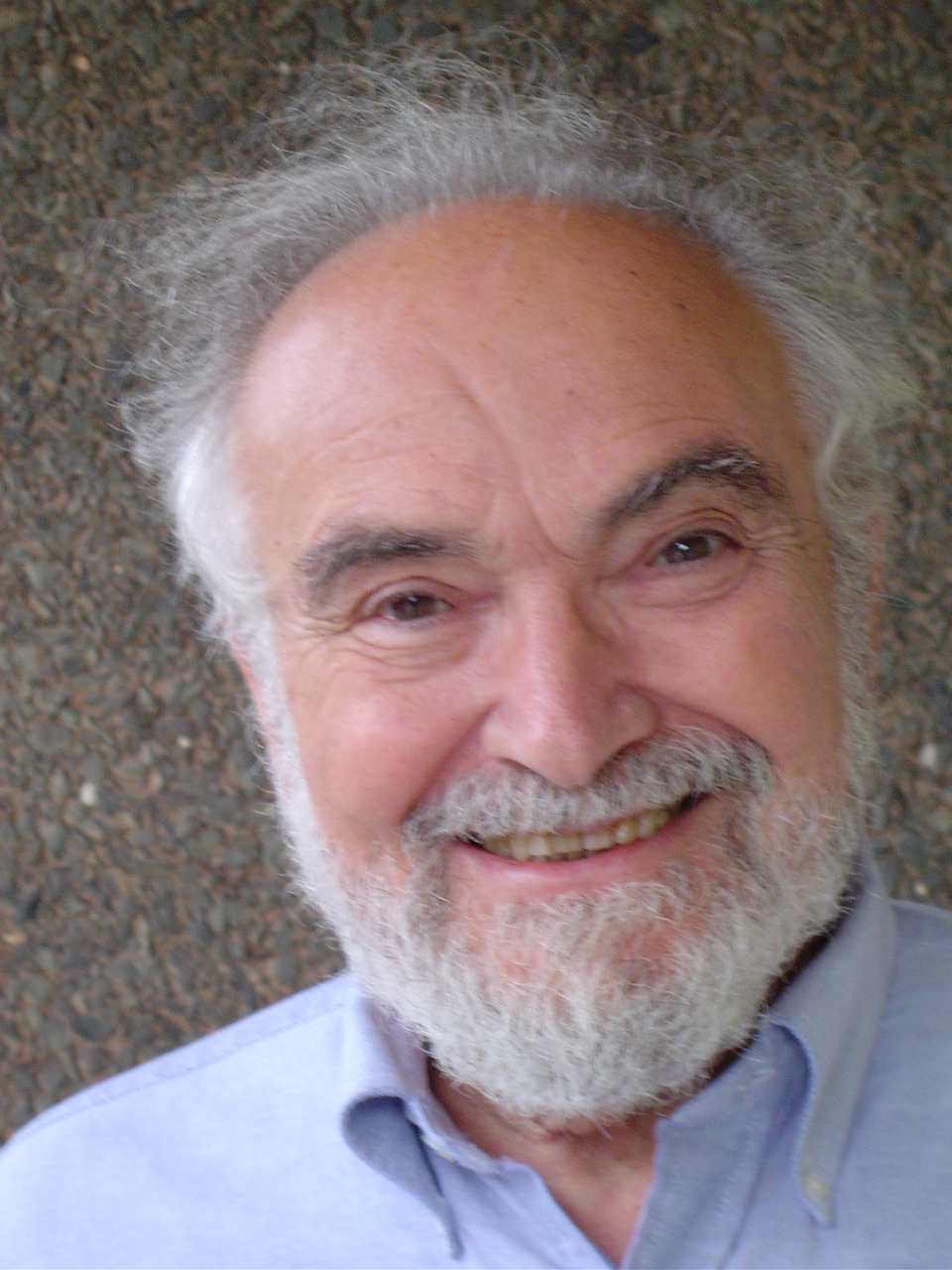 Joel L. Lebowitz合作论文数Center For Mathematical Sciences Research, Rutgers, The State University of New Jersey;Department of Physics and Astronomy, School of Arts and Sciences, Rutgers, The State University of New Jersey;Department of Mathematics, Rutgers, The State University of New Jersey5
 Kirone Mallick合作论文数5Eugene R Speer合作论文数5
 Jérémie Bouttier合作论文数Institut de Physique Theorique5francois nunzi合作论文数4
 Sylvie Corteel合作论文数Department of Mathematics, University of California, Berkeley4
 Benjamin Steinberg合作论文数Department of Mathematics, City College of New York4Sylvain Prolhac合作论文数4
 Nicolas M. Thiéry合作论文数Laboratoire de Probabilités, Combinatoire et Statistiques, Université Claude Bernard Lyon I4
 Martin James合作论文数Max Planck Inst Dynam & Self Org MPI DS, Gottingen, Germany3Dipankar Roy合作论文数Dept Math, Indian Inst Sci3
 Amritanshu Prasad合作论文数CIT campus Taramani, The Institute of Mathematical Sciences3
 Steven Spallone合作论文数Department of Mathematics;Purdue University;Department of Mathematics, Purdue University3
 Shubham Sinha合作论文数2Samu Potka合作论文数2Sunil Chhita合作论文数2Sanjay Ramassamy合作论文数2Caley Finn合作论文数2
 Amar Vutha合作论文数Department of Physics, Faculty of Arts and Science, University of Toronto2Atsuo Kuniba合作论文数Institute of Physics;University of Tokyo;Institute of Physics, University of Tokyo2
 Mahendra Verma合作论文数Department of Physics;Indian Institute of Technology;Department of Physics, Indian Institute of Technology2
 Steven Klee合作论文数Department of Mathematics|University of Washington2Erik Aas合作论文数2Chikashi Arita合作论文数2
 Mikko Stenlund合作论文数Courant Institute of Mathematical Sciences2Pooja Singla合作论文数2Volker Strehl合作论文数Department of Computer Science, Friedrich-Alexander-University of Erlangen-Nürnberg2
 Doron Zeilberger合作论文数Department of Mathematics, School of Arts and Sciences, Rutgers University2
 Kavita Jain合作论文数1qin shi you tian (親史 有田)合作论文数1Naya Banerjee合作论文数1
 Daniel Hathcock合作论文数Carnegie Mellon University1Ramesh Sharma合作论文数Department of Applied Science, Feroze Gandhi Institute of Engineering and Technology1
 Beáta Bényi合作论文数Faculty of Water Sciences, University of Public Service1
 Olya Mandelshtam合作论文数Department of Combinatorics and Optimization, University of Waterloo1Philippe Nadeau合作论文数1
 Priyanka合作论文数Theoretical Sciences Unit, Jawaharlal Nehru Centre for Advanced Scientific Research1
 Prasad Tetali合作论文数Department of Mathematical Sciences, Mellon College of Science, Carnegie Mellon University1
 Carlangelo Liverani合作论文数Department of Mathematicst, University of Rome Tor Vergata1
 Sheldon Goldstein合作论文数Department of Mathematics, Rutgers University–New Brunswick1
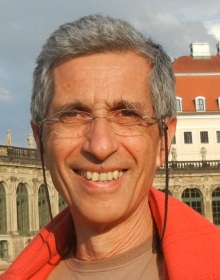 David Mukamel合作论文数Department of Physics of Complex Systems, Faculty of Physics, Weizmann Institute of Science1A. Sharan合作论文数1Kurt Johansson合作论文数Division of Mathematics, Department of Mathematics, School of Engineering Sciences, KTH Royal Institute of Technology1
 Robert Cori合作论文数Univ. Bordeaux1
 Bala Sury合作论文数1
 Dr Shishir Kumar合作论文数Department of CSE;Jaypee Institute of Engineering & Technology;Department of CSE, Jaypee Institute of Engineering & Technology1Dan Romik合作论文数The Hebrew University of Jerusalem1




