The fish supply chain (FSC) industry faces a significant challenge in efficiently and affordably preserving fish quality and detecting adulteration throughout the chain. Quality, Adulteration & Traceability (QAT) is a multi-mode spectroscopy and AI-based handheld device that is developed by our team to identify fish species and assess fish freshness that can be integrated into the FSC ecosystem. We conducted a survey interviewing professionals across the FSC, including harvesters, processors, distributors, and retailers and queried them about how they evaluate fish freshness and the major issues faced in freshness inspection and fraud detection. We learned that traditional sensory evaluation and electronic noses are the most common methods used for fish quality and freshness assessment. QAT technology will play a role as a substitute for current methods and will offer rapid results for fish species identification, quality assessment, and nutritional content analysis. Blockchain (BC), as a Distributed Ledger Technology (DLT), can be integrated with FSC to securely monitor and record fish quality and freshness values each step of the FSC. This helps in maintaining product integrity and provides stakeholders with access to the entire journey of the fish product. We extend our experiments to study the degradation of fish freshness throughout the FSC to trigger the system once the rate of decay exceeds a certain limit. These results should be used so BC integration with smart contracts be able to compare its freshness grade to the history of recorded values. If the degradation in freshness exceeds the expected range, then the smart contract should raise an alarm to alert the system. In this way, BC-based FSC incorporating QAT technology is able to detect any degradation and flag products that may have compromised freshness or quality. This integration of technologies not only promises to revolutionize the FSC but also addresses issues like fraud and illegal fishing activities, ultimately delivering higher-quality and more transparent fish products to consumers.
In this research, we have a theoretical simple and highly sensitive sodium chloride (NaCl) sensor based on the excitation of Tamm plasmon resonance through a one-dimensional photonic crystal structure. The configuration of the proposed design was, [prism/gold (Au)/water cavity/silicon (Si)/calcium fluoride (CaF2)(10)/glass substrate]. The estimations are mainly investigated based on both the optical properties of the constituent materials and the transfer matrix method as well. The suggested sensor is designed for monitoring the salinity of water by detecting the concentration of NaCl solution through near-infrared (IR) wavelengths. The reflectance numerical analysis showed the Tamm plasmon resonance. As the water cavity is filled with NaCl of concentrations ranging from 0 g l(-1) to 60 g l(-1), Tamm resonance is shifted towards longer wavelengths. Furthermore, the suggested sensor provides a relatively high performance compared to its photonic crystal counterparts and photonic crystal fiber designs. Meanwhile, the sensitivity and detection limit of the suggested sensor could reach the values of 24 700 nm per RIU (0.576 nm (g l)(-1)) and 0.217 g l(-1), respectively. Therefore, the suggested design could be of interest as a promising platform for sensing and monitoring NaCl concentrations and water salinity as well.
The control of light in photonic crystal fiber (PCF) is a special characteristic that is obtained due to the relations between material and light. In this paper, a surface plasmon resonance (SPR) based PCF sensor is introduced with two open-channel which cover an extensive field of bio-detection applications. Gold (Au) is considered as an effective plasmonic ingredient. The transformation of light through the fiber core is coupled with the gold and stimulates SPR. The proposed PCF-SPR sensor reports the highest wavelength sensitivity (WS) of 7000 nm/RIU (refractive index unit) as well as an amplitude sensitivity (AS) of 593.61 RIU−1. It also acquires an increased sensor resolution of 1.43 × 10⁻⁵ RIU and a decent figure of merit (FOM) is 94.97 RIU−1. Additionally, the operating constraints of the sensor such as corresponding air-holes diameter, the pitch, gold layer (Au) thickness and open-channel radius are revised to improve detection performance. The overall measurement is carried out over a broad range of variations in refractive index (RI) from 1.33 to 1.40. The sensor's appreciable performance makes it suitable for bio-sensing applications.
A sentiment analysis is one of the most prominent research topics in today's Natural Language Processing (NLP) field to analyze the statements or opinions of individuals. Individuals' statements can be classified into different classes as positive, slightly negative, strongly negative or neutral. In this approach, multi-classified sentiments have been classified or analyzed using a Deep Learning (DL) algorithm named Bidirectional Recurrent Neural Networks (Bi-RNN) applied on Bengali text data. To analyze people's comments on social sites or e-commerce sites sentiment analysis can play a notable role. The selected dataset for this approach has been multi-classified with mainly 7 types of sentiment tags based on the polarity to acknowledge the sentiment class with more specification. As one of the types of Recurrent Neural Networks (RNN) Bidirectional Recurrent Neural Networks (Bi-RNN) operates two RNN, the inputs are accessed in both forward and reverse directions. We have adopted multi-class classification with Bidirectional Recurrent Neural Networks (Bi-RNN) and acquired 88% exactitude.
Abstract The aim and scope of the paper is to simulate the signal propagation parameters estimation through designed multi-layer fibre with higher dominant modes by using OptiFibre simulation software. The multi-layer fibre profile has a length of 1000 m is designed and clarified with six layers. RI difference profile variations are clarified with radial distance variations. Modal/group index, group delay, dispersion, mode field diameter and total fibre losses are demonstrated with the fibre wavelength variations. All the dominant mode field distribution for multi-layer fibre are simulated and demonstrated. The other modes for designed multi-layer fibre with the theoretical fibre cutoff values for the different modes based the designed multi-layer fibre are analyzed and clarified clearly in details.
In this research, the de-noising of speckled SAR image has been done with fuzzy filters (ATMED, TMED, ATMAV & TMAV).SAR image or Synthetic Aperture Radar image consists of the informatics of ISW (Internal solitary waves).A new technique has been proposed which preserved the edge pixels by fuzzy edge detection method and then altered with the filtered image-pixels by fuzzy filtration for getting the de-noised image.The comparative result shows that the proposed filter performs better than the other filtered results in terms of PSNR (41.61 dB), MAE (1.47), MSE (4.54) for TMAVxAPE & SSIM (81%) for ATMEDwAPE.The proposed method in this research shows better SSI (Spackle Suppression Index) value.Therefore the experimental result illustrates that the suggested fuzzy filter is much more capable of simultaneously protecting edges and suppressing speckle noise.This research will be beneficial to remove spackle noise from SAR images and can be used for remote sensing and mapping of surface area of earth.
Abstract This paper aims to simulate performance efficiency of carrier suppressed non return to zero line coding based FSO transceiver systems under light rain conditions with amplification units at 40 Gbps. The max. Q, BER and total optical power are simulated and demonstrated after FSO channel and PIN Photodetector Receiver under light rain weather conditions at maximum reach of 1.2 km at 10 Gbps. As well as the max. Q Factor variations versus max reach variations are clarified after PIN photodetector receiver under light rain weather conditions at 10, 40 Gbps with/without amplification units. Besides the total optical power variations versus max reach variations are assured after FSO channel under light rain weather conditions at 10, 40 Gbps with/without amplification units.
Abstract This study clarifies the data error rates optimization for OFC/OWC channels based on different transmission codes. These codes that are namely multi bits/symbol digital pulse interval modulation (DPIM), multi bits/symbol pulse position modulation (PPM), nonreturn to zero inverted (NRZI), 4 bit data symbol/5 bit code (4B5B), and Manchester for upgrading optical wired/wireless communication systems. The optical power through OFC/OWC channels, S/N ratio, the output power at the receiver side are stimulated with high bit transmission rates. The effects of coding complexity on the Q-factor, BER, optical power, and electrical received power are also stimulated using both DPIM and PPM coding.
Two types of Kagome PCFs such as the slotted core PCF and circular PCF have been proposed. Finite element method is employed with boundary conditions to analyze the optical properties of the suggested PCFs. HRS and Epsilon Near Zero materials are employed in core and TOPAS as the background material. A wide frequency ranges for 0.8 THz to 2 THz is applied with numerical analysis. Novelty of the paper, we have proposed two Kagome PCFs with different core formations. One PCF is elliptical and rectangular hole based slotted core Kagome PCF, and another one is a circular hole in hexagonal formation based core Kagome PCF. We have investigated the optical properties by tuning the geometry of the PCFs. The main advantages of the proposed PCF are that it shows better results in terms of Dispersion, Birefringence, confinement loss, bending loss, effective material loss, total loss and V-parameters. The results have also been compared with previous papers. Furthermore, the structural design has been described, and numerical results have also been described in this paper. The structure is not complex and can be fabricated by employing well-known fabrication techniques.
In this research, we have projected and carried out a novel fishbone network that shows better performance in the term of minimizing the packet delay with respect to sink speed. Previous study implies that sector angle affects greatly on designing fishbone network. Finite Set of nodes arranges to sense the physical condition of any system is called wireless sensor. Our designed fishbone network can be potentially applied for a wireless sensing system to formulate a whole network. The network is a novel design which has been finalized by comparing sector angle. Analysis takes place by varying packet delay according to sink speed. Future analysis takes place for Quality of Service (QoS) and Quality of Experience (QoE). Latency of Packet and its size is the measurement criteria of any network or service is called Quality of Service (QoS). On the other hand the user experience of using the designed network is called Quality of Experience (QoE). Our designed network has been analyzed in TCP Tracer to find out the latency or packet delay for different users. The user data has been shorted and equated among them for latency with different no of packets. Our proposed spiral fishbone network shows better QoS and QoE. In future more nodes can be added to design extended fishbone network for wireless.
Abstract The study clarified spatial single mode laser interaction with measured pulse based parabolic index multimode fiber. Peak power level margin, maximum/minimum signal amplitude margin after parabolic index multimode fiber are measured with core radius of 25 µm, cladding thickness of 10 µm, refractive index peak of 1.4142, length of 300 m, and refractive index step of 1%. Maximum signal power margin against spectral frequency after PIN light detector based parabolic fiber properties is tested under the same operating parameters. The signal power amplitude/power within parabolic index multimode fiber is also measured based on variations of fiber lengths and relative refractive index step. The study implies the multimode graded index fibers with parabolic or near parabolic index profile cores have transmission bandwidths than other multimode fibers.
In this research, a novel wheel-shaped hexa sectored photonic crystal fiber (PCF) with an elliptical hole at the center of the core has been proposed as a soybean biodiesel sensor. The finite element method (FEM) method and perfectly matched layer (PML) have been used for the analysis of the proposed sensor. The designed PCF is suitable to operate through a wide operating frequency from 0.5 to 2 THz. The mainstay of the numerical investigations is significantly based on the concentration of soybean biodiesel, the ellipticity of the core and the change of temperature as well. The proposed hexa-wheel PCF sensor shows a high relative sensitivity of 89.03%, lower confinement loss of 2.3 × 10 −10 , high birefringence of 3.5 × 10 −4 (dB/m) and low material loss (EML) of 0.207 cm −1 . The presented sensor is very simple and easy to fabricate. In this regard, the designed structure could be of a wide interest through the detection of different biodiesels and liquids as well.
This study suggested a novel hexa-sectored square photonic crystal fiber (HS-SPCF) for blood serum and blood plasma sensing. The proposed HS-SPCF depicts an eminent sensitivity of blood plasma 66.7% and blood serum73.4% with ultralow low confinement loss 1.55 × 10⁻¹² and 10.55 × 10⁻¹² at the wavelength of 1.33 µm for blood plasma and serum. The operating wavelength to measure the optical properties using FEM was 0.6–1.6 µm. The proposed HS-SPCF showed ameliorating performance in confinement loss and relative sensitivity than the previous structures for blood components sensing. In addition, other optical characteristics like high birefringence of 2.6 × 10⁻³ and 2.6 × 10⁻³, lower EML of 0.21247 (cm−1) and 0.2170 (cm−1), effective area of 6.1 µm2 and 6.4 µm2, nonlinearity of 21.1(W−1 km−1) and 19.6 (W−1 km−1), numerical aperture (NA) of 0.286 and 0.281 has been achieved for proposed PCF at the wavelength of 1.33 µm. The proposed PCF will be used for biosensing or blood-sensing purposes and a broad diversity of chemical sensing functions.
Sentiment analysis is a process of extracting opinions into the positive, negative, or neutral categories from a pool of text using Natural Language Processing (NLP). In the recent era, our society is swiftly moving towards virtual platforms by joining virtual communities. Social media such as Facebook, Twitter, WhatsApp, etc are playing a very vital role in developing virtual communities. A pandemic situation like COVID-19 accelerated people's involvement in social sites to express their concerns or views regarding crucial issues. Mining public sentiment from these social sites especially from Twitter will help various organizations to understand the people's thoughts about the COVID-19 pandemic and to take necessary steps as well. To analyze the public sentiment from COVID-19 tweets is the main objective of our study. We proposed a deep learning architecture based on Bidirectional Gated Recurrent Unit (BiGRU) to accomplish our objective. We developed two different corpora from unlabelled and labeled COVID-19 tweets and use the unlabelled corpus to build an improved labeled corpus. Our proposed architecture draws a better accuracy of 87% on the improved labeled corpus for mining public sentiment from COVID-19 tweets.
 K. Ahmed合作论文数Department of Electrical and Computer Engineering, College of Engineering, University of Saskatchewan;Department of Information and Communication Technology, Mawlana Bhashani Science and Technology University52
 Bikash Kumar Paul合作论文数Department of Information and Communication Technology (ICT), Mawlana Bhashani Science and Technology University (MBSTU), Santosh, Tangail 1902, Bangladesh25
 Md Shadidul Islam合作论文数19
 Sawrab Chowdhury合作论文数Department of Information and Communication Technology (ICT),, Mawlana Bhashani Science and Technology University (MBSTU),18
 Shuvo Sen合作论文数MBSTU, Mawlana Bhashani Science and Technology University18
 Hasin Rehana合作论文数Rajshahi Univ Engn & Technol, Dept Comp Sci & Engn, Rajshahi, Bangladesh17
 Md. Ibadul Islam合作论文数Inst Informat & Commun Technol, Bangladesh Univ Engn & Technol16
 Md. Faizul Huq Arif合作论文数14
 Touhid Bhuiyan合作论文数Faculty of Science and Technology, Queensland University of Technology12
 Ali Newaz Bahar合作论文数Department of Information and Communication Technology, Mawlana Bhashani Science and Technology University9
 Ahmed Nabih Zaki Rashed合作论文数Department of Electronics and Electrical Communications Engineering, Faculty of Electronic Engineering, Menoufia University9
 Monir Morshed合作论文数Center for Quantum Effect Electronics, Research;Tokyo Institute of Technology;Research Center for Quantum Effect Electronics, Tokyo Institute of Technology6
 Nazrul Islam合作论文数5
 Mahmoud M. A. Eid合作论文数Department of Electrical Engineering, College of Engineering, Taif University5
 Md Rabiul Hasan合作论文数Rajshahi Univ Engn & Technol, Dept Elect & Telecommun Engn, Rajshahi 6204, Bangladesh5
 Mohammad Badrul Alam Miah合作论文数5
 Vishal Sorathiya合作论文数5
 Fartash Vasefi合作论文数Simon Fraser University;School of Engineering;School of Engineering, Simon Fraser University5
 Muhammad Shahin Uddin合作论文数5
 Md. Mohsin Sarker Raihan合作论文数4
 Mitchell Sueker合作论文数4
 Rana Joyti Chakma合作论文数4
 Sk Hasane Ahammad合作论文数4Malek G. Daher合作论文数4
 Osama S. Faragallah合作论文数Faculty of Electronic Engineering, Minufiya University4
 Hossein Kashani Zadeh合作论文数4Kaylee Husarik合作论文数3
 Maksuda Khatun合作论文数3M. D. Tanzil Aziz合作论文数3
 Mamun Ibn Bashar合作论文数International Centre for Diarrhoeal Disease Research3
 Md. Jaminul Haque Biddut合作论文数Corresponding author.3
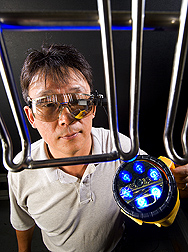 Moon S Kim合作论文数Environmental Microbial & Food Safety Laboratory, Beltsville Agricultural Research Center, U.S. Department of Agriculture Agricultural Research Service3
 Greg Bearman合作论文数Jet Propulsion Laboratory, California Institute of Technology3
 Asif Zuhayer合作论文数2
 Md Mynoddin合作论文数2
 Vincent O. Nyangaresi合作论文数Fac Biol & Phys Sci, Tom Mboya Univ2
 Shereen Ismail合作论文数Sch Elect Engn & Comp Sci, Univ North Dakota2
 Setu Chakraborty合作论文数Marine Microbial Pathogenesis & Vaccinol Lab, Mem Univ Newfoundland2
 Francis Jesmar Perez Montalbo合作论文数Batangas State University2
 Abrar Siddique合作论文数Dept Elect & Comp Engn, Univ Waterloo2
 Rayhan Habib Jibon合作论文数Elect & Commun Engn Discipline, Khulna Univ2
 Ashour M. Ahmed合作论文数IMSIU, Imam Mohammad Ibn Saud Islamic University2
 Shobhitkumar Kiritkumar Patel合作论文数2
 Mohammad Abu Yousuf合作论文数Coll Journalism Mass Commun Norman, Univ Oklahoma Gaylord2
 M. Baz合作论文数Department of Electronics, University of York2
 Hussein Elsayed合作论文数Faculty of Sciences, Beni-Suef University2
 Nitul Dutta合作论文数2
 Nicholas MacKinnon合作论文数Department of Cancer Imaging, British Columbia and Cancer Center2
 Matiur Rahman Minar合作论文数Department of Chemistry, Visva-Bharati University2




