Sensory interplay typically refers to cases where the content of one sensory modality affects the content of another sensory modality. Although there is much evidence today of such interplay, it is unknown how to interpret them. Is it a one-way causal function between two separate states (e.g., a visual process that influences an auditory process), a bidirectional relation between two separate states, or a new kind of state-as a sensory integration-that cannot be reduced to interactions between separate states? Despite these questions, the first-person perspective offers the insight that sensory modalities often integrate and that conscious content is seldom composed exclusively of one sense. Here, we explore how to understand sensory interplay and integration and how this analysis may provide a tool to analyze and investigate theories of consciousness. We argue that multisensory interplay leads the way to new empirical approaches to theory comparison that are not derivable from research in single perceptual systems, which may suggest new potential avenues of progress in consciousness science.
The recent “Conscious Turing Machine” (CTM) proposal offered by Manuel and Lenore Blum aims to define and explore consciousness, contribute to the solution of the hard problem, and demonstrate the value of theoretical computer science with respect to the study of consciousness. Surprisingly, given the ambitiousness and novelty of the proposal (and the prominence of its creators), CTM has received relatively little attention. We here seek to remedy this by offering an exhaustive evaluation of CTM. Our evaluation considers the explanatory power of CTM in three different domains of interdisciplinary consciousness studies: the philosophy of mind, cognitive neuroscience, and computation. Based on our evaluation in each of the target domains, at present, any claim that CTM constitutes progress is premature. Nevertheless, the model has potential, and we highlight several possible avenues of future research which proponents of the model may pursue in its development.
With incredible speed Large Language Models (LLMs) are reshaping many aspects of society. This has been met with unease by the public, and public discourse is rife with questions about whether LLMs are or might be conscious. Because there is widespread disagreement about consciousness among scientists, any concrete answers that could be offered the public would be contentious. This paper offers the next best thing: charting the possibility of consciousness in LLMs. So, while it is too early to judge concerning the possibility of LLM consciousness, our charting of the possibility space for this may serve as a temporary guide for theorizing about it.
Understanding consciousness is central to understanding human nature. We have competing theories of consciousness. In interdisciplinary consciousness studies most believe that consciousness can be naturalized (i.e., consciousness depends in some substantial way on processes in — or states of — the brain). For roughly two decades, proponents of almost every theory have focused on collecting empirical support for their preferred theory, on the tacit assumption that empirical evidence will resolve the debates. Yet, it remains unclear how empirical evidence can do this in practice. Here I address this issue by offering (a sketch of) a methodology to quantify the divergent sets of empirical support proposed in favor of extant theories of consciousness. This in turn forms the foundation for a process of inference to the best explanation inspired by Bayesian confirmation theory. In interdisciplinary consciousness studies we are blessed with an abundance of theories, but we have reached a point where, going forward, it would be beneficial to focus on the most promising ones. Methods for assessment and comparison are necessary to identify which those are. While future refinement is likely, the methodology for assessment and comparison proposed here is a first step toward a novel way of approaching this through a quantification of empirical support for theories of consciousness.
Abstract In the debate about phenomenal unity, the assumption that consciousness appears phenomenally unified is generally taken for granted. Based on this, most debates have focused on whether consciousness is in fact unified or whether it merely appears to be. Here, I object to the premise of this debate by questioning the assumption that the way consciousness appears to us suggests it is unified. One upshot of this objection is that theories or arguments that presume phenomenal unity are challenged. I illustrate this by discussing the impact of my objection on the Integrated Information Theory of consciousness.
When does the mind begin? Infant psychology is mysterious in part because we cannot remember our first months of life, nor can we directly communicate with infants. Even more speculative is the possibility of mental life prior to birth. The question of when consciousness, or subjective experience, begins in human development thus remains incompletely answered, though boundaries can be set using current knowledge from developmental neurobiology and recent investigations of the perinatal brain. Here, we offer our perspective on how the development of a sensory perturbational complexity index (sPCI) based on auditory (“beep-and-zip”), visual (“flash-and-zip”), or even olfactory (“sniff-and-zip”) cortical perturbations in place of electromagnetic perturbations (“zap-and-zip”) might be used to address this question. First, we discuss recent studies of perinatal cognition and consciousness using techniques such as functional magnetic resonance imaging (fMRI), electroencephalography (EEG), and, in particular, magnetoencephalography (MEG). While newborn infants are the archetypal subjects for studying early human development, researchers may also benefit from fetal studies, as the womb is, in many respects, a more controlled environment than the cradle. The earliest possible timepoint when subjective experience might begin is likely the establishment of thalamocortical connectivity at 26 weeks gestation, as the thalamocortical system is necessary for consciousness according to most theoretical frameworks. To infer at what age and in which behavioral states consciousness might emerge following the initiation of thalamocortical pathways, we advocate for the development of the sPCI and similar techniques, based on EEG, MEG, and fMRI, to estimate the perinatal brain's state of consciousness.
In recent years increasing attention has been given to systematic comparison of theories of consciousness. Laudable practical projects have emerged in this regard, such as adversarial collaboration and the development of databases lending themselves to comparisons of empirical support for theories. In addition to the practical advances, theoretical advances have been made, such as a list of issues a theory of consciousness must address. We propose adding the issue of the ontogenetic emergence (O-emergence) of consciousness to the list of issues we use to evaluate theories of consciousness. O-emergence concerns how and when consciousness emerges ontogenetically in human beings. The underlying assumption is that there exists a point in the development of a human individual before which that individual is not and cannot be conscious. This assumption, in turn, depends on a widely shared assumption of cognitive neuroscience, which is that consciousness somehow depends on — or derives from — brain activity. In this paper, we lay out the O-emergence criterion and investigate whether it can be accounted for within the Global Neuronal Workspace theory, the Self-Organizing Meta-representational Account, and the Reorganization of Elementary Functions framework.
I present an empirically based argument for the plausibility of misrepresentation as posited by some higher-order theories of consciousness. The argument relies on the assumption that conscious states are generated by processes in the brain. The underlying idea is that if the brain generates conscious states then misrepresentation may occur. The reason for this is that brain states can be corrupted and, accordingly, a conscious state that is at least partly caused by a corrupted brain state may be a misrepresentation. Our body of knowledge from cognitive and behavioral neuroscience lends support to the idea that corruption of neural states is both possible and relatively frequent. If this is the case, I argue, it is plausible that occasionally such corruption may result in misrepresentation. I support this claim by arguing that the most prevalent theoretical alternative to the occurrence of misrepresentation—the so-called no-consciousness reply—seems less supported by our current knowledge in the domain of consciousness and cognition. This way of arguing for misrepresentation is different from other empirically based arguments in the debate because it is a meta-level argument resting on a general premise that most participants in the debate can accept.
In a recent article, Cleeremans et al. [1] presented the self-organizing metarepresentational account (SOMA) of consciousness. According to SOMA, consciousness emerges as result of the development of a second-order system that subtends phenomenal experiences. Central to SOMA is a self-other loop that lets the individual develop a model of agenthood by observing and interacting with others. The model of agenthood is constructed from smaller models of unobservable internal states inferred in or attributed to other agents. According to Cleeremans et al., phenomenal consciousness is scaffolded by predictive processing involved in a perception-action loop that the individual develops in early childhood. Predictive processing is then deployed for inferences and attributions of unobservable inner states to other agents, eventually yielding a model of agenthood. Once the individual has acquired a model of agenthood, it is available for application to the individual herself. Critically, the application of the model to oneself is supposedly what results in the emergence of a self and phenomenal experience. As Cleeremans et al. put it, 'something unique happens when a developing agent has models of itself available to it' ([1], p.121; emphasis added). Thus, according to SOMA, the acquisition of consciousness depends on the self-other loop, which in turn depends on theory of mind (TOM).
Subjective experience has often taken center stage in debates between competing conceptual theories of the mind. This is also a central object of concern in the empirical domain, and especially in the search for the neural correlates of consciousness (NCCs). By now, most of the competing conceptual theories of consciousness have become aligned with distinct hypotheses about the NCCs. These hypotheses are usually distinguished by reference to their proposed location of the NCCs. This difference in hypothesized location of the NCCs has tempted participants in these debates to infer that evidence indicating the location of the NCCs in one or the other brain region can be taken as direct evidence for or against a given conceptual theory of consciousness. We argue that this is an overestimation of the work finding the NCCs can do for us, and that there are principled reasons to resist this kind of inference. To show this we point out the lack of both an isomorphism and a homomorphism between the conceptual frameworks in which most theories are cached, and the kind of data we can get from neuroimaging. The upshot is that neural activation profiles are insufficient to distinguish between competing theories in the conceptual domain. We suggest two ways to go about ameliorating this issue.
A tacit assumption in the field of consciousness studies is that the more empirical evidence a theory can explain, the better it fares when weighed against competitors. If one wants to take seriously the potential for empirical evidence to move forward debates in consciousness studies, there is a need to gather, organize, validate, and compare evidence. We present an inference to the best explanation (IBE) process on the basis of empirical support that is applicable in debates between competing theories of consciousness. Our proposed IBE process consists in four steps: Assimilate, Compile, Validate, and Compare. Until now, the vast majority of the work in the field has consisted in gathering empirical evidence for theories i.e., the assimilation step. To illustrate the feasibility of our proposed IBE process, and what it may look like when applied in practice, we deliver a complete collection (the compilation step) of empirical support for the distinction between A-Consciousness and P-Consciousness and the overflow hypothesis. Finally, we offer an example of the validation step, by scrutinizing the interpretation of aphantasics' performance on retro-cue paradigms offered in the literature in support of the overflow hypothesis. The compilation we deliver here is the first effort in the IBE process, the end result of which - hopefully - will be the ability of the research community to carry out side-by-side comparisons of theories and the empirical phenomena they claim to explain, i.e., the comparison step.
I present two caveats to the meta problem challenge to theories of consciousness. Chalmers suggests that a theory of consciousness that solves the hard problem should also inform us about the meta-problem, and vice versa. The first caveat is the view that mechanism Al, the mechanism through which content becomes conscious, may be neutral with respect to the content it renders conscious. This means that there can be no systematic connection between Al and conscious content. The second caveat concerns how we should treat the problem intuitions fuelling the meta-problem. I argue that we should award them no special status with respect to their explanatory power in relation to the hard problem.
Theoretical hypotheses about the neural correlates of consciousness (NCC) are usually grouped on the bases of the kind of general model or framework they espouse. Currently, much of the debate with respect to the NCC focuses on which is the right kind of overarching model. However, while settling the debate about the right kind of model is a significant step in our understanding of the NCC, it is not the final step. This is because even within each group of models, there are several theories that differ in their framing and nuances. In this chapter, I take my point of departure in the assumption that the correct kind of model is the higher-order thought framework, and consider how to distinguish between three competing higher-order thought theories depending on the characteristics of the presumed faculty in the brain that makes the initial assumption true. That is, depending on how the pieces fall with respect to the neural underpinnings of consciousness-rendering higher-order thoughts, we may be able to distinguish between competing higher-order thought theories.
Some proponents of the higher-order thought (HOT) theory of consciousness defend the view that higher-order misrepresentation is possible. In support of this view they have proposed various pieces of empirical evidence. This paper examines one such piece of proposed empirical evidence; Change blindness (CB). CB occurs when a subject fails to detect salient changes in visual scenes. I propose an alternative interpretation of the CB phenomenon on which misrepresentation does not occur. Finally, I examine three lines of reply that might be pursued to defend the claim that CB is evidence of misrepresentation against my interpretation. I conclude that none of the lines of reply succeed in preserving CB as evidence of misrepresentation. The upshot is that, pending further evidence, CB cannot be deployed as empirical evidence in the debate on misrepresentation.
Recently the account of free will proposed by Harry Frankfurt has come under attack. It has been argued that Frankfurt's notion of wholeheartedness is in conflict with prevalent intuitions about free will and should be abandoned. I will argue that empirical data from choice blindness experiments can vindicate Frankfurt's notion of wholeheartedness. The choice blindness phenomenon exposes that individuals fail to track their own decisions and readily take ownership of, and confabulate reasons for, decisions they did not make. Traditionally this has been taken to be problem for the notion of free will. I argue that Frankfurt's account does not face this problem. Instead, choice blindness can be fruitfully applied to it, and vice versa. Frankfurt's notion of wholeheartedness, I suggest, delineates the range of the choice blindness effect. This makes wholeheartedness a useful meta-theoretical concept for choice blindness research. I conclude that, pace the recent criticism, wholeheartedness is a useful notion and should not be abandoned.
Abstract I will start by noting that Harry Frankfurt’s concept of wholeheartedness is in conflict with the intuition that free will should be efficacious in general rather than pertain only to a small subset of decisions. To replace wholeheartedness I introduce a heuristic account for deliberation and decisions. I will show that introspective activity can lead to the individual having two types of “introspective revelations”. By the onset of the introspective revelations, a self-perpetuating loop is initiated. The loop consists of two elements positively reinforcing each other. The two elements are introspective activity and introspective revelations. The effect is a propensity to ask oneself “what do I want?” whenever faced with a choice. This propensity, I submit, can give us what we want if we want free will.
Recently, the possibility of misrepresentation has resurfaced in the debate between higher-order thought theorists and their opponents. One new element in the debate has been the rare cases of Charles Bonnet syndrome (RCB cases), proposed as empirical evidence for misrepresentation as posited by the higher-order theories. In this article I will spell out the argument supposedly underlying the claim that the RCB cases are genuine empirical evidence of misrepresentation. I will then proceed to show that this argument relies on a hidden premise. With this premise exposed the argument cannot support the notion of misrepresentation posited by higher-order theories.
 Morten Overgaard合作论文数Cognitive Neuroscience Research Unit;Hammel Neurorehabilitation and Research Center;Cognitive Neuroscience Research Unit, Hammel Neurorehabilitation and Research Center8
 Jakob Stenseke合作论文数Lund University1
 Karolina Talar合作论文数1
 Alessandra Dallavecchia合作论文数1Qian Janice Wang合作论文数1
 Julia Moser合作论文数IDM fMEG Ctr Helmholtz Ctr Munich, Univ Tubingen1
 Peter Fazekas合作论文数1
 Timo Lehmann Kvamme合作论文数Univ Cambridge, Dept Psychiat, Cambridge, England1
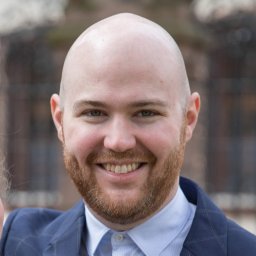 Joel Frohlich合作论文数1UCLA Center for Autism Research and Treatment (CART),, University of California, Los Angeles1
 Hubert Preissl合作论文数1
 Jesper Mogensen合作论文数Institute of Neurophysiology, University of Copenhagen1
 Pedro Mediano合作论文数Department of Computing, Imperial College London1
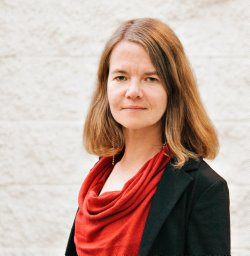 Julia Sophia Crone合作论文数Paracelsus Medical University1
 Ingar Brinck合作论文数Department of Philosophy;Lund University;Department of Philosophy, Lund University1
 Alireza Gharabaghi合作论文数Department of Neurosurgery, University of Tübingen1
 Tim Bayne合作论文数Department of Philosophy, School of Philosophical, Historical and International Studies, Monash University1




