This paper presents a novel event detector for implantable devices. The algorithm is based on a signal model which describes an event as a linear combination of basis functions. The linear combination involves two fundamental electrogram waveforms represented at different time scales. An efficient, low-complexity detector is developed using the dyadic wavelet transform with integer filter coefficients, and a generalized likelihood ratio test. The results show that reliable detection is obtained at an intermediate signal-to-noise ratio (SNR = 25 dB) for various common noise sources. In terms of probabilities of missed events and false alarms, an over-all performance of 0.7% and 0.1%, respectively, was achieved on electrograms corrupted by the different noise types at an intermediate SNR.
The purpose of this paper is to analyze and detect changes in body position (BPC) during electrocardiogram (ECG) recording. These changes are often manifested as shifts in the electrical axis and may be misclassified as ischemic changes during ambulatory monitoring. We investigate two ECG signal processing methods for detecting BPCs. Different schemes for feature extraction are used (spatial and scalar), while preprocessing, trend postprocessing and detection are identical. The spatial approach is based on VCG loop rotation angles and the scalar approach is based on the Karhunen-Loeve transform (KLT) coefficients. The methods are evaluated on two different databases: a database with annotated BPCs and the STAFF III database with recordings from rest and during angioplasty-induced ischemia but not including BPCs. The angle-based detector results in performance values of detection probability P/sub D/=95%, false alarm probability P/sub F/=3% in the BPC database and false alarm rate in the STAFF III database in control ECGs during rest R/sub F/(c)=2 h/sup -1/ (episodes per hour) and in ischemia recordings during angioplasty R/sub F/(a)=7 h/sup -1/, whereas the KLT-based detector produces values of P/sub D/=89%, P/sub F/=3%, R/sub F/(c)=4 h/sup -1/, and R/sub F/(a)=11 h/sup -1/, respectively. Including information on noise level in the detection process to reduce the number of false alarms, performance values of P/sub D//spl sime/90%, P/sub F//spl sime/1%, R/sub F/(c)/spl sime/1 h/sup -1/ and R/sub F/(a)/spl sime/2 h/sup -1/ are obtained with both methods. It is concluded that reliable detection of BPCs may be achieved using the ECG signal and should work in parallel to ischemia detectors.
A method for detecting body position changes that uses the surface vectorcardiogram (VCG) is presented. Such changes are often manifested as sudden shifts in the electrical axis of the heart and can erroneously be interpreted as acute ischaemic events. Axis shifts were detected by analysing the rotation angles obtained from the alignment of successive VCG loops to a reference loop. Following the rejection of angles originating from noise events, the detection of body position changes was performed on the angle series using a Bayesian approach. On a database of ECG recordings from normal subjects performing a predefined sequence of body position changes, a detection rate of 92% and a false alarm rate of 7% was achieved.
This paper presents a detection algorithm for pacemakers which is based on a signal model including a linear combination of descriptive functions. The functions are defined as different time scales of the two fundamental waveforms in the electrogram. An efficient detector structure is provided by the use of a dyadic wavelet transform with integer filter coefficients, followed by a generalized likelihood ratio test. The results show that reliable detection can be obtained for moderate to high noise levels for some common noise sources.
The measurement of subtle morphologic beat-to-beat variability in the electrocardiogram (ECG)/vectorcardiogram (VCG) is complicated by the presence of noise which is caused by, e.g., respiration and muscular activity. A method was recently presented which reduces the influence of such noise by performing spatial and temporal alignment of VCG loops. The alignment is performed in terms of scaling, rotation and time synchronization of the loops. Using an ECG simulation model based on propagation of action potentials in cardiac tissue, the ability of the method to separate morphologic variability of physiological origin from respiratory activity was studied. Morphologic variability was created by introducing a random variation in action potential propagation between different compartments. The results indicate that the separation of these two activities can be done accurately at low to moderate noise levels (less than 10 microV). At high noise levels, the estimation of the rotation angles was found to break down in an abrupt manner. It was also shown that the breakdown noise level is strongly dependent on loop morphology; a planar loop corresponds to a lower breakdown noise level than does a nonplanar loop.
Changes in body position are sometimes mistaken for myocardial ischemia during ECG monitoring in the coronary care unit. Two different methods for detecting body position changes based on spatial and scalar approaches are investigated. These methods have been tested in two databases containing controlled body position changes, and ischemic episodes, respectively. The results show that reliable detection is possible in more than 90% of the cases
Changes in body position are sometimes mistaken for as myocardial ischemia during ambulatory ECG monitoring. Two different methods for detecting body position changes based on spatial and scalar approaches are investigated. The results show that reliable detection is possible in more than 90% of the cases.
The performance of least squares VCG loop alignment by rotation, scaling and time synchronization is investigated in the presence of noise. The loop alignment is studied using simulated signals obtained from an action potential model which introduces a certain amount of morphologic beat-to-beat variability. The effects of noise due to respiration and muscular activity are studied in terms of morphologic variability and parameter estimate accuracy.
 Leif Sörnmo合作论文数Division for Biomedical Engineering, Department of Biomedical Engineering, Faculty of Engineering, Lund University9
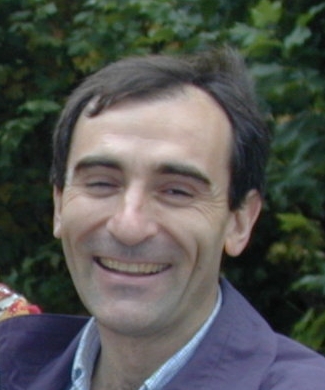 Pablo Laguna Lasosa合作论文数Department of Electrical Engineering, School of Engineering, University of Zaragoza;Aragón Institute for Engineering Research, University of Zaragoza6
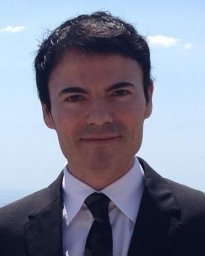 José García合作论文数Communications Technologies Group (GTC), Aragón Institute of Engineering Research (I3A), University of Zaragoza, Spain4
 Björn Wohlfart合作论文数2
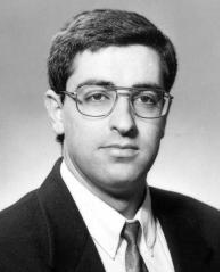 S. Olmos合作论文数University of Zaragoza Communication Technologies Group (GTC),, Aragón Institute of Engineering Research (I3A)2Olle Pahlm合作论文数Department of Clinical Physiology (Lund),Lund University1
 Eva Carro合作论文数Research Center. Hospital 12 de Octubre1




