Microfabrication techniques allow the development and production of artificial superhydrophobic surfaces that possess a precisely controlled roughness at the micrometer level, typically achieved through the arrangement of micropillar structures in periodic patterns. In this work, we analyze the stability and energy barrier of droplets in the Cassie-Baxter (CB) state on such periodic patterns. In addition, we further develop a transition criterion using the CB equation and derive an improved version which allows predicting for which pillar geometries, equilibrium contact angles, and droplet volumes the CB state switches from a metastable to an unstable state. This enables a comparison with existing experiments and three-dimensional multiphase Lattice Boltzmann simulations for different pillar distances, two contact angles, and two droplet volumes, where a good agreement has been found.
Power output of nuclear reactor and heat exchange between fuel assembly and the coolant can be severely affected by the presence of CRUD on the cladding of the fuel assembly. To understand the flow and nucleation boiling processes in the presence of CRUD, a Lattice Boltzmann model for the thermal 3D multiphase flow was developed and implemented in a high-performance multi-GPU-parallel code. The model is applied to procedurally generated CRUD-like structures and the emergence of bubbles due to superheat is investigated. The simulations predict a shorter evaporation time within chimney-like structures as well as the emergence of bubbles at the top layer of the CRUD.
The mechanism of bubble nucleation in boiling water at solid surface remains poorly understood. In this study, the water boiling and bubble nucleation density under nuclear reactor operation conditions were investigated by multiphase Lattice Boltzmann and Molecular Dynamics simulations. The developed multiscale model takes into account the surface energy of ZrO2 cladding in different crystallographic planes obtained by molecular dynamics simulations and uses it to inform the corresponding contact angle of two-phase fluid in the thermal multiphase Lattice Boltzmann model. The model describes the bubble formation on a rough surface due to boiling and predicts the number of active nucleation sites on surfaces of different roughness. Further, the effect of the different contact angles on bubble dynamics while in close contact with the surface is investigated. The obtained results are in good agreement with experimental observations and provide functional relationships between interface properties (roughness, surface energy) and the nucleation site density, necessary for macroscopic simulations of the boiling phenomena.
This work uses the smoothed particle hydrodynamics (SPH) meshless numerical method in order to investigate the behaviour of a water sheet falling under gravity by reproducing the experimental results of a laboratory chute of 9.5 m height. This kind of flow occurs typically over dam ogee-type spillways. The focus is on the trajectory and velocity of the water sheet as well as on the pressure upon impact. Simulations using a combination of adaptive particle refinement, surface tension model and air friction model were tested. The SPH simulations with refinement show good agreement with the experimental pressure results for all comparisons, while using air friction allows correct modelling of the falling velocity distribution.
Membrane distillation (MD) is a thermally driven separation process that is operated below boiling point. Since the performance of MD modules is still comparatively low, current research aims to improve the understanding of the membrane structure and its underlying mechanisms at the pore level. Based on existing realistic 3D membrane geometries (up to 0.5 billion voxels with 39nm resolution) obtained from ptychographic X-ray computed tomography, the D3Q27 lattice Boltzmann (LB) method was used to investigate the interaction of the liquid and gaseous phase with the porous membrane material. In particular, the Shan and Chen multi-phase model was used to simulate multi-phase flow at the pore level. We investigated the liquid entry pressure of different membrane samples and analysed the influence of different micropillar structures on the Wenzel and Cassie–Baxter state of water droplets on rough hydrophobic surfaces. Moreover, we calculated the liquid entry pressure required for entering the membrane pores and extracted realistic water contact surfaces for different membrane samples. The influence of the micropillars and flow on the water-membrane contact surface was investigated. Finally, we determined the air–water interface within a partially saturated membrane, finding that the droplet size and distribution correlated with the porosity of the membrane.
DualSPHysics is a weakly compressible smoothed particle hydrodynamics (SPH) Navier-Stokes solver initially conceived to deal with coastal engineering problems, especially those related to wave impact with coastal structures. Since the first release back in 2011, DualSPHysics has shown to be robust and accurate for simulating extreme wave events along with a continuous improvement in efficiency thanks to the exploitation of hardware such as graphics processing units (GPUs) for scientific computing or the coupling with wave propagating models such as SWASH and OceanWave3D. Numerous additional functionalities have also been included in the DualSPHysics package over the last few years which allow the simulation of fluid-driven objects. The use of the discrete element method (DEM) has allowed the solver to simulate the interaction among different bodies (sliding rocks, for example), which provides a unique tool to analyse debris flows. In addition, the recent coupling with other solvers like Project Chrono or MoorDyn has been a milestone in the development of the solver. Project Chrono allows the simulation of articulated structures with joints, hinges, sliders and springs and MoorDyn allows simulating moored structures. Both functionalities make DualSPHysics one of the meshless model world leaders in the simulation of offshore energy harvesting devices. Lately, the present state of maturity of the solver goes beyond single phase simulations, allowing multi-phase simulations with gas-liquid and a combination of Newtonian and non-Newtonian models expanding further the capabilities and range of applications for the DualSPHysics solver. These advances and functionalities make DualSPHysics a state-of-the-art meshless solver with emphasis on free-surface flow modelling.
The present work uses the Smoothed Particle Hydrodynamics (SPH) meshless numerical method in order to investigate the behaviour of a water sheet falling under gravity by comparing the simulation to the results of an experimental chute of 10m height. The present model is capable of predicting the falling velocity and the trajectory of the water sheet, as observed on the experiment.
This paper investigates the applicability of Smoothed Particle Hydrodynamics (SPH) for regular wave overtopping. The best practices for creating a 3-D wave simulation using SPH are investigated, focusing on the effect of numerical and physical parameters and creating the geometry of the domain. The simulation is compared to experiments conducted on a channel with complex dike geometry with particular interest in the overtopping volume and the free surface position. Close agreement was found for the free surface position and the volume of overtopped water between the experiment and the simulation.
This report covers the implementation of Message Passing Interface (MPI) and the Zoltan library in the Smoothed Particle Hydrodynamics (SPH) code DualSPHysics in preparation for massive parallelisation. The implementation was performed in two stages. During the first stage a new buffer system was developed to allow for asynchronous communication between nodes and data handling was altered to allow for a minimised memory footprint (Workpackage 1). The asynchronous communications were used to overlap node communication with the particle computation minimising idle time. A geometric domain decomposition scheme was created based on domain slices along the main axis. The scheme was used to create a data exchange system between nodes which was used both for creating the neighbour list and for identifying particles moving between nodes (Workpackage 2). The second stage of the project was the integration of the Zoltan library including its communication module and the Hilbert space-filling curve to create a cell map while maintaining spatial locality (Workpackage 3).
A numerical inconsistency has emerged for multi-phase smoothed particle hydrodynamics simulations when using very high resolution, made possible by graphical processing units. In violent flows unphysical voids and phase separation occur ultimately leading to numerical instability. New Fickian-based particle shifting algorithms with a selectively activated free-surface correction are developed for air-water simulations to prevent the creation of unnatural voids and maintain numerical stability through nearly uniform distributions. Using the shifting algorithm without surface correction in the air phase is recommended, with marginal improvements if the shifting algorithm is not applied in water. However, maintaining shifting in water would avoid possible void occurrence. The improvement is demonstrated using a dry-bed dam break and a sloshing tank case. A 3D case involving the impact of the water flow on an obstacle is compared with experimental data. The multi-phase SPH scheme gives closer agreement with experiment than a single-phase simulation.
The processes that cause the creation of a variety of sediment morphological features, e.g. laminated beds, ripples, or dunes, are based on the initial motion of individual sediment grains. However, with experimental techniques it is difficult to measure the flow characteristics, i.e. the velocity of the pore water flow in sediments, at a sufficient resolution and in a non-intrusive way. As a result, the role of fluid infiltration at the surface and in the interior affecting the initiation of motion of a sediment bed is not yet fully understood. Consequently, there is a strong need for numerical models, since these are capable of quantifying fluid driven sediment transport processes of complex sediment beds composed of irregular shapes.
This paper presents the acceleration of multi-phase smoothed particle hydrodynamics (SPH) using a graphics processing unit (GPU) enabling large numbers of particles (10–20 million) to be simulated on just a single GPU card. With novel hardware architectures such as a GPU, the optimum approach to implement a multi-phase scheme presents some new challenges. Many more particles must be included in the calculation and there are very different speeds of sound in each phase with the largest speed of sound determining the time step. This requires efficient computation. To take full advantage of the hardware acceleration provided by a single GPU for a multi-phase simulation, four different algorithms are investigated: conditional statements, binary operators, separate particle lists and an intermediate global function. Runtime results show that the optimum approach needs to employ separate cell and neighbour lists for each phase. The profiler shows that this approach leads to a reduction in both memory transactions and arithmetic operations giving significant runtime gains. The four different algorithms are compared to the efficiency of the optimised single-phase GPU code, DualSPHysics, for 2-D and 3-D simulations which indicate that the multi-phase functionality has a significant computational overhead. A comparison with an optimised CPU code shows a speed up of an order of magnitude over an OpenMP simulation with 8 threads and two orders of magnitude over a single thread simulation. A demonstration of the multi-phase SPH GPU code is provided by a 3-D dam break case impacting an obstacle. This shows better agreement with experimental results than an equivalent single-phase code. The multi-phase GPU code enables a convergence study to be undertaken on a single GPU with a large number of particles that otherwise would have required large high performance computing resources.
This paper investigates different programming algorithms for the acceleration of smoothed particle hydrodynamics (SPH) multi-phase simulations on graphics processing units (GPUs) using a modified version of the DualSPHysics code. The algorithms are teste
 Nikolaos I. Prasianakis合作论文数Aerothermochemistry and Combustion Systems Lab (LAV),, ETH Zurich5
 Benedict Rogers合作论文数Department of Civil Engineering and Management, School of Engineering, Faculty of Science and Engineering, The University of Manchester4
 P Stansby合作论文数School of Mechanical, Aerospace and Civil Engineering, University of Manchester4
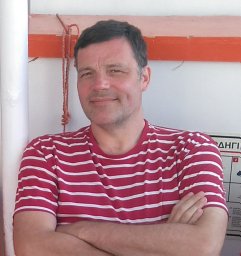 Damien Violeau合作论文数EDF R&D3Tobias Jager合作论文数2
 Georgios Fourtakas合作论文数Department of Mechanical, Aerospace and Civil Engineering, School of Engineering, Faculty of Science and Engineering, The University of Manchester2S. Leyer合作论文数Max-Planck-Institut für Plasmaphysik, Boltzmannstrasse 2, 85748 Garching, Germany2Sergey V. Churakov合作论文数2A. Tafuni合作论文数1S. V. Churakov合作论文数1m gomez gesteira合作论文数1
 Iván Martínez-Estévez合作论文数Environm Phys Lab, Univ Vigo1
 Thomas Fonty合作论文数EDF R&D1
 Remi Carmigniani合作论文数EDF R&D, LHSV1
 Bin Ma (马斌)合作论文数Agricultural College, Yangzhou University1
 George Dan Miron合作论文数Lab Waste Management, Paul Scherrer Inst1Gerhard Bartzke合作论文数1
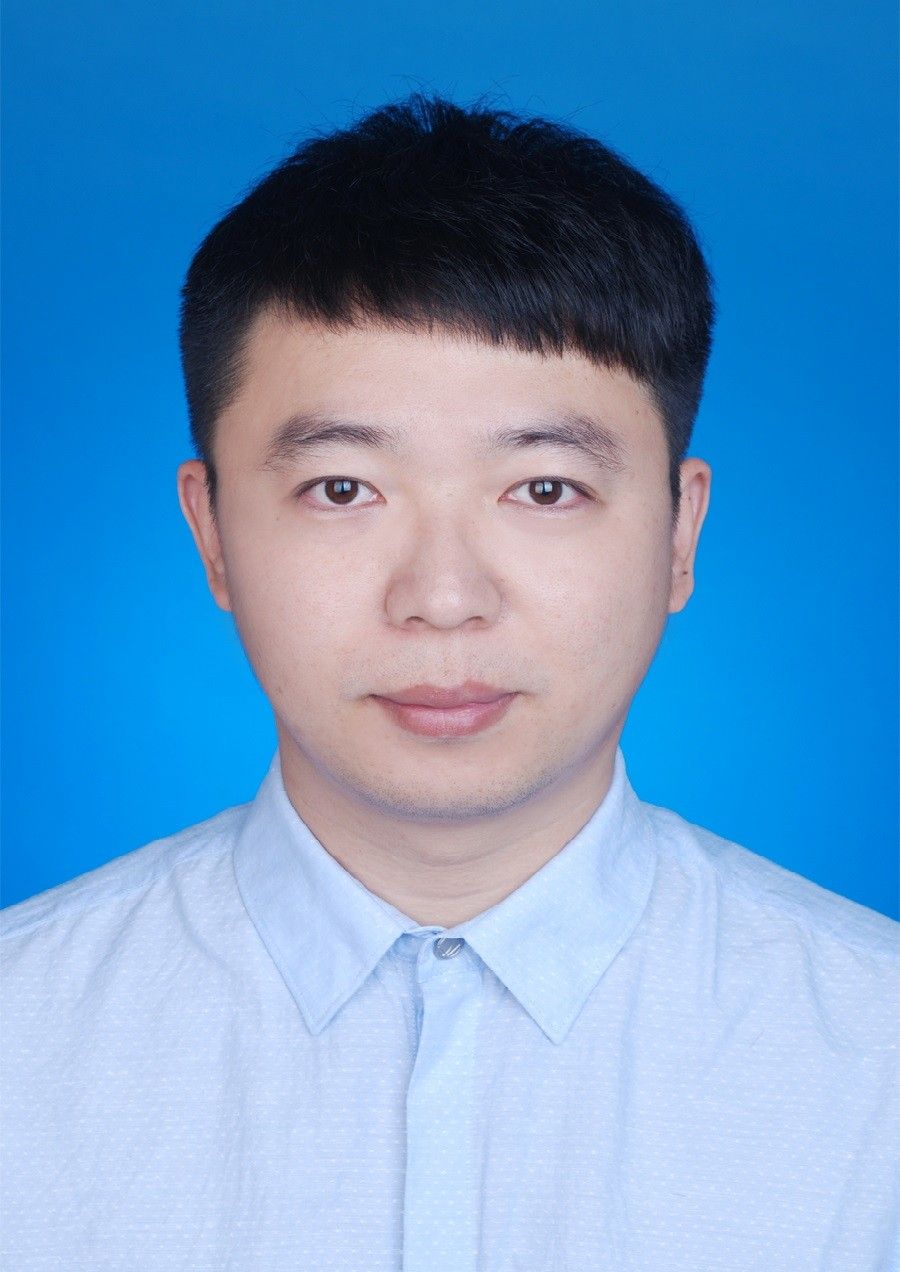 Haonan Peng (彭浩南)合作论文数Key Laboratory of Applied Surface and Colloid Chemistry, Ministry of Education, School of Chemistry & Chemical Engineering, Shaanxi Normal University1
 Renato Vacondio合作论文数Dept Engn & Architecture, Univ Parma1
 O. García-Feal合作论文数1
 Ricardo B. Canelas合作论文数1
 Karalis K合作论文数1
 Yohei Sato合作论文数1
 Corrado Altomare合作论文数Laboratori d'Enginyeria Maritima (LIM-CIIRC),, Universitat Politecnica de Catalunya (UPC),1
 Michele Griffa合作论文数Los Alamos National Laboratory1
 Agnès Leroy合作论文数Faculté Polytechnique, Université de Mons1
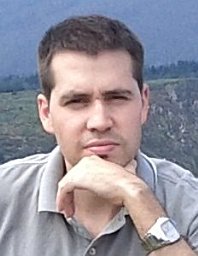 José M. Domínguez合作论文数Department of Ingenieria Molecular, Instituto Mexicano del Petróleo1
 Dmitrii A. Kulik合作论文数Waste Management Laboratory, Paul Scherrer Institute1Matthieu De Leffe合作论文数1
 Bojan Niceno合作论文数Thermal-Hydraulics Laboratory, Paul Scherrer Institute1
 A.J.C. Crespo合作论文数EPhysLab (Environmental Physics Laboratory),, Universidade de Vigo1Jose M. Dominguez-Vera合作论文数1




