Real-time video generation with Diffusion Transformers is bottlenecked by the quadratic cost of 3D self-attention, especially in real-time regimes that are both few-step and autoregressive, where errors compound across time and each denoising step must carry substantially more information. In this setting, we find that prior sparse-attention approximations break down, despite showing strong results for bidirectional, many-step diffusion. Specifically, we observe that video attention is not reliably sparse, but instead combines pronounced periodic structure driven by spatiotemporal position with dynamic, sparse semantic correspondences and dense mixing, exceeding the representational capacity of even oracle top-k attention. Building on this insight, we propose Monarch-RT, a structured attention parameterization for video diffusion models that factorizes attention using Monarch matrices. Through appropriately aligned block structure and our extended tiled Monarch parameterization, we achieve high expressivity while preserving computational efficiency. We further overcome the overhead of parameterization through finetuning, with custom Triton kernels. We first validate the high efficacy of Monarch-RT over existing sparse baselines designed only for bidirectional models. We further observe that Monarch-RT attains up to 95% attention sparsity with no loss in quality when applied to the state-of-the-art model Self-Forcing, making Monarch-RT a pioneering work on highly-capable sparse attention parameterization for real-time video generation. Our optimized implementation outperforms FlashAttention-2, FlashAttention-3, and FlashAttention-4 kernels on Nvidia RTX 5090, H100, and B200 GPUs respectively, providing kernel speedups in the range of 1.4-11.8X. This enables us, for the first time, to achieve true real-time video generation with Self-Forcing at 16 FPS on a single RTX 5090.
Large language models (LLMs) store factual knowledge in their parameters. While recent work has shown that this knowledge resides in MLP layers, existing constructive and mechanistic interpretability models of fact-storage in LLMs fail to explain the surprising empirical phenomenon that they store facts at an information-theoretically optimal rate. In this work, we develop a theoretical account of this phenomenon. We develop the first Transformer-compatible fact-storing MLP closed-form construction that satisfies the following three properties empirically observed in LLMs: it (i) attains optimal fact storage scaling, (ii) handles arbitrary input/output geometries, and (iii) works inside Transformers. Key to our work is to analyze the decoding margin of MLPs, whereas prior work only studies MLP fact storage. Under isotropic embeddings, our construction achieves information-theoretically optimal storage capacity scaling and requires 10-104× fewer parameters at matched fact count than prior constructions. For arbitrary key and value embeddings, we show that our construction attains the same storage capacity scaling, up to penalization factors depending on the embedding geometries. Moreover, we demonstrate that our constructed MLPs can be used within Transformer blocks for factual recall tasks at optimal capacity scaling, requiring 15-63× fewer parameters at matched fact count than prior constructions. Finally, as a proof-of-concept, we show that fact-storing MLPs enable modular fact editing by swapping a Transformer's MLP with a new one.
Real-time multimodal applications, including voice agents and interactive video generation, compose heterogeneous models into pipelines whose efficient deployment requires application-specific decisions about placement, streaming, and intra-model parallelism. Existing serving systems and auto-parallelism compilers commit to limited transformations and fixed workload assumptions, so achieving high performance on a new application requires hand-crafting an efficient implementation. We present FlashRT, an agent harness that guides coding agents to lift simple developer-written reference implementations into optimized multi-GPU deployments that flexibly weigh target metrics like latency and throughput. Using a new chain-of-program paradigm, FlashRT directs a generic coding agent through a multi-pass transformation process where an agent transforms the reference into an intermediate representation (IR) to capture data dependencies and persistent-state scopes, validates this IR via a sequential interpreter, and performs static analyses to identify candidate transformations. Then, the agent iteratively implements, verifies, and benchmarks each candidate under a measurement-gated optimization loop to produce effective deployments that span different hardware budgets. Across various applications, including video world models and multimodal LLMs, FlashRT converts reference implementations into highly efficient deployments, delivering up to 70x latency reduction and 2.8x throughput improvement on NVIDIA B200 GPUs. On AMD MI355X GPUs, FlashRT matches the peak latency reduction while increasing peak throughput improvement to 3.6x, demonstrating that agent-driven optimization can be more scalable on platforms with less mature expert optimization. In fact, for Qwen3-Omni text-to-audio inference, FlashRT reduces response latency by 65
Large language models are often used to answer queries grounded in large text corpora (e.g. codebases, legal documents, or chat histories) by placing the entire corpus in the context window and leveraging in-context learning (ICL). Although current models support contexts of 100K-1M tokens, this setup is costly to serve because the memory consumption of the KV cache scales with input length. We explore an alternative: training a smaller KV cache offline on each corpus. At inference time, we load this trained KV cache, which we call a Cartridge, and decode a response. Critically, the cost of training a Cartridge can be amortized across all the queries referencing the same corpus. However, we find that the naive approach of training the Cartridge with next-token prediction on the corpus is not competitive with ICL. Instead, we propose self-study, a training recipe in which we generate synthetic conversations about the corpus and train the Cartridge with a context-distillation objective. We find that Cartridges trained with self-study replicate the functionality of ICL, while being significantly cheaper to serve. On challenging long-context benchmarks, Cartridges trained with self-study match ICL performance while using 38.6x less memory and enabling 26.4x higher throughput. Self-study also extends the model's effective context length (e.g. from 128k to 484k tokens on MTOB) and surprisingly, leads to Cartridges that can be composed at inference time without retraining.
Scholars investigating ethical AI, especially in high stakes settings like child welfare, have arguably been seeking ways to embed notions of justice into the design of these critical technologies. These efforts often operationalize justice at the upper and lower bounds of its continuum, defining it in terms of progressiveness or reform. Before characterizing the type of justice an AI tool should have baked in, we argue for a systematic discovery of how justice is executed by the recipient system: a method the Value Sensitive Design (VSD) framework terms Value Source analysis. The present work asks: how is justice operationalized within current child welfare administrative policy and what does it teach us about how to develop AI? We conduct a mixed-methods analysis of child welfare policy in the state of New York and find a range of functional definitions of justice (which we term principles). These principles reflect more nuanced understandings of justice across a spectrum of contexts: from established concepts like fairness and equity to less common foci like the proprietary rights of parents and children. Our work contributes to a deeper understanding of the interplay between AI and policy, highlighting the importance of operationalized values in adjudicating our development of ethical design requirements for high stakes decision settings.
The success of large language models (LLMs) can be attributed in part to their ability to efficiently store factual knowledge as key-value mappings within their MLP parameters. Recent work has proposed explicit weight constructions to build such fact-storing MLPs, providing an improved understanding of LLM fact storage mechanisms. In this paper, we introduce an MLP construction framework that improves over previous constructions in three areas: it 1) works for all but a measure-zero set of feasible input-output pairs, 2) achieves asymptotically optimal parameter efficiency matching information-theoretic bounds for some embeddings, and 3) maintains usability within Transformers for factual recall. Through our improvements, we 1) discover a metric on value embeddings that characterizes facts-per-parameter scaling for both constructed and gradient-descent-trained MLPs, 2) identify a simple encoder-decoder mechanism that empirically matches gradient-descent MLP facts-per-parameter asymptotics across all the inputs and outputs we test, and 3) uncover a fundamental tradeoff between an MLP's fact-storage capacity and its usability within Transformers. Finally, we demonstrate a proof-of-concept application of fact-storing MLPs: modular fact editing on one-layer Transformers by replacing entire MLPs at once.
Physics-informed neural networks (PINNs) offer a flexible way to solve partial differential equations (PDEs) with machine learning, yet they still fall well short of the machine-precision accuracy many scientific tasks demand. In this work, we investigate whether the precision ceiling comes from the ill-conditioning of the PDEs or from the typical multi-layer perceptron (MLP) architecture. We introduce the Barycentric Weight Layer (BWLer), which models the PDE solution through barycentric polynomial interpolation. A BWLer can be added on top of an existing MLP (a BWLer-hat) or replace it completely (explicit BWLer), cleanly separating how we represent the solution from how we take derivatives for the PDE loss. Using BWLer, we identify fundamental precision limitations within the MLP: on a simple 1-D interpolation task, even MLPs with O(1e5) parameters stall around 1e-8 RMSE – about eight orders above float64 machine precision – before any PDE terms are added. In PDE learning, adding a BWLer lifts this ceiling and exposes a tradeoff between achievable accuracy and the conditioning of the PDE loss. For linear PDEs we fully characterize this tradeoff with an explicit error decomposition and navigate it during training with spectral derivatives and preconditioning. Across five benchmark PDEs, adding a BWLer on top of an MLP improves RMSE by up to 30x for convection, 10x for reaction, and 1800x for wave equations while remaining compatible with first-order optimizers. Replacing the MLP entirely lets an explicit BWLer reach near-machine-precision on convection, reaction, and wave problems (up to 10 billion times better than prior results) and match the performance of standard PINNs on stiff Burgers' and irregular-geometry Poisson problems. Together, these findings point to a practical path for combining the flexibility of PINNs with the precision of classical spectral solvers.
This paper investigates whether sequence models can learn to perform numerical algorithms, e.g. gradient descent, on the fundamental problem of least squares. Our goal is to inherit two properties of standard algorithms from numerical analysis: (1) machine precision, i.e. we want to obtain solutions that are accurate to near floating point error, and (2) numerical generality, i.e. we want them to apply broadly across problem instances. We find that prior approaches using Transformers fail to meet these criteria, and identify limitations present in existing architectures and training procedures. First, we show that softmax Transformers struggle to perform high-precision multiplications, which prevents them from precisely learning numerical algorithms. Second, we identify an alternate class of architectures, comprised entirely of polynomials, that can efficiently represent high-precision gradient descent iterates. Finally, we investigate precision bottlenecks during training and address them via a high-precision training recipe that reduces stochastic gradient noise. Our recipe enables us to train two polynomial architectures, gated convolutions and linear attention, to perform gradient descent iterates on least squares problems. For the first time, we demonstrate the ability to train to near machine precision. Applied iteratively, our models obtain 100,000x lower MSE than standard Transformers trained end-to-end and they incur a 10,000x smaller generalization gap on out-of-distribution problems. We make progress towards end-to-end learning of numerical algorithms for least squares.
Conjoint experiments have become central to survey research in political science and related fields because they allow researchers to study preferences across multiple attributes simultaneously. Beyond estimating main effects, scholars increasingly analyze heterogeneity through subgroup analysis and contextual variables, raising methodological challenges in detecting and interpreting interaction effects. Statistical power constraints, common in survey experiments, further complicate this task. This paper addresses the question: how can both main and interaction effects be reliably inferred in conjoint studies? We contribute in two ways. First, we conduct a systematic evaluation of leading approaches, including post-hoc corrections, sparse regression methods, and Bayesian models, across simulation regimes that vary sparsity, noise, and data availability. Second, we propose a novel black-box inference framework that leverages machine learning to recover main and interaction effects in conjoint experiments. Our approach balances computational efficiency with accuracy, providing a practical tool for researchers studying heterogeneous effects.
Teaching applied ethics in computer science has shifted from a perspective of teaching about professional codes of conduct and an emphasis on risk management towards a broader understanding of the impacts of computing on humanity and the environment and the principles and practices of responsible computing. One of the primary shifts in the approach to teaching computing ethics comes from research in the social sciences and humanities. This position is grounded in the idea that all computing artifacts, projects, tools, and products are situated within a set of ideas, attitudes, goals, and cultural norms. This means that all computing endeavors have embedded within them a set of values. To teach responsible computing always requires us to first recognize that computing happens in a context that is shaped by cultural values, including our own professional culture and values. The purpose of this paper is to highlight current scholarship, principles, and practices in the teaching of responsible computing in undergraduate computer science settings. The paper is organized around four primary sections: 1) a high-level rationale for the adoption of different pedagogical approaches based on program context and course learning goals, 2) a brief survey of responsible computing pedagogical approaches; 3) illustrative examples of how topics within the CS 2023 Social, Ethical, and Professional (SEP) knowledge area can be implemented and assessed across the broad spectrum of undergraduate computing courses; and 4) links to examples of current best practices, tools, and resources for faculty to build responsible computing teaching into their specific instructional settings and CS2023 knowledge areas.
Attention-free language models that combine gating and convolutions are growing in popularity due to their efficiency and increasingly competitive performance. To better understand these architectures, we pretrain a suite of 17 attention and "gated-convolution" language models, finding that SoTA gated-convolution architectures still underperform attention by up to 2.1 perplexity points on the Pile. In fine-grained analysis, we find 82% of the gap is explained by each model's ability to recall information that is previously mentioned in-context, e.g. "Hakuna Matata means no worries Hakuna Matata it means no" $\rightarrow$ "??". On this task, termed "associative recall", we find that attention outperforms gated-convolutions by a large margin: a 70M parameter attention model outperforms a 1.4 billion parameter gated-convolution model on associative recall. This is surprising because prior work shows gated convolutions can perfectly solve synthetic tests for AR capability. To close the gap between synthetics and real language, we develop a new formalization of the task called multi-query associative recall (MQAR) that better reflects actual language. We perform an empirical and theoretical study of MQAR that elucidates differences in the parameter-efficiency of attention and gated-convolution recall. Informed by our analysis, we evaluate simple convolution-attention hybrids and show that hybrids with input-dependent sparse attention patterns can close 97.4% of the gap to attention, while maintaining sub-quadratic scaling. Our code is accessible at: https://github.com/HazyResearch/zoology.
Convolution-based language models are asymptotically more efficient than Transformers and recent work shows they are competitive in quality. To better understand the relative language modeling quality of these architectures, we pre-train a suite of 14 language models across attention and convolution-based architectures, finding that the SoTA gated convolution architectures still underperform Transformers by up to 2.1 perplexity points on the Pile. Our analysis shows that a single language modeling capability, termed associative recall (AR) — output the next token using the prior context, e.g. Hakuna Matata means no worries Hakuna Matata it means no → ?? — accounts for 76% of the perplexity gap on average. We show the issue arises because the convolution-based models process sequences using fixed filters that do not depend on the input data, making it difficult to handle a variable number of input-specific recall distances (e.g. 4 tokens between instances of Hakuna vs. 5 between worries above). Theoretically, our core contributions are precise bounds for solving AR, applying to the entire class of gated convolution models, that show dimensionality scaling in sequence length. Meanwhile, attention enables tokens separated by any distance to interact and solves AR with model dimension independent of sequence length. We present (1) a concise synthetic AR task, on which we validate the theoretically predicted scaling holds, and (2) a series of architectural modifications, theoretically and empirically showing that they enable solving AR with improved scaling. Our analysis motivates a set of strong baseline models that outperform Transformers at 150M and 355M parameters. We release all checkpoints and code for future analysis.
Recent work has shown that attention-based language models excel at "recall", the ability to ground generations in tokens previously seen in context. However, the efficiency of attention-based models is bottle-necked during inference by the KV-cache's aggressive memory consumption. In this work, we explore whether we can improve language model efficiency (e.g. by reducing memory consumption) without compromising on recall. By applying experiments and theory to a broad set of architectures, we identify a key tradeoff between a model's recurrent state size and recall ability. We show that efficient alternatives to attention (e.g. H3, Mamba, RWKV) maintain a fixed-size recurrent state, but struggle at recall. We propose BASED a simple architecture combining linear and sliding window attention. By varying BASED window size and linear attention feature dimension, we can dial the state size and traverse the Pareto frontier of the recall-memory tradeoff curve, recovering the full quality of attention on one end and the small state size of attention-alternatives on the other. We train language models up to $1.3$b parameters and show that BASED matches the strongest sub-quadratic models (e.g. Mamba) in perplexity and outperforms them on real-world recall-intensive tasks by 10.36 accuracy points. We further develop IO-aware algorithms that enable BASED to provide 24× higher throughput on language generation than FlashAttention-2, when generating 1024 tokens using 1.3b parameter models. Overall, BASED expands the Pareto frontier of the throughput-recall tradeoff space beyond prior architectures.
Recurrent large language models that compete with Transformers in language modeling perplexity are emerging at a rapid rate (e.g., Mamba, RWKV). Excitingly, these architectures use a constant amount of memory during inference. However, due to the limited memory, recurrent LMs cannot recall and use all the information in long contexts leading to brittle in-context learning (ICL) quality. A key challenge for efficient LMs is selecting what information to store versus discard. In this work, we observe the order in which information is shown to the LM impacts the selection difficulty. To formalize this, we show that the hardness of information recall reduces to the hardness of a problem called set disjointness (SD), a quintessential problem in communication complexity that requires a streaming algorithm (e.g., recurrent model) to decide whether inputted sets are disjoint. We empirically and theoretically show that the recurrent memory required to solve SD changes with set order, i.e., whether the smaller set appears first in-context. Our analysis suggests, to mitigate the reliance on data order, we can put information in the right order in-context or process prompts non-causally. Towards that end, we propose: (1) JRT-Prompt, where context gets repeated multiple times in the prompt, effectively showing the model all data orders. This gives 11.0 ± 1.3 points of improvement, averaged across 16 recurrent LMs and the 6 ICL tasks, with 11.9× higher throughput than FlashAttention-2 for generation prefill (length 32k, batch size 16, NVidia H100). We then propose (2) JRT-RNN, which uses non-causal prefix-linear-attention to process prompts and provides 99% of Transformer quality at 360M params., 30B tokens and 96% at 1.3B params., 50B tokens on average across the tasks, with 19.2× higher throughput for prefill than FA2.
Theory of Computing Systems.To commemorate his extraordinary contributions to theoretical computer science, we solicited papers from the theory community.Nine groups responded to the call, which we present in this issue.-In "Holographic algorithms on domains of general size," a Zhiguo Fu and Jin-Yi Cai study the Simultaneously Realizability Problem in holographic algorithm construction.The authors construct a polynomial-time algorithm for the problem on domain size k ≥ 3 where the signatures are realizable by "matchgates" over a basis of size 1.-In "Subclasses of Ptime interpreted by programming languages," Siddharth Bhaskar, Cynthia Kop, and Jakob Grue Simonsen study the cons-free programming language of Neil Jones (who collaborated with Alan and, sadly, left this universe in April this year).They study the relationship between polynomial-step cons-free programs, polynomial-size circuits, and polynomial time-bounded Turing machines.They show that for each polynomial p, a polynomial-time decidable relation R exists that forces cons-free programs to spend polynomial time almost everywhere.-The paper "Dimension and the structure of complexity classes," by Jack Lutz, Neil Lutz, and Elvira Mayordomo investigates the Point-to-Set Principle in complexitytheoretic dimension theory, which connects the Hausdorff and the algorithm
State space models (SSMs) have demonstrated state-of-the-art sequence modeling performance in some modalities, but underperform attention in language modeling. Moreover, despite scaling nearly linearly in sequence length instead of quadratically, SSMs are still slower than Transformers due to poor hardware utilization. In this paper, we make progress on understanding the expressivity gap between SSMs and attention in language modeling, and on reducing the hardware barrier between SSMs and attention. First, we use synthetic language modeling tasks to understand the gap between SSMs and attention. We find that existing SSMs struggle with two capabilities: recalling earlier tokens in the sequence and comparing tokens across the sequence. To understand the impact on language modeling, we propose a new SSM layer, H3, that is explicitly designed for these abilities. H3 matches attention on the synthetic languages and comes within 0.4 PPL of Transformers on OpenWebText. Furthermore, a hybrid 125M-parameter H3-attention model that retains two attention layers surprisingly outperforms Transformers on OpenWebText by 1.0 PPL. Next, to improve the efficiency of training SSMs on modern hardware, we propose FlashConv. FlashConv uses a fused block FFT algorithm to improve efficiency on sequences up to 8K, and introduces a novel state passing algorithm that exploits the recurrent properties of SSMs to scale to longer sequences. FlashConv yields 2$\times$ speedup on the long-range arena benchmark and allows hybrid language models to generate text 2.4$\times$ faster than Transformers. Using FlashConv, we scale hybrid H3-attention language models up to 2.7B parameters on the Pile and find promising initial results, achieving lower perplexity than Transformers and outperforming Transformers in zero- and few-shot learning on a majority of tasks in the SuperGLUE benchmark.
Recent news and national reports have significantly increased interest in new approaches for teaching responsible computing to help students understand, evaluate, and address the social impact of existing and emerging computing technologies. This 3-hour workshop will be offered in two workshop format sessions: in-person and online. The first part of each session will introduce responsible computing and its connections to RESPECT and Cultural Competence in Computing (3C). Next, we will provide a short overview of our own work in teaching responsible computing along with frameworks, tools, and best practices. We will showcase four different approaches to teaching responsible computing across institutional settings (high school, college, university), interdisciplinary partnerships (computing, philosophy, STS, digital humanities), and instructional formats (dedicated courses, embedded lessons, design challenges, bootcamps). The workshop presentations will focus on practical advice about how to get started, available resources, securing support from administration and colleagues, and other considerations for this work. In the second half of the workshop, participants will work in small groups to co-design potential lessons based on shared topical interests, institutional settings, and/or learning objectives. Facilitators will provide guidance, recommendations, and classroom examples to help the small groups to complete draft lessons that will be disseminated among workshop participants and on the workshop website. A laptop or internet connected device is needed to participate in the small group activity. Handouts/materials will be provided on the workshop website.
State space models (SSMs) have high performance on long sequence modeling but require sophisticated initialization techniques and specialized implementations for high quality and runtime performance. We study whether a simple alternative can match SSMs in performance and efficiency: directly learning long convolutions over the sequence. We find that a key requirement to achieving high performance is keeping the convolution kernels smooth. We find that simple interventions--such as squashing the kernel weights--result in smooth kernels and recover SSM performance on a range of tasks including the long range arena, image classification, language modeling, and brain data modeling. Next, we develop FlashButterfly, an IO-aware algorithm to improve the runtime performance of long convolutions. FlashButterfly appeals to classic Butterfly decompositions of the convolution to reduce GPU memory IO and increase FLOP utilization. FlashButterfly speeds up convolutions by 2.2$\times$, and allows us to train on Path256, a challenging task with sequence length 64K, where we set state-of-the-art by 29.1 points while training 7.2$\times$ faster than prior work. Lastly, we introduce an extension to FlashButterfly that learns the coefficients of the Butterfly decomposition, increasing expressivity without increasing runtime. Using this extension, we outperform a Transformer on WikiText103 by 0.2 PPL with 30% fewer parameters.
Machine learning models are increasingly being scaled in both sequence length and model dimension to reach longer contexts and better performance. However, existing architectures such as Transformers scale quadratically along both these axes. We ask: are there performant architectures that can scale sub-quadratically along sequence length and model dimension? We introduce Monarch Mixer (M2), a new architecture that uses the same sub-quadratic primitive along both sequence length and model dimension: Monarch matrices, a simple class of expressive structured matrices that captures many linear transforms, achieves high hardware efficiency on GPUs, and scales sub-quadratically. As a proof of concept, we explore the performance of M2 in three domains: non-causal BERT-style language modeling, ViT-style image classification, and causal GPT-style language modeling. For non-causal BERT-style modeling, M2 matches BERT-base and BERT-large in downstream GLUE quality with up to 27% fewer parameters, and achieves up to 9.1$\times$ higher throughput at sequence length 4K. On ImageNet, M2 outperforms ViT-b by 1% in accuracy, with only half the parameters. Causal GPT-style models introduce a technical challenge: enforcing causality via masking introduces a quadratic bottleneck. To alleviate this bottleneck, we develop a novel theoretical view of Monarch matrices based on multivariate polynomial evaluation and interpolation, which lets us parameterize M2 to be causal while remaining sub-quadratic. Using this parameterization, M2 matches GPT-style Transformers at 360M parameters in pretraining perplexity on The PILE—showing for the first time that it may be possible to match Transformer quality without attention or MLPs.
Linear time-invariant state space models (SSM) are a classical model from engineering and statistics, that have recently been shown to be very promising in machine learning through the Structured State Space sequence model (S4). A core component of S4 involves initializing the SSM state matrix to a particular matrix called a HiPPO matrix, which was empirically important for S4's ability to handle long sequences. However, the specific matrix that S4 uses was actually derived in previous work for a particular time-varying dynamical system, and the use of this matrix as a time-invariant SSM had no known mathematical interpretation. Consequently, the theoretical mechanism by which S4 models long-range dependencies actually remains unexplained. We derive a more general and intuitive formulation of the HiPPO framework, which provides a simple mathematical interpretation of S4 as a decomposition onto exponentially-warped Legendre polynomials, explaining its ability to capture long dependencies. Our generalization introduces a theoretically rich class of SSMs that also lets us derive more intuitive S4 variants for other bases such as the Fourier basis, and explains other aspects of training S4, such as how to initialize the important timescale parameter. These insights improve S4's performance to 86% on the Long Range Arena benchmark, with 96% on the most difficult Path-X task.
 Christopher Ré合作论文数Department of Computer Science, School of Engineering, Stanford University;Stanford Artificial Intelligence Laboratory, Stanford University38
 Venkatesan Guruswami合作论文数Department of Electrical Engineering & Computer Sciences, University of California, Berkeley;Department of Mathematics, University of California, Berkeley14
 Tri Dao合作论文数Together AI;Princeton University13
 Albert Gu合作论文数Carnegie Mellon University12
 Steve Uurtamo合作论文数10
 Hung Q. Ngo合作论文数RelationalAI9
 Mary Wootters合作论文数Department of Electrical Engineering, Stanford University;Institute for Computational and Mathematical Engineering, Stanford University9
 Sabri Eyuboglu合作论文数Stanford Machine Learning Group, Stanford University8
 Murat Demirbas合作论文数Department of Computer Science and Engineering, University at Buffalo8
 Anna C. Gilbert合作论文数Department of Mathematics, Yale University;Department of Statistics & Data Science, Yale University8
 Simran Arora合作论文数Department of Computer Science, Stanford University7Vijay Kumar合作论文数7
 Hung Ngo合作论文数CoTAI - Center of Talent in AI7Aman Timalsina合作论文数6Isys Johnson合作论文数6
 Beidi Chen合作论文数Department of Electrical and Computer Engineering, College of Engineering, Carnegie Mellon University;FAIR, Meta6
 Ning Chen合作论文数Department of Mathematics, Nanyang Technological University6
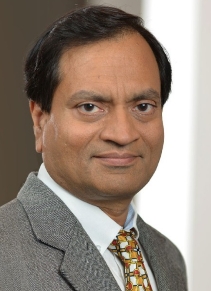 Pradeep Dubey合作论文数Parallel Computing Lab, Intel Corporation6
 Elyahou Kapon合作论文数Institute of Quantum Electronics and Photonics, Faculty of Basic Sciences, Ecole Polytechnique Federale de Lausanne6
 Charanjit S. Jutla合作论文数IBM Thomas J. Watson Research Center6
 Mahmoud Abo Khamis合作论文数RelationalAI6
 Dan Fu合作论文数Department of Computer Science, Stanford University5Sai Vikneshwar Mani Jayaraman合作论文数5
 Aranyak Mehta合作论文数Google Research5
 Michael Poli (宁致远)合作论文数The Stanford Artificial Intelligence Laboratory;Center for Research on Foundation Models, Stanford University;Liquid AI;Together AI;DiffeqML5
 Robert Krauthgamer合作论文数Department of Computer Science & Applied Mathematics, Faculty of Mathematics and Computer Science, Weizmann Institute of Science5
 Dung Nguyen合作论文数Department of Computer & Information Science & Engineering, University of Florida5
 Jesse Hartloff合作论文数5Sergey Tulyakov合作论文数Center for Excellence in Document Analysis and Recognition (CEDAR), SUNY at Buffalo.5
 Ely Porat合作论文数Department of Computer Science, Bar-Ilan University;Simons Institute for the Theory of Computing5
 Venu Govindaraju合作论文数Center for Unified Biometrics and Sensors, Department Computer Science and Engineering, School of Engineering and Applied Sciences, University at Buffalo, The State University of New York;NSF National AI Institute for Exceptional Education5
 Jessica Grogan合作论文数University at Buffalo4
 James Zou合作论文数Department of Biomedical Data Science, Stanford University;InterVenn Biosciences;Chan Zuckerberg Biohub4
 Pankaj Rohatgi合作论文数Google4
 Nikhil Bansal合作论文数Department of Computer Science & Engineering, College of Engineering, University of Michigan4Mohammad Iftekhar Husain合作论文数Department of Computer Science and Engineering, University at Buffalo4Jimmy Dobler合作论文数4
 Swapnoneel Roy合作论文数University at Buffalo, The State University of New York4
 Steven Y. Ko合作论文数School of Computing Science, Simon Fraser University4
 Akshat Verma合作论文数Motilal Nehru National Institute of Technology;Code for GovTech4
 Armin W. Thomas合作论文数Liquid AI3Jim Schuler合作论文数3
 Matthew Eichhorn合作论文数Univ Buffalo, Buffalo, NY 14260 USA3
 Stefano Ermon合作论文数Department of Computer Science, Stanford University;Woods Institute for the Environment, Stanford University;Inception3Nimit Sharad Sohoni合作论文数Citadel Securities3
 Kenneth Joseph合作论文数Carnegie Mellon University3
 Martin J. Strauss合作论文数University of Michigan3K. F. Karlsson合作论文数Department of Physics and Measurement Technology Linköping, Linkoping University3
 Vijayshankar Raman合作论文数Almaden Research Center3




