Although the concepts of balance and harmony are increasingly appreciated as important in research on wellbeing, their precise meaning is often vague or unclear. This paper aims to elucidate these ideas by exploring responses by 15,275 people across 154 nations to two open-ended questions embedded after the online VIA Inventory of Strengths: 'What does balance mean to you?' and 'What does harmony mean to you?', together with an item on which people prefer. Strikingly, while harmony was analysed as more positively valenced, people tended to prefer balance. This is perhaps because, using differential language-based analyses, we found people interpret harmony as mostly about relationships working well in synchrony, whereas balance seems to convey proportionality across most life domains, and hence may have more applicability and impact. The paper offers suggestions for future work on these topics, such as exploration of the relevance of culture and economics.
Implicit motives, nonconscious needs that influence individuals' behaviors and shape their emotions, have been part of personality research for nearly a century but differ from personality traits. The implicit motive assessment is very resource-intensive, involving expert coding of individuals' written stories about ambiguous pictures, and has hampered implicit motive research. Using large language models and machine learning techniques, we aimed to create high-quality implicit motive models that are easy for researchers to use. We trained models to code the need for power, achievement, and affiliation (N = 85,028 sentences). The person-level assessments converged strongly with the holdout data, intraclass correlation coefficient, ICC(1,1) = .85, .87, and .89 for achievement, power, and affiliation, respectively. We demonstrated causal validity by reproducing two classical experimental studies that aroused implicit motives. We let three coders recode sentences where our models and the original coders strongly disagreed. We found that the new coders agreed with our models in 85% of the cases (p < .001, ϕ = .69). Using topic and word embedding analyses, we found specific language associated with each motive to have a high face validity. We argue that these models can be used in addition to, or instead of, human coders. We provide a free, user-friendly framework in the established R-package text and a tutorial for researchers to apply the models to their data, as these models reduce the coding time by over 99% and require no cognitive effort for coding. We hope this coding automation will facilitate a historical implicit motive research renaissance. (PsycInfo Database Record (c) 2025 APA, all rights reserved).
The Cantril Ladder is among the most widely administered subjective well-being measures; every year, it is collected in 140+ countries in the Gallup World Poll and reported in the World Happiness Report. The measure asks respondents to evaluate their lives on a ladder from worst (bottom) to best (top). Prior work found Cantril Ladder scores sensitive to social comparison and to reflect one’s relative position in the income distribution. To understand this, we explored how respondents interpret the Cantril Ladder. We analyzed word responses from 1581 UK adults and tested the impact of the (a) ladder imagery, (b) scale anchors of worst to best possible life, and c) bottom to top. Using three language analysis techniques (dictionary, topic, and word embeddings), we found that the Cantril Ladder framing emphasizes power and wealth over broader well-being and relationship concepts in comparison to the other study conditions. Further, altering the framings increased preferred scale levels from 8.4 to 8.9 (Cohen’s d = 0.36). Introducing harmony as an anchor yielded the strongest divergence from the Cantril Ladder, reducing mentions of power and wealth topics the most (Cohen’s d = −0.76). Our findings refine the understanding of historical Cantril Ladder data and may help guide the future evolution of well-being metrics and guidelines.
BackgroundUnhealthy alcohol consumption is a severe public health problem. But low to moderate alcohol consumption is associated with high subjective well-being, possibly because alcohol is commonly consumed socially together with friends, who often are important for subjective well-being. Disentangling the health and social complexities of alcohol behavior has been difficult using traditional rating scales with cross-section designs. We aim to better understand these complexities by examining individuals’ everyday affective subjective well-being language, in addition to rating scales, and via both between- and within-person designs across multiple weeks.MethodWe used daily language and ecological momentary assessment on 908 US restaurant workers (12692 days) over two-week intervals. Participants were asked up to three times a day to “describe your current feelings”, rate their emotions, and report their alcohol behavior in the past 24 hours, including if they were drinking alone or with others.ResultsBoth between and within individuals, language-based subjective well-being predicted alcohol behavior more accurately than corresponding rating scales. Individuals self-reported being happier on days when drinking more, with language characteristic of these days predominantly describing socializing with friends. Between individuals (over several weeks), subjective well-being correlated much more negatively with drinking alone (r= -.29) than it did with total drinking (r= -.10). Aligned with this, people who drank more alone generally described their feelings assad,stressedandanxiousand drinking alone days related tonervousandannoyedlanguage as well as a lower reported subjective well-being.ConclusionsIndividuals’ daily subjective well-being, as measured via language, in part, explained the social aspects of alcohol drinking. Further, being alone explained this relationship, such that drinking alone was associated with lower subjective well-being.
Research on Student Evaluation of Teaching (SET) has indicated that course design is at least as important as teachers’ performance for student-rated perceived quality and student engagement. Our data analysis of more than 6000 SETs confirms this. Two hierarchical multiple regression models revealed that course design significantly predicts perceived quality more strongly than teachers, and that course design significantly predicts student engagement independent of teachers. While the variable teachers is a significant predictor of perceived quality, it is not a significant predictor of student engagement. In line with previous research, the results suggest it is important to highlight the vital impact of course design. The results are discussed particularly in relation to improved teaching practice and student learning, but also in terms of how student evaluations of teaching can be used in meaningful ways.
Very large language models (LLMs) perform extremely well on a spectrum of NLP tasks in a zero-shot setting. However, little is known about their performance on human-level NLP problems which rely on understanding psychological concepts, such as assessing personality traits. In this work, we investigate the zero-shot ability of GPT-3 to estimate the Big 5 personality traits from users' social media posts. Through a set of systematic experiments, we find that zero-shot GPT-3 performance is somewhat close to an existing pre-trained SotA for broad classification upon injecting knowledge about the trait in the prompts. However, when prompted to provide fine-grained classification, its performance drops to close to a simple most frequent class (MFC) baseline. We further analyze where GPT-3 performs better, as well as worse, than a pretrained lexical model, illustrating systematic errors that suggest ways to improve LLMs on human-level NLP tasks.
Discrepancies in views of the Self are suggested to be negatively related to well-being (Higgins, 1987). In the present study, we used a novel concept, Personality Estimation Discrepancy (PED), to test this classic idea. PED is defined as the computed difference between how one view oneself (Self-Perceived Personality) and a standard Big Five test (IPIP-NEO-30). In a pre-registered (osf.io) UK online study (N = 297; Mage = 37, SD = 14) we analyzed: 1) whether PED would predict Subjective Well-Being (SWB; Harmony in Life, Satisfaction with Life, Positive affect, Negative Affect) and Self-Insight, and 2) whether Self-Insight would mediate the relationship between PED and SWB. The results showed that underestimation of Extraversion, Conscientiousness, and Emotional Stability indeed is associated with both high SWB and high Self-Insight. However, these effects mostly disappeared when controlling for the Big Five test scores. Furthermore, Self-Insight largely (42.9 %) mediated the relationship between the mis-estimation and SWB. We interpret these finding such that the relationship of mis-estimating one's personality with SWB and Self-Insight are mostly explained by the Big Five factors, yet the discrepancy is a dependent feature of scoring particularly high or low on certain personality traits.
Activities and Subjective Well-Being (SWB) have been shown to be intricately related to each other. However, no research to date has shown whether individuals understand how their everyday activities relate to their SWB. Furthermore, the assessment of activities has been limited to predefined types of activities and/or closed-ended questions. In two studies, we examine the relationship between self-reported everyday activities and SWB, while allowing individuals to express their activities freely by allowing open-ended responses that were then analyzed with state-of-the-art (transformers-based) Natural Language Processing. In study 1 (N = 284), self-reports of Yesterday's Activities did not significantly relate to SWB, whereas activities reported as having the most impact on SWB in the past four weeks had small but significant correlations to most of the SWB scales (r = .14 -.23, p < .05). In Study 2 (N = 295), individuals showed strong agreement with each other about activities that they considered to increase or decrease SWB (AUC = .995). Words describing activities that increased SWB related to physically and cognitively active activities and social activities ("football", "meditation", "friends"), whereas words describing activities that decreased SWB were mainly activity features related to imbalance ("too", "much", "enough"). Individuals reported both activities and descriptive words that reflect their SWB, where the activity words had generally small but significant correlations to SWB (r =. 17 -.33, p < .05) and the descriptive words had generally strong correlations to SWB (r = .39-63, p < .001). We call this correlational gap the well-being/activity description gap and discuss possible explanations for the phenomenon.
Vid slutavverkning av skog ar det viktigt att hansynsomraden lamnas kvar for att gynna den biologiska mangfalden. Den har studien har undersokt om lamnade hansynsomraden vid en slutavverkning kan kartlaggas med hjalp av fjarranalys. Studien delades upp i tva delmal: , 1) lokalisera och berakna arealen for lamnade hansynsomraden utifran laserskanningsdata och 2) klassificera typen av lamnade hansynsomraden i fyra olika klasser: fuktig mark, bergig mark, kantzon mot vatten och tradgrupper. Studien utfordes strax utanfor Vindeln i Vasterbottens lan. Dar samlades hogupplosta bilder in over sju slutavverkade bestand med hjalp av en dronare. Bilderna bildtolkades manuellt och totalt karterades 72 verkliga hansynsomraden. Dessa jamfordes sedan mot en automatiserad segmentering av hansynsomraden utifran en krontaksmodell, skapad fran laserskanningsdata. Segmenteringen underskattade arealen lamnad hansyn och var 96 % av den totala verkliga arealen. De segmenterade hansynsomradenas areal var korrekt placerade innanfor de verkliga hansynsomradena i snitt med 85,4 %. De segmenterade hansynsomradena tenderade att vara felplacerad i en storre utstrackning dar vegetation var gles och korrekt placerad dar vegetationen var sluten. For delmal tva klassificerades 123 inventerade hansynsomraden med hjalp av klassificeringsmetoden random forest. Totalt anvandes nio olika variabler i klassificeringen, exempelvis tradens hojd och markens fuktighet. Klassificeringen av de lamnade hansynsomradena hade en total klassningsnoggrannhet pa 75,6 %. Lamnade hansynsomraden pa fuktig mark (85,7 %) hade hogst producentnoggrannhet medan bergig mark (44,4 %) hade lagst producentnoggrannhet. De viktigaste variablerna for den totala klassningsnoggrannheten var information om vattnets lage i terrangen, hansynsomradets geometriska utformning och areal. Denna studie indikerar att lamnade hansynsomraden vid en slutavverkning kan kartlaggas med hjalp av hogupplosta bilder. Metoden ar framfor allt lamplig for att uppskatta arealen lamnad hansyn vid slutavverkningar inom ett storre geografiskt omrade, eftersom precisionen var lagre for enskilda hansynsomraden. Det ar mojligt att skapa sig en uppfattning om vilka typer av hansynsomraden som tenderar att lamnas kvar efter en slutavverkning med metoden, men osakerheten var alltfor stor for att klassificera enskilda hansynsomraden. Ett litet urval av hansynsomraden tillsammans med andra felkallor i den har studien gor att resultatet kan variera for forsok med andra forhallanden.
 Kjell Oscar N E合作论文数Department of Psychology, Lund University4
 Adithya V Ganesan合作论文数Department of Computer Science, Stony Brook University3
 H. Andrew Schwartz合作论文数Department of Computer Science, Stony Brook University;College of Connected Computing, Vanderbilt University3
 Tim Lomas合作论文数a Department of Psychology, University of East London2
 Young-Min Cho合作论文数1
 Stefan D. Persson合作论文数1Erik Hellryd合作论文数1Kira Friedrichs合作论文数1Henrik Levinsson合作论文数1
 Yash Kumar Lal合作论文数Department of Computer Science, Stony Brook University1
 R. Noah Padgett合作论文数Dept Educ Psychol, Baylor Univ1
 Malte Runge合作论文数Human Resource Management & Org Psychol, Univ Ghent1
 James R. McKay合作论文数Department of Psychiatry, Perelman School of Medicine, University of Pennsylvania;Penn-TRI Center on the Continuum of Care in the Addictions, University of Pennsylvania;Center of Excellance in Substance Abuse Treatment and Education, Philadelphia Veterans Affairs Medical Center1
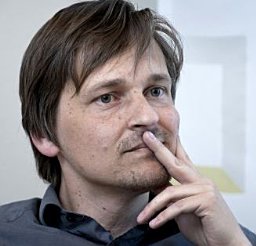 Kajonius Petri J合作论文数University of Gothenburg, University of Skövde1
 Tyler VanderWeele合作论文数Department of Biostatistics, T.H. Chan School of Public Health, Harvard University;Department of Epidemiology, T.H. Chan School of Public Health, Harvard University1
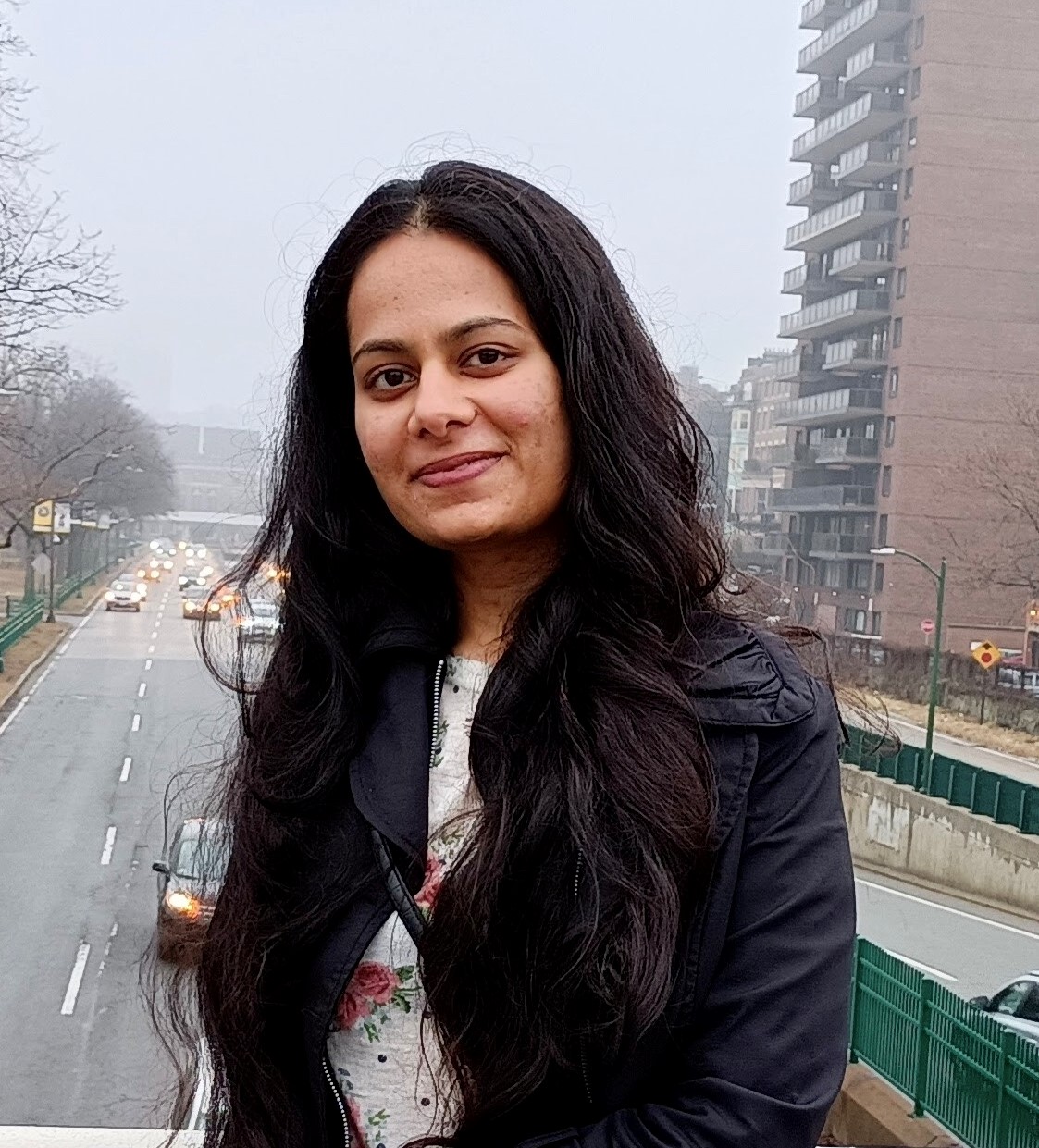 Nikita Soni合作论文数Department of Computer Science, Stony Brook University1
 James O. Pawelski合作论文数1
 Huy Vu合作论文数NVIDIA1
 Katarina Mårtensson合作论文数Centre for Educational Development, Lund University1
 Richard N. Rosenthal合作论文数College of Physicians & Surgeons, Columbia University1
 Johannes Eichstaedt合作论文数Department of Psychology, Stanford University;Institute for Human-Centered Artificial Intelligence, Stanford University;Computational Psychology & Well-Being Lab, Stanford University1
 Lyle Ungar合作论文数Department of Computer and Information Science, School of Engineering and Applied Science, University of Pennsylvania;Department of Psychology, School of Arts and Sciences, University of Pennsylvania;School of Medicine, University of Pennsylvania;Operations, Information and Decisions Department, The Wharton School, The University of Pennsylvania1




