The renewed interest in lunar exploration and the development of future lunar communication and navigation services highlight the need for a precise, stable, and interoperable geodetic and timing infrastructure on the Moon. NovaMoon, proposed as a scientific and navigation payload for ESA's Argonaut lander, is designed as a lunar-based local differential, geodetic, and timing station supporting both operational needs in the Moon's south polar region and a broad range of scientific investigations. The payload integrates a lunar laser retroreflector, a Very Long Baseline Interferometry transmitter, a receiver for navigation signals compatible with LunaNet standards, high-stability atomic clocks, and direct-to-Earth radio links – making it the first lunar station to co-locate multiple ranging, tracking, and timing techniques. NovaMoon will enable sub-metre to decimetre positioning, provide local differential corrections for lunar users, and ensure an accurate and stable realisation of position and time. Preliminary simulation studies show that this multi-technique dataset improves the lunar reference frame, orientation and ephemerides, and estimates of interior parameters like tidal response and core properties. NovaMoon will also provide the first long-duration physical realisation of a lunar time reference. Beyond its primary goals, it supports improved cartography, precise surface geolocation, and higher-resolution topography, contributing to safer landings and operations. It also enables new tests of fundamental physics, including constraints on relativity and possible deviations from classical gravity.
Entangled Relativity is a recent non-linear reformulation of General Relativity that does not include Planck's constant & hbar; or Newton's gravitational constant G in its fundamental structure. One of its key predictions is that & hbar; emerges as a dynamical field, potentially varying across space and time. In this study, we estimate the magnitude of such variations in three different astrophysical environments: the weak gravitational fields of the Sun and Earth, the intermediate regime of white dwarfs, and the strong fields found in neutron stars. In the Solar System, the relative change in & hbar; is minimal, reaching at most similar to 2.5x10⁻¹². In white dwarfs, depending on central density, variations range from similar to 7x10⁻¹⁰ to similar to 10-6. For neutron stars, the variation can be as high as 1.5% at the surface relative to a remote observer, and up to 5.7% at the center. These results suggest that, if Entangled Relativity accurately describes gravity, spatial variations of Planck's constant could become an observable signature, particularly in the context of dense stellar objects.
Astrophysical spectroscopy provides a powerful probe of spacetime variations of fundamental constants, as atomic and ionic emission and absorption lines depend sensitively on the fine-structure constant. In particular, coherent temporal oscillations induced by an ultralight scalar background produce characteristic, time-resolved signatures that can be robustly disentangled from intrinsic variability. In the Galactic Center, such scalar backgrounds can be substantially enhanced, either through the formation of dense scalar clouds powered by black hole rotational energy extraction or as ultralight scalar dark matter forming a soliton-like core. These scalar configurations generically induce oscillations of the fine-structure constant, with periods set by the scalar mass and spatial profiles determined by the scalar wavefunction and its coupling to the electromagnetic sector. We show that precise, time-resolved spectroscopy of S-stars orbiting the supermassive black hole Sgr A^* provides a sensitive test of these effects, enabling constraints on quadratic scalar-photon couplings in the exceptionally high boson-density environment of the Galactic Center.
This document sets out the conventions used for data simulations, waveforms, and analysis pipelines within the Distributed Data Processing Centre (DDPC) of the Laser Interferometer Space Antenna (LISA). It can also be considered a best practice guide for all publications related to the LISA mission. Topics covered include time-to-frequency transformations, gravitational-wave source parametrization, the instrumental response to gravitational waves, time-delay interferometry, and reference frame definitions.
GUEST is a space mission concept whose central objective is the detection of gravitational waves (GWs) in the microhertz band – a physics-rich frequency window that no other present or planned detector can reach at a significant level. The concept is simple: two dense, passive spheres, covered with cube-corner retroreflectors, deployed in highly eccentric Earth orbits (e ≳ 0.7, period P ≳ 33 h), tracked continuously by the global network of satellite laser-ranging stations over a minimum observation time of 10 years, with an expected total duration of 30 years. The orbits themselves act as resonant detectors of the oscillating gravitational perturbations, with the microhertz sensitivity emerging from the selected orbital parameters. From the same data stream, GUEST delivers a programme of fundamental and applied science that cuts across particle physics, gravitational-wave astronomy, cosmology, astrophysics, and geodesy: the first coherent search for GWs from supermassive black-hole binaries in the μHz band, the exploration of primordial GW backgrounds in the unexplored energy-scale gap between pulsar-timing arrays and LISA, a dedicated probe of ultra-light dark matter in a parameter region untouched by any other experiment, a new way to search for ultra-light bosons, order-of-magnitude-improved tests of new gravitational interactions at astronomical ranges, and a step change in the absolute determination of GM_⊕ that underpins the Global Geodetic Observing System and future navigation and Earth-observation missions. This white paper presents the motivation, scientific reach, and mission concept of GUEST.
“Adding colour” to the gravitational-wave sky by probing unexplored frequency bands has the potential to unveil new and unexpected phenomena in the Universe. In these proceedings, we summarise current efforts to probe gravitational waves with μHz frequencies through their resonant impact on binary systems. We also discuss how these binaries can explore uncharted regions of parameter space in the hunt for dark matter.
The future space-based gravitational wave observatory LISA is expected to detect massive black hole binaries (MBHBs) with high signal-to-noise ratios (SNRs), ranging up to thousands. Such high-precision observations require accurate modeling of the detector response. However, current derivations of the response function neglect the motion of the spacecraft during light travel time, omitting velocity-dependent terms of order β= v/c ∼ 10^-4. In this work, we derive the velocity-dependent corrections to the gravitational wave response. We analyze the contribution of the velocity-terms for MBHBs in the mass range [10^6,10^8] M_⊙ using a modified version of the state-of-the-art response simulator lisagwresponse. We find that corrections introduce residual SNRs up to ∼ 2 for the loudest events and fractional differences up to 0.04%, compared to lisagwresponse. While small, these effects are comparable to current waveform modeling uncertainties and imprint distinctive sky-localization signatures, making them potentially relevant for parameter estimation of high-mass MBHBs and simulation of mock datasets.
Time-delay interferometry (TDI) suppresses laser frequency noise by forming linear combinations of time-shifted interferometric measurements. The time-shift operation is implemented by interpolating discretely sampled data. To enable in-band laser noise reduction by eight to nine orders of magnitude, interpolation has to be performed with high accuracy. Interpolation can be understood as the convolution of an interpolation kernel with the data to be shifted. Optimizing the design of this interpolation kernel is the focus of this work. Previous research that studied constant time-shifts suggested Lagrange interpolation as the interpolation method for TDI. Its transfer function is maximally flat at DC and therefore performs well at low frequency. However, to be accurate at high frequencies, Lagrange interpolation requires a high number of coefficients. Furthermore, when applied in TDI we observed prominent time-domain features when a time-varying shift scanned over a pure integer sample shift. To limit this effect we identify an additional requirement for the interpolation kernel: when considering time-varying shifts the interpolation kernel must be sufficiently smooth to avoid unwanted time-domain transitions that produce glitch-like features in power spectral density estimates. The Lagrange interpolation kernel exhibits a discontinuous first derivative by construction, which is insufficient for the application to LISA or other space-based gravitational-wave observatories. As a solution we propose a novel design method for interpolation kernels that respect a predefined requirement on in-band interpolation residuals and that possess continuous derivatives up to a prescribed order. Using this method we show that an interpolation kernel with 22 coefficients is sufficient to respect LISA's picometre-requirement and to allow for a continuous first derivative which suppresses the magnitude of the time-domain transition adequately. The reduction from 42 (Lagrange interpolation) to 22 coefficients enables us to increase robustness against artifacts in the data and, as a side effect, save computational cost.
Precision observations of orbital systems have recently emerged as a promising new means of detecting gravitational waves and ultra-light dark matter, offering sensitivity in new regimes with significant discovery potential. These searches rely critically on precise modeling of the dynamical effects of these signals on the observed system; however, previous analyses have mainly only relied on the secularly-averaged part of the response. We introduce here a fundamentally different approach that allows for a fully time-resolved description of the effects of oscillatory metric perturbations on orbital dynamics. We find that gravitational waves and ultra-light dark matter can induce large oscillations in the orbital parameters of realistic binaries, enhancing the sensitivity to such signals by orders of magnitude compared to previous estimates.
We propose a simple modification of space-based gravitational wave (GW) detector optical benches which would enable the measurement of vacuum birefringence of light induced by axion dark matter through its coupling to electromagnetism. Specifically, we propose to change a half-wave plate by a circular polarizer. While marginally affecting the sensitivity to GW by a factor 2, we show that such an adjustment would make future detectors such as LISA, TianQin, Taiji and Big-Bang Observer the most sensitive experiments at low axion masses.
Axion dark matter coupled via QCD induces a non-zero differential acceleration between test masses of different composition. Tests of the equivalence principle, like the recent MICROSCOPE space mission, are sensitive to such a signal. We use the final released data of the MICROSCOPE experiment, to search for this effect. We find no positive signal consistent with the dark matter model, and set upper limits on the axion-gluon coupling that improve existing laboratory bounds by up to two orders of magnitude for axion masses in the 10^-17 eV to 10^-13 eV range.
A scalar ultralight dark matter (ULDM) candidate would induce oscillatory motion of freely falling test masses via its coupling to Standard Model fields. Such oscillations would create an observable Doppler shift of light exchanged between the test masses, and in particular would be visible in space-based gravitational waves (GW) detectors, such as LISA. While this kind of detection has been proposed multiple times in the recent years, we numerically investigate if it is possible to extract a scalar ULDM signal in a space-based GW detector, and in particular how to differentiate such a signal from a GW signal. Using one year of realistic orbits for the LISA spacecrafts and Bayesian methods, we find that LISA will indeed be able to discriminate between the two signals.
This summary of the second Terrestrial Very-Long-Baseline Atom Interferometry (TVLBAI) Workshop provides a comprehensive overview of our meeting held in London in April 2024 (Second Terrestrial Very-Long-Baseline Atom Interferometry Workshop, Imperial College, April 2024), building on the initial discussions during the inaugural workshop held at CERN in March 2023 (First Terrestrial Very-Long-Baseline Atom Interferometry Workshop, CERN, March 2023). Like the summary of the first workshop (Abend et al. in AVS Quantum Sci. 6:024701, 2024), this document records a critical milestone for the international atom interferometry community. It documents our concerted efforts to evaluate progress, address emerging challenges, and refine strategic directions for future large-scale atom interferometry projects. Our commitment to collaboration is manifested by the integration of diverse expertise and the coordination of international resources, all aimed at advancing the frontiers of atom interferometry physics and technology, as set out in a Memorandum of Understanding signed by over 50 institutions (Memorandum of Understanding for the Terrestrial Very Long Baseline Atom Interferometer Study).
In the presence of a weak gravitational wave (GW) background, astrophysical binary systems act as high-quality resonators, with efficient transfer of energy and momentum between the orbit and a harmonic GW leading to potentially detectable orbital perturbations. In this work, we develop and apply a novel modeling and analysis framework that describes the imprints of GWs on binary systems in a fully time-resolved manner to study the sensitivity of lunar laser ranging, satellite laser ranging, and pulsar timing to both resonant and nonresonant GW backgrounds. We demonstrate that optimal data collection, modeling, and analysis lead to projected sensitivities which are orders of magnitude better than previously appreciated possible, opening up a new possibility for probing the physics-rich but notoriously challenging to access μHz frequency GWs. We also discuss improved prospects for the detection of the stochastic fluctuations of ultra-light dark matter, which may analogously perturb the binary orbits.
Liger is a next-generation near-infrared (0.81 - 2.45 mu m) integral field spectrograph (IFS) and imaging camera for the W. M. Keck Observatory (WMKO) adaptive optics (AO) system. The instrument concept originated by coupling designs from WMKO AO instruments and the future Thirty Meter Telescope IRIS spectrograph. Liger is designed for the Keck I telescope to operate behind the upcoming Keck All-sky Precision Adaptive optics (KAPA) system. The imaging camera sequentially feeds an IFS that makes use of slicer assembly for the coarsest sampling (75 mas and 150 mas per spaxel) and lenslet array (14 mas and 31 mas per spaxel) for diffraction-limited sampling. The imaging camera makes use of off-axis parabolas and a Hawaii-2RG detector to achieve a 14 mas/pixel plate scale and 20.5 '' x20.5 '' field of view. The IFS offers a range of spectral resolving power of R=4,000 10,000 and yields large fields of view for an AO-fed IFS. Liger will enable new science by providing enhanced capabilities, including higher spectral resolving power, access to shorter wavelengths, and larger fields of view than any current or planned ground- or space-based IFS system. Liger will be able to unlock previously inaccessible science across a wide range of the cosmos, such as dark matter substructure, supermassive black holes, the Galactic Center, exoplanet atmospheres, and the time-variable Solar System. We present the overall design of the Liger subsystems and review unique science drivers.
Interspacecraft ranging is crucial for the suppression of laser frequency noise via time-delay interferometry (TDI). So far, the effects of on-board delays and ambiguities on the LISA ranging observables were neglected in LISA modelling and data processing investigations. In reality, on-board delays cause offsets and timestamping delays in the LISA measurements, and pseudo-random noise (PRN) ranging is ambiguous, as it only determines the range up to an integer multiple of the PRN code length. In this article, we identify the four LISA ranging observables: PRN ranging, the sideband beatnotes at the interspacecraft interferometer, TDI ranging, and ground-based observations. We derive their observation equations in the presence of on-board delays, noise, and ambiguities. We then propose a three-stage ranging sensor fusion to combine these observables in order to gain accurate and precise ranging estimates. We propose to calibrate the on-board delays on ground and to compensate the associated offsets and timestamping delays in an initial data treatment (stage 1). We identify the ranging-related routines, which need to run continuously during operation (stage 2), and implement them numerically. Essentially, this involves the reduction of ranging noise, for which we develop a Kalman filter combining the PRN ranging and the sideband beatnotes. We further implement crosschecks for the PRN ranging ambiguities and offsets (stage 3). We show that both ground-based observations and TDI ranging can be used to resolve the PRN ranging ambiguities. Moreover, we apply TDI ranging to estimate the PRN ranging offsets.
This document presents a summary of the 2023 Terrestrial Very-Long-Baseline Atom Interferometry Workshop hosted by CERN. The workshop brought together experts from around the world to discuss the exciting developments in large-scale atom interferometer (AI) prototypes and their potential for detecting ultralight dark matter and gravitational waves. The primary objective of the workshop was to lay the groundwork for an international TVLBAI proto-collaboration. This collaboration aims to unite researchers from different institutions to strategize and secure funding for terrestrial large-scale AI projects. The ultimate goal is to create a roadmap detailing the design and technology choices for one or more km-scale detectors, which will be operational in the mid-2030s. The key sections of this report present the physics case and technical challenges, together with a comprehensive overview of the discussions at the workshop together with the main conclusions.
We present a theoretical investigation of the expected experimental signals produced by freely falling atoms with time oscillating mass and transition frequency. These oscillations could be produced in a variety of models, in particular, models of scalar dark matter nonuniversally coupled to the standard matter such as axionlike particles and dilatons. Performing complete and rigorous calculations, we show that, on one hand, two different atomic species would accelerate at a different rate, and, on the other hand, they would produce a nonzero differential phase shift in atom interferometers (AI). The former would produce observable signals in equivalence principle tests like the recent MICROSCOPE mission, and we provide a corresponding sensitivity estimate, showing that MICROSCOPE can reach beyond the best existing searches in the axionlike particle case. We also compare the expected sensitivity of two future AI experiments, namely the AION-10 gradiometer and an isotope differential AI considered for MAGIS-100, that we will refer to as SPID. We show that the SPID setup would be more sensitive to these dark matter fields compared to the gradiometer one, assuming equivalent experimental parameters.
This study presents bounds on transient variations of fundamental constants, with typical timescales ranging from minutes to months, using clocks in space. The underlying phenomenology describing such transient variations relies on models for Dark Matter (DM) which suggest possible encounters of macroscopic compact objects with the Earth, due to the motion of the solar system in the galactic halo. If such compact objects possess an effective feeble interaction with the ordinary matter beyond the gravitational one, it may result in effective transient variations of fundamental constants. Such variations leave signatures on clocks onboard GNSS satellites. In this paper, we introduce a phenomenological study dedicated to the search for such DM transient objects using the network of passive hydrogen masers (H-Masers) onboard Galileo satellites. We first model the signature of transient variations of fundamental constants as a frequency modulation in the difference between two satellite clocks, considering the satellite trajectories relative to the transient event. Then, we present first results based on a fast analysis method, the maximum reach analysis. The main result is a significant extension of the discovery range for DM transients, with a sensitivity never achieved before. We investigate indeed the range of transient sizes from 105 to 109 kilometres, which, apart from indirect and model-dependent non-transient effects, has never been explored previously.
A vector dark matter candidate, also known as dark photon, would induce an oscillating electric field through kinetic mixing. One detection strategy uses a spherical reflector to focus the induced emission at its center of curvature. On one hand, we investigate the effects of diffraction in this type of experiment from an analytical standpoint, making use of the Kirchhoff integral theorem in the low-curvature dish limit. On the other hand, we estimate the impact of mode-matching, in the case of detection by a pyramidal horn antenna. We show that the expected signal intensity can be significantly reduced compared to usual estimates. Our method is applied to the re-interpretation of the SHUKET experiment data, the results of which are shown to be degraded by a factor of $\sim$~50 due to both diffraction and mode-matching. The analytical method allows optimizing some experimental parameters to gain sensitivity in future runs. Our results can be applied to any dish antenna experiment using a low curvature reflector.
 Peter Wolf合作论文数34
 C. Le Poncin-Lafitte合作论文数Technische Universitat Dresden33
 Tuan Do合作论文数Physics & Astronomy Department, College of Life Sciences, University of California30
 Andrea M. Ghez合作论文数Department of Physics and Astronomy, University of California28
 Jessica Lu合作论文数Department of Astronomy, University of California, Berkeley21
 Pacome Delva合作论文数18
 Smadar Naoz合作论文数Department of Physics & Astronomy, College of Physical Sciences, University of California, Los Angeles;Division of Astronomy & Astrophysics, University of California, Los Angeles17Devin S. Chu合作论文数16
 Adrien Bourgoin合作论文数15
 Gautam, A.K.合作论文数Univ. of California;c;Univ. of California14
 Olivier Minazzoli合作论文数14Mark Morris合作论文数Division of Astronomy and Astrophysics, University of California, Los Angeles;Department of Physics and Astronomy, University of California, Los Angeles;Galactic Center Group, University of California, Los Angeles13
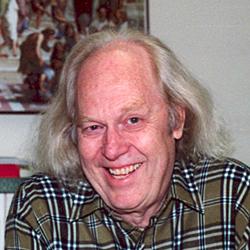 Eric Becklin合作论文数Physics & Astronomy Department, College of Physical Sciences, University of California, Los Angeles13Gunther Witzel合作论文数11
 Philippe Jetzer合作论文数Physik-Institut, University of Zurich;Istitute of Theoretical Physics, University of Zurich11
 Gregory Martinez合作论文数Department of Physics and Astronomy, University of California, Los Angeles11
 Anna Ciurlo合作论文数Physics & Astronomy Department, College of Life Sciences, University of California9Siyao Jia合作论文数Google9
 Rainer Schodel合作论文数Instituto de Astrofísica de Andalucía9
 Carlos F. Sopuerta合作论文数ICE, CSIC-IEEC9Clément Courde合作论文数8K. Matthews合作论文数8
 Serge Reynaud合作论文数Laboratoire Kastler-Brossel, Sorbonne University7
 Jean-Baptiste Bayle合作论文数7
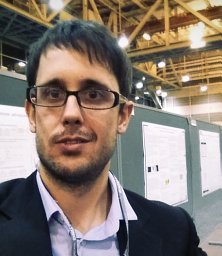 S. Bertone合作论文数Ctr Space Sci & Technol, Univ Maryland Baltimore Cty7F. Meynadier合作论文数7
 Shoko Sakai合作论文数Division of Astronomy and Astrophysics, University of California, Los Angeles7
 John Ellis合作论文数Department of Physics, Faculty of Natural, Mathematical and Engineering Sciences, King’s College London7
 Diego Blas Temiño合作论文数Institució Catalana de Recerca i Estudis Avançats;The Barcelona Institute of Science and Technology;Department of Theoretical Physics, CERN7
 Kai Bongs合作论文数School of Physics and Astronomy, College of Engineering and Physical Sciences, University of Birmingham7Mariechristine Angonin合作论文数7
 Luzi Bergamin合作论文数7
 Philippe Bouyer合作论文数Institute of Physics, University of Amsterdam;Eindhoven University of Technology;Institut d'optique Graduate School;MuQuans;Laboratoire Photonique, Numérique et Nanosciences7
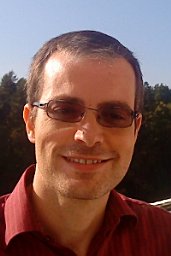 Albert Roura合作论文数Institute of Quantum Technologies, German Aerospace Center7B. Lamine合作论文数6Breann N. Sitarski合作论文数6Kelly Kosmo O'Neil合作论文数6Etienne Savalle合作论文数Univ PSL, Sorbonne Univ, Observ Paris, SYRTE,CNRS,LNE, 61 Ave Observ, F-75014 Paris, France6Olaf Hartwig合作论文数6
 Oliver Buchmueller合作论文数Department of Physics, Faculty of Natural Sciences, Imperial College London6
 Benjamin Roberts合作论文数School of Physics, University of New South Wales6
 Ernst Maria Rasel合作论文数Institute for Quantum Optics, Faculty of Mathematics and Physics, Leibniz Universität Hannover6
 Igor Pikovski合作论文数6
 Gilles Metris合作论文数Laboratoire Géoazur, Université Côte d’Azur6
 Naceur Gaaloul合作论文数Institut für Quantenoptik, Fakultät für Mathematik und Physik, Leibniz University of Hanover6Jordan Gue合作论文数5Samantha Chappell合作论文数5Lisa Wörner合作论文数5
 Baptiste Battelier合作论文数5




