Genes upregulated in Ptenpc-/-Smad4pc-/- tumors as compared to Ptenpc-/- tumors ({greater than or equal to}2 fold).
Abs IC50 values (µM) for 36 small molecule inhibitors across a panel of cancer cell lines.
Detailed pathology description of the Gr1 treated mice and Cxcr2 inhibitor treated mice.
shRNA suppressor screening data for H446 and MDA-MB-468 cells (tabs 1, 2) and RNA expression level associations with LY3295668 Abs IC50 values from 493 cancer cell lines (tab 3).
Supplementary Figure S1. CyTOF analysis of biological samples from Ptenpc-/-Smad4pc-/- mice (Related to Figure 2). Supplementary Figure S2. Strategy used for MDSCs Isolation (Related to Figure 3). Supplementary Figure S3. Treatment scheme for Gr-1 antibody, peptibody, and Cxcr2 inhibitor SB225002. Supplementary Figure S4. IHC staining of Ki67, CD45, Vimentin, Smooth muscle actin (SMA) and Trichrome staining of mouse prostate tissues treated with IgG control or Gr1 antibody. Supplementary Figure S5. The top 10 differentially expressed genes in Ptenpc-/-Smad4pc-/- tumors as compared to Ptenpc-/- tumors, identified by microarray analysis (n=5). Figure S6. Top 10 activated oncogenic signatures identified by GSEA analysis in Ptenpc-/- Smad4pc-/- tumors as compared to Ptenpc-/- tumors (n=5). Figure S7. Clustering of primary prostate tumors from Wallace et al into MDSC-high and MDSC-low subtypes.
Table S4. Genes upregulated in GFP+ tumors cells from Ptenpc-/-Smad4pc-/- mice as compared to Tomato+ cells ({greater than or equal to}4 fold).
Overlapped genes between Genes upregulated in Ptenpc-/-Smad4pc-/- tumors as compared to Ptenpc-/- tumors ({greater than or equal to}2 fold) and genes upregulated in GFP+ tumors cells from Ptenpc-/-Smad4pc-/- mice as compared to Tomato+ cells ({greater than or equal to}4 fold).
supplementary Figures S1-S10. S1 growth and regression of iKRAS tumors. S2 culture comparison. S3 immunohistochemistry of p-erk and p-s6 S4 Phospho rtk array S5 Validation of anti AXL antibodies S6 validationn of the AXL inhibitor in vitro S7 validationn of the AXL inhibitor in vivo S8 efficacy of targeting AXL S9 RTK array of iKRAS cells treated with multiple RTK inhibitors S10 P-ERK levels
Oncogenic KRAS mutations commonly co-occur with loss of CDKN2A in pancreas and lung cancer. Both mutations are known to activate D-cyclin dependent kinases and therefore may confer sensitivity to drugs that inhibit CDK4 and CDK6 (CDK4/6i). Indeed, preclinical studies have shown that KRAS/CDKN2A double-mutant cancers are reasonably sensitive to CDK4/6 inhibitors and the CDK4/6i abemaciclib showed evidence of benefit in clinical studies of KRAS-mutant NSCLC (1) (http://www.ascopost.com/News/58135). However, despite the encouraging result, abemaciclib did not meet a prespecified overall survival endpoint in the JUNIPER trial, and it has been shown that failure to suppress CDK2 activity diminishes the antiproliferative activity of CDK4/6i in KRAS/CDKN2A mutant cancer cells (2). Since CDK2-specific inhibitors are not available for clinical combination strategies, it is unclear how to exploit this discovery. We employed CRISPR and shRNA genome-wide library screens to identify alternate mechanisms to potentiate the CDK4/6 inhibitor abemaciclib in this class of cancer. Depletion of Src family or Ras-MAPK pathway genes emerged as consistent hits in both lung and pancreas cancer cells with KRAS/CDKN2A mutations. Inhibitors of Src family or Ras-MAPK pathway kinases led to a strong suppression of CDK2 activity and apoptosis when combined with abemaciclib. Across a panel of cancer cell lines, ERKi LY3214996 combined with abemaciclib potently inhibited the growth of KRAS/CDKN2A mutant cancer cells. The combination of LY3214996 with abemaciclib was well tolerated in vivo and caused regressions in mice bearing human KRAS/CDKN2A mutant tumor xenografts, supporting the clinical examination of this drug combination. References 1. Patnaik A et al. Efficacy and safety of abemaciclib, an inhibitor of CDK4 and CDK6, for patients with breast cancer, non-small cell lung cancer, and other solid tumors. Cancer Discov 2016;6:740-53. 2. Gong X et al. Genomic aberrations that activate D-type cyclins are associated with enhanced sensitivity to the CDK4 and CDK6 inhibitor abemaciclib. Cancer Cell 2017;32:761-76 e766. This abstract is also being presented as Poster A33. Citation Format: Lacey Litchfield, Avnish Kapoor, Wenjuan Wu, Xueqian Gong, Yue Webster, Sheng-Bin Peng, Shripad Bhagwat, Farhana Merzoug, Sean G. Buchanan. Combinations with CDK4/6 inhibitors to treat cancers with mutations in both KRAS and CDKN2A [abstract]. In: Proceedings of the AACR Special Conference on Targeting RAS-Driven Cancers; 2018 Dec 9-12; San Diego, CA. Philadelphia (PA): AACR; Mol Cancer Res 2020;18(5_Suppl):Abstract nr PR06.
Abstract Oncogenic KRAS (KRAS*) is a key tumor maintenance gene in pancreatic ductal adenocarcinoma (PDAC), motivating pharmacologic targeting of KRAS* and its effectors. Here, we explored mechanisms involving the tumor microenvironment (TME) as a potential basis for resistance to targeting KRAS*. Using the inducible KrasG12D;Trp53−/− PDAC mouse model, gain-of-function screens of epigenetic regulators identified HDAC5 as the top hit enabling KRAS* independent tumor growth. HDAC5-driven escaper tumors showed a prominent neutrophil-to-macrophage switch relative to KRAS*-driven tumors. Mechanistically, HDAC5 represses Socs3, a negative regulator of chemokine CCL2, resulting in increased CCL2, which recruits CCR2+ macrophages. Correspondingly, enforced Ccl2 promotes macrophage recruitment into the TME and enables tumor recurrence following KRAS* extinction. These tumor-associated macrophages in turn provide cancer cells with trophic support including TGFβ to enable KRAS* bypass in a SMAD4-dependent manner. Our work uncovers a KRAS* resistance mechanism involving immune cell remodeling of the PDAC TME. Significance: Although KRAS* is required for PDAC tumor maintenance, tumors can recur following KRAS* extinction. The capacity of PDAC cancer cells to alter the TME myeloid cell composition to support KRAS*-independent tumor growth illuminates novel therapeutic targets that may enhance the effectiveness of therapies targeting KRAS* and its pathway components. See related commentary by Carr and Fernandez-Zapico, p. 910. This article is highlighted in the In This Issue feature, p. 890
 Ronald DePinho合作论文数Department of Cancer Biology, Division of Basic Science Research, The University of Texas MD Anderson Cancer Center26
 Wantong Yao合作论文数Univ Texas MD Anderson Canc Ctr, Houston, TX 77030 USA23Alan Q. Wang合作论文数21Chang-Jiun Wu合作论文数16Baoli Hu合作论文数16
 Shan Jiang合作论文数16
 Lynda Chin合作论文数Apricity Health16Sujun Hua合作论文数Institute of Bioinformatics, Tsinghua University16
 Haoqiang Ying合作论文数Department of Molecular and Cellular Oncology, Division of Basic Science Research, The University of Texas MD Anderson Cancer Center15
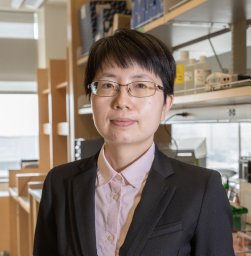 Pingping Hou合作论文数Univ Texas MD Anderson Canc Ctr, Houston, TX 77030 USA14
 Jian-Kang Zhu (朱健康)合作论文数Institute of Advanced Biotechnology, Southern University of Science and Technology;Chinese Academy of Agricultural Sciences;Ministry of Agriculture and Rural Affairs of the People’s Republic of China14Qing Chang合作论文数13Jianhua Zhang合作论文数13Piergiorgio Pettazzoni合作论文数12Viale Andrea合作论文数The University of Texas MD Anderson Cancer Center, The University of Texas MD Anderson Cancer Center12
 Giulio F. Draetta合作论文数Department of Genomic Medicine, Division of Cancer Medicine, The University of Texas MD Anderson Cancer Center12Timothy P. Heffernan合作论文数12Pingna Deng合作论文数11
 Huamin Wang (王华民)合作论文数Department of Pathology, Division of Pathology/Lab Medicine, The University of Texas MD Anderson Cancer Center;MD Anderson UT Health Graduate School of Biomedical Sciences, The University of Texas11
 Prasenjit Dey合作论文数10
 Vandhana Ramamoorthy合作论文数Univ Texas MD Anderson Canc Ctr, Dept Sarcoma Med Oncol, Houston, TX 77030 USA10Chia-Chin Wu合作论文数Univ Texas MD Anderson Canc Ctr, Dept Genom Med, Houston, TX 77030 USA10Sánchez Nora S合作论文数10
 Guocan Wang (王国灿)合作论文数School of Earth Sciences, China University of Geosciences (Wuhan)
10
Guocan Wang (王国灿)合作论文数School of Earth Sciences, China University of Geosciences (Wuhan)
10 Manu Agarwal合作论文数Department of Plant;Molecular Biology;University of Delhi;Department of Plant, University of Delhi10Elsa M. Li Ning Tapia合作论文数9Zhenglin Guo合作论文数9
 Trang N Tieu合作论文数9Ramakrishna C. Konaparthi合作论文数9Xiaoying Shang合作论文数Univ Texas MD Anderson Canc Ctr, Dept Canc Biol, Houston, TX 77030 USA9Tim Heffernan合作论文数Univ Texas MD Anderson Canc Ctr, Inst Appl Canc Sci, Houston, TX 77030 USA9
 Sunada Khadka合作论文数Univ Texas MD Anderson Canc Ctr, Dept Canc Syst Imaging, Houston, TX 77030 USA9
 Anil Grover合作论文数Department of Plant Molecular Biology, University of Delhi9Patricia Troncoso合作论文数9Zhuangna Fang (方壮娜)合作论文数9Di Zhao合作论文数9
 Christopher J. Logothetis合作论文数Department of Genitourinary Medical Oncology, Division of Cancer Medicine, The University of Texas MD Anderson Cancer Center;Department of The David H. Koch Center for Applied Research of Genitourinary Cancers, The University of Texas MD Anderson Cancer Center9
 Sean G Buchanan合作论文数8mark j mcarthur合作论文数8
 Xiaolu Pan合作论文数Tongji Hosp, Huazhong Univ Sci & Technol8
 Yanxia Shi (史艳侠)合作论文数Sun Yat-sen University Cancer Center8
 Lili Ren (任丽莉)合作论文数School of Pharmaceutical Sciences, Nanjing Tech University8Merzoug Farhana F合作论文数8Gong Xueqian合作论文数8Yue W. Webster合作论文数8Zhihu Ding合作论文数8
 Emily Bernstein合作论文数Department of Oncological Sciences, Mount Sinai School of Medicine8Deem Angela K合作论文数7
 Surekha Katiyar-Agarwal合作论文数Department of Plant;Molecular Biology;University of Delhi;Department of Plant, University of Delhi7




