We demonstrate an entirely optical, co-registered Raman-photoluminescence (PL) spectroscopy method for quantitative mapping of dopant distributions in prepared silica-based optical fiber preform cross sections and fibers. We utilize 532 nm excitation for simultaneous Raman-PL signal acquisition. For Yb-doped alumino-phospho-silicate preforms and fibers, profiles obtained from the Raman P = O vibration band and Yb-related PL emission band closely match P and Yb distributions measured by electron probe microanalysis (EPMA) and energy-dispersive X-ray (EDX) spectroscopy. Calibrations against EPMA/EDX measurements on the corresponding samples enable absolute dopant-concentration scales and direct conversion of optical signals into quantitative profiles. Measured refractive-index profiles show excellent agreement with Raman-PL results, validating the combined approach as an optical diagnostic for prepared preform cross sections and drawn fibers.
This study investigates the radiation-induced attenuation (RIA) of an Anti-Resonant Hollow-Core Fiber (AR-HCF) exposed to neutron and gamma radiation in a nuclear reactor environment. The AR-HCF—with a revolver-style structure—was characterized for RIA and compared to a solid, pure-silica-core fiber. Experimental results demonstrate that the AR-HCF exhibits substantially higher radiation tolerance compared to pure-silica, solid-core fibers, by about a factor of six in terms of dB/m. Numerical modeling in COMSOL Multiphysics (Version 6.3) was performed to simulate potential contributors of RIA, including silica compaction due to neutron fluence and changes in light confinement. These simulations ruled out these effects as primary causes of the measured attenuation. We also show that our results are consistent with the radiolytic generation of nitric acid within the hollow core, an interpretation that aligns with findings from a prior study. The results included in this manuscript provide insight into the behavior of AR-HCFs in the radiation field of a nuclear reactor, a topic with very limited prior literature, and underscore their potential for use in high-radiation environments such as fission and fusion reactors, particle accelerators, and space applications. The findings also point to promising future directions, including spectral characterization and dosimetry applications that leverage the unique properties of these fibers.
Recent reports show hollow-core fibers (HCF) exceeding their silica counterpart in terms of transmission losses across UV to IR wavelengths. At shorter wavelengths, HCFs are of particular interest where solid core silica fibers suffer from scattering losses and light-induced solarization effect. In this work, a modified Particle Swarm Optimization (PSO) technique is employed to optimize a 12-capillary fiber design for minimal attenuation at 400 nm. The PSO routine focuses on four coupled variables, enabling efficient optimization within the otherwise extensive parameter space for HCFs. The final design achieves a fundamental mode loss of 0.02 dB/km with 30 mu m mode field diameter and exhibits low surface scattering loss at 400 nm of less than 0.001 dB/km. Such fiber design can facilitate high power delivery, and the realization of multi-core imaging HCFs with high pixel densities by utilizing the fiber structure as a unit cell for individual cores.
A 5-tube nested hollow-core anti-resonant fiber is proposed to simultaneously achieve ultra-low loss (<1dB/km), broader transmission window, lower bend loss, and larger higher-order mode suppression than fibers with a different number of cladding tubes.
This paper reports on the fabrication and performance of a fiber bundle with seven hollow cores arranged in a hexagonal pattern. The bundle shows individual core transmission with less than 0.07% core-to-core coupling over a length of 11 cm. Each core exhibits several transmission windows in the visible to near infrared region. These low attenuation regions with large higher order mode suppression are a result of anti-resonant guidance due to the negative curvature membranes encircling the cores. The central core exhibits the widest transmission window with a minimum loss of 4 dB/m between 1250 nm and 1450 nm. The lowest loss for the central core is estimated to be 2.5 dB/m at 600 nm. Such hollow core fiber bundles may be employed in applications including communication, imaging systems, high power laser delivery, or sensing.
We demonstrate the transmission of 1.8 kW 38 GHz linewidth laser at 1080 nm through a 100 m AR-HCF, maintaining 95% efficiency, near-diffraction-limited beam quality, and no measurable stimulated Brillouin scattering response. Our results also highlight a potential path for high-efficiency multi-kW CW Raman lasing.
In this study, we explore the applicability of negative curvature anti-resonant solid-core large mode area fibers to achieve single-mode, normal dispersion (–7.5 ps/nm/km) and minimal propagation losses at the 2 µm wavelength.
We report kW-class CW frequency comb-like lasing by directly exciting multiple rotational Raman shifts achieving over 85% conversion via nitrogen-filled hollow-core fiber while maintaining strictly single-mode performance. (c) 2024 The Author(s)
We present a low-loss nested anti-resonant hollow-core fiber in the near-UV range. The characterized fiber shows a wide transmission window exceeding 40 nm near 390 nm wavelength with a loss $< 30$ dB/km. The lowest measured loss is found to be 7.3 dB/km at 402 nm.
An ARHCF was irradiated with neutron and gamma radiation from a nuclear reactor. The RIA was 5x less than that of pure silica core fiber, showing significant promise for applications in extreme radiation environments.
Experimental demonstration of ultra-low NA Yb-doped LMA gain fiber maximizing differential mode loss of HOM content at 2 kW output power is presented. Four fold increase in TMI threshold is achieved as compared to identical step-index fiber.
We report the applicability of all-solid anti-resonant large mode area silica fibers to attain single-mode and normal dispersion at the 2 µm wavelength. The design parameters are optimized using the genetic algorithm methodology.
We demonstrate a fast and versatile approach to analyze the modal content of a high power fiber amplifier using a low-loss photonic lantern. By monitoring the first three modes of the photonic lantern on a photodetector we can directly determine the modal content of a laser beam, enabling real time diagnostics of the output and its corresponding beam quality factor, M2. We first investigate the beam quality and modal content of the output of a passive LMA double clad fiber commonly used as a delivery fiber in high power fiber laser amplifiers. The output of the fiber is analyzed by both a 6-mode mode-selective photonic lantern and a conventional M2 setup utilizing a translation stage and beam profiler. The modal content and beam quality measurements produced in real-time by the photonic lantern are compared to the M2 measurements resulting in an RMS error less than 0.098 across M2 values between 1.020 to 2.260. We then conduct a follow on experiment using the same photonic lantern to monitor modal instability in a large mode area fiber laser amplifier. In this case, we compare our photonic lantern mode analysis approach versus the commonly used RIN/pinhole method evaluating modal instabilities. Not only does the photonic lantern estimate the modal content and beam quality in real-time but the modal content trends with the RIN metric as the fiber laser amplifier progresses from stable regime below 300W through the chaotic transverse modal instability regime above 400W.
Imaging through scattering media is a useful and yet demanding task since it involves solving for an inverse mapping from speckle images to object images. It becomes even more challenging when the scattering medium undergoes dynamic changes. Various approaches have been proposed in recent years. However, none of them are able to preserve high image quality without either assuming a finite number of sources for dynamic changes, assuming a thin scattering medium, or requiring access to both ends of the medium. In this paper, we propose an adaptive inverse mapping (AIP) method, which requires no prior knowledge of the dynamic change and only needs output speckle images after initialization. We show that the inverse mapping can be corrected through unsupervised learning if the output speckle images are followed closely. We test the AIP method on two numerical simulations: a dynamic scattering system formulated as an evolving transmission matrix and a telescope with a changing random phase mask at a defocused plane. Then we experimentally apply the AIP method to a multimode-fiber-based imaging system with a changing fiber configuration. Increased robustness in imaging is observed in all three cases. AIP method's high imaging performance demonstrates great potential in imaging through dynamic scattering media.
This special issue contains a collection of papers on optical fiber sensors that were originally presented and published in a more succinct form in conjunction with the 27th International Conference on Optical Fiber Sensors (OFS) held in Alexandria, Virginia, United States, from 29th August to 2nd September, 2022.
Recent years have witnessed the tremendous development of fusing fiber-optic imaging with supervised deep learning to enable high-quality imaging of hard-to-reach areas. Nevertheless, the supervised deep learning method imposes strict constraints on fiber-optic imaging systems, where the input objects and the fiber outputs have to be collected in pairs. To unleash the full potential of fiber-optic imaging, unsupervised image reconstruction is in demand. Unfortunately, neither optical fiber bundles nor multimode fibers can achieve a point-to-point transmission of the object with a high sampling density, as is a prerequisite for unsupervised image reconstruction. The recently proposed disordered fibers offer a new solution based on the transverse Anderson localization. Here, we demonstrate unsupervised full-color imaging with a cellular resolution through a meter-long disordered fiber in both transmission and reflection modes. The unsupervised image reconstruction consists of two stages. In the first stage, we perform a pixel-wise standardization on the fiber outputs using the statistics of the objects. In the second stage, we recover the fine details of the reconstructions through a generative adversarial network. Unsupervised image reconstruction does not need paired images, enabling a much more flexible calibration under various conditions. Our new solution achieves full-color high-fidelity cell imaging within a working distance of at least 4 mm by only collecting the fiber outputs after an initial calibration. High imaging robustness is also demonstrated when the disordered fiber is bent with a central angle of 60°. Moreover, the cross-domain generality on unseen objects is shown to be enhanced with a diversified object set.
Multimode (MM) laser light has a vast application history spanning from laser pump sources, to high-speed optical links, to imaging systems but can suffer enormous inefficiencies when coupled through a solid core optical fiber for long transmission path lengths. One way to improve the MM transmission is by replacing the traditional solid-core fibers with uniquely tailored nested antiresonant hollow-core fibers (NANFs). By improving upon previous design methods, one can extend the application of the HCF to 100s of modes and beyond while maintaining low loss thus enabling novel concepts such as power beaming through fiber and the transmission of spatiotemporal tailored ultrafast wavepackets. We report a uniquely designed, fabricated, and tested MM NANF that enables low-loss transmission of 100s of modes.
The laser is one of the greatest inventions in history. Because of its ubiquitous applications and profound societal impact, the concept of the laser has been extended to other physical domains including phonon lasers and atom lasers. Quite often, a laser in one physical domain is pumped by energy in another. However, all lasers demonstrated so far have only lased in one physical domain. We have experimentally demonstrated simultaneous photon and phonon lasing in a two-mode silica fiber ring cavity via forward intermodal stimulated Brillouin scattering (SBS) mediated by long-lived flexural acoustic waves. This two-domain laser may find potential applications in optical/acoustic tweezers, optomechanical sensing, microwave generation, and quantum information processing. Furthermore, we believe that this demonstration will usher in other multidomain lasers and related applications.
Recent years have witnessed much progress in the development of fiber lasers in the 2 μm region. Yet, to date, their power levels are limited by modulation instability and soliton formation attributed to the strong anomalous dispersions of fused silica in this wavelength region. Further power scaling requires a novel design of an all-solid silica active fiber that features normal dispersion by compensating the material dispersion with the waveguide dispersion. At the same time, a large mode area, low losses, single mode operation and robustness need to be maintained. In this paper, we propose an all-solid anti-resonant fiber (AS-ARF) design that meets these demands. We demonstrate that normal dispersion can be achieved in AS-ARFs at 2 μm by exploiting the Kramers-Kronig relation. To balance the desired dispersion with the other performance parameters, we optimize the design of the AS-ARFs using a genetic algorithm. The optimized AS-ARF has a mode field area of 1170 μm 2 and normal dispersion over the spectrum from 1.96 μm to 2.04 μm. Within this spectrum, the maximum confinement loss (CL) of the fundamental mode (FM) is 16 dB/km and the minimum CL of the higher order modes (HOMs) is over 100 dB/km. The HOMs can be easily coupled out by bending the fiber while the FM stays in the core. For example, the CLs are over 2 × 10 4 dB/km for the HOMs and below 200 dB/km for the FM at 2 μm at a bending radius of 20 cm. Moreover, the properties of the proposed AS-ARF remain favorable even under large geometric variations, showing good tolerance to manufacturing errors. We expect the proposed AS-ARF to further stimulate the development of high-power fiber lasers in the 2 μm region.
Anti-resonant hollow core fibers (AR-HCF) have been investigated for several use cases relating to high power transmission. Single mode, low-loss operation is needed in high-speed telecommunications and in high-energy beam delivery applications. In these fibers, higher order modes leak out of the core through the surrounding capillaries and subsequently are highly attenuated upon propagation resulting in effective mode filtering. With regards to CW operation, 900W have been delivered through a single resonant ring AR-HCF, and 1kW through a nested AR-HCF. This study presents an experimentally derived performance comparison of the spatial, spectral, and loss metrics between these two types of fibers when using an identical 1kW laser source.
 J. Enrique Antonio-Lopez合作论文数CREOL, The College of Optics and Photonics, University of Central Florida138
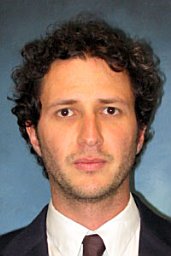 Rodrigo Amezcua Correa合作论文数Relativity Networks;College of Optics and Photonics, University of Central Florida;Townes Laser Institute, University of Central Florida130
 Nasser Peyghambarian合作论文数Optical Sciences Center, The University of Arizona/College of Optical Sciences, The University of Arizona/Department of Materials Science and Engineering, The University of Arizona113
 Amy Van Newkirk合作论文数CREOL, Univ. of Central Florida;c36
 Jerome V. Moloney合作论文数Arizona Center for Mathematical Sciences, University of Arizona;Department of Mathematics, University of Arizona;University College Cork33
 Joel Villatoro合作论文数Faculty of Engineering, University of the Basque Country29
 Jian Zhao (赵健)合作论文数School of Precision Instrument and Optoelectronics Engineering, Tianjin University25
 Guifang Li合作论文数College of Optics and Photonics, The University of Central Florida24
 Zeinab (Zahoora) Sanjabi Eznaveh合作论文数MKS Instruments24
 Arash Mafi合作论文数Department of Physics and Astronomy, College of Arts and Sciences, University of New Mexico23
 Valery Temyanko合作论文数University of Arizona23
 Joseba Zubia合作论文数ETSI Bilbao, Univ Basque Country UPV EHU21
 Md Selim Habib合作论文数Department of Electrical Engineering and Computer Science, College of Engineering and Science, Florida Institute of Technology19
 Clemence Jollivet合作论文数CREOL, Univ. of Central Florida;c;CREOL, Univ. of Central Florida19Peter Hofmann合作论文数18L Li合作论文数17Stefan Gausmann合作论文数16
 Jacques Albert合作论文数Department of Electronics, Carleton University16
 Pierre Sillard合作论文数Prysmian Group16Fritz Henneberger合作论文数Humboldt-Universitat zu Berlin16Mike Morrell合作论文数15R. Amezcua Correa合作论文数15Xiaowen Hu合作论文数13
 Salceda-Delgado Guillermo合作论文数13
 Christine Spiegelberg合作论文数13
 Seppo Honkanen合作论文数University of Eastern Finland12
 Jayan Thomas合作论文数Optical Science Center, The University of Arizona12
 Matthew A. Cooper合作论文数11
 Savas Tay合作论文数Pritzker School of Molecular Engineering, The University of Chicago;Institute for Bio and Immuno Engineering, The University of Chicago11
 Juan Carlos Alvarado Zacarias合作论文数Microsoft11
 Muhsin Eralp合作论文数11
 Bernard J Kippelen (Bernard Kippelen)合作论文数School of Electrical and Computer Engineering, College of Engineering, Georgia Institute of Technology11cedric gonnet合作论文数10Joseph Wahlen合作论文数10
 Chigo Okonkwo合作论文数Department of Electrical Engineering, Eindhoven University of Technology;Department of Applied Physics and Science Education, Eindhoven University of Technology;CUbIQ Technologies10
 Ivan B. Divliansky合作论文数10
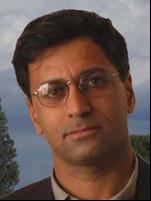 Masud Mansuripur合作论文数Wyant College of Optical Sciences, University of Arizona;MM Research, Inc.10
 Martin C. Richardson合作论文数Laser & Plasma Laboratory, University of Central Florida;Department of Physics, College of Sciences, University of Central Florida10
 Robert A. Norwood合作论文数James C. Wyant College of Optical Sciences, University of Arizona10
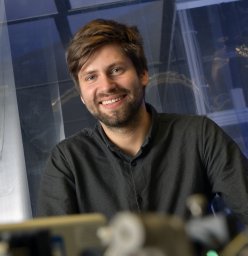 Martin Gebhardt合作论文数Friedrich Schiller Univ Jena, Abbe Ctr Photon, Inst Appl Phys, Albert Einstein Str 15, D-07745 Jena, Germany9
 Angel Ortega-Gomez合作论文数Corresponding authors.9
 Pavel Polynkin合作论文数Ultraintense Nonlinear Optics Laboratory, Wyant College of Optical Sciences, The University of Arizona9
 Xiushan Zhu合作论文数9
 Stephanos Yerolatsitis合作论文数Dept. of Phys., Univ. of Bath;c;Dept. of Phys., Univ. of Bath9Cruz-Delgado Daniel合作论文数9
 Teng Qiu (邱腾)合作论文数School of Physics, Southeast University9
 Seth Marder合作论文数Department of Chemical and Biological Engineering, College of Engineering and Applied Science, University of Colorado Boulder;National Renewable Energy Laboratory;Renewable and Sustainable Energy Institute, University of Colorado Boulder9
 Shibin Jiang合作论文数Wyant College of Optical Sciences, University of Arizona;AdValue Photonics Inc9
 Jens Limpert合作论文数Institute of Applied Physics, Faculty of Physics and Astronomy, Friedrich-Schiller-Universität Jena9




