Automatic transaction categorization is crucial for enhancing the customer experience in QuickBooks by providing accurate accounting and bookkeeping. The distinct challenges in this domain stem from the unique formatting of transaction descriptions, the wide variety of transaction categories, and the vast scale of the data involved. Furthermore, organizing transaction data in a relational database creates difficulties in developing a unified model that covers the entire database. In this work, we develop a novel graph-based model, named Rel-Cat, which is built directly over the relational database. We introduce a new formulation of transaction categorization as a link prediction task within this graph structure. By integrating techniques from natural language processing and graph machine learning, our model not only outperforms the existing production model in QuickBooks but also scales effectively to a growing customer base with a simpler, more effective architecture without compromising on accuracy. This design also helps tackle a key challenge of the cold start problem by adapting to minimal data.
Ubiquitous applications of Deep neural networks (DNNs) in different artificial intelligence systems have led to their adoption in solving challenging visualization problems in recent years. While sophisticated DNNs offer an impressive generalization, it is imperative to comprehend the quality, confidence, robustness, and uncertainty associated with their prediction. A thorough understanding of these quantities produces actionable insights that help application scientists make informed decisions. Unfortunately, the intrinsic design principles of the DNNs cannot beget prediction uncertainty, necessitating separate formulations for robust uncertainty-aware models for diverse visualization applications. To that end, this contribution demonstrates how the prediction uncertainty and sensitivity of DNNs can be estimated efficiently using various methods and then interactively compared and contrasted for deep image synthesis tasks. Our inspection suggests that uncertainty-aware deep visualization models generate illustrations of informative and superior quality and diversity. Furthermore, prediction uncertainty improves the robustness and interpretability of deep visualization models, making them practical and convenient for various scientific domains that thrive on visual analyses.
With the rising popularity of Large Language Models (LLMs), there has been an increasing interest in compression techniques that enable their efficient deployment. This study focuses on the Post-Training Quantization (PTQ) of LLMs. Drawing from recent advances, our work introduces QuantEase, a layer-wise quantization framework where individual layers undergo separate quantization. The problem is framed as a discrete-structured non-convex optimization, prompting the development of algorithms rooted in Coordinate Descent (CD) techniques. These CD-based methods provide high-quality solutions to the complex non-convex layer-wise quantization problems. Notably, our CD-based approach features straightforward updates, relying solely on matrix and vector operations, circumventing the need for matrix inversion or decomposition. We also explore an outlier-aware variant of our approach, allowing for retaining significant weights (outliers) with complete precision. Our proposal attains state-of-the-art performance regarding perplexity and zero-shot accuracy in empirical evaluations across various LLMs and datasets, with relative improvements of up to 15% over methods such as GPTQ. Particularly noteworthy is our outlier-aware algorithm’s capability to achieve near or sub-3-bit quantization of LLMs with an acceptable drop in accuracy, obviating the need for non-uniform quantization or grouping techniques, improving upon methods such as SpQR by up to two times in terms of perplexity.
Stochastic Gradient Descent (SGD) stands as a cornerstone optimization algorithm with proven real-world empirical successes but relatively limited theoretical understanding. Recent research has illuminated a key factor contributing to its practical efficacy: the implicit regularization it instigates. Several studies have investigated the linear stability property of SGD in the vicinity of a stationary point as a predictive proxy for sharpness and generalization error in overparameterized neural networks (Wu et al., 2022; Jastrzebski et al., 2019; Cohen et al., 2021). In this paper, we delve deeper into the relationship between linear stability and sharpness. More specifically, we meticulously delineate the necessary and sufficient conditions for linear stability, contingent on hyperparameters of SGD and the sharpness at the optimum. Towards this end, we introduce a novel coherence measure of the loss Hessian that encapsulates pertinent geometric properties of the loss function that are relevant to the linear stability of SGD. It enables us to provide a simplified sufficient condition for identifying linear instability at an optimum. Notably, compared to previous works, our analysis relies on significantly milder assumptions and is applicable for a broader class of loss functions than known before, encompassing not only mean-squared error but also cross-entropy loss.
Social networks are platforms where content creators and consumers share and consume content. The edge recommendation system, which determines who a member should connect with, significantly impacts the reach and engagement of the audience on such networks. This paper emphasizes improving the experience of inactive members (IMs) who do not have a large connection network by recommending better connections. To that end, we propose a multi-objective linear optimization framework and solve it using accelerated gradient descent. We report our findings regarding key business metrics related to user engagement on LinkedIn, a professional network with over 850 million members.
Modern deep learning models are over-parameterized, where different optima can result in widely varying generalization performance. The Sharpness-Aware Minimization (SAM) technique modifies the fundamental loss function that steers gradient descent methods toward flatter minima, which are believed to exhibit enhanced generalization prowess. Our study delves into a specific variant of SAM known as micro-batch SAM (mSAM). This variation involves aggregating updates derived from adversarial perturbations across multiple shards (micro-batches) of a mini-batch during training. We extend a recently developed and well-studied general framework for flatness analysis to theoretically show that SAM achieves flatter minima than SGD, and mSAM achieves even flatter minima than SAM. We provide a thorough empirical evaluation of various image classification and natural language processing tasks to substantiate this theoretical advancement. We also show that contrary to previous work, mSAM can be implemented in a flexible and parallelizable manner without significantly increasing computational costs. Our implementation of mSAM yields superior generalization performance across a wide range of tasks compared to SAM, further supporting our theoretical framework.
With the rising popularity of Large Language Models (LLMs), there has been an increasing interest in compression techniques that enable their efficient deployment. This study focuses on the Post-Training Quantization (PTQ) of LLMs. Drawing from recent advances, our work introduces QuantEase, a layer-wise quantization framework where individual layers undergo separate quantization. The problem is framed as a discrete-structured non-convex optimization, prompting the development of algorithms rooted in Coordinate Descent (CD) techniques. These CD-based methods provide high-quality solutions to the complex non-convex layer-wise quantization problems. Notably, our CD-based approach features straightforward updates, relying solely on matrix and vector operations, circumventing the need for matrix inversion or decomposition. We also explore an outlier-aware variant of our approach, allowing for retaining significant weights (outliers) with complete precision. Our proposal attains state-of-the-art performance in terms of perplexity and zero-shot accuracy in empirical evaluations across various LLMs and datasets, with relative improvements up to 15% over methods such as GPTQ. Leveraging careful linear algebra optimizations, QuantEase can quantize models like Falcon-180B on a single NVIDIA A100 GPU in $\sim$3 hours. Particularly noteworthy is our outlier-aware algorithm's capability to achieve near or sub-3-bit quantization of LLMs with an acceptable drop in accuracy, obviating the need for non-uniform quantization or grouping techniques, improving upon methods such as SpQR by up to two times in terms of perplexity.
Social networks are prosperous marketplaces where creators and consumers congregate to share and consume various content. In general, products that rank content for distribution (such as newsfeeds, stories, and notifications) and are related to edge recommendations (such as connect to members, follow celebrities or groups or hashtags) optimize the experience of active users. Typically, such users generate ample interaction data amenable to accurate model training and prediction. In contrast, we prioritize enhancing the experience of inactive members (IMs) who do not have a rich connection network. We formulate strategies for recommending superior edges to help members grow their connection network. Adapting the recommendations provides enormous value to the IMs and can significantly influence their future behaviour and engagement with the ecosystem. To that end, we propose a general and scalable multi-objective optimization (MOO) framework to provide more value to IMs as invitation recipients on LinkedIn, a professional network with over 900M members. To deal with the enormous scale, we formulate the problem as a massive constrained linear optimization involving billions of variables and millions of constraints and efficiently solve it using accelerated gradient descent,making this the largest deployment of LP-based recommender systems worldwide. Furthermore, the proposed MOO paradigm can solve the general problem of matching different types of entities in an m-sided marketplace. Finally, we discuss the challenges and benefits of implementing and ramping our method in production at scale at LinkedIn and report our findings about the core business metrics related to users' engagement and network health.
Several key problems in web-scale recommender systems, such as optimal matching and allocation, can be formulated as large-scale linear programs (LPs) [4, 1]. These LPs take predictions from ML models such as probabilities of click, like, etc. as inputs and optimize recommendations made to users. In recent years, there has been an explosion in the research and development of large-scale recommender systems, but effective optimization of business objectives using the output of those systems remains a challenge. Although LPs can help optimize such business objectives, and algorithms for solving LPs have existed since the 1950s [5, 8], generic LP solvers cannot handle the scale of these problems. At LinkedIn, we have developed algorithms that can solve LPs of various forms with trillions of variables in a Spark-based library called "DuaLip" [7], a novel distributed solver that solves a perturbation of the LP problem at scale via gradient-based algorithms on the smooth dual of the perturbed LP. DuaLip has been deployed in production at LinkedIn and powers several very large-scale recommender systems. DuaLip is open-sourced and extensible in terms of features and algorithms. In this first-of-its-kind tutorial, we will motivate the application of LPs to improve recommender systems, cover the theory of key LP algorithms [8, 6], and introduce DuaLip (https://github.com / linkedin/DuaLip), a highly performant Spark-based library that solves extreme-scale LPs for a large variety of recommender system problems. We will describe practical successes of large-scale LP in the industry [3, 2, 9], followed by a hands-on exercise to run DuaLip.
Modern deep learning models are over-parameterized, where the optimization setup strongly affects the generalization performance. A key element of reliable optimization for these systems is the modification of the loss function. Sharpness-Aware Minimization (SAM) modifies the underlying loss function to guide descent methods towards flatter minima, which arguably have better generalization abilities. In this paper, we focus on a variant of SAM known as mSAM, which, during training, averages the updates generated by adversarial perturbations across several disjoint shards of a mini-batch. Recent work suggests that mSAM can outperform SAM in terms of test accuracy. However, a comprehensive empirical study of mSAM is missing from the literature -- previous results have mostly been limited to specific architectures and datasets. To that end, this paper presents a thorough empirical evaluation of mSAM on various tasks and datasets. We provide a flexible implementation of mSAM and compare the generalization performance of mSAM to the performance of SAM and vanilla training on different image classification and natural language processing tasks. We also conduct careful experiments to understand the computational cost of training with mSAM, its sensitivity to hyperparameters and its correlation with the flatness of the loss landscape. Our analysis reveals that mSAM yields superior generalization performance and flatter minima, compared to SAM, across a wide range of tasks without significantly increasing computational costs.
Many tasks that rely on representations of nodes in graphs would benefit if those representations were faithful to distances between nodes in the graph. Geometric techniques to extract such representations have poor scaling over large graph size, and recent advances in Graph Neural Network (GNN) algorithms have limited ability to reflect graph distance information beyond the first degree neighborhood. To enable this highly desired capability, we propose a technique to learn Isometric Graph Neural Networks (IGNN), which requires changing the input representation space and loss function to enable any GNN algorithm to generate representations that reflect distances between nodes. We experiment with the isometric technique on several GNN architectures for modeling multiple prediction tasks on multiple datasets. In addition to an improvement in AUC-ROC as high as $43\%$ in these experiments, we observe a consistent and substantial improvement as high as 400% in Kendall's Tau (KT), a measure that directly reflects distance information, demonstrating that the learned embeddings do account for graph distances.
Discriminative classification models often assume all classes are available at the training phase. As such models do not have a strategy to learn new concepts from available unlabeled instances, they usually work poorly when unknown classes emerge from future data to be classified. To address the appearance of new classes, some authors have developed approaches to transfer knowledge from known to unknown classes. Our study provides a more flexible approach to learn new (visual) classes that emerge over time. The key idea is materialized by an iterative classifier that combines Support Vector Machines with clustering via an optimization algorithm. An entropy and density-based selection strategy explores label uncertainty and high-density regions from unlabeled data to be classified. Selected instances from new classes are submitted to get labels and then used to improve the model. The proposed image classifier is consistently better than approaches that select instances randomly or from clusters. We also show that features obtained via Deep Learning methods improve results when compared with shallow features, but only using our selection strategy. Our approach requires fewer iterations to learn new classes, thereby significantly saving labeling costs.
The abundance of digital text has led to extensive research on topic models that reason about documents using latent representations. Since for many online or streaming textual sources such as news outlets, the number, and nature of topics change over time, there have been several efforts that attempt to address such situations using dynamic versions of topic models. Unfortunately, existing approaches encounter more complex inferencing when their model parameters are varied over time, resulting in high computation complexity and performance degradation. This paper introduces the DM-DTM, a dual Markov chain dynamic topic model, for characterizing a corpus that evolves over time. This model uses a gamma Markov chain and a Dirichlet Markov chain to allow the topic popularities and word-topic assignments, respectively, to vary smoothly over time. Novel applications of the Negative-Binomial augmentation trick result in simple, efficient, closed-form updates of all the required conditional posteriors, resulting in far lower computational requirements as well as less sensitivity to initial conditions, as compared to existing approaches. Moreover, via a gamma process prior, the number of desired topics is inferred directly from the data rather than being pre-specified and can vary as the data changes. Empirical comparisons using multiple real-world corpora demonstrate a clear superiority of DM-DTM over strong baselines for both static and dynamic topic models.
Developing models to discover, analyze, and predict clusters within networked entities is an area of active and diverse research. However, many of the existing approaches do not take into consideration pertinent auxiliary information. This paper introduces Joint Gamma Process Poisson Factorization (J-GPPF) to jointly model network and side-information. J-GPPF naturally fits sparse networks, accommodates separately-clustered side information in a principled way, and effectively addresses the computational challenges of analyzing large networks. Evaluated with hold-out link prediction performance on sparse networks (both synthetic and real-world) with side information, J-GPPF is shown to clearly outperform algorithms that only model the network adjacency matrix.
Unsupervised models can provide supplementary soft constraints to help classify new data since similar instances are more likely to share the same class label. In this context, this paper reports on a study on how to make an existing algorithm, named C³E from consensus between classification and clustering ensembles, more convenient by automatically tuning its main parameters. The C³E algorithm is based on a general optimisation framework that takes as input class membership estimates from existing classifiers, and a similarity matrix from a cluster ensemble operating solely on the new target data to be classified, in order to yield a consensus labelling of the new data. To do so, two parameters have to be defined a priori by the user: the relative importance of classifier and cluster ensembles, and the number of iterations of the algorithm. We propose a differential evolution DE algorithm, named dynamic DE D²E, which is a computationally efficient alternative for optimising such parameters. D²E provides better results than DE by dynamically updating its control parameters. Moreover, competitive results were achieved when comparing D²E with three state-of-the-art algorithms.
Certain relational datasets, such as those representing social networks, evolve over time, motivating the development of time-series models where the characteristics of the underlying groups of entities can adapt with time. This paper proposes the Dynamic Gamma Process Poisson Factorization for Network (D-NGPPF) modeling framework, wherein binary network entries are modeled using a truncated Poisson distribution and the ideal number of network groups is discovered from the data itself. Crucially, a Gammamarkov chain enables the characteristics of these groups to smoothly evolve over time. Exploiting the properties of the Negative Binomial distribution and a novel data augmentation technique, closed form Gibbs sampling updates are derived that yield superior empirical results for both synthetic and real world datasets.
A gamma process dynamic Poisson factor analysis model is proposed to factorize a dynamic count matrix, whose columns are sequentially observed count vectors. The model builds a novel Markov chain that sends the latent gamma random variables at time (t -1) as the shape parameters of those at time t, which are linked to observed or latent counts under the Poisson likelihood. The significant challenge of inferring the gamma shape parameters is fully addressed, using unique data augmentation and marginalization techniques for the negative binomial distribution. The same nonparametric Bayesian model also applies to the factorization of a dynamic binary matrix, via a Bernoulli-Poisson link that connects a binary observation to a latent count, with closed-form conditional posteriors for the latent counts and efficient computation for sparse observations. We apply the model to text and music analysis, with state-of-the-art results.
Many complex social and biological interactions can be represented as graphs. Often such interaction networks also come with countvalued side-information that influence these interactions. Similarly, in applications like recommender systems, the count-valued rating matrix, capturing the interaction between users and items, may also be associated with auxiliary information in the form of a social network of users, which can conveniently be represented as a binary matrix. Jointly modeling both the primary as well as side information can result in better predictive performance. This paper introduces one such model, Joint Gamma Process Poisson Factorization (J-GPPF), which jointly models a binary symmetric interaction matrix B and a count matrix Y. The model discovers the ideal number of latent factors for modeling both B and Y from the data itself and outperforms strong baselines that do not use the side-information at all. We derive closed form updates for Gibbs sampling and predict the missing values in both B and Y in a mathematically consistent way.
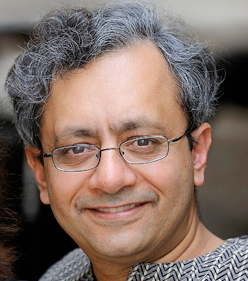 Joydeep Ghosh合作论文数Department of Electrical and Computer Engineering, Cockrell School of Engineering, The University of Texas at Austin16
 Amit Konar合作论文数Department of Electronics and Telecommunication Engineering, Jadavpur University15
 Deepyaman Maiti合作论文数9
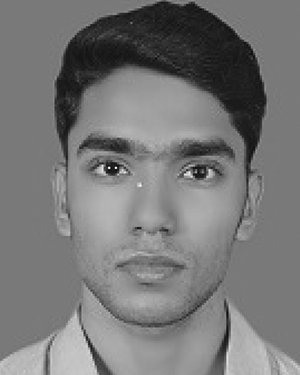 Aman Gupta合作论文数8
 Aritra Banerjee合作论文数7
 Eduardo R. Hruschka合作论文数Computer Science Department, University of Sao Paulo6
 Rahul Mazumder合作论文数Operations Research Center, Sloan School of Management, Massachusetts Institute of Technology;Center for Statistics and Data Science, Massachusetts Institute of Technology6Borja Ocejo合作论文数5
 Ramadoss Janarthanan合作论文数Department of IT, Jaya Engg. College5
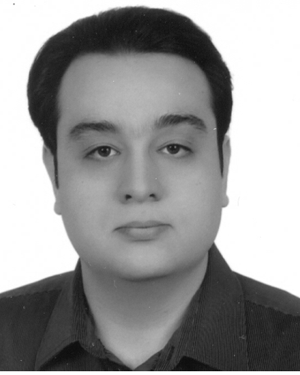 Kayhan Behdin合作论文数Advanced Communications Research Institute (ACRI),, Sharif University of Technology4
 Sathiya Keerthi Selvaraj合作论文数LinkedIn4
 Mingyuan Zhou合作论文数Department of Statistics and Data Sciences, College of Natural Sciences, The University of Texas at Austin;Department of Computer Science, College of Natural Sciences, The University of Texas at Austin;Microsoft AI4Koushik Chattopadhyay合作论文数4Sreangsu Acharyya合作论文数The University of Texas at Austin4
 Luiz F. S. Coletta合作论文数Computer Science Department Brazil, University of São Paulo (USP)3
 Anand Seetharam合作论文数University of Massachusetts3
 Kinjal Basu合作论文数Aliveo AI3Dean Teffer合作论文数3
 Ankan Saha合作论文数LinkedIn3
 Mrinal Kanti Naskar合作论文数jadavpur university3Parag Agrawal合作论文数2
 David Durfee合作论文数LinkedIn2
 Siyuan Gao (高思远)合作论文数Pinterest2
 Mithun Chakraborty合作论文数Computer Science and Engineering Division, Department of Electrical Engineering and Computer Science, University of Michigan Ann Arbor2
 Qingquan Song (宋清全)合作论文数OpenAI2
 Rajiv Khanna合作论文数Department of Computer Science, Purdue University2
 Abhishek Bhattacharyya合作论文数1 Becton Drive2
 Gregory Dexter合作论文数LinkedIn Corporation2Ahmad Amaan合作论文数1Faheem Nizar合作论文数1Rahul Mazumdar合作论文数1Rupesh Gupta合作论文数1An Chen合作论文数1P Agrawal合作论文数1J. Kenneth Tay合作论文数Dept Stat, Stanford Univ1Miao Cheng合作论文数1
 Kaiwen Dong合作论文数China Univ Min & Technol1Neeraj Gaur合作论文数Google Inc, Mountain View, CA 94043 USA1jangwon lee合作论文数1
 Yafei Wang合作论文数上海财经大学1Jette Henderson合作论文数The University of Texas1
 Yiou Xiao合作论文数Dept. of EECS, Syracuse Univ.;c;Dept. of EECS, Syracuse Univ.1Avijit Saha合作论文数Dept. of Computer Science and Engineering, IIT Madras1
 Rohan Ramanath合作论文数LinkedIn1
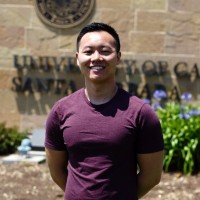 Bo Yan合作论文数LinkedIn AI1
 Balaraman Ravindran合作论文数Department of Data Science and Artificial Intelligence, Indian Institute of Technology Madras;Robert Bosch Centre for Data Science and Artificial Intelligence, Indian Institute of Technology Madras1
 Lakhmi C. Jain合作论文数University of South Australia;University of Canberra1




