The total and differential Higgs boson production cross-sections are measured through a combined statistical analysis of the H → ZZ* → 4ℓ and H → γγ decay channels. The results are based on a dataset of 139 fb−1 of proton–proton collisions at a centre-of-mass energy of 13 TeV, recorded by the ATLAS detector at the Large Hadron Collider. The measured total Higgs boson production cross-section is 55.5_-3.8^+4.0 pb, consistent with the Standard Model prediction of 55.6 ± 2.5 pb. All results from the two decay channels are compatible with each other, and their combination agrees with the Standard Model predictions. A combined statistical interpretation of the measured fiducial cross-sections as a function of the Higgs boson transverse momentum is performed in order to probe the Yukawa couplings to the bottom and charm quarks. A similar interpretation is performed by including also the constraints from the measurements of Higgs boson production in association with a W or Z boson in the H → bb and cc decay channels.
In the published HTML version of this article, the affiliations of the authors of the National Research Nuclear University MEPhI, Moscow, Russia were unfortunately marked incorrectly.
An error in the normalization of the Aplanarity and D-parameter has been found. Insufficient precision on the eigenvalue calculation can cause lambda(3) to be negative, exclusively in two-jet events, yielding an underestimation of the inclusive two-jet cross section.
AbstractA measurement of the $$ B_{s}^{0} \rightarrow J/\psi \phi $$ B s 0 → J / ψ ϕ decay parameters using $$ 80.5\, \mathrm {fb^{-1}} $$ 80.5 fb - 1 of integrated luminosity collected with the ATLAS detector from 13 $$\text {Te}\text {V}$$ Te proton–proton collisions at the LHC is presented. The measured parameters include the CP-violating phase $$\phi _{s} $$ ϕ s , the width difference $$ \Delta \Gamma _{s}$$ Δ Γ s between the $$B_{s}^{0}$$ B s 0 meson mass eigenstates and the average decay width $$ \Gamma _{s}$$ Γ s . The values measured for the physical parameters are combined with those from $$ 19.2\, \mathrm {fb^{-1}} $$ 19.2 fb - 1 of 7 and 8 $$\text {Te}\text {V}$$ Te data, leading to the following: $$\begin{aligned} \phi _{s}= & {} -0.087 \pm 0.036 ~\mathrm {(stat.)} \pm 0.021 ~\mathrm {(syst.)~rad} \\ \Delta \Gamma _{s}= & {} 0.0657 \pm 0.0043 ~\mathrm {(stat.)}\pm 0.0037 ~\mathrm {(syst.)~ps}^{-1} \\ \Gamma _{s}= & {} 0.6703 \pm 0.0014 ~\mathrm {(stat.)}\pm 0.0018 ~\mathrm {(syst.)~ps}^{-1} \end{aligned}$$ ϕ s = - 0.087 ± 0.036 ( stat . ) ± 0.021 ( syst . ) rad Δ Γ s = 0.0657 ± 0.0043 ( stat . ) ± 0.0037 ( syst . ) ps - 1 Γ s = 0.6703 ± 0.0014 ( stat . ) ± 0.0018 ( syst . ) ps - 1 Results for $$\phi _{s} $$ ϕ s and $$ \Delta \Gamma _{s}$$ Δ Γ s are also presented as 68% confidence level contours in the $$\phi _{s} $$ ϕ s –$$ \Delta \Gamma _{s}$$ Δ Γ s plane. Furthermore the transversity amplitudes and corresponding strong phases are measured. $$\phi _{s} $$ ϕ s and $$ \Delta \Gamma _{s}$$ Δ Γ s measurements are in agreement with the Standard Model predictions.
The first measurement of longitudinal decorrelations of harmonic flow amplitudes v_{n} for n=2-4 in Xe+Xe collisions at sqrt[s_{NN}]=5.44 TeV is obtained using 3 μb^{-1} of data with the ATLAS detector at the LHC. The decorrelation signal for v_{3} and v_{4} is found to be nearly independent of collision centrality and transverse momentum (p_{T}) requirements on final-state particles, but for v_{2} a strong centrality and p_{T} dependence is seen. When compared with the results from Pb+Pb collisions at sqrt[s_{NN}]=5.02 TeV, the longitudinal decorrelation signal in midcentral Xe+Xe collisions is found to be larger for v_{2}, but smaller for v_{3}. Current hydrodynamic models reproduce the ratios of the v_{n} measured in Xe+Xe collisions to those in Pb+Pb collisions but fail to describe the magnitudes and trends of the ratios of longitudinal flow decorrelations between Xe+Xe and Pb+Pb. The results on the system-size dependence provide new insights and an important lever arm to separate effects of the longitudinal structure of the initial state from other early and late time effects in heavy-ion collisions.
 Teresa Barillari合作论文数Max Planck Institute for Physics156
 Lorenzo Bellagamba合作论文数Gran Sasso Laboratory, INFN153
 Mario Antonelli合作论文数Laboratori Nazionali di Frascati LNF, Istituto Nazionale di Fisica Nucleare153
 Fernando Barreiro合作论文数CIAFF, Univ Autonoma Madrid153
 Joseph Boudreau合作论文数Department of Physics and Astronomy, University of Pittsburgh153
 Elżbieta Banaś合作论文数Division of Particle and Astroparticle Physics, Institute of Nuclear Physics, Polish Academy of Sciences;Department of Diffractive Processes, Institute of Nuclear Physics, Polish Academy of Sciences;CERN153
 Gabor Bella合作论文数Department of Physics and Astronomy Tel Aviv University 69978 Tel Aviv Israel153Michael Begel合作论文数Department of Physics, Brookhaven National Laboratory152
 Driss Benchekroun合作论文数Faculté des Sciences Ain Chock, Université Hassan II de Casablanca;Réseau Universitaire de Physique des Hautes Energies152
 Christos Anastopoulos合作论文数School of Mathematical and Physical Sciences, University of Sheffield152
 Georges Azuelos合作论文数Department of Physics, Faculty of Arts and Science, Université de Montréal;TRIUMF152
 Giulio Aielli合作论文数Dipartimento di Fisica, Università degli studi di Tor Vergata;CERN152
 Liron Barak合作论文数School of Physics and Astronomy, Tel Aviv University152
 Otmar Biebel合作论文数Fakultät für Physik, Ludwig-Maximilians-Universität München152
 Tim Adye合作论文数Particle Physics Department, Rutherford Appleton Laboratory152
 Georges Aad合作论文数Aix-Marseille University152Henri Bachacou合作论文数DSM/IRFU (Institut de Recherches sur les Lois Fondamentales de l’Univers), CEA Saclay (Commissariat a l’Energie Atomique), Gif-sur-Yvette, France152C Amelung合作论文数151Tancredi Carli合作论文数CERN151
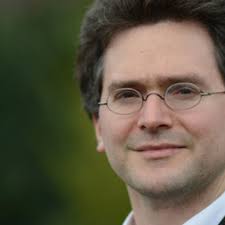 Philip Bechtle合作论文数Physikalisches Institut, Universität Bonn;Faculty of Mathematics and Natural Sciences, Universität Bonn151
 Shikma Bressler合作论文数151
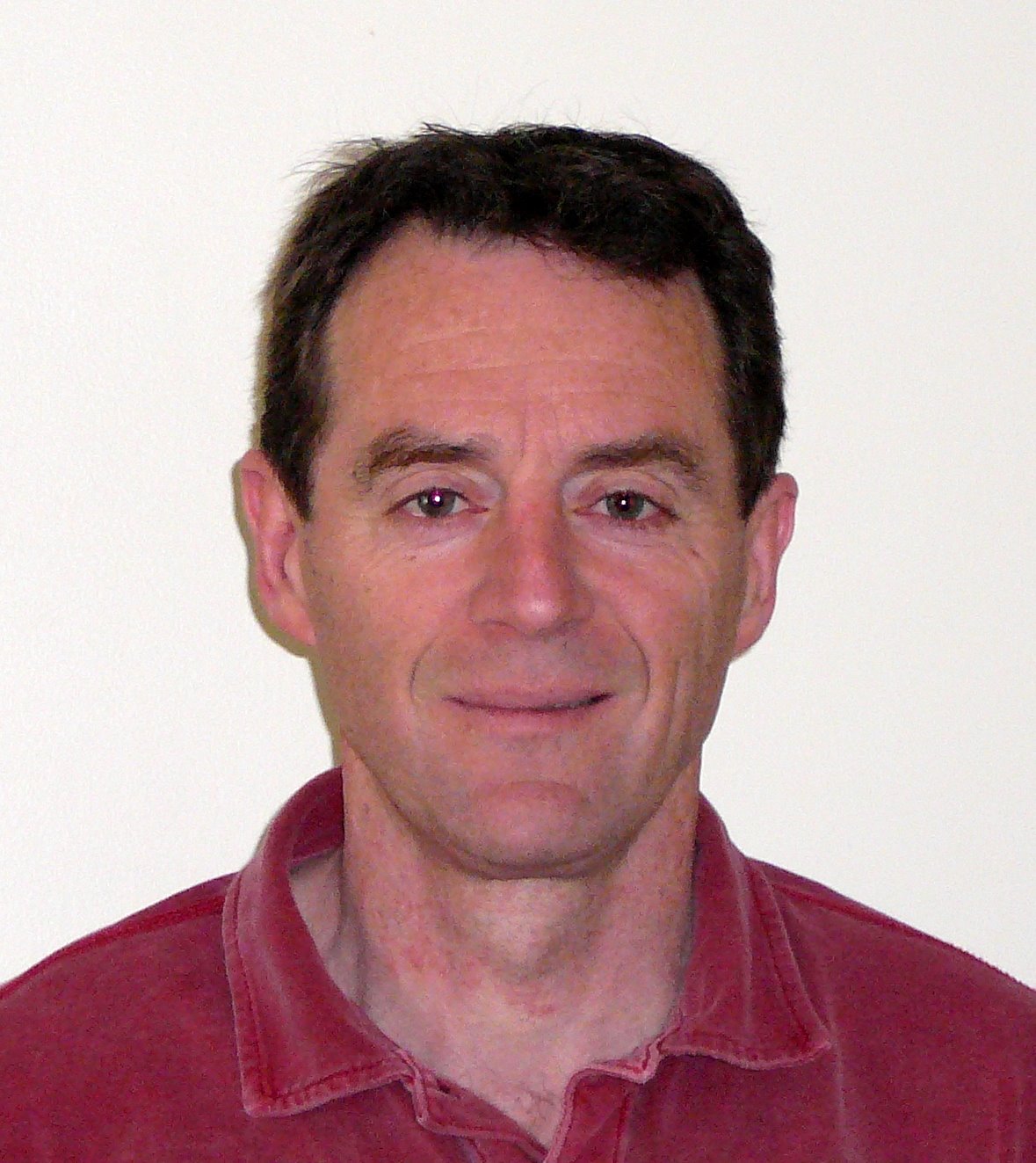 Dave Britton合作论文数School of Physics & Astronomy, University of Glasgow;Department of Physics and Astronomy, University of Glasgow151M. Aleksa合作论文数European Laboratory for Particle Physics (CERN), CH-1211 Geneva 23, Switzerland151T. Bold合作论文数Department of Physics & Astronomy, University of California151Giacomo Artoni合作论文数Department of Physics, University of Oxford151
 Theo Alexopoulos合作论文数Department of Physics, School of Applied Mathematical & Physical Sciences, National Technical University of Athens;Hellenic Open University150
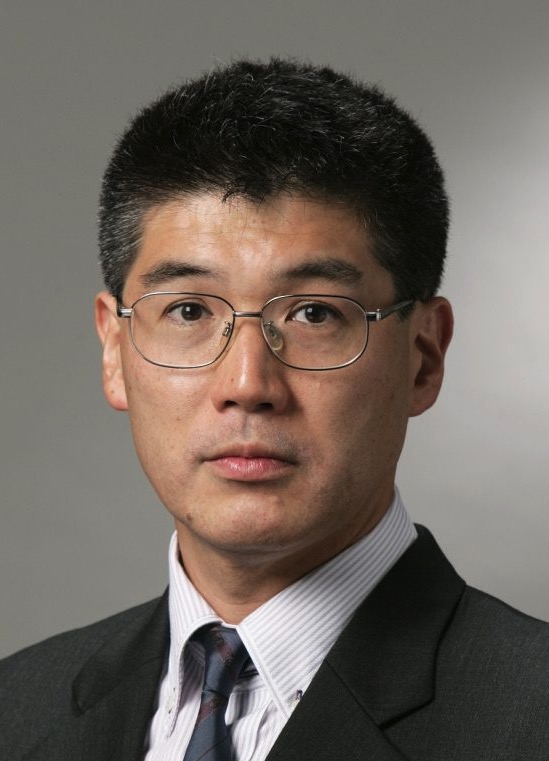 Shoji Asai (浅井祥仁)合作论文数Department of Physics, Graduate School of Science, The University of Tokyo;International Center for Elementary Particle Physics, The University of Tokyo150
 Sascha Caron合作论文数Radboud University Nijmegen;Nikhef150
 Gianluca Alimonti合作论文数Istituto Nazionale di Fisica Nucleare;University of Milan150
 Torsten Åkesson合作论文数Lund University150
 Oleg Brandt合作论文数The Cavendish Laboratory, Department of Physics, University of Cambridge150
 Timothy R Andeen合作论文数Department of Physics, College of Natural Sciences, The University of Texas at Austin150
 Aaron Richard Angerami合作论文数Lawrence Livermore National Laboratory150
 Elisabetta Barberio合作论文数School of Physics, Faculty of Science, The University of Melbourne;Arc Centre of Excellence for Dark Matter Particle Physics150
 Calin Alexa合作论文数Horia Hulubei National Institute of Physics and Nuclear Engineering150Vincenzo Cavasinni合作论文数Universita di Pisa;Istituto Nazionale di Fisica Nucleare149
 Sergei Chekanov合作论文数High Energy Physics Division, Argonne National Laboratory149Timothy L. Barklow合作论文数SLAC National Accelerator Laboratory, Stanford University149
 Fabio Anulli合作论文数Istituto Nazionale di Fisica Nucleare148F. Cerutti合作论文数148G. Avolio合作论文数148M. Capua合作论文数Department of Physics, Università della Calabria148
 Paolo Calafiura合作论文数Lawrence Berkeley National Laboratory;The United States Department of Energy148
 Hans Peter Beck合作论文数Departement für Physik, Universität Fribourg;Physikalischen Institut, Universität Bern148
 Peter J. Bussey合作论文数School of Physics & Astronomy, University of Glasgow147D. Calvet合作论文数147
 Jean-François Arguin合作论文数Département De Physique, Faculté Des Arts Et Des Sciences, Université de Montréal147
 Attilio Andreazza合作论文数Dipartimento di Fisica, Università degli studi di Milano;Laboratorio di Trattamento Numerico dei Dati Sperimentali, Università degli studi di Milano;Istituto Nazionale di Fisica Nucleare147Paolo Bagnaia合作论文数147




