Despite more than 250 years of taxonomic research, we still have only a vague idea about the true size and composition of the faunas and floras of the planet. Many biodiversity inventories provide limited insight because they focus on a small taxonomic subsample or a tiny geographic area. Here, we report on the size and composition of the Swedish insect fauna, thought to represent roughly half of the diversity of multicellular life in one of the largest European countries. Our results are based on more than a decade of data from the Swedish Taxonomy Initiative and its massive inventory of the country's insect fauna, the Swedish Malaise Trap Project The fauna is considered one of the best known in the world, but the initiative has nevertheless revealed a surprising amount of hidden diversity: more than 3,000 new species (301 new to science) have been documented so far. Here, we use three independent methods to analyze the true size and composition of the fauna at the family or subfamily level: (1) assessments by experts who have been working on the most poorly known groups in the fauna; (2) estimates based on the proportion of new species discovered in the Malaise trap inventory; and (3) extrapolations based on species abundance and incidence data from the inventory. For the last method, we develop a new estimator, the combined non-parametric estimator, which we show is less sensitive to poor coverage of the species pool than other popular estimators. The three methods converge on similar estimates of the size and composition of the fauna, suggesting that it comprises around 33,000 species. Of those, 8,600 (26%) were unknown at the start of the inventory and 5,000 (15%) still await discovery. We analyze the taxonomic and ecological composition of the estimated fauna, and show that most of the new species belong to Hymenoptera and Diptera groups that are decomposers or parasitoids. Thus, current knowledge of the Swedish insect fauna is strongly biased taxonomically and ecologically, and we show that similar but even stronger biases have distorted our understanding of the fauna in the past. We analyze latitudinal gradients in the size and composition of known European insect faunas and show that several of the patterns contradict the Swedish data, presumably due to similar knowledge biases. Addressing these biases is critical in understanding insect biomes and the ecosystem services they provide. Our results emphasize the need to broaden the taxonomic scope of current insect monitoring efforts, a task that is all the more urgent as recent studies indicate a possible worldwide decline in insect faunas.
Spacecraft charging in GEO particularly concerns dielectric surfaces that may charge to significant voltages relative to spacecraft ground because of the space environment. Testing materials helps to define the level of risk and to maintain confidence in a spacecraft's immunity to damaging effects. Another factor defining the risk involves numerical simulation of spacecraft charging. Several tools aim to calculate surface charging, which is particularly hazardous in harsh environments produced by geomagnetic sub storms, where particles in the energy range of a few to hundreds of kiloelectronvolts are present. The main codes include Nascap-2k, Spacecraft plasma Interaction Software (SPIS), MUSCAT, and Coulomb-2. They use different numerical and sometimes physical models and cross checking their results is a necessary process to achieve better confidence in simulations performed by spacecraft prime manufacturers. The objective of this paper is to simulate different GEO spacecraft configurations with NASA Charging Analyzer Program at geosynchronous orbits (a 1980s to 1990s predecessor to Nascap-2k) and SPIS and to compare the results, both in terms of absolute and differential potentials. The first section concerns the SCATHA spacecraft. The second part of this paper compares efforts to model a modern telecom spacecraft. Finally, we conclude on the reliability of the simulations performed and possible areas for modeling improvement.
While it demonstrated its capability to simulate many common situations, Spacecraft Plasma Interaction Software (SPIS) open source code lacked the possibility to model more challenging situations. The major cases of interest were identified as related to either multitimescale or multiphysical situations. Two major improvements were brought to SPIS code to answer these needs. The first one was an implicit circuit solver with an automatic determination of time steps. The implemented Newton-type algorithm makes use of a predictor for the plasma current variations when surface potentials change. The second major development was a multiphysical model for electrons. The approach consisted in using equilibrium or dynamical electron models in two different zones and connecting these zones at their boundary through a Child-Langmuir (CL)-type condition. Fulfilling this condition dynamically determines the location of the boundary and the electron current to be injected from the dense thermal zone to the space-charge zone. These new features were then used to simulate validation and application cases. The first one consisted in modeling a charging situation in GEO, which had been modeled with NASA charging analyzer (NASCAP) codes and published. Concerning the multiphysical model of electrons, the loop controlling the CL condition was first tested on elementary cases, exhibiting a good qualitative and quantitative behavior. It was then applied to the modeling of a ground experiment performed in JONAS plasma tank at the Office National d'Etudes et Recherches Aerospatiales, i.e., the expansion of the flashover generated by an electrostatic discharge over a precharged solar array coupon, leading to its neutralization.
 J.-C. Mateo-Velez合作论文数2
 David Rodgers合作论文数2A Petersson合作论文数2
 Denis Payan合作论文数2Benoit Thiebault合作论文数2
 Bertil Arvidsson合作论文数2Johan Abenius合作论文数1Ingemar Struwe合作论文数1Carl-Cedric Coulianos合作论文数1Carl-Axel Gertsson合作论文数1Phil Withers合作论文数1Sven-Olof Ulefors合作论文数1
 Sibylle Haggqvist合作论文数1sverre kobro合作论文数1marc sevoz合作论文数1Rasmus Hovmöller合作论文数1Meike Schuppenhauer合作论文数1
 Julia Stigenberg合作论文数Dept Zool, Swedish Museum Nat Hist1
 Matthias Riedel合作论文数1Jindřich Roháček合作论文数1
 Pierre Sarrailh合作论文数1Jeanty-Ruard, B.合作论文数1
 Oleksandr Varga合作论文数Schmalhausen Institute of Zoology, National Academy of Sciences;Email: Sancho.Varga@gmail.com.;Schmalhausen Institute of Zoology, National Academy of Sciences1
 Arne Fjellberg合作论文数1
 Klopfstein Seraina合作论文数Swedish Museum of Natural History1
 Rudolf Meier合作论文数Leibniz-Institut fur Evolutions- und Biodiversitatsforschung, Museum fur Naturkunde;Humboldt University1Taeger Andreas合作论文数1
 Andrew Liston合作论文数Senckenberg Deutsches Entomologisches Institut1
 Karlsson Dave合作论文数Department of Entomology, Swedish Museum of Natural History1
 Marc Pollet合作论文数1Mathias Jaschhof合作论文数1
 Ulf Gardenfors合作论文数1
 Tom Britton合作论文数Department of Mathematics, Stockholm University1
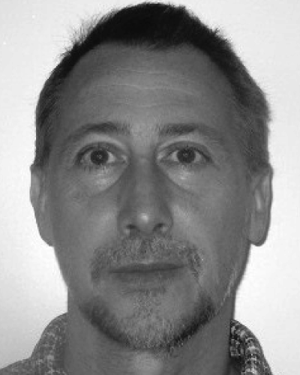 Alain Hilgers合作论文数1
 Jean-François Roussel合作论文数1
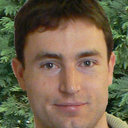 Guillaume Dufour合作论文数1Mattias Forshage合作论文数1Sven Hellqvist合作论文数1
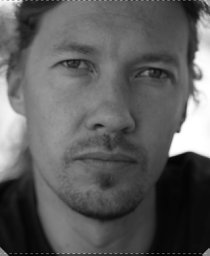 Johannes Bergsten合作论文数Department of Entomology, Swedish Museum of Natural History1
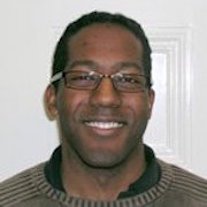 Kevin C Holston合作论文数Swedish Natural History;Section for Entomology;Section for Entomology, Swedish Natural History1
 Fredrik Ronquist合作论文数Department of Bioinformatics and Genetics, Swedish Museum of Natural History1
 Jostein Kjærandsen合作论文数1Nicolas Balcon合作论文数Australian National University1Inger Carlberg合作论文数1Peter Neerup Buhl合作论文数1




