A search for heavy neutral lepton (N) production in π+→e+N in-flight decays using data collected by the NA62 experiment at CERN in 2017–2024 is reported. Upper limits for the extended neutrino mixing matrix element |Ue4|2 are established at the level of 10−8 for heavy neutral leptons with mass in the range 95–126 MeV/c2 and lifetime exceeding 50 ns.
Results from the study of the rare decays K^+→π^+νν , K+ → π+μ+μ− and K+ → π+γγ at the NA62 experiment at CERN are interpreted in terms of improved limits for ℬ(K^+→π^+X) and coupling parameters of hidden-sector models, where X is a mediator. World-leading limits are achieved for dark photon, dark scalar and axion-like particle models.
The CERN NA62 experiment is dedicated to rare kaon decays. Data collected during Run1 (2016-2017-2018) already constitute the largest sample ever of detected K+ decays and offer unprecedented opportunities to test the SM or to search for New Physics in a variety of rare kaon and pion decays. The preliminary NA62 precision measurement of the pi(0) -> e(+)e(-) decay branching fraction is reported in the following, together with the recently published study of the K+ -> pi(+)gamma gamma decay and the first search for an axion-like particle (a) coupling to gluons in the decay chain K+ -> pi(+)a, a -> gamma gamma.
The NA62 experiment at CERN has the capability to collect data in a beam-dump mode, where 400 GeV protons are dumped on an absorber. In this configuration, New Physics particles, including dark photons, dark scalars, and axion-like particles, may be produced in the absorber and decay in the instrumented volume beginning approximately 80 m downstream of the dump. A search for these particles decaying in flight to hadronic final states is reported, based on an analysis of a sample of 1.4 × 10^17 protons on dump collected in 2021. No evidence of a New Physics signal is observed, excluding new regions of parameter spaces of multiple models.
The NA62 experiment at CERN SPS is designed to study the $K^+\to\pi^+\nu\bar\nu$ decay. After collecting data in 2016, 2017, and 2018, the experiment has resumed data taking in 2021 and has received approval for operations until the onset of LS3. The first search for the lepton number violating decay $K^+\to\pi^0\pi^-\mu^+ e^+$ and lepton flavour violating decays $K^+\to\pi^0\pi^+\mu^+ e^-$ , $K^+\to\pi^0\pi^+\mu^- e^+$ is reported. More recent results from NA62 analyses of $K^+\to\pi^+\gamma\gamma$ and $\pi^0\to e^+e^-$ decay are also reported. Additionally, the search for New Physics in the data collected during the beam-dump mode in 2021 will be discussed.
The NA62 experiment at CERN, designed to measure the highly-suppressed decay $K^+\to\pi^+\nu\bar\nu$, has the capability to collect data in a beam-dump mode, where $400~$GeV protons are dumped on an absorber. In this configuration, new physics (NP) particles, including dark photons, dark scalars and axion-like particles, may be produced and reach a decay volume starting 80~m downstream of the absorber. A search for NP particles decaying in flight to hadronic final states is reported, based on a blind analysis of a sample of $1.4\times 10^{17}$ protons on target collected in dump mode in 2021.
The NA62 experiment at the CERN SPS reports the first detection of a tagged neutrino candidate based on the data collected in 2022. The candidate consists of a K+ -> mu(+)nu(mu) decay where the charged particles are reconstructed and the neutrino is detected through a charged-current interaction in a liquid krypton calorimeter.
A measurement of the K+ -> pi(+)nu(nu) over bar decay by the NA62 experiment at the CERN SPS is presented, using data collected in 2021 and 2022. This dataset was recorded, after modifications to the beamline and detectors, at a higher instantaneous beam intensity with respect to the 2016-2018 data taking. Combining NA62 data collected in 2016-2022, a measurement of B(K+ -> pi(+) nu(nu) over bar) = (13.0(-3.0)(+3.3)) x10(-11) is reported. With 51 signal candidates observed and an expected background of 18(-2)(+3) events, B(K+ -> pi(+) nu(nu) over bar) becomes the smallest branching ratio measured with a signal significance above 5 sigma.
Abstract The NA48/2 experiment at CERN reports the first observation of the K± → π0π0μ±ν decay based on a sample of 2437 candidates with 15% background contamination collected in 2003–2004. The decay branching ratio in the kinematic region of the squared dilepton mass above 0.03 GeV2/c4 is measured to be (0.65 ± 0.03) × 10−6. The extrapolation to the full kinematic space, using a specific model, is found to be (3.45 ± 0.16) × 10−6, in agreement with chiral perturbation theory predictions.
The NA62 experiment at CERN utilises a differential Cherenkov counter with achromatic ring focus (CEDAR) for tagging kaons within an unseparated monochromatic beam of charged hadrons. The CEDAR-H detector was developed to minimise the amount of material in the path of the beam by using hydrogen gas as the radiator medium. The detector was shown to satisfy the kaon tagging requirements in a test-beam before installation and commissioning at the experiment. The CEDAR-H performance was measured using NA62 data collected in 2023.
A sample of 3984 candidates of the K+→π+γγ decay, with an estimated background of 291±14 events, was collected by the NA62 experiment at CERN during 2017–2018. In order to describe the observed di-photon mass spectrum, the next-to-leading order contribution in chiral perturbation theory was found to be necessary. The decay branching ratio in the full kinematic range is measured to be (9.61±0.17)×10−7. The first search for production and prompt decay of an axion-like particle with gluon coupling in the process K+→π+a, a→γγ is also reported.
The NA62 experiment at CERN, configured in beam-dump mode, has searched for dark photon decays in flight to electron-positron pairs using a sample of 1.4×10¹⁷ protons on dump collected in 2021. No evidence for a dark photon signal is observed. The combined result for dark photon searches in lepton–antilepton final states is presented and a region of the parameter space is excluded at 90% confidence level, improving on previous experimental limits for dark photon mass values between 50 and 600 MeV/c2 and coupling values in the range 10−6 to 4×10⁻⁵. An interpretation of the e+e− search result in terms of the emission and decay of an axionlike particle is also presented. Published by the American Physical Society 2024
Recent results from searches for rare kaon decays with the NA62 experiment at CERN are reported, together with the future prospects. A future experiment HIKE, to go beyond NA62, has been proposed to push kaon physics to an unprecedented frontier. The HIKE timescale and expected performance are described. Among the NA62 results, the measurement of the branching ratios of the flavour changing neutral current $K^+\rightarrow\pi^+\mu^+\mu^-$ and the radiative non leptonic $K^+\rightarrow\pi^+\gamma\gamma$ decays are reported, upper limits are given for lepton flavor and lepton number violating decays $K^+\rightarrow\mu^-\nu e^+e^+$ and $K^+\rightarrow\pi^-\pi^0 e^+e^+$. A search for new physics in the branching ratio of the decay $K^+\rightarrow\pi^+ e^+e^-e^+e^-$ is presented
The first search for the lepton number violating decay K+ -> pi(0)pi(-)mu(+)e(+) and lepton flavour violating decays K+ -> pi(0)pi(+)mu-e(+), K+ -> pi(0)pi(+)mu(+)e(-) has been performed using a dataset collected by the NA62 experiment at CERN in 2016-2018. Upper limits of 2.9 x 10(-10), 3.1 x 10(-10) and 5.0 x 10(-10), respectively, are obtained at 90% CL for the branching ratios of the three decays on the assumption of uniform phase-space distributions.
Kaon physics is at a turning point – while the rare-kaon experiments NA62 and KOTO are in full swing, the end of their lifetime is approaching and the future experimental landscape needs to be defined. With HIKE, KOTO-II and LHCb-Phase-II on the table and under scrutiny, it is a very good moment in time to take stock and contemplate about the opportunities these experiments and theoretical developments provide for particle physics in the coming decade and beyond. This paper provides a compact summary of talks and discussions from the Kaons@CERN 2023 workshop, held in September 2023 at CERN.
 A. Antonelli合作论文数291
 Burkhard Renk合作论文数283
 Bertrand Vallage合作论文数283Kleinknecht K合作论文数276G. P. Mannocchi合作论文数274
 Franco Ligabue合作论文数Scuola Normale Superiore di Pisa253k tittel合作论文数253L Silvestris合作论文数252A. Rougé合作论文数252Alain Bonissent合作论文数252A. Vayaki合作论文数251
 Peter Dornan合作论文数Department of Physics, Faculty of Natural Sciences, Imperial College London251H. Drevermann合作论文数European Laboratory for Particle Physics (CERN) 1211 Geneva 23 Switzerland251A. Messineo合作论文数INFN Sezione di Pisa, Pisa, Italy251
 Federico Ruggieri合作论文数Dipartimento di Matematica e Fisica, Università degli Studi Roma Tre;GARR251Daniel Decamp合作论文数250g capon合作论文数250Kuhn D合作论文数250
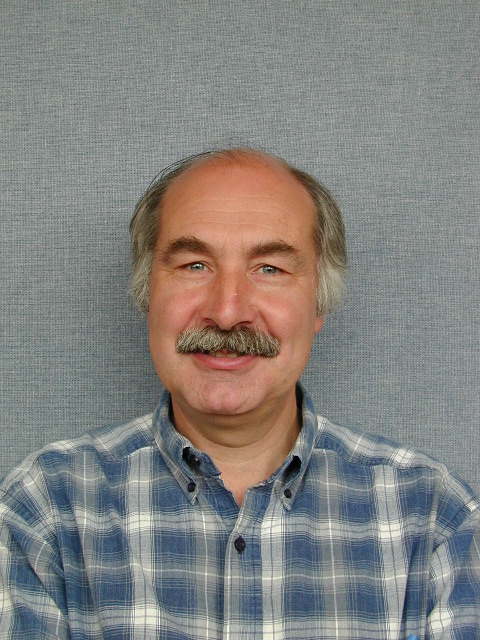 Chris Booth合作论文数School of Mathematical and Physical Sciences, University of Sheffield;Dept of Physics and Astronomy, University of Sheffield249E. E. Kluge合作论文数Institut für Hochenergiephysik der Universität D-6900 Heidelberg Federal Republic of Germany249Giuseppe Bagliesi合作论文数INFN249T. Medcalf合作论文数248A. Falvard合作论文数248F. Foster合作论文数248J.-J. Veillet合作论文数248W. Cameron合作论文数248
 Giuseppe Raso合作论文数Dipartimento di Fisica, INFN Sezione di Bari248E. Simopoulou合作论文数247
 Michel Davier合作论文数Université Paris-Saclay247Patrice Payre合作论文数247R.W. Clifft合作论文数Laboratoire de Physique des Particules (LAPP),, IN2P3-CNRS247Jm Crespo合作论文数246
 Eric Lancon合作论文数Department of Physics, Brookhaven National Laboratory246
 Pere Mato合作论文数246
 Ioana Videau合作论文数Experimental Physics Division, CERN246J. Boucrot合作论文数245F. Ranjard合作论文数245
 Glen Cowan合作论文数Centre for Particle Physics and Astronomy, Department of Physics, Royal Holloway, University of London245
 Ronald Settles合作论文数245G Parrini合作论文数244
 Giovanni Bencivenni合作论文数Laboratori Nazionali di Frascati, INFN244Joe E. Rothberg合作论文数244J. Rander合作论文数243A Giassi合作论文数243Francesco Ragusa合作论文数Università degli Studi di Milano243G. Lütjens合作论文数242c geweniger合作论文数242O. Callot合作论文数242H. Wachsmuth合作论文数242




