The decays of pions, the lightest particles composed of quarks, provide important insight into fundamental questions in particle physics including basic symmetries, the universality of fermionic weak interactions, and aspects of the strong interaction described by Quantum Chromodynamics (QCD). An introduction to the theoretical and experimental study of charged and neutral pion decays is presented.
The NA62 experiment at CERN utilises a differential Cherenkov counter with achromatic ring focus (CEDAR) for tagging kaons within an unseparated monochromatic beam of charged hadrons. The CEDAR-H detector was developed to minimise the amount of material in the path of the beam by using hydrogen gas as the radiator medium. The detector was shown to satisfy the kaon tagging requirements in a test-beam before installation and commissioning at the experiment. The CEDAR-H performance was measured using NA62 data collected in 2023.
A sample of 3984 candidates of the K+→π+γγ decay, with an estimated background of 291±14 events, was collected by the NA62 experiment at CERN during 2017–2018. In order to describe the observed di-photon mass spectrum, the next-to-leading order contribution in chiral perturbation theory was found to be necessary. The decay branching ratio in the full kinematic range is measured to be (9.61±0.17)×10−7. The first search for production and prompt decay of an axion-like particle with gluon coupling in the process K+→π+a, a→γγ is also reported.
The NA62 experiment at CERN, configured in beam-dump mode, has searched for dark photon decays in flight to electron-positron pairs using a sample of 1.4×10¹⁷ protons on dump collected in 2021. No evidence for a dark photon signal is observed. The combined result for dark photon searches in lepton–antilepton final states is presented and a region of the parameter space is excluded at 90% confidence level, improving on previous experimental limits for dark photon mass values between 50 and 600 MeV/c2 and coupling values in the range 10−6 to 4×10⁻⁵. An interpretation of the e+e− search result in terms of the emission and decay of an axionlike particle is also presented. Published by the American Physical Society 2024
Recent results from searches for rare kaon decays with the NA62 experiment at CERN are reported, together with the future prospects. A future experiment HIKE, to go beyond NA62, has been proposed to push kaon physics to an unprecedented frontier. The HIKE timescale and expected performance are described. Among the NA62 results, the measurement of the branching ratios of the flavour changing neutral current $K^+\rightarrow\pi^+\mu^+\mu^-$ and the radiative non leptonic $K^+\rightarrow\pi^+\gamma\gamma$ decays are reported, upper limits are given for lepton flavor and lepton number violating decays $K^+\rightarrow\mu^-\nu e^+e^+$ and $K^+\rightarrow\pi^-\pi^0 e^+e^+$. A search for new physics in the branching ratio of the decay $K^+\rightarrow\pi^+ e^+e^-e^+e^-$ is presented
The first search for the lepton number violating decay K+ -> pi(0)pi(-)mu(+)e(+) and lepton flavour violating decays K+ -> pi(0)pi(+)mu-e(+), K+ -> pi(0)pi(+)mu(+)e(-) has been performed using a dataset collected by the NA62 experiment at CERN in 2016-2018. Upper limits of 2.9 x 10(-10), 3.1 x 10(-10) and 5.0 x 10(-10), respectively, are obtained at 90% CL for the branching ratios of the three decays on the assumption of uniform phase-space distributions.
The first search for ultra-rare K+ decays into the π+e+e−e+e− final state is reported, using a dataset collected by the NA62 experiment at CERN in 2017–2018. An upper limit of 1.4×10⁻⁸ at 90% CL is obtained for the branching ratio of the K+→π+e+e−e+e− decay, predicted in the Standard Model to be (7.2±0.7)×10−11. Upper limits at 90% CL are obtained at the level of 10−9 for the branching ratios of two prompt decay chains involving pair-production of hidden-sector mediators: K+→π+aa, a→e+e− and K+→π+S, S→A′A′, A′→e+e−.
The NA62 experiment at CERN, designed to study the ultra-rare decay K+ → π+ νν , has also collected data in beam-dump mode. In this configuration, dark photons may be produced by protons dumped on an absorber and reach a decay volume beginning 80 m downstream. A search for dark photons decaying in flight to μ+μ− pairs is reported, based on a sample of 1.4 × 10¹⁷ protons on dump collected in 2021. No evidence for a dark photon signal is observed. A region of the parameter space is excluded at 90
We report the results of a search for dark photon in-flight decays to μ + μ − pairs at NA62. Dark photons could be produced by dumping protons onto a copper-iron absorber, reach the NA62 decay volume more than 80 m downstream of the dump and decay therein. The measurement is based on data collected in 2021 which correspond to 1.4 × 10¹⁷ dumped protons.
The NA62 experiment at CERN, designed to study the ultra-rare decay $K^+ \to \pi^+\nu\overline{\nu}$, has also collected data in beam-dump mode. In this configuration, dark photons may be produced by protons dumped on an absorber and reach a decay volume beginning 80 m downstream. A search for dark photons decaying in flight to $\mu^+\mu^-$ pairs is reported, based on a sample of $1.4 \times 10^{17}$ protons on dump collected in 2021. No evidence for a dark photon signal is observed. A region of the parameter space is excluded at 90% CL, improving on previous experimental limits for dark photon masses between 215 and 550 MeV$/c^2$.
Measurement of the ultra-rare K^+→π^+νν decay at the NA62 experiment at CERN requires high-performance particle identification to distinguish muons from pions. Calorimetric identification currently in use, based on a boosted decision tree algorithm, achieves a muon misidentification probability of 1.2 × 10⁻⁵ for a pion identification efficiency of 75
A search for the K+ -> mu(-)ve(+)e(+) decay, forbidden within the Standard Model by either lepton number or lepton flavour conservation depending on the flavour of the emitted neutrino, has been performed using the dataset collected by the NA62 experiment at CERN in 2016-2018. An upper limit of 8.1 x 10(-11) is obtained for the decay branching fraction at 90% CL, improving by a factor of 250 over the previous search. (c) 2023 The Author(s). Published by Elsevier B.V. This is an open access article under the CC BY license (http://creativecommons .org /licenses /by /4 .0/). Funded by SCOAP(3).
The NA62 experiment at CERN targets the measurement of the ultra-rare K^+→π^+νν decay, and carries out a broad physics programme that includes probes for symmetry violations and searches for exotic particles. Data were collected in 2016–2018 using a multi-level trigger system, which is described highlighting performance studies based on 2018 data.
A sample of 1.3 x 10(5)K+? p(0)e(+)?? candidates with less than 1% background was collected by the NA62 experiment at the CERN SPS in 2017-2018. Branching fraction measurements are obtained at percent relative precision in three restricted kinematic regions, improving on existing results by a factor larger than two. An asymmetry, possibly related to T-violation, is investigated with no evidence observed within the achieved precision.
Abstract A sample of 1.3 × 10⁵ K + → π 0 e + νγ candidates with less than 1% background was collected by the NA62 experiment at the CERN SPS in 2017–2018. Branching fraction measurements are obtained at percent relative precision in three restricted kinematic regions, improving on existing results by a factor larger than two. An asymmetry, possibly related to T-violation, is investigated with no evidence observed within the achieved precision.
A system for determining the purity of liquid krypton employed in the NA62 rare kaon decay experiment at CERN was developed based on the use of a time projection chamber. The attenuation of drifting ionization electrons from absorption of 511 keV gamma rays in liquid krypton was measured to estimate the purity. The setup was tested with krypton purified from commercial sources.
 T. Numao合作论文数180James Macdonald合作论文数105
 R Larose Poutissou合作论文数TRIUMF102Laurence S. Littenberg合作论文数102P. Kitching合作论文数93J. Frank合作论文数82
 Ewart Blackmore合作论文数78J.-M. Poutissou合作论文数77Rc Strand合作论文数75A. Konaka合作论文数71I. H. Chiang合作论文数71
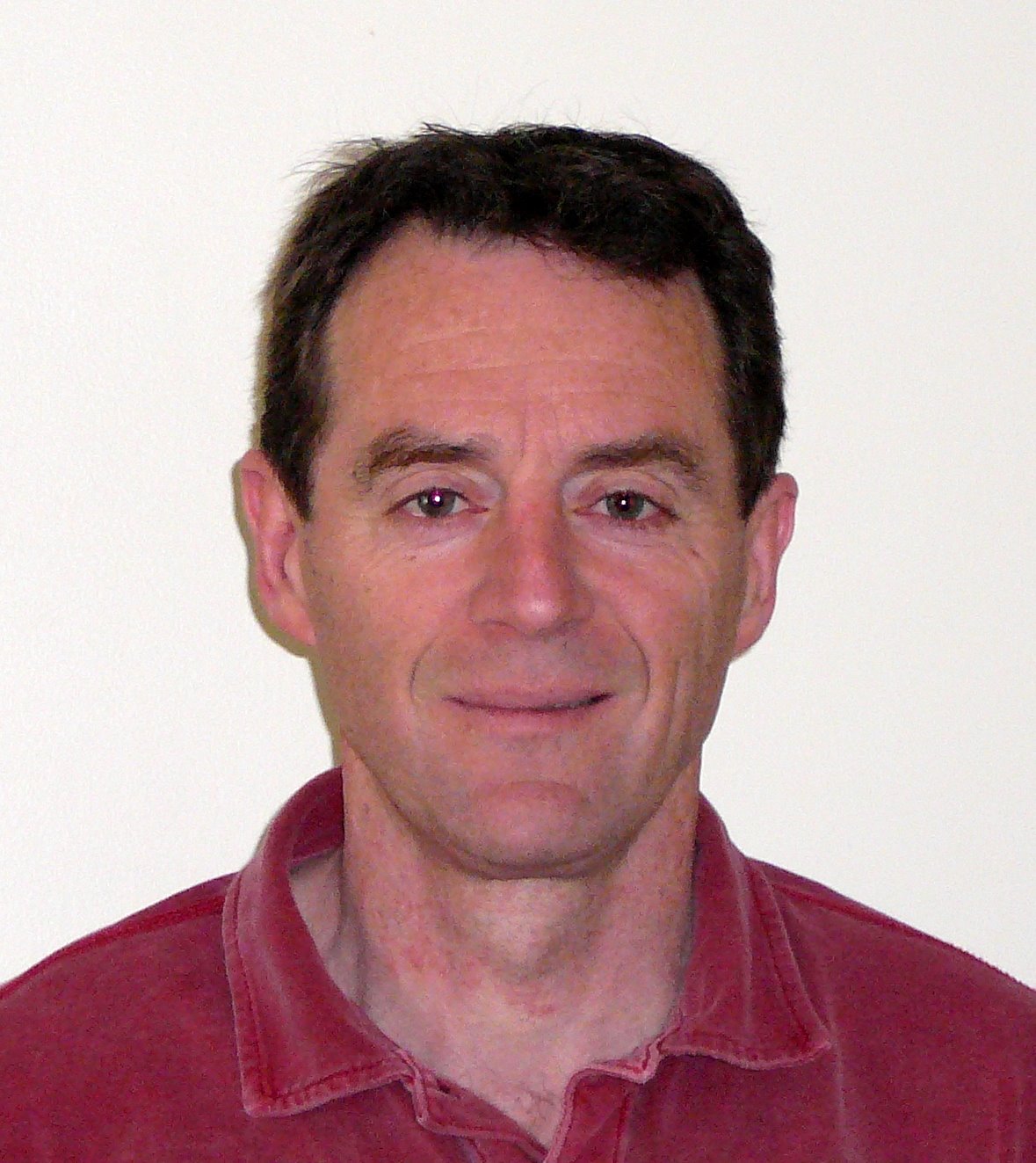 Dave Britton合作论文数School of Physics & Astronomy, University of Glasgow;Department of Physics and Astronomy, University of Glasgow70K. K. Li合作论文数70
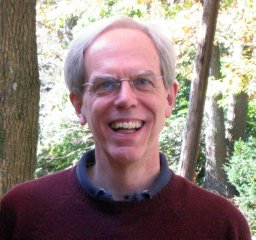 John Haggerty合作论文数Physics Department, Brookhaven National Laboratory60
 Dan Protopopescu合作论文数Glasgow U59Fc Shoemaker合作论文数58Steve Kettell合作论文数58
 Peter Meyers合作论文数Department of Physics, Princeton University54
 Yoshitaka Kuno合作论文数Department of Physics, Graduate School of Science, Osaka University54T. F. Kycia合作论文数49MS Atiya合作论文数47
 Marvin Blecher合作论文数46Vladimir Obraztsov合作论文数Department of Experimental Physics, Institute for High Energy Physics45D. V. Vavilov合作论文数45B. Velghe合作论文数44Masaaki Ito合作论文数44L. L. Kurchaninov合作论文数43
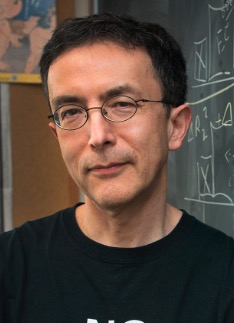 George Redlinger合作论文数Physics Department, Brookhaven National Laboratory43
 A. Sher合作论文数TRIUMF43Seiji Kabe合作论文数43A. Shaikhiev合作论文数43
 H. O. Danielsson合作论文数CERN43Norihito Muramatsu合作论文数43
 Jurgen Engelfried合作论文数Universitat Heidelberg;Physikalisches Institut;Physikalisches Institut, Universitat43V. Falaleev合作论文数42I Polenkevich合作论文数41Tk Komatsubara合作论文数41K. Massri合作论文数41N. Lurkin合作论文数41
 P. Vicini合作论文数Sezione di Roma, INFN41Tomáš Blažek合作论文数Department of Theoretical Physics, Faculty of Mathematics, Physics and Informatics, Comenius University Bratislava41R. Aliberti合作论文数41A. Biagioni合作论文数Lab Nazl Frascati, Ist Nazl Fis Nucl41P. Cenci合作论文数41R. Marchevski合作论文数41M Zamkovsky合作论文数41E. Gamberini合作论文数41P. Massarotti合作论文数41A. Sergi合作论文数41




