In this paper, we propose two methods for detecting attacks on the control setpoints of distributed energy resources providing voltage support to electric power distribution systems. We consider a radial feeder in which some nodes are providing reactive power for voltage control. A subset of these nodes may be adversarial and inject more or less power than prescribed. We seek to simultaneously estimate the state of the grid (i.e., the reactive power at each node) and reconstruct the attack vector in terms of the power being injected by the adversarial nodes. We propose two estimators for this purpose. In the first estimator, we assume that the attack vector is sparse and utilize the theory of unknown input observers. In the second estimator, we do not make this assumption and apply tools from robust estimation. We present analysis and numerical illustration of both these methods.
The integration of renewable energy resources (RERs) in the modern power grid is increasing rapidly because of aggressive decarbonization goals, lower costs, and increased government investment. However, higher penetrations of inverter-based generation can lead to frequency stability issues because of reduced system inertia. This paper develops a framework for quantifying the contribution of electric vehicles (EVs) toward providing frequency support to the grid and thus increasing the penetration limit of renewable energy resources (RERs). EVs are considered to provide both inertial response and primary frequency response support to the grid. A stochastic approach incorporating the uncertainties associated with the behavior of EVs is developed to derive the discharge limit of EV aggregators. A multi-machine system frequency response (MM-SFR) model is developed, which incorporates the dynamic virtual inertia and droop coefficients of EV aggregators derived from the EV control modules. Frequency security constraints are developed from this MM-SFR model, which, along with the converter voltage security and low voltage ride-through constraints, are integrated within a nonlinear optimization framework to determine the RER integration limit. The efficacy of the proposed approach is validated using the RTS-GMLC test system.
Li-ion batteries are increasingly being used in various sectors, including consumer electronics, electric vehicles (EVs), and grid energy storage, as critical components in modern infrastructure. Convention for the EV market dictated that 80% of the initial capacity of the battery represented the end of life and is therefore commonly marked as the end point of battery aging studies. To exploit the potential applications of a given cell, an understanding of degradation trends beyond 80% capacity is needed and requires the collection of data at various standard use conditions. This work details a multi-year cycling study of commercial LiFePO4 (LFP), LiNixCoyAl1−x−yO2 (NCA), and LiNixMnyCo1−x−yO2 (NMC) 18650 cells, varying the discharge rate (C-rate), state of charge (SOC) ranges, and environment temperature. This work builds on a previously published analysis performed up to 80% capacity, now focusing on post 80% analysis[1]. The capacity degradation of each chemistry, under varying conditions, were compared. Cycling at varying discharge C-rates (0.5C, 1C, 2C, 3C), SOC ranges (0-100%, 20-80%, and 40-60%) and temperatures (15, 25, and 35 °C) affected each chemistry to different extents. Therefore, the relative importance of each parameter in cyclic aging is different for different chemistries. Overall, we find that each cell chemistry can conduct significant cycling post 80%, in some cases to a capacity retention of 40%, with minimal loss of round-trip efficiency (RTE). We find that SOC range is the most consistent factor in cell capacity fade rate for all chemistries considered. Temperature had varied impacts on capacity fade depending on cell chemistry, for example NCA cells show no clear trend before 80% capacity, but post 80%, increased temperatures caused an increase in the rate of capacity fade. C-rate of discharge has a more prominent impact on capacity as cells age. LFP cells are the only ones that showed a clear trend of the highest and lowest C-rates causing the most rapid fade before 80%. Post 80%, the NMC and NCA cells start to show a similar trend and the LFP trend becomes more pronounced. Most batteries do not display a distinct knee point, instead exhibiting a more linear degradation with gradual increase in slope. When they do experience knee points, there is no consistent trend across chemistries and conditions that appear to cause knees. Other metrics such as RTE, total discharged energy, and internal resistance (IR) are also being considered to identify trends. This study represents the broadest public report of post 80% capacity cycling across multiple chemistries and will be valuable in lifetime prediction modelling for efficient battery usage. References: 1Preger et al. “Degradation of Commercial Lithium-Ion Cells as a Function of Chemistry and Cycling Conditions” J. Electrochem. Soc., 2020 , 167, 120532. SNL is managed and operated by NTESS under DOE NNSA contract DE-NA0003525.
Energy storage systems (ESSs) are a flexible resource that will be vital to meet the aggressive clean energy targets of the future. However, the economic gains from ESSs can be limited due to large capital investments and monetization challenges. It is thus desirable to utilize ESSs for multiple techno-economic benefits to justify deployment costs. In this work, a framework to simultaneously dispatch ESSs for energy arbitrage and power quality applications is presented. More specifically, a model predictive control (MPC)-based framework that can dispatch energy storage to accomplish multiple techno-economic objectives is proposed. This is achieved without impacting market revenues while satisfying all power system and ESS constraints. Simulation results indicate that power quality applications such as voltage regulation and power factor correction can be stacked with arbitrage without significantly impacting arbitrage revenues and in some cases even improving the revenues. A controller-hardware-in-the-loop (CHIL) study of the proposed framework is also performed to demonstrate the practical feasibility of the framework.
We consider the problem of decentralized control of reactive power provided by distributed energy resources for voltage support in the distribution grid. We assume that the reactance matrix of the grid is unknown and potentially time-varying. We present a decentralized adaptive controller in which the reactive power at each inverter is set using a potentially heterogeneous droop curve and analyze the stability and the steady-state error of the resulting system. The effectiveness of the controller is validated in simulations using a modified version of the IEEE 13-bus and a 8500-node test system.
Lithium-ion batteries are widely used in applications from consumer electronic devices to stationary energy storage. Appropriate management of batteries is challenging due to limited data on their performance and materials degradation. Previous studies have focused on characterization of single cells under specific operating conditions. In the present work, commercial 18650 lithium-ion cells with LiNixMnyCo1-x-yO2 (NMC) and LiNixCoyAl1-x-yO2 (NCA) positive electrodes were characterized by a wide range of electrochemical and materials techniques after cycling at 15, 25, or 35 °C to ∼80% capacity. The NCA cells exhibit weak temperature dependence in their cycle aging and materials degradation. The NMC cells exhibited increased capacity fade and materials degradation as ambient temperature decreased. All cells exhibited loss of lithium inventory as their primary degradation mode. However, the NCA cells only showed evidence of solid electrolyte interphase (SEI) growth whereas the NMC cells showed signs of Li plating at 15 °C, transitioning to SEI growth at 35 °C. The NMC cells displayed signs of loss of active material at the positive electrode at lower temperatures, suggesting that Li plating is correlated to additional processes that increase the rate of degradation. These results highlight the importance of avoiding broad generalizations about Li-ion battery temperature dependence.
The penetration of wind power generation into the power grid has been accelerated in recent times due to the aggressive emission targets set by governments and other regulatory authorities. Although wind power has the advantage of being environment-friendly, wind as a resource is intermittent in nature. In addition, wind power contributes little inertia to the system as most wind turbines are connected to the grid via power electronic converters. These negative aspects of wind power pose serious challenges to the frequency security of power systems as penetration increases. In this work, an approach is proposed where an energy storage system (ESS) is used to mitigate frequency security issues of wind-integrated systems. ESSs are well equipped to supply virtual inertia to the grid due to their fast-acting nature, thus replenishing some of the energy storage capability of displaced inertial generation. In this work, a probabilistic approach is proposed to estimate the amount of inertia required by a system to ensure frequency security. Reduction in total system inertia due to the displacement of conventional synchronous generation by wind power generation is considered in this approach, while also taking into account the loss of inertia due to forced outages of conventional units. Monte Carlo simulation is employed for implementing the probabilistic estimation of system inertia. An ESS is then sized appropriately, using the system swing equation, to compensate for the lost inertia. The uncertainty associated with wind energy is modeled into the framework using an autoregressive moving average technique. Effects of increasing the system peak load and changing the wind profile on the expected system inertia are studied to illustrate various factors that might affect system frequency security. The proposed method is validated using the IEEE 39-bus test system.
Increase in the number and frequency of widespread outages in recent years has been directly linked to drastic climate change necessitating better preparedness for outage mitigation. Severe weather conditions are experienced more frequently and on larger scales, challenging system operation and recovery time after an outage. The impact is more evident and concerning than before, considering the increased dependency on electricity in all aspects of our lives.
The future U.S. electric grid is being transformed with deep decarbonization of generation (i.e., removing or reducing reliance on fossil fuels and replacing them with renewable and clean energy resources), which in practice is not achievable without a dramatic increase in the reliance on long-duration energy storage (LDES) technologies. Regulators at both the state and federal level are well advised to take steps to address current policy gaps, build frameworks that will enable a greater role for LDES to contribute to grid reliability and be fairly compensated for its grid services. . Decarbonization by definition is dependent on an increasing reliance on variable renewable energy, primarily wind and solar resources, that needs to be stored for longer durations to maintain electric grid reliability and provide operational flexibility to grid operators. However, despite the growing realization of the need for long-duration energy storage (LDES) technologies, a persistent gap of policy levers at the federal and state level creates a vacuum in terms of defining how and where LDES technologies can be utilized to support the electric grid, along with an inadequate regulatory framework wherein these resources will need to be valued and compensated for the services they can provide. This paper—which is primarily intended for US decision makers, but should be of value for all energy professionals and the general public—addresses policy gaps, needs, and opportunities for LDES that require urgent attention from US-based policymakers at the federal and state level. This paper also provides background information on how the US E&U industry is structured and regulated, along with perspectives on LDES technologies and applications, all of which have direct relevance to the paper’s primary focus on the need for LDES policymaking. Discussion Despite a generally accepted future need for long-duration energy storage (LDES) technologies that is directly tied to the rapid of renewable resources on the U.S. electric grid, there is a lack of policymaking, market designs, and compensation mechanisms for LDES technologies. Decarbonization (i.e., the goal of removing or reducing reliance on fossil fuels) cannot be achieved at the aggressive levels envisioned without utilizing LDES. Policymakers must take steps now to build frameworks that recognize the unique ways in which LDES will increasingly contribute to grid reliability and resilience, and receive appropriate compensation for the services it provides. Graphical abstract
We consider the problem of decentralized control of reactive power provisioned by distributed energy resources for voltage support in the distribution grid. We assume that the reactance matrix of the grid is unknown and potentially time-varying. We present conditions for stability of the system when the reactive power at each inverter is set using a potentially heterogeneous droop curve. These conditions utilize energy dissipation requirements and can be naturally satisfied even when the reactance matrix is unknown by using an adaptive controller and when the reactance matrix is time-varying.
Variable energy resources (VERs) like wind and solar are the future of electricity generation as we gradually phase out fossil fuel due to environmental concerns. Nations across the globe are also making significant strides in integrating VERs into their power grids as we strive toward a greener future. However, integration of VERs leads to several challenges due to their variable nature and low inertia characteristics. In this paper, we discuss the hurdles faced by the power grid due to high penetration of wind power generation and how energy storage system (ESSs) can be used at the grid-level to overcome these hurdles. We propose a new planning strategy using which ESSs can be sized appropriately to provide inertial support as well as aid in variability mitigation, thus minimizing load curtailment. A probabilistic framework is developed for this purpose, which takes into consideration the outage of generators and the replacement of conventional units with wind farms. Wind speed is modeled using an autoregressive moving average technique. The efficacy of the proposed methodology is demonstrated on the WSCC 9-bus test system.
The true useful life of secondary Li-ion batteries is currently not well characterized. 80% of initial capacity, a decades old metric for vehicle applications, is a common endpoint in literature cycling studies and commercial cell specification sheets. As such, much is not known about cell performance beyond this metric. The 80% cutoff may not be applicable for non-vehicle applications, like grid energy storage, where there are different requirements for performance. Degradation data beyond the 80% capacity threshold is needed to make these evaluations. To address this, we have been conducting a multi-year study of both cycling and calendar aging of 18650 cells. During this study, LiNixCoyAl1-x-yO2/NCA, and LiNixMnyCo1-x-yO2/NMC cells have been cycled at systematically varied temperature, state of charge (SOC) ranges, and cycling rates. Cells were cycled at different state of charge (SOC) ranges (0-100%, 20-80%, and 40-60%), temperatures (15, 25, and 35 °C) and discharge rates (0.5C, 1C, 2C, and 3C). Additionally, we present data from a concurrent calendar aging study at different temperatures (15, 25, and 35 °C) and SOCs (25, 50, and 90%). Our group has previously reported on trends for cycle aging down to 80% capacity [1]. Here, we present an update on performance of cells cycled beyond 80% capacity to an end of life (EOL) of 40% capacity and cells undergoing calendar aging. Results so far suggest that SOC range continues to be the largest factor in capacity fade rate for both chemistries. Combining stress factors (NMC at high SOC and low temperature) causes rapid capacity fade beyond what would be expected by simple addition of degradation rates from the individual stress factors. Depending on the conditions of cycling, so called knee points do not always appear when a cell is cycled beyond 80%. When a knee point occurs varies by cycling conditions. We also consider additional metrics by which battery performance can be measured such as round-trip efficiency (RTE), total discharged energy, and internal resistance (IR). And find that IR increases generally matches well with capacity fade and appear to increase dramatically at observed knee points. For the calendar aging study, we find that holding cells at higher SOCs and temperatures generally increases the rate of fade. This study represents the broadest public report of post 80% capacity cycling across multiple chemistries. It will inform cell lifetime prediction and allow for better utilization of battery systems. Sandia National Laboratories is a multi-mission laboratory managed and operated by National Technology & Engineering Solutions of Sandia, LLC, a wholly owned subsidiary of Honeywell International Inc., for the U.S. Department of Energy’s National Nuclear Security Administration under contract DE-NA0003525. SAND2022-5089 A References: 1Preger et al. “Degradation of Commercial Lithium-Ion Cells as a Function of Chemistry and Cycling Conditions” J. Electrochem. Soc., 2020 , 167, 120532.
This article discusses the upcoming changes in the electricity industry including electrification, and the drive toward fossil-free generation, and the role of energy storage (ES) in electrification and the operation of a future electric grid without fossil fuels. Though our discussion is primarily focused on the United States electricity system, the issues affecting the operation of future electr...
Highlights Zn-MnO 2 batteries promise safe, reliable energy storage, and this roadmap outlines a combination of manufacturing strategies and technical innovations that could make this goal achievable. Approaches such as improved efficiency of manufacturing and increasing active material utilization will be important to getting costs as low as $100/kWh, but key materials innovations that facilitate the full 2-electron capacity utilization of MnO 2 , the use of high energy density 3D electrodes, and the promise of a separator-free battery with greater than 2V potential offer a route to batteries at $50/kWh or less. Abstract Large-scale energy storage is certain to play a significant, enabling role in the evolution of the emerging electrical grid. Battery-based storage, while not a dominant form of storage today, has opportunity to expand its utility through safe, reliable, and cost-effective technologies. Here, secondary Zn–MnO 2 batteries are highlighted as a promising extension of ubiquitous primary alkaline batteries, offering a safe, environmentally friendly chemistry in a scalable and practical energy dense technology. Importantly, there is a very realistic pathway to also making such batteries cost-effective at price points of $50/kWh or lower. By examining manufacturing examples at the Zn–MnO 2 battery manufacturer Urban Electric Power, a roadmap has been created to realize such low-cost systems. By focusing on manufacturing optimization through reduced materials waste, scalable manufacturing, and effective materials selection, costs can be significantly reduced. Ultimately, though, coupling these approaches with emerging research and development advances to enable full capacity active materials utilization and battery voltages greater than 2V are likely needed to drive costs below a target of $50/kWh. Reaching this commercially important goal, especially with a chemistry that is safe, well-known, and reliably effective stands to inject Zn–MnO 2 batteries in the storage landscape at a critical time in energy storage development and deployment. Graphical abstract
This paper presents a literature review on current practices and trends on cyberphysical security of grid-connected battery energy storage systems (BESSs). Energy storage is critical to the operation of Smart Grids powered by intermittent renewable energy resources. To achieve this goal, utility-scale and consumer-scale BESS will have to be fully integrated into power systems operations, providing ancillary services and performing functions to improve grid reliability, balance power and demand, among others. This vision of the future power grid will only become a reality if BESS are able to operate in a coordinated way with other grid entities, thus requiring significant communication capabilities. The pervasive networking infrastructure necessary to fully leverage the potential of storage increases the attack surface for cyberthreats, and the unique characteristics of battery systems pose challenges for cyberphysical security. This paper discusses a number of such threats, their associated attack vectors, detection methods, protective measures, research gaps in the literature and future research trends.
In recent years lithium-ion (Li-ion) batteries with a lithium iron phosphate (LFP) cathode have become popular for grid storage and electric vehicle applications. To address uncertainty in their performance and lifetime, we initiated a multi-year cycle and calendar aging study of commercial LFP cells under systematically varied conditions. Here, we present an update of cycling data from these cells at their current state where most have reached 80% capacity retention. Cells were cycled at different state of charge (SOC) ranges (0-100%, 20-80%, and 40-60%), temperatures (15, 25, and 35 °C) and discharge rates (0.5C, 1C, 2C, and 3C). Additionally, we present data from a concurrent calendar aging study at different temperatures (15, 25, and 35 °C) and SOCs (25, 50, and 90%). To date, higher ambient temperatures have most significantly reduced the cycle and calendar life of LFP cells. A higher SOC range or single SOC value during cycle and calendar aging, respectively, also increased the capacity fade rate, but to a lesser extent. The rate of discharge during cycling showed a mixed influence on capacity fade, with the highest and lowest rates producing the most rapid fade. This data provides a foundation to identify the distinct contributions of calendar and cycle aging. We will also discuss changes in other metrics that are of interest to system integrators, such as round-trip efficiency, cell skin temperature during cycling and discharge energy throughput. Finally, we will discuss future work that will center around materials cycling of cells disassembled at 80% capacity and cycling the remaining cells down to an end of life of 40% capacity, at which point materials characterization will be conducted again. This will help determine why capacity fade varies in the cells and what is their useful life under these aging conditions. This work was funded by the DOE Office of Electricity under the direction of Dr. Imre Gyuk. Sandia National Laboratories is a multimission laboratory managed and operated by National Technology & Engineering Solutions of Sandia, LLC, a wholly owned subsidiary of Honeywell International Inc., for the U.S. Department of Energy's National Nuclear Security Administration under contract DE-NA0003525. SAND2021-15833 A
 Yuliya Preger合作论文数Energy Storage Tech & Syst, Sandia Natl Labs21Armando Fresquez合作论文数19
 Raymond H. Byrne合作论文数Electric Power Systems Research Department, Sandia National Laboratories19Robert H. Reuss合作论文数17
 Reed M. Wittman合作论文数Sandia National Laboratories, Albuquerque, New Mexico, USA14
 Summer R. Ferreira合作论文数12
 Timothy Lambert合作论文数Department of Photovoltaics & Materials Technologies, Sandia National Laboratorie, U.S. Department of Energy10
 Tu Nguyen合作论文数9
 Heather Barkholtz合作论文数9
 Atri Bera合作论文数Department of Electrical and Computer Engineering, Michigan State University8joshua lamb合作论文数8
 Joydeep Mitra合作论文数Department of Electrical and Computer Engineering, College of Engineering, Michigan State University7
 Dorota Temple合作论文数6Jill Langendorf合作论文数5
 Sonia Grego合作论文数Department of Electrical & Computer Engineering, Pratt School of Engineering, Duke University5Erik Vick合作论文数5
 Sergei D. Ivanov合作论文数4Imre Gyuk合作论文数4
 Rodrigo D. Trevizan合作论文数Univ Florida, Dept Elect & Comp Engn, Gainesville, FL 32611 USA4
 Vijay Gupta合作论文数Department of Electrical Engineering, College of Engineering, University of Notre Dame4Travis M. Anderson合作论文数4
 Yi Wei合作论文数4David Golden合作论文数4
 Erik D. Spoerke合作论文数Department of Materials Science and Engineering, Northwestern University4
 Bruce Gnade合作论文数Department of Materials Science and Engineering, Erik Jonsson School of Engineering and Computer Science, The University of Texas at Dallas4
 Stan Atcitty合作论文数Energy Storage Technology & Systems Department, Sandia National Laboratories4
 Ralph Masiello合作论文数Quanta Technology4craig amrine合作论文数3
 Birendra Ale Magar合作论文数Dept Phys, New Mexico State Univ3
 Seong Beom Lee合作论文数Dept Energy Resources Engn, Stanford Univ3
 Matthew B. Lim合作论文数Sandia Natl Labs3
 Loraine Torres-Castro合作论文数Power Sources R&D, Sandia Natl Labs3Duay Jonathon合作论文数Department of Chemistry and Biochemistry, University of Maryland3Lewis, Jay合作论文数RTI Int.;c;RTI Int.3
 David A. Copp合作论文数3Pratt Harry D合作论文数Sandia National Laboratories, Albuquerque, New Mexico 87185, USA.3
 Arokia Nathan (阿洛基亚·那桑)合作论文数School of Information Science and Engineering, Shandong University;Darwin College, University of Cambridge3
 Norbert Fruehauf合作论文数Chair of Display Technology, Universitaet Stuttgart3
 Valerio De Angelis合作论文数Mathematics Department, Xavier University of Louisiana3
 John C. Hewson合作论文数Sandia National Laboratories, Albuquerque, NM 87185-1135, USA3Richard A. Copeland合作论文数Molecular Physics Laboratory, SRI International3
 Kishalay Mitra合作论文数Tata Consultancy Services3
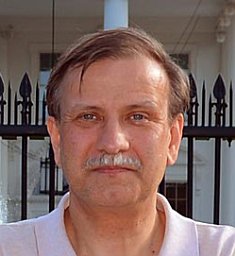 Igor Vasiliev合作论文数Department of Physics, New Mexico State University3
 Venkat R. Subramanian合作论文数Walker Department of Mechanical Engineering, Cockrell School of Engineering, The University of Texas at Austin3ronald o petersen合作论文数2Ka Dean合作论文数2Richard Fioravanti合作论文数2j lamb合作论文数2Benjamin W. Juba合作论文数2




