We report an analysis of correlations between magnetic field and velocity fluctuations in the fast solar wind beyond 1 AU at high latitudes. We have found that on scales shorter than the microstream structures, there exists a well‐defined dependence of the flow speed on the angle between the magnetic field vector and the radial direction. Solar wind is found to be slightly faster when the measured magnetic field vector is transverse to the velocity, while it is always slower when the magnetic field is parallel, or antiparallel, to the radial direction. We show that this correlation is a direct consequence of the high Alfvénicity of fast wind fluctuations and that it can be reasonably described by a simple model taking into account the main properties of the low‐frequency antisunward Alfvén fluctuations as observed in the solar wind plasma. We also discuss how switchbacks, short periods of magnetic field reversals, naturally fit in this new observed correlation.
An analysis of ion non‐thermal properties in the fast solar wind based on Ulysses data is reported. The radial evolution of the main proton moments (density, temperature, and drift velocities) and their empirical correlations with other plasma parameters are investigated in detail and compared with theoretical expectations. The stability of the plasma is studied against different ion kinetic instabilities driven by ion temperature anisotropies and differential velocities, focusing on the identification of possible signatures of relevant instabilities in the observed core‐beam structure of proton distributions. The temperature anisotropy of the total proton distribution appears to be constrained by fire hose instabilities, in agreement with previous studies, while if considered separately, beam and core populations exhibit opposite anisotropies, with core protons characterized by perpendicular temperatures larger than the parallel ones, possibly (marginally) unstable for ion‐cyclotron instability. The evolution with distance of the drift velocity between the secondary population and the main core is found to be nonadiabatic, leading to the identification of a marginal stability path of a magnetosonic ion‐beam instability. As a conclusion, we find that a large fraction of the proton distributions observed by Ulysses display signatures of either a beam or a fire hose instability, suggesting that such kinetic processes play an important role in regulating the solar wind thermal energetics during the plasma expansion.
Previous work has led to suggestions that core-beam distributions of ions in the fast polar solar wind could be caused either by wave-particle interactions in interplanetary space or by ejections of faster material into pre-existing flows. It has also been suggested that the many-hour-long high-speed structures, or microstreams, in the polar wind could be the interplanetary manifestation of solar X-ray jets observed in supergranule boundaries. Proton distribution functions both in the microstreams and in the ambient fast polar wind are examined to test the conjecture that solar ejections may play an important role in creating double proton beams. Double-peaked distributions in the microstreams that have the peak containing most of the particles (the core) being faster than the less-dense beam are suggestive of ejection of material that may have come from a jet. It is concluded, however, that those "backwards" distributions were caused by magnetic reversals, or switchbacks, rather than by the inclusion of faster material. Other than in the switchbacks, there is no qualitative difference between the double-proton streaming in the microstreams peaks and in the ambient wind. Evidence is provided that essentially all departures of the magnetic field from the dominant polarity of the polar wind are due to such switchbacks rather than to solar fields with non-dominant polarities. It is also shown that, in the fast polar solar wind, there are more short-duration switchbacks than longer ones and that the incidence of reversed fields increases with solar distance.
Ion kinetic simulations of the solar wind using hybrid codes can model local wave input, heating and instabilities, but generally do not include long term evolution effects in the expanding solar wind. We further develop the expanding box model used in earlier studies to include the mirror force effects and study their role in the evolution of the proton distribution functions in the outer corona and inner heliosphere. The mirror force, significant in the acceleration region of the solar wind, is required for consistency with the conservation of magnetic moment of particles in the expanding wind. We present preliminary results from the modified 1D expanding box hybrid (EBHM) simulations.
The first evidence of the solar wind was provided through observations of comet tail deflections by L. Biermann in 1951. A cometary ion tail is oriented along the difference between the cometary and solar wind velocities, whereas the dust tail is in the antisunward direction; the ion tail directions demonstrated the existence of an outflow of ionized gas from the Sun (the solar wind) and allowed estimates of solar wind speed. Spacecraft observations have now established that at 1 AU the solar wind has a typical ion number density of about 7 /cc and is composed by number of about 95% protons and 5% Helium, with other minor ions also present. The solar wind as observed at 1 AU in the ecliptic has speeds typically in the range 300-700 km/ s. At such speeds ions travel from the Sun to 1 AU in from 2.5 to 6 days. The impact of the solar wind on planets with magnetic fields (Earth, Jupiter, Saturn, Uranus, Neptune) causes phenomena such as magnetospheres, aurorae, and geomagnetic storms, whereas at objects lacking magnetospheres (Mars, Venus, comets), atmospheric neutrals undergo charge exchange and are picked up by the solar wind flow. The solar wind also shields the Earth from low energy cosmic rays, and is responsible for the existence of the anomalous component of the cosmic rays a low energy component that is created locally rather than in the galaxy. Presented here is a brief introduction to the solar wind and a description of some current topics of research. Solar wind properties vary a great deal due to the changing magnetic structure on the Sun.
Properties of multiple ion beams in the solar wind beyond 1 AU as observed by the SWOOPS experiment on Ulysses are discussed. The solar wind proton distributions are approximated by a two beam bi-Maxwellian model. The slower outward traveling beam typically comprises the majority of the solar wind density. Differential streaming between the slower and faster proton beams decreases with distance from the Sun. The greatest difference between the beams in their evolution with distance from the Sun is that the parallel temperature component of the faster beam decreases more rapidly, r(-1.22), than that of the slower beam, r(-0.39). The difference in behavior for the perpendicular components (r(-0.46) for the faster beam and r(-0.73) for the slower beam) is real but less marked. The indication that relative perpendicular cooling is less for the faster beam while relative parallel cooling is greater and differential beam speed decreases is generally consistent with expectations from a streaming instability between the two proton beams. We have observed a dependence of the temperature anisotropy of the faster proton beam on the drift speed of the faster beam with respect to the slower beam; for large drifts (about 1.6 V-A) the anisotropy, T-vertical bar/T-perpendicular to, is smaller (about 0.8), whereas for slower drifts the parallel temperature is relatively hotter (anisotropy ratio of about 1.5).
Observations of solar wind from both large polar coronal holes (PCHs) during Ulysses' third orbit showed that the fast solar wind was slightly slower, significantly less dense, cooler, and had less mass and momentum flux than during the previous solar minimum (first) orbit. In addition, while much more variable, measurements in the slower, in‐ecliptic wind match quantitatively with Ulysses and show essentially identical trends. Thus, these combined observations indicate significant, long‐term variations in solar wind output from the entire Sun. The significant, long‐term trend to lower dynamic pressures means that the heliosphere has been shrinking and the heliopause must be moving inward toward the Voyager spacecraft. In addition, our observations suggest a significant and global reduction in the mass and energy fed in below the sonic point in the corona. The lower supply of mass and energy may result naturally from a reduction of open magnetic flux during this period.
We report an analysis of the proton temperature anisotropy evolution from 0.3 to 2.5 AU based on the Helios and Ulysses observations. With increasing distance the fast wind data show a path in the parameter space (β∥p, T⊥p/T∥p). The first part of the trajectory is well described by an anticorrelation between the temperature anisotropy T⊥p/T∥p and the proton parallel beta, while after 1 AU the evolution with distance in the parameter space changes and the data result in agreement with the constraints derived by a fire hose instability. The slow wind data show a more irregular behavior, and in general it is not possible to recover a single evolution path. However, on small temporal scale we find that different slow streams populate different regions of the parameter space, and this suggests that when considering single streams also the slow wind follows some possible evolution path.
Comet McNaught was the brightest comet observed from Earth in the last 40 years. For a period of five days in early 2007 February, four instruments on the Ulysses spacecraft directly measured cometary ions and key properties of the interaction of the comet's ion tail with the high-speed solar wind from the polar regions of the Sun. Because of the record-breaking duration of the encounter, the data are unusually comprehensive. O3+ ions were detected for the first time in a comet tail, coexisting with singly charged molecular ions with masses in the range 28-35 amu. The presence of magnetic turbulence and of ions with energies up to ~200 keV indicate that at a distance of ~1.6 AU from the comet nucleus, the ion tail of comet McNaught had not yet reached equilibrium with the surrounding solar wind.
Alfvén waves, discontinuities, proton perpendicular acceleration and magnetic decreases (MDs) in interplanetary space are shown to be interrelated. Discontinuities are the phase-steepened edges of Alfvén waves. Magnetic decreases are caused by a diamagnetic effect from perpendicularly accelerated (to the magnetic field) protons. The ion acceleration is associated with the dissipation of phase-steepened Alfvén waves, presumably through the Ponderomotive Force. Proton perpendicular heating, through instabilities, lead to the generation of both proton cyclotron waves and mirror mode structures. Electromagnetic and electrostatic electron waves are detected as well. The Alfvén waves are thus found to be both dispersive and dissipative, conditions indicting that they may be intermediate shocks. The resultant 'turbulence' created by the Alfvén wave dissipation is quite complex. There are both propagating (waves) and nonpropagating (mirror mode structures and MDs) byproducts. Arguments are presented to indicate that similar processes associated with Alfvén waves are occurring in the magnetosphere. In the magnetosphere, the 'turbulence' is even further complicated by the damping of obliquely propagating proton cyclotron waves and the formation of electron holes, a form of solitary waves. Interplanetary Alfvén waves are shown to rapidly phase-steepen at a distance of 1AU from the Sun. A steepening rate of ~35 times per wavelength is indicated by Cluster-ACE measurements. Interplanetary (reverse) shock compression of Alfvén waves is noted to cause the rapid formation of MDs on the sunward side of corotating interaction regions (CIRs). Although much has been learned about the Alfvén wave phase-steepening processfrom space plasma observations, many facets are still not understood. Several of these topics are discussed for the interested researcher. Computer simulations and theoretical developments will be particularly useful in making further progress in this exciting new area.
We present hybrid expanding box simulations of the interaction of left‐handed Alfvén waves with protons, alpha particles, and a tenuous population of oxygen O5+. The Alfvén waves are initially nonresonant with the ions, and the expansion brings them to the cyclotron resonance with O5+ ions, then with alpha particles, and finally with protons. The simulations show that O5+ ions are efficiently heated in the directions perpendicular to the background magnetic field but are only slightly accelerated. Oxygen scattering has a finite time span and saturates mainly due to the marginal stabilization with respect to the oxygen cyclotron instability generated by the temperature anisotropy. During the scattering, oxygen ions are able to absorb only a limited amount of available fluctuating energy and, for the parameters used in the simulations, their presence has a minimum influence on alpha particles and protons.
Spacecraft reaching 5 AU and beyond present an opportunity to study the thickness of the heliospheric current sheet (HCS) and plasma sheet (HPS), how they change with distance and what determines their thickness. To answer these questions, we studied HCS/HPS thickness at several distances using field and plasma data obtained by Ulysses and ACE. The Ulysses data were obtained in 1991 en-route to Jupiter near 3 AU and in 2004 near 5 AU. The same current-plasma sheets analyzed at similar to 5 AU were then identified and studied in ACE data at I AU. The median thickness of the HCS decreased slightly with distance from the sun (1700 to 1450 km). The HPS medians also decreased with distance (3x 10(6) to 1.4x 10(6) km). However, individual HCS thicknesses appear to be uncorrelated with the associated HPS thickness. No obvious controllers of the HCS or HPS thickness have been identified. Polarity reversals in electron heat flux were well correlated with the HCS at 5 AU.
During periods of high solar activity when there are many sources of solar wind on the solar disk, a spacecraft occasionally encounters consecutive solar wind streams with the same magnetic polarity. The low‐speed wind in the region of interaction between the two streams exhibits many of the same features as, but has some differences from, the low‐speed wind that includes crossings of the heliospheric current sheet (HCS) where the direction of the heliospheric magnetic field reverses. The non‐HCS slow wind exhibits many of the same small‐scale structures usually associated with the slow wind around the HCS; these include discontinuous stream interfaces and other discontinuities, magnetic holes, and low‐entropy structures. These entropy holes do not appear to have the same origin as the plasma sheets observed near the HCS, however. The helium abundances and heavy ion charge states in the non‐HCS regions are not significantly different from those in HCS‐associated regions. Some of the dynamical properties of the non‐HCS regions differ from those found near the HCS; the regions between leading and trailing stream interfaces have a shorter duration or scale size, greater minimum speed, and lower peak and average densities. No correlation could be found between the non‐HCS slow wind and visible coronal streamers.
The Heliospheric Constellation (HELICON) mission concept calls for the first constellation of spacecraft to make coordinated measurements of the solar wind magnetic field, plasma and energetic particle distributions and composition in order to determine scale-lengths of solar wind structures and to resolve ambiguities in temporal and spatial variability. Specifically, HELICON enables the resolution of a wide array of critical questions of solar wind structure and dynamics. The HELICON's Science Objectives are as follows: (1) Determine the structure and evolution of expanding interplanetary coronal mass ejections, (2) Use supra-thermal and energetic particles to determine the source populations of solar events and the scale sizes of Interplanetary Coronal Mass Ejections (ICMEs) and Corotating Interaction Regions (CIRs) (3) Determine the structure and nature of the heliospheric current sheet, and (4) Examine the causes of variability in the solar wind. This brief report describes the mission concept and scientific rationale for such a mission.
 Marcia Neugebauer合作论文数86Andre Balogh合作论文数Department of Physics, Faculty of Natural Sciences, Imperial College London44
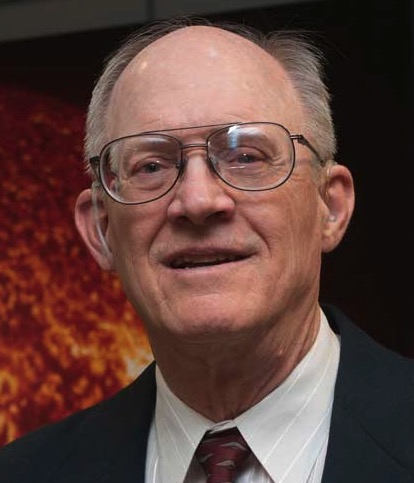 J T Gosling合作论文数Laboratory for Atmospheric and Space Physics, University of Colorado, Boulder43B. T. Tsurutani合作论文数42
 Edward J. Smith合作论文数Jet Propulsion Laboratory41J. L. Phillips合作论文数41SJ BAME合作论文数34
 Hans Balsiger合作论文数University of Bern24
 David J. McComas合作论文数Department of Astrophysical Sciences, Princeton University19
 William C. Feldman合作论文数19
 Robert J Forsyth合作论文数18Helmut Rosenbauer合作论文数17Eg Shelley合作论文数15
 R. Schwenn合作论文数15S. T. Suess合作论文数14
 C. M. Ho合作论文数14S. Peter Gary合作论文数13
 Ruth M Skoug合作论文数13Paulett C. Liewer合作论文数13
 Marco Velli合作论文数Department of Earth, Planetary, and Space Sciences, College of Physical Sciences, University of California12R. Goldstein合作论文数11J. K. Arballo合作论文数11A. J. Lazarus合作论文数10Bruce L. Barraclough合作论文数10
 Bruce Tadashi Tsurutani (Bruce T. Tsurutani)合作论文数Jet Propulsion Laboratory, NASA9T. R. Sanderson合作论文数9
 Johannes Geiss合作论文数8R. G. Marsden合作论文数8B. Buti合作论文数8
 Gurbax Lakhina合作论文数Indian Institute of Geomagnetism8Paulett C Liewer合作论文数8
 Stephen A. Fuselier合作论文数Lockheed Martin Advanced Technology Center7D. R. Clay合作论文数7
 Kathrin Altwegg合作论文数Center for Space and Habitability, Faculty of Science, University of Bern;Department of Space Research and Planetology, University of Bern7
 Fritz M. Neubauer合作论文数Institut fur Geophysik und Meteorologie, Faculty of Mathematics and Natural Sciences, University of Cologne7Victor J. Pizzo合作论文数7u rettenmund合作论文数6r sakurai合作论文数6
 Stephen Fuselier合作论文数Southwest Research Institute, University of Texas at San Antonio6K.-P. Wenzel合作论文数6
 Alexander Ruzmaikin合作论文数Institute of Applied Mathematics, U.S.S.R. Academy of Science Moscow6daniel winterhalter合作论文数6A Meier合作论文数5
 Ming Hammond合作论文数5
 Volker Bothmer合作论文数Max-Planck-Institut für Sonnensystemforschung5
 David T Young合作论文数Southwest Research Institute5
 Pete Riley合作论文数Predictive Science Inc.5
 Daniel B. Reisenfeld合作论文数Los Alamos National Laboratory5




