A mapping from the Lie algebra of the complexified Lorentz group to the 𝔰𝔲(2)×𝔰𝔲(2) ∼𝔰𝔭(1)×𝔰𝔭(1) part of the algebra the coset space Sp(2)/[Sp(1)× Sp(1)] is presented. The coset space is shown to be home to the instanton, the curvature form that optimizes the Yang-Mills functional. Arguments are presented to support the generalization to Sp(n)/Sp(1)^n to yield a self-consistent many-body theory for n particles interacting with one another via fields that reside in the coset space.
The power law describing the distribution X-n of molecular weights for polymerizations that proceed via step-growth ring expansion is shown to be X-n similar to n(-3/2). This differs from ring-chain equilibria that are described by Jacobson-Stockmayer theory with its X-n similar to n(-5/2) law. This difference in the power law for formation of rings has a profound effect on the distribution of macrocycle molecular weights. At high conversions, the number average degree of polymerization (DP) for a ring expansion polymerization is approximately the square root of that for an equivalent linear step-growth polymerization and is not increased by dilution. The weight average DP at high conversions is approximately one-half that of the number average DP for a linear polymerization at the same conversion.
Cyclo-octa-sulfur, c-S8, in the orthorhombic crystal, α-S, has two low energy rotational states of S-S bonds at about ± 99°; the SSS bond angle is ca. 108°. On heating, α-S first melts and then undergoes a polymerization. Many different forms of polymeric sulfur are recognized in the literature – we will lump these together as p-S. A commercially useful form of p-S is compatible with rubbery polymers, but the reversion of p-S to the stable α-S occurs readily. To understand the reversion, we have performed high-level quantum calculations to evaluate the relative energetics of (1) the reverse of the radical polymerization mechanism, and (2) internal loop formation that pinches c-S8 rings out from long chains via a hypervalent intermediate. We show that both mechanisms are viable routes to depolymerization.
The accuracy of force fields is a key to the successful prediction of the thermodynamic properties of materials. In simulations of organic molecules over large temperature ranges, atomistic force fields that are parametrized at, or near, ambient temperatures are found to systematically underestimate the intermolecular dispersion interactions at elevated temperatures. Analysis of the underestimates using diatomic molecules indicates that a minor part is due to the change in molecular polarizability, while the major part is due to the reduced dielectric constant of the bulk liquid as the density decreases with increasing temperature. By establishing the dispersion parameter as a linear function of temperature, we have successfully enhanced the temperature transferability of atomistic force fields. This approach is tested on 66 molecular liquids covering four functional groups - alkane, aromatic, ether, and ketone-aldehyde - over a broad range of temperatures by calculating liquid density, heat of vaporization, isobaric heat capacity, and shear viscosity.
The action of $Sp(3)$ on a vector space $V_3\in \mathbb H^3$ is analyzed. The transitive action of the group is conveyed by the flag manifold (coset space) $Sp(3)/Sp(1)^3\sim G/H$, a Wallach space. The curvature two-forms are shown to mediate pair-wise interactions between the components of the $\mathbb H^3$ vector space. The root space of the flag manifold is shown to be isomorphic to that of $SU(3)$, suggesting similarities between the representations of the flag manifold and those of $SU(3)$. The passage from $SU(3)$ to $Sp(3)$ and the interpretation given here encompasses the spin of the fermionic components of $V_3$. Composite fermions are representable as linear combinations of product states of the eigenvectors of $G/H$.
The belief that three dimensional space is infinite and flat in the absence of matter is a canon of physics that has been in place since the time of Newton. The assumption that space is flat at infinity has guided several modern physical theories. But what do we actually know to support this belief? A simple argument, called the "Telescope Principle", asserts that all that we can know about space is bounded by observations. Physical theories are best when they can be verified by observations, and that should also apply to the geometry of space. The Telescope Principle is simple to state, but it leads to very interesting insights into relativity and Yang-Mills theory via projective equivalences of their respective spaces.
Organic nonlinear optical (ONLO) chromophores are used to make electro-optic devices. Traditional ONLO chromophores use a π-conjugated bridge to couple the electron acceptor and donor moieties. We have explored whether other types of conjugation can be used to make high-performance ONLO chromophores. We have found that cross-conjugated bridge structures, when other parameters are kept the same, can exhibit comparable hyperpolarizabilities. Experimental hyperpolarizabilities of prototypical cross-conjugated chromophores, measured by hyper-Raleigh scattering, are comparable with their π-conjugated analogues, in contrast with the prediction of several electronic structure calculation methods. This opens new synthetic routes to other types of chromophores, which may provide enhanced performance.
We have developed an approach to coarse-grained (CG) modeling of the van der Waals (vdW) type of interactions among molecules by representing groups of atoms within those molecules in terms of ellipsoids (rather than spheres). Our approach systematically translates an arbitrary underlying all-atom (AA) representation of a molecular system to a multisite ellipsoidal potential within the family of Gay-Berne type potentials. As the method enables arbitrary levels of coarse-graining, or even multiple levels of coarse-graining within a single simulation, we describe the method as a Level of Detail (LoD) model. The LoD model, as integrated into our group's Metropolis Monte Carlo computational package, is also capable of reducing the complexity of the molecular electrostatics by means of a multipole expansion of charges obtained from an AA force field (or directly from electronic structure calculations) of the charges within each ellipsoid. Electronic polarizability may additionally be included. The present CG representation does not include transformation of bonded interactions; ellipsoids are connected at the fully atomistic bond sites by freely rotating links that are constrained to maintain a constant distance. The accuracy of the method is demonstrated for three distinct types of self-assembling or self-organizing molecular systems: (1) the interaction between benzene and perfluorobenzene (dispersion interactions), (2) linear hydrocarbon chains (a system with large conformational flexibility), and (3) the self-organization of ethylene carbonate (a highly polar liquid). Lastly, the method is applied to the interaction of large (∼100 atom) molecules, which are typical of organic nonlinear optical chromophores, to demonstrate the effect of different CG models on molecular assembly.
Orientational order parameters are useful metrics for characterizing the probability distribution for vector-valued quantities such as the dipole moment or optical axis of molecules in materials such as liquid crystals and organic glasses. These parameters are the moments of the underlying orientational probability distribution. Many molecular systems can be characterized using a single centrosymmetric (even) moment. For dipolar systems, an applied electric or magnetic field can break the symmetry of the system, leading to nonzero acentric (odd) moments. For complex systems, it is difficult to characterize the nature of the bulk structures and to quantitatively understand the relationship between acentric and centrosymmetric moments. We have found that it is useful to relate the moments of the distribution in terms of an apparent dimensionality of the ordering process. Here we show that the idea of noninteger dimensionality, originally introduced by Stillinger, provides a useful method to characterize the relation between centrosymmetric and acentric orientational order parameters. Applying dimensional constraints is equivalent to removing rotational degrees of freedom or constraining rotation within a restricted volume. Simulations based on simple examples—using restoring potentials on arrays of independent dipoles—and on complex many-body Monte Carlo simulations of dipolar spheroids are described. An analysis of the results illustrates the utility of fractional dimensionality to describe ordering in materials.
The geometry that yields the gauge potential and curvature form of Yang-Mills theory is known to be $Sp(2)/Sp(1)\times Sp(1)\sim S^4$. The projective metric for this space will be constructed and the curvature tensor will be shown to consist of both self-dual and anti-self-dual components. In the central projection, one hemisphere of $S^4$ is mapped onto the other, such that one hemisphere, excluding the equator, is equivalent to a four dimensional ball. This enables a mapping between the compact geometry of YM theory and relativity, with the double cover of the equator mapping to infinity in the anti-de Sitter (AdS) space. By interpreting the YM geometry (instanton) as the space of interactions between two particles it is suggested that the $Sp(2)/Sp(1)\times Sp(1)$ YM quaternionic geometry can be generalized to $n$ fermions, each having an $Sp(1)\sim SU(2)$ gauge group.
Flag manifolds are shown to describe the relations between configurations of distinguished points (topologically equivalent to punctures) embedded in a general spacetime manifold. Grassmannians are flag manifolds with just two subsets of points selected out from a set of N points. The geometry of Grassmannians is determined by a group acting by linear fractional transformations, and the associated Lie algebra induces transitions between subspaces. Curvature tensors are derived for a general flag manifold, showing that interactions between a subset of k points and the remaining N-k points in the configuration is determined by the coordinates in the flag manifold.
The solution of the many-body statistical mechanical theory of elasticity formulated by James and Guth in the 1940s [H. M. James, J. Chem. Phys. 15, 651 (1947)] is presented. The remarkable aspect of the solution is that it gives an elastic free energy that is essentially equivalent to that developed by Flory over a period of several decades.
We studied the effect of a cross-conjugated bridging group (χC) on charge-transfer in a push-pull chromophore system. The hyperpolarizability of such molecules was found to be comparable to that of a fully π-conjugated molecule (πC) with the same donor and acceptor. The cross-conjugated moiety was then applied as a pendant to a fully π-conjugated chromophore containing a tricyanopyrroline acceptor (TCP). The addition of a χC moiety did not alter the intrinsic hyperpolarizability and provides an avenue for extending and aiding πC systems. The molecules were examined by X-ray diffraction (XRD), hyper-Raleigh scattering (HRS) and UV-visible (UV-vis) spectroscopy. Experimental results were compared with the predictions of density functional theory (DFT). Cross-conjugated molecules have comparable ß values, relative to πC molecules, due to reduced spatial overlap between the highest occupied molecular orbital (HOMO) and lowest unoccupied molecular orbital (LUMO). Thus, the χC architecture could facilitate independent modification of donor and acceptor strengths while minimizing unfavorable effects on electronic transitions and dipole moments.
In this paper we present a time-domain time-dependent density functional theory (TDDFT) approach to calculate frequency-dependent polarizability and hyperpolarizabilities. In this approach, the electronic degrees of freedom are propagated within the density matrix based TDDFT framework using the efficient modified midpoint and unitary transformation algorithm. We use monochromatic waves as external perturbations and apply the finite field method to extract various orders of the time-dependent dipole moment. By fitting each order of time-dependent dipole to sinusoidal waves with harmonic frequencies, one can obtain the corresponding (hyper)polarizability tensors. This approach avoids explicit Fourier transform and therefore does not require long simulation time. The method is illustrated with application to the optically active organic molecule para-nitroaniline, of which the frequency-dependent polarizability α(-ω; ω), second-harmonic generation β(-2ω; ω, ω), optical rectification β(0; -ω, ω), third-harmonic generation γ(-3ω; ω, ω, ω), and degenerate four-wave mixing γ(-ω; ω, ω, -ω) are calculated.
Experimental and computational studies of the solvent dependence of the first molecular hyperpolarizability (β) for two donor-bridge-acceptor chromophores (CLD-1 and YLD156) are presented. Hyper-Rayleigh scattering (HRS) measurements are performed with 1907 nm excitation in a series of solvents with dielectric constants ranging from ~2 (toluene) to ~36 (acetonitrile). For both chromophores an approximately 2-fold increase in β is observed by HRS over this range of dielectric constants. Computational studies employing a polarized continuum model to represent the solvent are capable of reproducing this experimental result. The experimental and computational results are compared to the predictions of the widely employed two-state model (TSM) for β. Surprisingly, for the chromophores studied here the TSM predicts that β should decrease with increasing dielectric constant over the range investigated. The results presented here demonstrate that the TSM provides neither a quantitative nor qualitative description of the solvent dependence of β for CLD-1 and YLD156. The enhancement of β with increased dielectric constant suggests that modification of the dielectric surrounding the chromophore is one path by which the performance of nonlinear optical devices employing these chromophores may be significantly enhanced.
The dipole moments of highly polar molecules measured in solution are usually smaller than the molecular dipole moments that are calculated with reaction field methods, whereas vacuum values are routinely calculated in good agreement with available vapor phase data. Whether from Onsager's theory (or variations thereof) or from quantum mechanical methods, the calculated molecular dipoles in solution are found to be larger than those measured. The reason, of course, is that experiments measure the net dipole moment of solute together with the polarized (perturbed) solvent "cloud" surrounding it. Here we show that the reaction field charges that are generated in the quantum mechanical self-consistent reaction field (SCRF) method give a good estimate of the net dipole moment of the solute molecule together with the moment arising from the reaction field charges. This net dipole is a better description of experimental data than the vacuum dipole moment and certainly better than the bare dipole moment of the polarized solute molecule.
A theory for the transitive action of a group on the configuration space of a system of particles is shown to lead to the conclusion that interactions can be represented by the action of cosets of the group. By application of this principle to Pauli spinors, the symplectic group Sp(n) is shown to be the largest group of isometries of the space. Interactions between particles are represented by the complete quaternionic flag variety Sp(n)/Sp(1)^n.
The roles played by various spatially-anisotropic interactions, dielectric permittivity, and optical frequency in determining electro-optic activity in a variety of different types of organic materials is discussed from the perspective of correlated quantum/statistical mechanical methods and measurement techniques for the determination of poling-induced acentric order and molecular first hyperpolarizability. Comparison of experimental and theoretical data suggests that a "first principles" understanding of electro-optic activity in organic materials can be achieved for chromophore/polymer composites; chromophores covalently incorporated into polymers and dendrimers; and for complex binary (and multiple) chromophore-containing organic glasses. Issues associated with integrating organic electro-optic (OEO) materials into all-organic and hybrid OEO/silicon photonic devices are discussed. Conductivity plays a major role in defining the performance of devices and various options for minimizing the undesired effects of conductivity are discussed.
An overview of the development and utilization of organic electro-optic materials is presented with emphasis on the role played by quantum and statistical mechanical calculations in understanding critical structure/function relationships that have guided the improvement of such materials over the past two decades. This review concentrates largely on three classes of organic electro-optic materials prepared by electric field poling of materials near their glass transition temperature: (1) chromophore/polymer composite materials, (2) dendrimers and polymers containing covalently incorporated chromophores, and (3) matrix-assisted-poling (MAP) materials where specific spatially anisotropic interactions enhance poling efficiency. In particular, the role of chromophore shape, restrictions on chromophore motion associated with covalent bonds, and lattice dimensionality effects are reviewed. The role of device design and auxiliary properties (optical loss, thermal stability, photochemical stability, processability) in influencing the utilization of organic electro-optic materials is also briefly reviewed.
 Bruce H. Robinson合作论文数Department of Chemistry, University of Washington35
 Larry R. Dalton合作论文数Department of Chemistry, College of Arts & Sciences, University of Washington29
 sullivan phillip a合作论文数15Philip J. Reid合作论文数15
 Yi Liao合作论文数Florida Institute of Technology12
 Alex K. Y. Jen (任廣禹)合作论文数School of Energy and Environment, City University of Hong Kong;Department of Materials Science and Engineering, College of Engineering, City University of Hong Kong;Hong Kong Institute for Clean Energy11Denise H. Bale合作论文数11Sanchali Bhattacharjee合作论文数9
 Benjamin Olbricht合作论文数9Lewis E Johnson合作论文数8Kimberly A. Firestone合作论文数8Yk Leung合作论文数7
 Jingdong Luo (羅敬東)合作论文数Department of Chemistry, College of Science, City University of Hong Kong7
 Scott R. Hammond合作论文数Departments of Chemistry and Electrical Engineering, University of Washington7L. Y. Shy合作论文数7
 Werner Kaminsky合作论文数Department of Chemistry, University of Washington6
 James E. Martin合作论文数Sandia National Laboratories6Antao Chen (陈安涛)合作论文数6
 Gaoyuan Wei (魏高原)合作论文数Department of Chemistry, Peking University6jessica sinness合作论文数5D Rigby合作论文数5
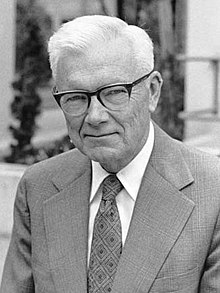 Paul John Flory (保罗·约翰·弗洛里)合作论文数Stanford University5Stephen J. Mumby合作论文数Molecular Simulations Inc.5
 Joshua A. Davies合作论文数5
 Andrew Akelaitis合作论文数5
 Stephanie J. Benight合作论文数5nicholas buker合作论文数4mark lingwood合作论文数4harry rommel合作论文数4K.-J. Lee合作论文数4Y HUANG合作论文数4
 Bill Henry Steier合作论文数Ming Hsieh Department of Electrical and Computer Engineering, Viterbi School of Engineering, University of Southern California4Sen Liu合作论文数4Harrison L. Rommel合作论文数4
 Xiaosong Li合作论文数Department of Chemistry, University of Washington;Department of Materials Science and Engineering, University of Washington;College of Arts & Sciences, University of Washington;Pacific Northwest National Laboratory4N. A. Neuburger合作论文数4Marnie Haller合作论文数4
 Christine M. Isborn合作论文数Department of Chemistry;Uni Versity of Washington;Department of Chemistry, Uni Versity of Washington4Vassilios Galiatsatos合作论文数4Robert C. Snoeberger合作论文数4Caibao Qian合作论文数4P. Sullivan合作论文数3T.-K. YIN合作论文数3Ka Firestone合作论文数3philip ried合作论文数3
 Erich Wimmer合作论文数Materials Design, Inc.3
 Huai Sun (孙淮)合作论文数School of Chemistry and Chemical Engineering, Shanghai Jiao Tong University;Zhiyuan College, Shanghai Jiao Tong University3Brenden Carlson合作论文数3
 Gregory Phelan合作论文数Chemistry Department;University of Washington;Chemistry Department, University of Washington3




