The TCV tokamak (R=0.9m, a=0.25m, 1<κ<2.9, -0.7<δ<1, BT<1.52T, PECH<4MW) is dedicated to investigating the importance of plasma shaping for transport and stability, as well as the physics of ECH and ECCD. The large variety of plasma shapes, sizes and positions impose important and often conflicting requirements on the design of diagnostics system. These are in part met by a set of multichord diagnostics, several of which offer a complete coverage of the highly eleongated vacuum vessel. They range from single-viewing fan diagnostics to multiple camera systems consisting of up to 200 individual detectors in up to 10 cameras and cover the e.m. spectrum from the visible range up to hard X rays. They provide essential information for diagnostics tasks as diverse as divertor physics, MHD instabilities and suprathermal electron dynamics. PACS: 52.70Kz, 52.70La
On the Tokamak a Configuration Variable (TCV), electron internal transport barriers (eITBs) can be formed during a gradual evolution from a centrally peaked to a hollow current profile while all external actuators are held constant. The formation occurs rapidly (<tau E-e) and locally and, according to ASTRA modelling, is consistent with the appearance of a local minimum in the safety factor (q) profile. The eITB is sustained by non-inductively driven currents (including the off-axis bootstrap current) for many current redistribution times while the current in the tokamak transformer is held constant. The maximum duration is limited by the pulse length of the gyrotrons. The transformer coil can be used as a counter (or co-) current source with negligible accompanying input power. In established eITBs the performance can be enhanced (degraded) by altering solely the central current or q-profile. New experiments show that the same stationary eITB performance can be reached starting from discharges with centrally peaked current. A fine scan in surface voltage shows a smooth increase in performance and no sudden improvement with voltage despite the fact that q(min) must pass through several low-order rational values. The appearance, in some cases, of magnetic islands simultaneously with that of the eITB provides a new constraint on the simulation of the q-profiles.
Powerful ECH with an adaptable launching geometry and plasma shaping capability are exploited on TCV to create and control high performance regimes, with 3MW of 2nd and 1.5MW of 3rd harmonic (X3) and real time optimisation of the absorption by mirror feedback. Full X3 absorption with launching parallel to the resonant surface was obtained. Electron temperature profile stiffness was measured as a function of the shape up for a large range of temperature gradients and confirmed that the diffusivity is lower at negative triangularity and high elongation. The link between shear and transport was verified by interleaved modulation of coand counterECCD. ECCD efficiency and fast electron generation and transport measurements demonstrate the role of transport on the driven current profile. Stationary electron ITBs were created and the role of the current profile in transport reduction was clarified by improving or destroying the barrier with a small induced electric field.
The Tokamak Configuration Variable (TCV) tokamak (R = 0.88 m, a < 0.25 m, B < 1.54 T) programme is based on flexible plasma shaping and heating for studies of confinement, transport, control and power exhaust. Recent advances in fully sustained off-axis electron cyclotron current drive (ECCD) scenarios have allowed the creation of plasmas with high bootstrap fraction, steady-state reversed central shear and an electron internal transport barrier. High elongation plasmas, kappa = 2.5, are produced at low normalized current using far off-axis electron cyclotron heating and ECCD to broaden the current profile. Third harmonic heating is used to heat the plasma centre where the second harmonic is in cut-off. Both second and third harmonic heating are used to heat H-mode plasmas, at the edge and centre, respectively. The ELM frequency is decreased by the additional power. In separate experiments, the ELM frequency can be affected by locking to an external perturbation current in the internal coils of TCV. Spatially resolved current profiles are measured at the inner and outer divertor targets by Langmuir probe arrays during ELMs. The strong, reasonably balanced currents are thought to be thermoelectric in origin.
This paper presents experimental results on the accessibility and the properties of plasmas with improved confinement in TCV. First, the H-mode threshold power is measured in Ohmic plasmas. Above an Ohmic threshold density, the threshold power increases with the density. A lower threshold density is found when additional electron cyclotron heating (ECH) is applied. At these low densities, the threshold power increases dramatically with decreasing density. Only a small fraction of the wide operational domain leading to the Ohmic H-mode is found to lead to a stationary regime with edge localized modes (ELMs). The ELMs have an irregular frequency, but in TCV they can be triggered by an external magnetic perturbation that induces a rapid vertical movement of the plasma. With this perturbation, the ELM frequency can be increased. The ELM triggering mechanism is provided by the vertical movement of the plasma away from the X-point of a single null configuration. This movement induces a positive current at the plasma edge, and we deduce that the ELMs are being controlled by this modification of the plasma edge current.Electron internal transport barriers (eITBs) are produced deep in the plasma during the stationary phase of TCV discharges. Different scenarios of ECH or selectron cyclotron current drive (ECCD) at different radial locations have been used to obtain eITBs with and without inductively driven current. The eITBs are characterized by steep electron temperature gradients, high confinement improvement and a large fraction of bootstrap current. In plasmas with fully non-inductively driven current the size and the strength of the eITB are controlled by the location of the power deposition and by the co- or counter-direction of the central ECCD. Finally, a small inductive perturbation of an otherwise non-inductively driven plasma current profile progressively shrinks the eITB, confirming the link between current profiles and eITBs.
In noninductively driven discharges, 0.9 MW second harmonic (X2) off-axis co-electron cyclotron current drive deposition is combined with 0.45 MW X2 central heating to create an electron internal transport barrier (eITB) in steady plasma conditions resulting in a 1.6-fold increase of the confinement time (τEe) over ITER-98L-mode scaling. The eITB is associated with a reversed shear current profile enhanced by a large bootstrap current fraction (up to 80%) and is sustained for up to 10 current redistribution times. A linear dependence of the confinement improvement on the product of the global shear reversal factor (q0/qmin) and the reversed shear volume (ρq-min2) is shown. In other discharges heated with X2 the sawteeth are destabilized (respectively stabilized) when heating just inside (respectively outside) the q=1 surface. Control of the sawteeth may allow the avoidance of neoclassical tearing modes that can be seeded by the sawtooth instability. Results on H-mode and highly elongated plasmas using the newly completed third harmonic (X3) system and achieving up to 100% absorption are also discussed, along with comparison of experimental results with the TORAY-GA ray tracing code [K. Matsuda, IEEE Trans. Plasma Sci. PS-17, 6 (1989); R. H. Cohen, Phys. Fluids 30, 2442 (1987)].
Note: part 2: Invited talk at the 44th Annual Meeting, APS Division of Plasma Physics, Orlando, Florida, USA, November 2002 (see also #3502,3639,3640) Reference CRPP-CONF-2002-114 Record created on 2008-05-13, modified on 2017-12-10
Sawtooth inversion radii and profile peaking factors of a large variety of ohmic and ECH heated L mode plasmas, including elongations up to 2.6 and triangularities between -0.5 and 0.75, have been investigated in the TCV tokamak. In ohmic plasmas, normalized inversion radii and electron temperature profile peaking factors (corrected for sawtoothing effects) depend solely on the parameter ⟨j⟩/q0j0, irrespective of plasma shape. With ECH this parameter remains the main scaling parameter. Density profiles are well described as functions of poloidal flux, in agreement with turbulent equipartition theories. Parameter conversions are also provided that allow the observed scalings to be expressed using the conventional scaling variables q95, δ95 and κ95.
Note: 19th IAEA Fusion Energy Conference, Lyon, France, October 2002, IAEA-CN-94/OV/4-2, IPP-Garching, LANL, USA, DRFC-CEA Cadarache, IPR, Bhat, India, GA, San Diego, RRC Kurchatov, Moscow Reference CRPP-CONF-2002-051 Record created on 2008-05-13, modified on 2017-05-12
The physics of tokamak plasmas, in which electrons are heated by electron cyclotron heating (ECH) and whose current is driven by electron cyclotron current drive (ECCD), is investigated in this paper together with applications on tokamak à configuration variable (TCV) using modifications of the pressure and current profiles to improve the operational regimes. In order to explain the experimentally determined current drive efficiency and hard x-ray and electron cyclotron emission measurements, it is shown that quasi-linear effects and radial transport of the suprathermal electrons are necessary. Plasmas with fully non-inductively driven currents were obtained with 0.9 MW of off-axis ECCD and 0.45 MW of on-axis counter ECCD. The combination of the driven current and the bootstrap current, accounting for 50% of the total current and peaking off-axis, yields a reversed safety factor profile and a wide and stable electron internal transport barrier. This barrier leads to an enhancement in the energy confinement by a factor of 4.5. ECH is also used to broaden the current profile of high elongation, low normalized-current plasmas whose vertical position would otherwise be uncontrollable on TCV, but whose MHD stability properties should allow high β values. An elongation of 2.47 at a normalized-current of 1.05 MA mT−1 is obtained with off-axis ECH absorbed at an optimized normalized radius between 0.55 and 0.7. Finally, third harmonic ECH is tested in various scenarios, all using vertical beam launching. In particular, high density Ohmic target and preheating with second harmonic ECH are presented. The fraction of third harmonic power absorbed reaches 65% and 85%, respectively.
Fully noninductive, steady-state electron cyclotron current drive (ECCD) has been demonstrated for the first time in experiments carried out in the tokamak à configuration variable (TCV) [O. Sauter et al., Phys. Rev. Lett. 84, 3322 (2000)]. By appropriately distributing six 0.45 MW ECCD sources over the discharge cross section, fully noninductive, stable, and stationary plasmas with Ip up to 210 kA were obtained for the full discharge duration of 1.9 s, corresponding to more than 900 energy confinement times and more than 10 current redistribution times at an average current drive efficiency η20CD=0.01[1020 A W−1 m−2]. These experiments have also demonstrated for the first time the steady recharging of the ohmic transformer using ECCD only. The effect of localized off-axis electron cyclotron heating (ECH) and EC current drive (ECCD) (co- and counter-) is investigated showing that locally driven currents amounting to only 1% of Ip significantly alter sawtooth periods and crash amplitudes. An improved quasi-stationary core confinement regime, with little or no sawtooth activity, has been obtained by a combination of off-axis ECH and on-axis CNTR–ECCD.
This overview highlights the progress accomplished on tokamak à configuration variable (TCV) during the past two years, along five research avenues: particle, energy and momentum transport, edge physics, H-mode physics under strong electron heating, electron cyclotron (EC) heating and electron cyclotron current drive physics, scenarios with internal transport barriers and large non-inductive current fractions. Peaked density profiles are measured in the absence of a Ware pinch or a core particle source. Decreasing the plasma triangularity leads to a significant reduction in χe. Measurements of the plasma toroidal rotation in the absence of external torque are inconsistent with diffusion of toroidal momentum from the edge. Scrape-off layer fluctuation measurements and the relevant modelling using a fluid turbulence code indicate radial interchange motion of plasma filaments as the cause of cross-field transport. Third harmonic EC heating (1.5 MW) applied to ELMy H-modes leads to βN∼ 2, large ELMs and peaked density profiles, significant ion heating (Ti∼ 1 keV, withTi/Te∼ 0.4) and to quasi-stationary ELM-free H-modes lasting for many energy confinement times. Supra-thermal electrons produced during strong EC heating and following sawtooth crashes are shown to undergo rapid cross-field transport. Electron Bernstein wave heating is demonstrated in the O–X–B conversion scheme. Electron internal transport barriers are generated in a variety of scenarios, leading to significant confinement improvement and bootstrap current fractions in excess of 70%.
Note: 28th EPS Conference on Controlled Fusion and Plasma Physics, Funchal, Madeira, Portugal, June 2001, Plasma Physics and Controlled Fusion 43(12A), A161 - A173, 2001 (ISSN 0741-3335) Reference CRPP-CONF-2001-030 Record created on 2008-05-13, modified on 2017-05-12
Experiments with high-power electron cyclotron heating (ECH) and current drive (ECCD) in the TCV tokamak are discussed. Power up to 2.7 MW from six gyrotrons is delivered to the tokamak at the second-harmonic frequency (82.7 GHz) in X-mode. The power is transmitted to the plasma by six independent launchers, each equipped with steerable mirrors that allow a wide variety of injection angles in both the poloidal and toroidal directions. Fully non-inductive operation of the tokamak has been achieved in steady state, for the full 2 s gyrotron pulse duration, by co-ECCD with a highest current to date of 210 kA at full power. The experimentally measured ECCD efficiency agrees well with predictions obtained from linear modelling. We have observed that the highest global efficiency attainable at a given power is limited by stability constraints. While the efficiency is maximum on the magnetic axis, a disruptive MHD instability occurs when the width of the deposition profile is lower than a minimum value, which increases with total power. Many ECCD discharges display a high level of electron energy confinement, enhanced by up to a factor of two over the Rebut-Lallia-Watkins (RLW) scaling law, which by contrast is well satisfied in ohmic conditions. The longest confinement times (up to four times RLW) are observed with central counter-ECCD. Central electron heat diffusivities comparable to ohmic levels are obtained in these scenarios, with electron temperatures in excess of 10 keV.
A steady-state, fully noninductive plasma current has been sustained for the first time in a tokamak using electron cyclotron current drive only. In this discharge, 123 kA of current have been sustained for the entire gyrotron pulse duration of 2 s. Careful distribution across the plasma minor radius of the power deposited from three 0. 5-MW gyrotrons was essential for reaching steady-state conditions. With central current drive, up to 153 kA of current have been fully replaced transiently for 100 ms. The noninductive scenario is confirmed by the ability to recharge the Ohmic transformer. The dependence of the current drive efficiency on the minor radius is also demonstrated.
This contribution describes the results of impurity seeding experiments using neon gas injection into the private flux zone of an ohmically heated TCV single null lower, deuterium fuelled, open divertor configuration. In these first experiments, neon has been injected under feedback control on the intensity of the UV NeVIII line at 77 nm. Measurements of the dependence of edge temperature and density on n̄e at the outboard divertor target show the divertor in the absence of neon to be operating in the low recycling regime. Neon is observed to penetrate easily into the confined plasma at all densities, increasing core radiation and suppressing radiation in the divertor. This suppression is accompanied by reductions of power and particle flux to the divertor target and Dα emission in the divertor volume. The most intense emission is observed in the X-point vicinity and stable discharges have been obtained at radiation fractions, PR/PΩ, up to 0.75. Values of 〈Zeff〉=1.5–2 and 〈ΔZeff〉=0.25–0.75 are observed at the highest densities for which the lowest core neon concentrations of ≈0.5–1.0% are obtained, with 〈Zeff〉 appearing to scale with PR and and n̄e according to the empirical relationship derived by Matthews (G.F. Matthews et al., J. Nucl. Mater. 241–243 (1997) 450). There is evidence for an increase in particle confinement when neon is injected, with the effect being most marked at the highest densities when the radiated power fractions are highest. Neon injection is also found to be effective in suppressing ohmic H-modes.
 j b lister合作论文数109
 Antoine Pochelon合作论文数Centre de Recherches en Physique;Ecole Polytechnique Fédérale de Lausanne;Centre de Recherches en Physique, Ecole Polytechnique Fédérale de Lausanne84J.-M Moret合作论文数76Fridolin Hofmann合作论文数65
 Basil Duval合作论文数École Polytechnique Fédérale de Lausanne63R. Behn合作论文数46A LIETTI合作论文数40
 Henri Weisen合作论文数Institute of Physics, School of Basic Sciences, Federal Institute of Technology in Lausanne38Ch. Hollenstein合作论文数38Y. Martin合作论文数35a heym合作论文数33S. Nowak合作论文数33R.A. Pitts合作论文数32r keller合作论文数31X. Llobet合作论文数26z a pietrzyk合作论文数25c nieswand合作论文数25M. Q. Tran合作论文数24
 Gilbert Tonetti合作论文数24k appert合作论文数23W. Simm合作论文数23Damien Fasel合作论文数22René Chavan合作论文数22
 Olivier Sauter合作论文数Center for Research In Plasma Physics, Ecole Polytechnique Federale de Lausanne21a dechambrier合作论文数20
 Timothy Goodman合作论文数École Polytechnique Fédérale de Lausanne20
 Alexandre de chambrier合作论文数19
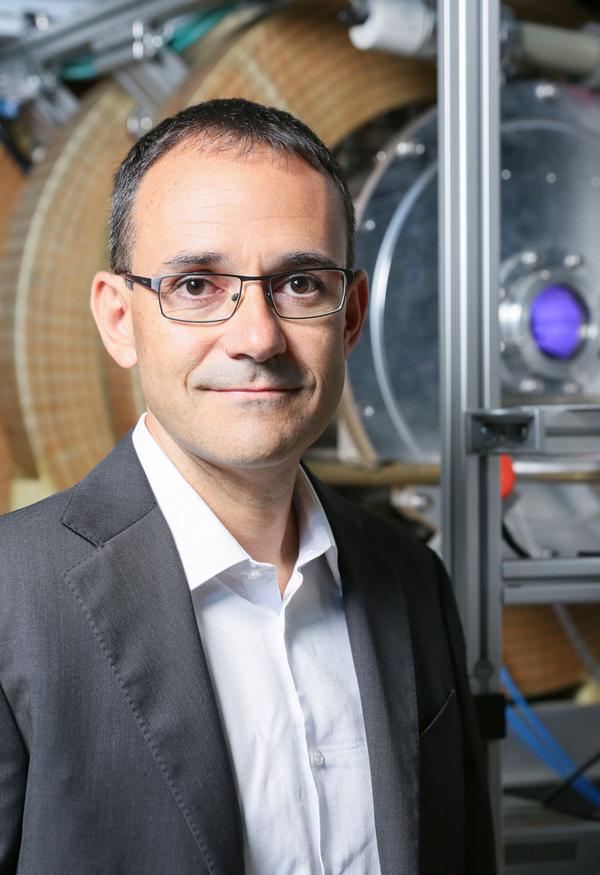 Ivo Furno合作论文数Swiss Plasma Center, School of Basic Sciences, Ecole Polytechnique Fédérale de Lausanne19
 Philippe Marmillod合作论文数Centre de Recherches en Physique des Plasmas;Ecole Polytechnique Federale de Lausanne;Centre de Recherches en Physique des Plasmas, Ecole Polytechnique Federale de Lausanne19
 Blaise Marletaz合作论文数18George a Collins合作论文数18p j paris合作论文数17julien mayor合作论文数17
 Stefano Coda合作论文数Institute of Physics, School of Basic Sciences, Federal Institute of Technology in Lausanne17A. Perez合作论文数17
 Michael James Dutch合作论文数17
 M. A. Henderson合作论文数16j c magnin合作论文数15
 Stefano Alberti合作论文数Institute of Physics, School of Basic Sciences, Federal Institute of Technology in Lausanne15
 Alexander William Degeling合作论文数Department of Physics, University of Alberta15Jean-Philippe Hogge合作论文数Centre de Recherche en Physique;Ecole Polytechnique Fédérale de Lausanne;Centre de Recherche en Physique, Ecole Polytechnique Fédérale de Lausanne15f b marcus合作论文数15simm w c合作论文数14s franke合作论文数14
 Petri Nikkola合作论文数14Pierre Lavanchy合作论文数14A. Zabolotsky合作论文数14GA COLLINS合作论文数13
 P. Blanchard合作论文数13




