Fingerprint mosaicking—the process of combining multiple fingerprint impressions into a single master fingerprint—is an essential step in modern biometric systems, but it is prone to errors that can significantly degrade image quality. This paper proposes a deep learning-based approach to detect and score hard mosaicking artifacts in fingerprint images. Our method uses a self-supervised learning framework to train a segmentation model on large-scale unlabeled fingerprint data, eliminating the need for manual artifact annotation. The proposed model effectively identifies mosaicking errors, achieving high segmentation performance across multiple fingerprint modalities—contactless, rolled, and pressed—and proves robust to different data sources. We also introduce a mosaicking artifact score that quantifies the severity of detected errors and enables automated evaluation of fingerprint images at scale. Training and evaluation rely on synthetic artifacts, we therefore provide a qualitative comparison to real stitching failures and discuss the limits of this validation strategy in detail. By addressing the previously underexplored problem of reference-free hard-artifact detection in fingerprints, our work contributes to improving the accuracy and reliability of fingerprint-based biometric systems.
Patients with isolated rapid eye movement (REM) sleep behavior disorder (iRBD) are considered to be in the prodromal stage of alpha-synucleinopathy. They exhibit abnormal muscle activity during REM sleep and dream enactment. Currently, diagnosing iRBD requires an in-lab video-polysomnography (v-PSG), which involves manual and time-consuming analyses. In this study, we explore the feasibility of using a small and portable depth sensor to identify patients with iRBD, potentially enabling home-based assessments. Our study included 10 patients with iRBD, 10 patients with differential diagnoses of RBD, and 5 control subjects. Depth data were recorded simultaneously with v-PSG. After preprocessing to remove noise, we tested various temporal, spatiotemporal convolutional kernels, and dense optical flow to generate motion maps from depth data. Movements were then automatically detected during REM and non-REM sleep, and relevant features were extracted. Logistic regression models with leave-one-subject-out cross-validation were used to discriminate patients with iRBD, with performance evaluated based on the area under the curve (AUC). The highest AUC (0.900) was achieved when analyzing REM and non-REM sleep movements, using a convolutional kernel to detect fast movements. High performance (AUC = 0.893) was also observed when using features from movements in REM sleep identified with a spatiotemporal kernel. Although not achieving as high performance as when using movements annotated by experts (AUC of 0.993), our findings support the feasibility of using a small, portable depth sensor for the automatic detection of patient movements and the reliable identification of patients with iRBD.Clinical relevance— The proposed approach has the potential to be implemented in home environments to detect patients with iRBD, enabling faster and more objective identification.
Contactless fingerprint recognition systems offer a hygienic, user-friendly, and efficient alternative to traditional contact-based methods. However, their accuracy heavily relies on precise fingertip detection and segmentation, particularly under challenging background conditions. This paper introduces TipSegNet, a novel deep learning model that achieves state-of-the-art performance in segmenting fingertips directly from grayscale hand images. TipSegNet leverages a ResNeXt-101 backbone for robust feature extraction, combined with a Feature Pyramid Network (FPN) for multi-scale representation, enabling accurate segmentation across varying finger poses and image qualities. Furthermore, we employ an extensive data augmentation strategy to enhance the model’s generalizability and robustness. This model was trained and evaluated using a combined dataset of 2257 labeled hand images. TipSegNet outperforms existing methods, achieving a mean intersection over union (mIoU) of 0.987 and an accuracy of 0.999, representing a significant advancement in contactless fingerprint segmentation. This enhanced accuracy has the potential to substantially improve the reliability and effectiveness of contactless biometric systems in real-world applications.
Biometric fingerprint identification hinges on the reliability of its sensors; however, calibrating and standardizing these sensors poses significant challenges, particularly in regards to repeatability and data diversity. To tackle these issues, we propose methodologies for fabricating synthetic 3D fingerprint targets, or phantoms, that closely emulate real human fingerprints. These phantoms enable the precise evaluation and validation of fingerprint sensors under controlled and repeatable conditions. Our research employs laser engraving, 3D printing, and CNC machining techniques, utilizing different materials. We assess the phantoms’ fidelity to synthetic fingerprint patterns, intra-class variability, and interoperability across different manufacturing methods. The findings demonstrate that a combination of laser engraving or CNC machining with silicone casting produces finger-like phantoms with high accuracy and consistency for rolled fingerprint recordings. For slap recordings, direct laser engraving of flat silicone targets excels, and in the contactless fingerprint sensor setting, 3D printing and silicone filling provide the most favorable attributes. Our work enables a comprehensive, method-independent comparison of various fabrication methodologies, offering a unique perspective on the strengths and weaknesses of each approach. This facilitates a broader understanding of fingerprint recognition system validation and performance assessment.
BACKGROUND AND PURPOSE:Automatic 3D video analysis of the lower body during rapid eye movement (REM) sleep has been recently proposed as a novel tool for identifying people with isolated REM sleep behavior disorder (iRBD), but, so far, it has not been validated on unseen subjects. This study aims at validating this technology in a large cohort and at improving its performances by also including an analysis of movements in the head, hands and upper body. METHODS:Fifty-three people with iRBD and 128 people without RBD (of whom 89 had sleep disorders considered RBD differential diagnoses) were included in the study. An automatic algorithm identified movements from 3D videos during REM sleep in four regions of interest (ROIs): head, hands, upper body and lower body. The movements were divided into categories according to duration: short (0.1-2 s), medium (2-15 s) and long (15-300 s). For each ROI and duration range, features were obtained from the identified movements. Logistic regression models using as predictors the features from one single ROI or a combination of ROIs were trained and tested in a 10-runs 10-fold cross-validation scheme on the task of differentiating people with iRBD from people without RBD. RESULTS:The best differentiation was achieved using short movements in all four ROIs (test accuracy 0.866 ± 0.007, test F1 score = 0.783 ± 0.010). Single group analyses showed that people with iRBD were distinguished successfully from subjects with RBD differential diagnoses. CONCLUSIONS:Automatic 3D video analysis might be implemented in clinical routine as a supportive screening tool for identifying people with RBD.
Increasing security awareness in the public sector are leading to a more and more widespread use of surveillance applications. Although the available technologies like video processing are already well advanced, they still suffer from high false alarm rates when used under realistic conditions. We present a method for sensor fusion based on probability density maps and a rule engine. The system was tested in a public area using the combination of audio localization, audio classification and video detection using 79 simulated scenarios and 44 hours of sample data recorded over a period of several weeks. The false positive rate decreased by 60% and the event localization rate increased by 25% with the fusion approach compared to the detection performance of individual techniques
Auch wenn heutzutage eine Selfie-Registrierung am Smartphone über Gesichtsbiometrie einfach erscheint (bei allen Nachteilen und Sicherheitsbedenken) sind Fingerabdrücke nach wie vor ein vielgenutztes Mittel zur Personenidentifizierung und nebenbei genauer als Gesichtsbiometrie. Seit Einführung der Biometrische Reisepässe eMRTDs1 stellen nun 150 Länder weltweit eMRTDs – inklusive Fingerabdrücke – aus. Die Anwendungen sind vielfältig. Durch das Auftreten weltweiter Pandemien wird der Ruf nach kontaktloser Biometrie, insbesondere Fingerabdrücke, immer lauter. Man könnte meinen: nichts einfacher als das, ein gutes Foto müsste ja genügen – aber die Thematik ist weitaus komplexer
Current fingerprint identification systems face significant challenges in achieving interoperability between contact-based and contactless fingerprint sensors. In contrast to existing literature, we propose a novel approach that can combine pose correction with further enhancement operations. It uses deep learning models to steer the correction of the viewing angle, therefore enhancing the matching features of contactless fingerprints. The proposed approach was tested on real data of 78 participants (37,162 contactless fingerprints) acquired by national police officers using both contact-based and contactless sensors. The study found that the effectiveness of pose correction and unwarping varied significantly based on the individual characteristics of each fingerprint. However, when the various extension methods were combined on a finger-wise basis, an average decrease of 36.9% in equal error rates (EERs) was observed. Additionally, the combined impact of pose correction and bidirectional unwarping led to an average increase of 3.72% in NFIQ 2 scores across all fingers, coupled with a 6.4% decrease in EERs relative to the baseline. The addition of deep learning techniques presents a promising approach for achieving high-quality fingerprint acquisition using contactless sensors, enhancing recognition accuracy in various domains.
Fingerprints have long been recognized as a unique and reliable means of personal identification. Central to the analysis and enhancement of fingerprints is the concept of the fingerprint core. Although the location of the core is used in many applications, to the best of our knowledge, this study is the first to investigate the empirical distribution of the core over a large, combined dataset of rolled, as well as plain fingerprint recordings. We identify and investigate the extent of incomplete rolling during the rolled fingerprint acquisition and investigate the centrality of the core. After correcting for the incomplete rolling, we find that the core deviates from the fingerprint center by 5.7% $\pm$ 5.2% to 7.6% $\pm$ 6.9%, depending on the finger. Additionally, we find that the assumption of normal distribution of the core position of plain fingerprint recordings cannot be rejected, but for rolled ones it can. Therefore, we use a multi-step process to find the distribution of the rolled fingerprint recordings. The process consists of an Anderson-Darling normality test, the Bayesian Information Criterion to reduce the number of possible candidate distributions and finally a Generalized Monte Carlo goodness-of-fit procedure to find the best fitting distribution. We find the non-central Fischer distribution best describes the cores' horizontal positions. Finally, we investigate the correlation between mean core position offset and the NFIQ 2 score and find that the NFIQ 2 prefers rolled fingerprint recordings where the core sits slightly below the fingerprint center.
Biometric recognition systems integrated into mobile devices have gained acceptance during recent years. Developments in fingerprint acquisition technology have resulted in touchless mobile devices that acquire high quality fingerprints. While authorities are particular interested on mobile solutions, they have databases containing fingerprint data mainly acquired using contact-based devices. Therefore, they are interested in the accuracy of cross-sensor fingerprint recognition. We present a case study of a comprehensive matching comparison on real fingerprint data acquired by national police officers. The objective of this study is: (i) to analyse the feasibility when comparing data acquired using a typical contact-based fingerprint device against data acquired using a new contactless device, and (ii) the feedback of the end user (i.e. national police officers) regarding the acquisition process. Obtained results are promising and the current prototype shows its feasibility for operational police use. The end users expressed their satisfaction with the developed prototype and they suggested extra functionalities towards a practical solution for police officers.
Elderly people are increasingly discouraged from using mobile digital devices due to the large number of applications. In this paper, we present ISA, an integrated system that is intended to simplify the inclusion of older people in the digital world, by a joint organisation of a digital calendar by care organisation, cared for person and informal carer. On a tablet computer daily routine such as home care, taking medication, but also appointments, meetings with friends or relatives can be easily managed by an integrated calendar. In addition, functions such as video telephony and photo albums are offered for better social interaction with friends and relatives. A pilot operation was carried out to check whether the system would be helpful in daily activities or in reducing the burden of informal carers. 12 pairs of participants, each consisting of the person to be cared for and the informal carer, were recruited for a study. They filled out questionnaires on activities of daily life and the caregiver burden before and after the test. Evaluation of the questionnaires showed no significant change of status regarding the activities of daily living or the caregiver burden.
Movements during sleep characterize sleep disorders, which can disturb sleep or its onset, impacting sleep quantity and quality. Video-polysomnography is the current gold standard to assess movements during sleep, but its availability is limited. Using data recorded with a 3D time of flight sensor, we developed a novel method of encoding temporal and spatial information of automatically identified movements during sleep. In a cohort of 20 insomnia patients and 18 controls, we showed that this novel method holds important information able to discriminate the groups. Future studies will explore the methodology in the context of other sleep disorders.
Rapid eye movement (REM) sleep behavior disorder (RBD) is a parasomnia characterized by dream enactment, abnormal jerks and movements during REM sleep. Isolated RBD (iRBD) is recognized as the early stage of alpha-synucleinopathies, i.e. dementia with Lewy bodies, Parkinson's disease and multiple system atrophy. The certain diagnosis of iRBD requires video-polysomnography, evaluated by experts with time-consuming visual analyses. In this study, we propose automatic analysis of movements detected with 3D contactless video as a promising technology to assist sleep experts in the identification of patients with iRBD. By using automatically detected upper and lower body movements occurring during REM sleep with a duration between 4s and 5s, we could discriminate 20 iRBD patients from 24 patients with sleep-disordered breathing with an accuracy of 0.91 and F1-score of 0.90. This pilot study shows that 3D contactless video can be successfully used as a non-invasive technology to assist clinicians in identifying abnormal movements during REM sleep, and therefore to recognize patients with iRBD. Future investigations in larger cohorts are needed to validate the proposed technology and methodology.
Increasing security concerns in the public domain lead to a more widespread use of video and audio surveillance techniques. While both technologies are already advanced, they still produce high false alarm rates when deployed on their own under realistic conditions. We present a method for sensor fusion based on weighted maps and a rule engine. The system was tested in a public space with the combination of audio localization, audio classification and video crowd detection, using 79 simulated security relevant scenarios and 44 hours sample data recorded over a period of several weeks. It has been shown that the false positive rate was reduced by 60 % and the localization accuracy has been increased by 25% with the fusion approach compared to the detection performance of individual sensors alone.
The cartoon Fidgety Philip, the banner of Western-ADHD diagnosis, depicts a 'restless' child exhibiting hyperactive-behaviors with hyper-arousability and/or hypermotor-restlessness (H-behaviors) during sitting. To overcome the gaps between differential diagnostic considerations and modern computing methodologies, we have developed a non-interpretative, neutral pictogram-guided phenotyping language (PG-PL) for describing body-segment movements during sitting (Journal of Psychiatric Research). To develop the PG-PL, seven research assistants annotated three original Fidgety Philip cartoons. Their annotations were analyzed with descriptive statistics. To review the PG-PL's performance, the same seven research assistants annotated 12 snapshots with free hand annotations, followed by using the PG-PL, each time in randomized sequence and on two separate occasions. After achieving satisfactory inter-observer agreements, the PG-PL annotation software was used for reviewing videos where the same seven research assistants annotated 12 one-minute long video clips. The video clip annotations were finally used to develop a machine learning algorithm for automated movement detection (Journal of Psychiatric Research). These data together demonstrate the value of the PG-PL for manually annotating human movement patterns. Researchers are able to reuse the data and the first version of the machine learning algorithm to further develop and refine the algorithm for differentiating movement patterns.
Objective: The purpose of this study was to derive a respiratory movement signal from a 3D time-of-flight camera and to investigate if it can be used in combination with SpO2 to detect respiratory events comparable to polysomnography (PSG) based detection. Methods: We derived a respiratory signal from a 3D camera and developed a new algorithm that detects reduced respiratory movement and SpO2 desaturation to score respiratory events. The method was tested on 61 patients synchronized 3D video and PSG recordings. The predicted apnea-hypopnea index (AHI), calculated based on total sleep time, and predicted severity were compared to manual PSG annotations (manualPSG). Predicted AHI evaluation, measured by intraclass correlation (ICC), and severity classification were performed. Furthermore, the results were evaluated by 30-second epoch analysis, labelled either as respiratory event or normal breathing, wherein the accuracy, sensitivity, specificity and Cohens kappa were calculated. Results: The predicted AHI scored an ICC r 0.94 (0.90 0.96 at 95 confidence interval, p < 0.001) compared to manualPSG. Severity classification scored 80 accuracy, with no misclassification by more than one severity level. Based on 30-second epoch analysis, the method scored a Cohens kappa 0.72, accuracy 0.88, sensitivity 0.80, and specificity 0.91. Conclusion: Our detection method using SpO2 and 3D camera had excellent reliability and substantial agreement with PSG-based scoring. Significance: This method showed the potential to reliably detect respiratory events without airflow and respiratory belt sensors, sensors that can be uncomfortable to patients and susceptible to movement artefacts.
In clinical practice, the quality of polysomnographic recordings in children and patients with neurodegenerative diseases may be affected by sensor displacement and diminished total sleep time due to stress during the recording. In the present study, we investigated if contactless three-dimensional (3D) detection of periodic leg movements during sleep was comparable to polysomnography. We prospectively studied a sleep laboratory cohort from two Austrian sleep laboratories. Periodic leg movements during sleep were classified according to the standards of the World Association of Sleep Medicine and served as ground truth. Leg movements including respiratory-related events (A1) and excluding respiratory-related events (A2 and A3) were presented as A1, A2 and A3. Three-dimensional movement analysis was carried out using an algorithm developed by the Austrian Institute of Technology. Fifty-two patients (22 female, mean age 52.2 +/- 15.1 years) were included. Periodic leg movement during sleep indexes were significantly higher with 3D detection compared to polysomnography (33.3 [8.1-97.2] vs. 30.7 [2.9-91.9]: +9.1%, p = .0055/27.8 [4.5-86.2] vs. 24.2 [0.00-88.7]: +8.2%, p = .0154/31.8 [8.1-89.5] vs. 29.6 [2.4-91.1]: +8.9%, p = .0129). Contactless automatic 3D analysis has the potential to detect restlessness mirrored by periodic leg movements during sleep reliably and may especially be suited for children and the elderly.
Analyses of sleep-related movement disorders have gained importance due to an increase in life expectancy. The present approaches for measuring movements are based on electromyography or accelerometry and provide only local or specific results from muscles/limbs to which sensors have been attached. The motivation of this work was to investigate the detection of a more complete spectrum of sleep-related movements using a three-dimensional (3D) camera instead of the current conventional methods. In contrast to most of the previously published literature, this method allows for the detection of movements even when patients are covered with a blanket. This is the first work to evaluate movement detection with a clinical dataset and replicate the clinical environment in a laboratory setup. The laboratory setup allowed for the characterization of detectable movements through the determination of speed and amplitude limits. We used the Kinect One time-of-flight sensor to record 3D videos. Movements were quantified based on the temporal depth change in these 3D videos. A computer-controlled lifting table allowed for the controlled simulation of movements. Our algorithm detected movements with amplitude values >3.0 mm and velocity values >3.5 mm/s with an F1 score ≥95%. The shortest reliably detected duration of movement was 350 ms. In an ethically approved clinical study including 44 patients, 93.1% of electromyography-detected leg movements were also found in 3D. A significant correlation ($\rho = 0.86$ ) was found between movements detected by the 3D system and polysomnography. The 3D system detected 31.2% more movements than electromyography. In addition to obtaining a broader spectrum of movements not limited to local and muscle/limb-specific movements, the usage of a contactless 3D camera simplifies the recording setup and preserves natural sleeping behavior. The presented 3D system may become useful for diagnostic purposes during sleep studies.
BACKGROUND:Behavioral observations support clinical in-depth phenotyping but phenotyping and pattern recognition are affected by training background. As Attention Deficit Hyperactivity Disorder, Restless Legs syndrome/Willis Ekbom disease and medication induced activation syndromes (including increased irritability and/or akathisia), present with hyperactive-behaviors with hyper-arousability and/or hypermotor-restlessness (H-behaviors), we first developed a non-interpretative, neutral pictogram-guided phenotyping language (PG-PL) for describing body-segment movements during sitting.METHODOLOGY & RESULTS:The PG-PL was applied for annotating 12 1-min sitting-videos (inter-observer agreements >85%->97%) and these manual annotations were used as a ground truth to develop an automated algorithm using OpenPose, which locates skeletal landmarks in 2D video. We evaluated the algorithm's performance against the ground truth by computing the area under the receiver operator curve (>0.79 for the legs, arms, and feet, but 0.65 for the head). While our pixel displacement algorithm performed well for the legs, arms, and feet, it predicted head motion less well, indicating the need for further investigations.CONCLUSION:This first automated analysis algorithm allows to start the discussion about distinct phenotypical characteristics of H-behaviors during structured behavioral observations and may support differential diagnostic considerations via in-depth phenotyping of sitting behaviors and, in consequence, of better treatment concepts.
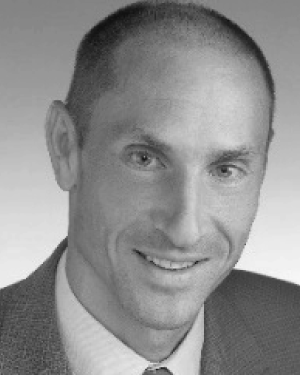 Heinrich Garn合作论文数33
 Stefan Seidel合作论文数17
 Christoph Wiesmeyr合作论文数Sensonic GmbH16
 Gerhard Kloesch合作论文数12
 O Ipsiroglu合作论文数11Boeck Marion合作论文数10G. Kloesch合作论文数9
 Martin Litzenberger合作论文数9
 Magdalena Mandl合作论文数9
 Markus A Wimmer合作论文数Department of Orthopedic Surgery, Rush Medical College, Rush University9
 Carmina Coronel合作论文数8
 Laurenz Ruzicka合作论文数8
 Markus Gall合作论文数AIT Austrian Inst Technol GmbH8
 N. Beyzaei合作论文数H Behav Res Lab, BC Childrens Hosp Res Inst7
 Eugenijus Kaniusas合作论文数7
 Evi Holzknecht合作论文数6M. Mandl合作论文数6Elisabeth Brandauer合作论文数6
 Karen Spruyt合作论文数Institut National de La Santé et de La Recherche Médicale;Hôpital Robert Debré;NeuroDiderot;Université Paris Cité6
 Machiel Van der Loos合作论文数Department of Mechanical Engineering, Faculty of Applied Science, The University of British Columbia6Birgit Hogl合作论文数6
 Abubaker Ibrahim Shaddad合作论文数5
 nikolaus donath合作论文数5
 Ambra Stefani合作论文数5Klaus Dittrich合作论文数5Andrijana Stefanic-Kejik合作论文数Medical University of Vienna, Vienna, Austria5
 Bernhard Strobl合作论文数5
 Thomas Penzel合作论文数Department of Cardiology, Sleep Medicine Center, Charité Universitätsmedizin Berlin5
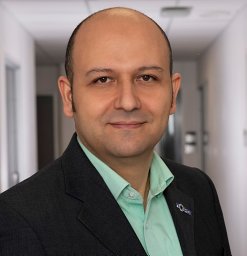 Ahmed Nabil Belbachir合作论文数ARC, Seibersdorf Research GmbH5
 Martin Glos合作论文数5
 Manuel Wimmer合作论文数Department of Business Informatics, Software Engineering, Johannes Kepler University Linz5Clemens Heitzinger合作论文数Department of Mathematics, University of Vienna & Wolfgang Pauli5H. Hussaina合作论文数4
 Melvin Chan合作论文数4Dieter Grossegger合作论文数4Heidbreder Anna合作论文数Department of Neurology, Medical University of Innsbruck4Bergmann Melanie合作论文数4Andrijana Stefanic合作论文数3Gerhard Gritsch合作论文数3Khaola Safia Maher合作论文数3E. Tse合作论文数3Marion Böck合作论文数Department of Neurology, Medical University of Vienna, Waehringer Guertel 18-20, 1090, Vienna, Austria.3
 Calvin Kuo合作论文数School of Biomedical Engineering, Faculty of Applied Science, The University of British Columbia/School of Biomedical Engineering, Faculty of Medicine, The University of British Columbia3Kuzeljevic Boris合作论文数3
 Markus Waser合作论文数3
) Matteo Cesari合作论文数Dipartimento di Scienze Cliniche e di Comunita, Università degli Studi di Milano;Geriatric Unit, IRCCS Istituti Clinici Scientifici Maugeri3
Matteo Cesari合作论文数Dipartimento di Scienze Cliniche e di Comunita, Università degli Studi di Milano;Geriatric Unit, IRCCS Istituti Clinici Scientifici Maugeri3 Christoph Posch合作论文数AIT Austrian Institute of Technology3M. Kemethofer合作论文数2




