AIM: To systematically evaluate the safety and efficacy of intravitreous injection of anti-VEGF drugs combined with Ahmed glaucoma drainage valve(AGV)implantation compared with single AGV implantation in the treatment of neovascular glaucoma(NVG).METHODS: PubMed, Cochrane Library, American Science Citation Index(SCI)Database, China National Knowledge Infrastructure(CNKI), Wanfang Database were searched from the establishment to July 20, 2021 for relevant literatures about the treatment of NVG with AGV implantation and anti-VEGF drugs. These literatures were imported into EndNoteX9, strictly screened according to the inclusion and exclusion criteria and evaluated for their quality, and the raw data were extracted and integrated. STATA 16.0 and RevMan 5.3 were applied for Meta-analysis.RESULTS: A total of 10 clinical studies with 490 eyes in total were included in Meta-analysis. According to the different research types of these literatures, the quality of the original literatures was evaluated as medium to high, and the homogeneity of the basic data among the studies was excellent. Meta-analysis showed that the intraocular pressure of patients who underwent intravitreous injection of anti-VEGF drugs was significantly decreased 1wk and 1mo after treatment compared with those patients who underwent single AGV implantation. Moreover, AGV implantation combined with intravitreous injection of anti-VEGF drugs could not improve postoperative best corrected visual acuity(BCVA). Although the combination with bevacizumab did not significantly improve the success rate of surgery, it could significantly reduce the amount of anti-glaucoma drugs still needed after surgery, whereas, ranibizumab did the opposite in both success rate and drug amount.CONCLUSION: Compared with single AGV implantation, the combination of AGV implantation and intravitreous injection of anti-VEGF drugs has advantages in reducing intraocular pressure of NVG patients. According to different anti-VEGF drugs, the combination has some positive effects on increasing the success rate of surgery and reducing the amount of anti-glaucoma drugs still needed after operation.
[目的]探讨日间手术模式在腹腔镜胆囊切除术中的应用及护理效果.[方法]回顾性分析2017年7月—2018年6月172例行腹腔镜胆囊切除术病人的临床资料.将2017年7月—2017年12月采用常规住院护理模式的82例病人作为对照组,以2018年1月—2018年6月引入日间手术模式的90例病人为观察组.比较两组病人术后首次进食时间、首次下床活动时间、疼痛评分、住院时间、住院费用、病人对护理工作的满意度及并发症发生情况.[结果]观察组病人首次进食时间、首次下床活动时间、住院时间短于对照组,疼痛评分、住院费用均低于对照组,对护理工作满意度高于对照组(P<0.05).[结论]对行腹腔镜胆囊切除术病人实施日间手术模式可缩短病人康复时间、住院时间,降低住院费用,控制疼痛,提高病人的满意度.
颈椎外伤合并高位脊髓损伤伴截瘫是一种严重的致残性损伤,伤情常严重而复杂,除损伤部位疼痛外,还立即出现四肢瘫痪,严重丧失生活自理能力.给病人的生理和心理造成极大的不适和痛苦.1998年台湾华杏出版社总裁萧丰富先生提出"萧氏双C护理模式"即萧氏舒适护理模式[1],舒适护理是一种整体、个体化、创造性、有效的护理模式,它使人无论在生理、心理、社会上达到最愉快的状态,或缩短、降低其不愉快的程度[2].
<正>随着人均寿命的延长,患有膝关节疾病的老年人日益增多,而膝关节病变严重影响老年人的日常活动,使他们晚年的生活质量明显下降。关节置换手术在缓解疼痛,恢复膝关节功能和促进病人生活质量方面都具有显著的效果,被认为是骨科手术中最有
AIM: To analyze the clinical features and pathogenesis of obstructive lung disease after allogenic hematopoietic stem cell transplantation.METHODS: Twenty-seven patients with hematophy were given allogenic hematopoietic stem cell transplantation in Department of Hematology, Zhongshan Hospital, Xiamen University between December 2002 and April 2005. The patients had no disease in lung and showed a normal pulmonary function by chest X-ray. The follow up ended on April 30th 2006. The conditioning regimen including busulfan and cyclophosphamide was used. The regimen for prophylaxis of graft versus host disease was the combination of mycophenolate mofetil plus cyclosporine and short course methotrexate. Ganciclovir was given for prophylaxis of cytomegalovirus before transplantation. The diagnosis of obstructive lung disease was based on respiratory symptoms including dry cough and dyspnea with no evidence of infection; pulmonary function test: forced expiratory volume in first second (FEV1) less than 80% of predicted value and FEV1/FVC less than 80%, and the chest X-ray showed normal or hyperinflation; high-resolution CT may reveal areas of alveolar perfusion or bronchiectasis. The clinical data such as hematopoiesis rebuilding, occurrence of graft versus host disease and obstructive lung disease, treatment and prognosis of the patients with obstructive lung disease was analyzed.RESULTS: All 27 patients were involved in the result analysis. ①According to the clinical diagnosed criteria, 7 cases (26%) was diagnosed as obstructive lung disease, which was developed at a median time of onset of 300 days after transplantation (110-390 days). All patients showed chronic graft-versus-host disease. ②Respiratory symptoms including dry cough (57%), dyspnea and lower vesicular breath sound (100%). There was no abnormality in chest X-ray. On pulmonary high-resolution CT, patchy opacity, mosaic perfusion and bronchiectasis were found. All cases showed serious obstruction of small airway on pulmonary function tests. ③There was no response to antibiotics therapy. The treatment of immunosuppressant and corticosteroid were effective, but the symptoms would be aggravated when the drugs were reduced or ceased. Three cases died from respiratory failure, the clinical condition of 4 cases were improved while no improvement in pulmonary function was found. CONCLUSION: Obstructive lung disease is one of serious complications after allogenic hematopoietic stem cell transplantation. Some of the diseases develop increasingly, which accompanies by high mortality. Regular pulmonary function tests may be useful for early diagnosis of obstructive lung disease. The non-infections factor is primarily responsible for the disease.
<正>造血干细胞移植(HSCT)中预处理方案的选择对造血干细胞的植入,移植并发症和移植物抗宿主病(GVHD)的发生有直接的影响。我们以氟达拉滨(Flud)联合白消安(Bu)、环磷酰胺(cy)组成FBC预处理方案进行HSCT治疗22例恶性血液病患者,现将结果报告如下。病例和方法 1 病例22例均为2002年12月至2004年10月我科住院患者,男14例,女8例,中位年龄28(8-42)岁。包括急性髓
目的 探讨异基因造血干细胞移植治疗白血病的新方法.方法 23例白血病患者,HLA配型全相合9例,1~3个位点不相合14例,采用粒细胞集落刺激因子(G-CSF)动员的骨髓和外周血干细胞联合移植,采用环孢素A(CsA)和霉酚酸酯(MMF)及短程甲氨蝶呤(MTX)方案预防移植物抗宿主病(GVHD).结果 1例植入失败,22例完全植入,HLA全相合受者未发生急性GVHD,13例HLA不全相合受者中Ⅱ~Ⅳ度急性GVHD发生率46.2%.20例可评估的患者中,慢性GVHD 13例,广泛型5例,累积发生率65%.随访6至32个月,预期一年生存率86.6%.结论 骨髓和外周血联合移植对HLA配型全相合和部分相合患者是安全、有效的移植方法.
 YuXian Cai (蔡玉贤)合作论文数3Yong Guo (郭勇)合作论文数3Peng Zhang (张鹏)合作论文数3
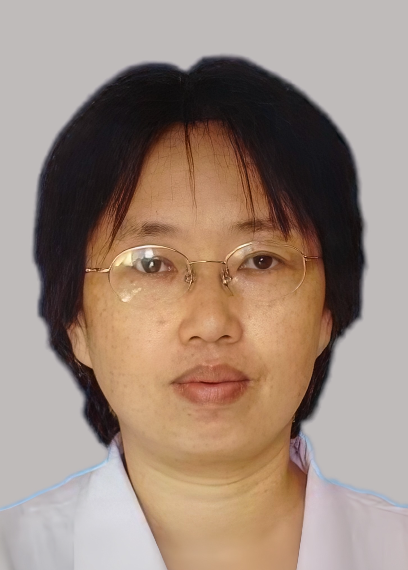 Xiaoqing Niu (牛小青)合作论文数Zhongshan Hospital, Xiamen University3
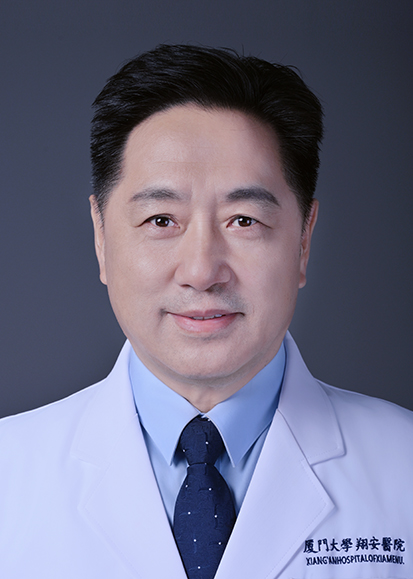 Quanyi Lu (鹿全意)合作论文数Xiang‘an Hospital of Xiamen University3Jiangning Zhao合作论文数Dana Farber Cancer Institute2Xiaoyan Chen (陈小燕)合作论文数1CHEN Xiao-yan (陈小燕)合作论文数1yajuan wang (王亚娟)合作论文数1
 Longlong Chen (陈龙龙)合作论文数Xiamen Eye Center Affiliated to Xiamen University1
 Dongkan Li (李东侃)合作论文数Xiamen Eye Center of Xiamen University1Biying Wu (吴碧颖)合作论文数1Jianhui Wu (伍建辉)合作论文数1
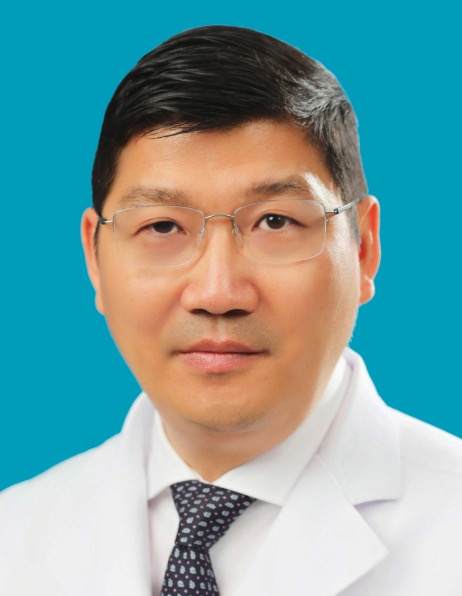 Zhao Wang (王昭)合作论文数Department of Hematology, Beijing Friendship Hospital, Capital Medical University1




