In this research we report deposition of thin films from the already synthesized chalcohalide (GeS1.5)1-x(AgI)x glasses, where x=5, 10, 20mol.%. The bulk samples used and the corresponding layers are checked by XRD analysis which reveals only a diluted halo on the respective diffractograms. Some basic optical parameters of the investigated Ge-S- AgI thin films are estimated and their relation with materials’ composition is determined. The influence of the third component on the optical absorption is discussed. The optical energy gap (Eg) is determined from the Tauc plot αhν=B(E Tauc – hν)2 and Eg04 is found from the relationship α=f(hν). The Eg values calculated by both methods reveal slight increase with silver iodide addition probably due to structural changes.
We obtained amorphous thin films by evaporation and condensation in three-component systems based on As, Se and Ag. The aim was to investigate the influence of the third component on the thin film structure and optical properties.The refractive index and the film thickness were determined from the upper and lower envelopes of the optical transmission spectra measured in the spectral range 400 - 2500 nm. The absorption coefficient (alpha) was determined after extrapolating the values of n in the region of strong absorption (where alpha >= 10(4) cm(-1)); its spectral distribution is discussed. The dispersion of the refractive index was analyzed in terms of the single-oscillator Wemple-DiDomenico model. The shift of the optical absorption edge was described using the non-direct transition model proposed by Tauc. The optical band gap was calculated from the Tauc plot alpha h nu = B(E-g(opt) - h nu)(2); the compositional dependence of the optical gap is also discussed.
Layered Ge-S-AgI material was used as a sensitive layer in cantilever gas sensors. The proposed sensor system was exposed to different vapour analytes: water, acetone, ammonia. The sensor studied works on the principle of a resonance microbalance and showed the best response to ammonia vapours. The chemisorbed ammonia on the surface of the exposed material caused an increased sensitivity towards water.
Novel chalcohalide glasses have been developed. The amorphous nature of the synthesized Ge—S—AgI materials has been proven by means of X-ray diffraction. Differential scanning calorimetry has been used to investigate the thermal characteristics of the materials to derive information about the glassy structure. The glass transition (Tg), the onset of crystallization (Ton), and the peak crystallization (Tcr) and melting (Tm) temperatures have been determined in the temperature range of 293—750 K. The criteria for thermal stability (ΔT) and the glass-forming ability (Hgl and S) have been calculated.
The processes of vacuum evaporation and condensation in the Ge-Se-In system were investigated. Thin amorphous films were deposited by modified thermal evaporation from previously synthesized non-crystalline (GeSey)(1-x)In-x ingots, where x=0, 5, 10, 15,20 and y=4, 5 and 6 The specific evaporation rate was determined by measuring of the mass of evaporator before evaporation and the mass of empty evaporator after evaporation in temperature range of evaporation (500-800) K The substrate temperature was varied in the range (300-430)K to study the condensation process and specific condensation rate was determined by measuring of the substrate mass before and after condensation. The condensation energy of the (GeSey)(1-x)In-x layers steady increases at indium additionThe thin films studied by transmission electron microscopy (TEM) and electron microdiffraction (EMD) reveal homogeneous and amorphous structure. The layer composition determined by Auger electron spectroscopy is close to that of the corresponded bulk samples.
We report a structural investigation of bulk Ge-rich Ge–S–AgI chalcohalide glasses. A vibrational spectroscopic study of the quaternary system (AgI)x (GeS1.5)100−x (0⩽xAgI⩽20) has been undertaken using infrared spectroscopy and Fourier transform Raman scattering. It was found that the GeS1.5 Raman spectrum is compatible with a glass structure composed of corner- and edge-sharing mixed GeSnGe4−n (n=0–4) tetrahedra where units with n=2–4 dominate, whilst the fraction of corner-sharing units are significantly lower than the corresponding fraction in the stoichiometric GeS2 glass. The addition of AgI has revealed a subtle but systematic effect in the structure of the Ge-rich glass matrix, manifested by mild decrease of the ES units and the concomitant increase of complex GeSnI4−n or GeSnGemI4-n−m tetrahedra whose vibrational modes form a continuum at low frequencies. Although, AgI seems to cause subtle structural changes due to the formation of Ge–I bonds, it is also evident that AgI does not act as a real modifier that would depolymerize appreciably the Ge–S network structure.
Thin amorphous Ge–S–AgI films were thermally evaporated on cantilever sensors and their sorption properties were investigated upon exposure to volatile analytes, such as water, ethanol, acetone, and ammonia vapours. The films were smooth and uniform in thickness as revealed by atomic force and scanning electron microscopies. The exposure to the analytes resulted in a change of the resonance frequency of the cantilever. Initially, the largest dynamic responses (frequency shifts) were observed towards acetone, i.e. the cantilever acted as a resonant microbalance. When the sensor was exposed to ammonia, its molecules were chemisorbed on the surface of the sensitive layer. This surface modification increased the sensor sensitivity towards water molecules by the creation of new interaction sites.
The novel bulk glasses from the chalcohalide Ge-S-AgI system have been synthesized. From the as-prepared samples amorphous films have been deposited by vacuum thermal evaporation. The amorphous nature of the studied bulk and layered materials has been proved by Xray diffraction. The composition of the synthesized bulk chalcohalide glasses and corresponding amorphous thin films has been ascertained by means of Auger electron spectroscopy. The morphology and uniformity of the deposited layers have been investigated using scanning electron microscopy. The basic optical properties of the studied glassy films have been defined. Variations in the optical behaviors as a function of the composition have been derived. Experiments related to optical recording in the investigated Ge-S-AgI layers has been implemented. The diffraction efficiency as a function of various recording beam intensities has been obtained.
Novel amorphous bulk materials from the chalcohalide Ge-S-AgI system were synthesized. From the as-prepared materials, thin amorphous films were evaporated by conventional thermal evaporation in vacuum onto different substrates. The amorphous nature of the bulk and layered materials was proved using X-ray diffraction.The morphology and uniformity of the deposited layers were investigated using scanning electron microscopy; the surface topology and roughness were studied by atomic force microscopy.The compositional dependence of the microhardness of the studied thin chalcohalide coatings was established and the influence of the third component (AgI) was determined.Stress measurements of the thin films deposited on special silicon cantilevers were performed in a period of 3 months and the relation between AgI content and stress was defined. In addition, the compositional dependence of the stress relaxation of the studied glassy Ge-S-AgI coatings was elucidated and the most probable reasons for the stress formation were proposed. (c) 2007 Elsevier Ltd. All rights reserved.
Thin films of glassy (GeS2)(1-x) (Agl)(x), system have been studied. The films have been coated on cantilever-based gas sensors and studied upon exposure to water, acetone, and ammonia vapours. The results reveal that the sensor acted like a resonance microbalance, showing highest sensitivity towards the analyte with the highest molecular weight, i.e. towards acetone. Modification of the surface of the sensitive layer after the exposure to ammonia is associated with chemisorption of the analyte molecules on it and results in increase sensitivity towards water due to the chemisorbed NH3. molecules.
Thin amorphous chalcogenide films from the GeSex (x=1–5), (GeSe4)100−yGay and (GeSe5)100−y Ga(Tl, B)y (y=5, 10, 15, 20) systems have been prepared by thermal evaporation and characterized with respect to their internal stress using a cantilever technique. The correlations between the stress, the composition and the structure of the films were investigated. The obtained results were related with some structural and mechanical parameters of the glasses like mean coordination number, number of constrains per atom, density, compactness, microhardness and Young's modulus. For all investigated chalcogenide films a stress relaxation with the time was observed as a result of spontaneous structural rearrangements.
Thin films of glassy (GeS2)(1-x) (AgI)(x) system have been studied. The films have been prepared from the respective bulk glasses previously synthesized from the elements with constant Ge:S=1:2 ratio and different amount of AgI (x= 5, 10, 15,20 mol.%). The amorphous nature of the films has been proved by X-ray diffraction (XRD) and electron microscope investigation. Spectral distribution of the film transmission has been obtained. Compositional dependence of the basic optical parameters has been derived. The optical energy gap E-g(Tauc) has been determined from the Tauc plot alpha hv=B(E-g(Tauc)- hv)(2) and E-g(04) from the relationship alpha = f(hv). The values of E-g calculated by both methods show decrease with increasing oil silver content. The influence of the third component on the thin film structure and optical absorption has been discussed.
Thin films of glassy (GeS 2 ) 1 - x (AgI) x system have been studied. The films have been prepared from the respective bulk glasses previously synthesized from the elements with constant Ge:S=1:2 ratio and different amountof AgI (x= 5, 10, 15,20 mol.%). The amorphous nature of the films has been proved by X-ray diffraction (XRD) and electron microscope investigation. Spectral distribution of the film transmission has been obtained. Compositional dependence of the basic optical parameters has been derived. The optical energy gap E g T a u c has been determined from the Tauc plot αhν=B(E g T a u c - hv) 2 and E g 0 4 from the relationship a = f(hv). The values of Eg calculated by both methods show decrease with increasing of silver content. The influence of the third component on the thin film structure and optical absorption has been discussed.
Thin films from the As2Se3–Ag4SSe–SnTe system have been prepared by vacuum thermal evaporation from the corresponding bulk glasses. The film structure and surface morphology have been investigated by scanning electron microscopy (SEM) and atomic force microscopy (AFM). The investigated chalcogenide films are amorphous, featureless and with smooth surfaces. The stress measurements have been carried out by a cantilever bending technique, and tensile stress has been observed. The obtained results have been comprehensively discussed with respect to the film composition and structure. The relationship between the stress and other mechanical parameters, like compactness and density, of the amorphous condensates has been established. The obtained dependencies confirmed the existence of a structural threshold in the glassy network at mean coordination numbers Z=2.27 and Z=2.56.
Amorphous thin films from the system As2Se3–Ag4SSe–SnTe were prepared by thermal vacuum evaporation from the corresponding bulk glassy samples. The film structure and surface morphology were investigated by scanning electron microscopy and atomic force microscopy; the results revealed uniform, smooth and homogeneous coatings. The amorphous chalcogenide films are transparent in a wide spectral range as shown by transmission and reflection measurements in the VIS and NIR regions. The optical band gap was determined and its compositional dependence is discussed in terms of structural considerations and the formation of charged defect centers.
 Peicho Petkov合作论文数Department of Atomic Physics, Faculty of Physics, University of Sofia15
 Tamara Petkova合作论文数Institute of Electrochemistry and Energy Systems (IEES),, Bulgarian Academy of Sciences11
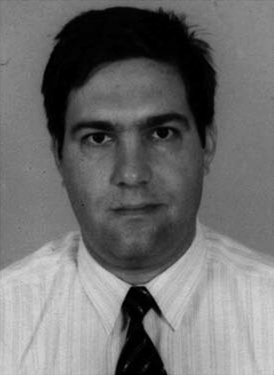 Cyril Popov合作论文数9
 Svetlana Boycheva合作论文数3Y. Nedeva合作论文数3V. Vassilev合作论文数2K. Kolev合作论文数2Victor Boev合作论文数Central Laboratory of Electrochemical Power Sources, The Bulgarian Academy of Sciences2
 Vania Ilcheva合作论文数Bulgarian Academy of Sciences Institute of Genetics2T. Ivanov合作论文数1
 Jacob Philip合作论文数1
 Ivo W. Rangelow合作论文数Fakultat Fur Elektrotechnik Und Informationstechnik, Ilmenau University of Technology1Plamen Petkov合作论文数Departments of Physics, University of Chemical Technology and Metallurgy1D. Filenko合作论文数1Ofeliya Kostadinova合作论文数Foundation for Research and Technology, Hellas-Institute of Chemical Engineering and High Temperature Chemical Processes (FORTH/ICE-HT), P.O. Box 1414, GR-26504, Rio, Patras, Greece1Svetlin Parvanov合作论文数1Nikolay Nikolov合作论文数1
 Johann Peter Reithmaier合作论文数Institute of Physics, The Faculty of Mathematics and Natural Sciences, University of Kassel;Institute of Nanostructure Technologies and Analytics, University of Kassel1
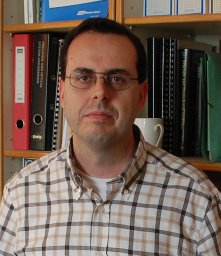 Spyros Yannopoulos合作论文数Department of Chemistry, University of Patras;Institute of Chemical Engineering Sciences1
 A. Stoilova合作论文数Institute of Organic Chemistry, Bulgarian Academy of Sciences1
 Lilia Aljihmani合作论文数University of Chemical Technology and Metallurgy, Department of Non-Ferrous Metals and Semiconductor Technologies, 8 Kl. Ohridsky Blvd., 1756 Sofia, Bulgaria1




