This erratum corrects measurements of the prompt and secondary (from-b).
The angular distribution of the dimuon system of the decays.
C. Baesso, M. Cruz Torres, C. Gobel, J. Molina Rodriguez are associated to Universidade Federal do Rio de Janeiro (UFRJ), Rio de Janeiro, Brazil Y. Xie, J. Yu are associated to Center for High Energy Physics, Tsinghua University, Beijing, China D. A. Milanes, I. A. Monroy, J. A. Rodriguez Lopez are associated to LPNHE, Universite Pierre et Marie Curie, Universite Paris Diderot, CNRS/IN2P3, Paris, France O. Grunberg, M. Hes, C. Vos, R. Waldi are associated to Physikalisches Institut, Ruprecht-Karls-Universitat Heidelberg, Heidelberg, Germany T. Likhomanenko, A. Malinin, V. Shevchenko, A. Ustyuzhanin are associated to Institute of Theoretical and Experimental Physics (ITEP), Moscow, Russia D. Derkach, E. Khairullin, T. Likhomanenko, A. Ustyuzhanin are associated to Institute of Theoretical and Experimental Physics (ITEP), Moscow, Russia F. Martinez Vidal, A. Oyanguren, P. Ruiz Valls, C. Sanchez Mayordomo are associated to Universitat de Barcelona, Barcelona, Spain C. J. G. Onderwater is associated to Nikhef National Institute for Subatomic Physics, Amsterdam, The Netherlands Deceased (T. M. Karbach)
The first study is presented of CP violation with an amplitude analysis of the Dalitz plot of $B^0 D K^+ pi^-$ decays, with $D K^+ pi^-$, $K^+ K^-$ and $pi^+ pi^-$. The analysis is based on a data sample corresponding to $3.0,{rm fb}^{-1}$ of $pp$ collisions collected with the LHCb detector. No significant CP violation effect is seen, and constraints are placed on the angle $gamma$ of the unitarity triangle formed from elements of the Cabibbo-Kobayashi-Maskawa quark mixing matrix. Hadronic parameters associated with the $B^0 D K^*(892)^0$ decay are determined for the first time. These measurements can be used to improve the sensitivity to $gamma$ of existing and future studies of the $B^0 D K^*(892)^0$ decay.
Amplitude models are applied to studies of resonance structure in ${D}^{0}\ensuremath{\rightarrow}{K}_{S}^{0}{K}^{\ensuremath{-}}{\ensuremath{\pi}}^{+}$ and ${D}^{0}\ensuremath{\rightarrow}{K}_{S}^{0}{K}^{+}{\ensuremath{\pi}}^{\ensuremath{-}}$ decays using $pp$ collision data corresponding to an integrated luminosity of $3.0\text{ }\text{ }{\mathrm{fb}}^{\ensuremath{-}1}$ collected by the LHCb experiment. Relative magnitude and phase information is determined, and coherence factors and related observables are computed for both the whole phase space and a restricted region of $100\text{ }\text{ }\mathrm{MeV}/{c}^{2}$ around the ${K}^{*}(892{)}^{\ifmmode\pm\else\textpm\fi{}}$ resonance. Two formulations for the $K\ensuremath{\pi}\text{ }S$-wave are used, both of which give a good description of the data. The ratio of branching fractions $\mathcal{B}({D}^{0}\ensuremath{\rightarrow}{K}_{S}^{0}{K}^{+}{\ensuremath{\pi}}^{\ensuremath{-}})/\mathcal{B}({D}^{0}\ensuremath{\rightarrow}{K}_{S}^{0}{K}^{\ensuremath{-}}{\mathrm{\ensuremath{\pi}}}^{+})$ is measured to be $0.655\ifmmode\pm\else\textpm\fi{}0.004(\mathrm{stat})\ifmmode\pm\else\textpm\fi{}0.006(\mathrm{syst})$ over the full phase space and $0.370\ifmmode\pm\else\textpm\fi{}0.003(\mathrm{stat})\ifmmode\pm\else\textpm\fi{}0.012(\mathrm{syst})$ in the restricted region. A search for $CP$ violation is performed using the amplitude models and no significant effect is found. Predictions from SU(3) flavor symmetry for ${K}^{*}(892)K$ amplitudes of different charges are compared with the amplitude model results.
Citation Aaij, R., C. Abellan Beteta, B. Adeva, M. Adinolfi, A. Affolder, Z. Ajaltouni, S. Akar, et al. “Measurement of the Difference of TimeIntegrated CP Asymmetries in D[superscript 0] K[superscript ]K[superscript +] and D[superscript 0] [superscript ][superscript +] Decays.” Physical Review Letters 116, no. 19 (May 9, 2016). © 2016 CERN, for the LHCb Collaboration As Published http://dx.doi.org/10.1103/PhysRevLett.116.191601 Publisher American Physical Society
bstract An angular analysis of the B 0 → K *0 (→ K + π − ) μ + μ − decay is presented. The dataset corresponds to an integrated luminosity of 3.0 fb −1 of pp collision data collected at the LHCb experiment. The complete angular information from the decay is used to determine CP -averaged observables and CP asymmetries, taking account of possible contamination from decays with the K + π − system in an S-wave configuration. The angular observables and their correlations are reported in bins of q 2 , the invariant mass squared of the dimuon system. The observables are determined both from an unbinned maximum likelihood fit and by using the principal moments of the angular distribution. In addition, by fitting for q 2 -dependent decay amplitudes in the region 1.1 < q 2 < 6.0 GeV 2 / c 4 , the zero-crossing points of several angular observables are computed. A global fit is performed to the complete set of CP -averaged observables obtained from the maximum likelihood fit. This fit indicates differences with predictions based on the Standard Model at the level of 3.4 standard deviations. These differences could be explained by contributions from physics beyond the Standard Model, or by an unexpectedly large hadronic effect that is not accounted for in the Standard Model predictions.
The production of ψ (2 S ) mesons is studied in dimuon final states using proton-lead ( p Pb) collision data collected by the LHCb detector. The data sample corresponds to an integrated luminosity of 1 . 6 nb −1 . The nucleon-nucleon centre-of-mass energy of the p Pb collisions is √(s_N N)=5 TeV. The measurement is performed using ψ (2 S ) mesons with transverse momentum less than 14 GeV/ c and rapidity y in the ranges 1 . 5 < y < 4 . 0 and −5 . 0 < y < −2 . 5 in the nucleon-nucleon centre-of-mass system. The forward-backward production ratio and the nuclear modification factor are determined for ψ (2 S ) mesons. Using the production cross-section results of ψ (2 S ) and J/ψ mesons from b -hadron decays, the bb cross-section in p Pb collisions at √(s_N N)=5 TeV is obtained.
The oscillation frequency, [Formula: see text], of [Formula: see text] mesons is measured using semileptonic decays with a [Formula: see text] or [Formula: see text] meson in the final state. The data sample corresponds to 3.0[Formula: see text] of pp collisions, collected by the LHCb experiment at centre-of-mass energies [Formula: see text] = 7 and 8[Formula: see text]. A combination of the two decay modes gives [Formula: see text], where the first uncertainty is statistical and the second is systematic. This is the most precise single measurement of this parameter. It is consistent with the current world average and has similar precision.
A search for the decays of the Bc+ meson to pp¯π+ is performed for the first time using a data sample corresponding to an integrated luminosity of 3.0fb−1 collected by the LHCb experiment in pp collisions at centre-of-mass energies of 7 and 8 TeV. No signal is found and an upper limit, at 95% confidence level, is set, fcfu×B(Bc+→pp‾π+)<3.6×10⁻⁸ in the kinematic region m(pp‾)<2.85GeV/c2, pT(B)<20GeV/c and 2.0
A search for CP violation in D^{0}→K^{-}K^{+} and D^{0}→π^{-}π^{+} decays is performed using pp collision data, corresponding to an integrated luminosity of 3 fb^{-1}, collected using the LHCb detector at center-of-mass energies of 7 and 8 TeV. The flavor of the charm meson is inferred from the charge of the pion in D^{*+}→D^{0}π^{+} and D^{*-}→D[over ¯]^{0}π^{-} decays. The difference between the CP asymmetries in D^{0}→K^{-}K^{+} and D^{0}→π^{-}π^{+} decays, ΔA_{CP}≡A_{CP}(K^{-}K^{+})-A_{CP}(π^{-}π^{+}), is measured to be [-0.10±0.08(stat)±0.03(syst)]%. This is the most precise measurement of a time-integrated CP asymmetry in the charm sector from a single experiment.
A search for B ( s ) 0 → K S 0 K ∗ (892) 0 decays is performed using pp collision data, corresponding to an integrated luminosity of 1 . 0 fb −1 , collected with the LHCb detector at a centre-of-mass energy of 7 TeV. The B s 0 → K S 0 K ∗ (892) 0 decay is observed for the first time, with a significance of 7.1 standard deviations. The branching fraction is measured to be ℬ(B_s^0→K^0K^∗(892)^0)+ℬ(B_s^0→K^0K^∗(892)^0)=(16.4± 3.4± 2.3)× 10^-6, where the first uncertainty is statistical and the second is systematic. No evidence is found for the decay B 0 → K S 0 K ∗ (892) 0 and an upper limit is set on the branching fraction, ℬ(B^0→K^0K^∗(892)^0)+ℬ(B^0→K^0K^∗(892)^0)<0.96× 10^-6 , at 90
The first study is presented of CP violation with an amplitude analysis of the Dalitz plot of B → DKþπ− decays, with D → Kþπ−, KþK−, and πþπ−. The analysis is based on a data sample corresponding to 3.0 fb−1 of pp collisions collected with the LHCb detector. No significant CP violation effect is seen, and constraints are placed on the angle γ of the unitarity triangle formed from elements of the Cabibbo-Kobayashi-Maskawa quark mixing matrix. Hadronic parameters associated with the B → DK ð892Þ0 decay are determined for the first time. These measurements can be used to improve the sensitivity to γ of existing and future studies of the B → DK ð892Þ0 decay.
The first observation of the B_{s}^{0}→D[over ¯]^{0}K_{S}^{0} decay mode and evidence for the B_{s}^{0}→D[over ¯]^{*0}K_{S}^{0} decay mode are reported. The data sample corresponds to an integrated luminosity of 3.0 fb^{-1} collected in pp collisions by LHCb at center-of-mass energies of 7 and 8 TeV. The branching fractions are measured to be B(B_{s}^{0}→D[over ¯]^{0}K[over ¯]^{0})=[4.3±0.5(stat)±0.3(syst)±0.3(frag)±0.6(norm)]×10^{-4},B(B_{s}^{0}→D[over ¯]^{*0}K[over ¯]^{0})=[2.8±1.0(stat)±0.3(syst)±0.2(frag)±0.4(norm)]×10^{-4},where the uncertainties are due to contributions coming from statistical precision, systematic effects, and the precision of two external inputs, the ratio f_{s}/f_{d} and the branching fraction of B^{0}→D[over ¯]^{0}K_{S}^{0}, which is used as a calibration channel.
The branching fraction of the decay B-s(0) -> D-s(()*D-)+(s)(*()-) is measured using pp collision data corresponding to an integrated luminosity of 1.0 fb(-1), collected using the LHCb detector at a center-of-mass energy of 7 TeV. It is found to be B(B-s(0) -> D-s(()*D-)(s)(*()-)) = (3.05 +/- 0.10 +/- 0.20 +/- 0.34)%, where the uncertainties are statistical, systematic, and due to the normalization channel, respectively. The branching fractions of the individual decays corresponding to the presence of one or two D-s(*+/-) are also measured. The individual branching fractions are found to be B(B-s(0) -> D-s*D-+/-(s)-/+) = (1.35 +/- 0.06 +/- 0.09 +/- 0.15)%, B(B-s(0) -> D-s*D-+(s)*(-)) = (1.27 +/- 0.08 +/- 0.10 +/- 0.14)%. All three results are the most precise determinations to date.
 Matthew Needham合作论文数Institute for Particle and Nuclear Physics, School of Physics and Astronomy, The University of Edinburgh424
 Chris Parkes合作论文数Department of Physics & Astronomy, School of Natural Sciences, Faculty of Science and Engineering, The University of Manchester423Pascal Perret合作论文数Laboratoire de Physique de Clermont Auvergne, Universite Blaise Pascal;CNRS421M. Meissner合作论文数421
 Patrick Owen合作论文数Physik-Institut, Universität Zürich418Giovanni Passaleva合作论文数418
 Irina Nasteva合作论文数Instituto de Física, Universidade Federal do Rio de Janeiro;European Organization for Nuclear Research;Fermilab417S. Monteil合作论文数416
 Clara Matteuzzi合作论文数Istituto Nazionale di Fisica Nucleare;University of Milan416
 A. (Antonio) Pellegrino合作论文数Faculty of Science and Engineering, University of Groningen416O. Okhrimenko合作论文数415
 Valentin Niess合作论文数Laboratoire de Physique de Clermont Auvergne, Institut National De Physique Nucléaire Et De Physique Des Particules, CNRS;Université Clermont Auvergne415Z. Mathe合作论文数414
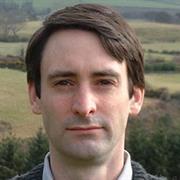 Ronan McNulty合作论文数School of Physics, University College Dublin414Stefano Perazzini合作论文数Istituto Nazionale di Fisica Nucleare Sezione di Bologna414
 Antonis Papanestis合作论文数Rutherford Appleton Laboratory414A. Novoselov合作论文数413E. Picatoste Olloqui合作论文数413J. Prisciandaro合作论文数413Nikolay P. Nikitin合作论文数412J. M. Otalora Goicochea合作论文数411
 Paras Naik合作论文数Department of Physics, School of Physical Sciences, Faculty of Science and Engineering, University of Liverpool;University of Bristol411
 Olivier Leroy合作论文数Centre De Physique Des Particules De Marseille, Institut National De Physique Nucléaire Et De Physique Des Particules, CNRS411
 Girish Patel合作论文数Department of Physics, School of Physical Sciences, Faculty of Science and Engineering, University of Liverpool411
 Rudolf Gerhard Christiaan Oldeman合作论文数Dipartimento di Fisica, Università di Cagliari411
 Monica Pepe Altarelli合作论文数European Organization for Nuclear Research411
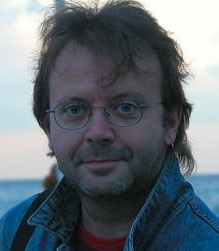 Alessandro Petrolini合作论文数Dipartimento Di Fisica, Università degli Studi di Genova;Istituto Nazionale di Fisica Nucleare410
 Sergii Kandybei合作论文数410
 Katharina Kreplin合作论文数SAP410J. Panman合作论文数410
 Florian Kruse合作论文数Point 8 GmbH410
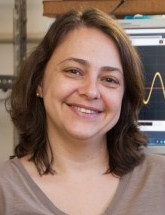 Erica Polycarpo合作论文数Instituto de Física, Universidade Federal do Rio de Janeiro410
 Ricardo Graciani Díaz合作论文数Departament de Física Quàntica i Astrofísica, Facultat de Física, Universitat de Barcelona410Anatolii a Mazurov合作论文数409
 Eric van Herwijnen合作论文数Chiojdeanu409B. Pietrzyk合作论文数Laboratoire de Physique des Particules (LAPP),, IN2P3-CNRS409L. A. Granado Cardoso合作论文数408M. -N. Minard合作论文数407S. C. Haines合作论文数407
 Neville Harnew合作论文数Department of Physics, University of Oxford407M. Karacson合作论文数407Pierre Henrard合作论文数Université Clermont Auvergne406
 Raymond Joseph Mountain合作论文数Department of Physics, College of Arts & Sciences, Syracuse University406
 Marco Gersabeck合作论文数Physikalisches Institut, University of Freiburg406
 David Hutchcroft合作论文数Department of Physics, School of Physical Sciences, Faculty of Science and Engineering, University of Liverpool405B. Khanji合作论文数405
 Florin Maciuc合作论文数Horia Hulubei National Institute for R&D in Physics and Nuclear Engineering405
 Alexandru Tudor Grecu合作论文数Horia Hulubei National R&D Institute for Physics and Nuclear Engineering405G. Martellotti合作论文数404




