In a high-energy physics data analysis, the term “fake” backgrounds refers to events that would formally not satisfy the (signal) process selection criteria, but are accepted nonetheless due to mis-reconstructed particles. This can occur, e.g., when leptons from secondary decays are incorrectly identified as originating from the hard-scatter interaction point (known as non-prompt leptons), or when other physics objects, such as hadronic jets, are mistakenly reconstructed as leptons (resulting in mis-identified leptons). These fake leptons are usually estimated using data-driven techniques, one of the most common being the Fake Factor method. This method relies on predicting the fake lepton contribution by reweighting data events, using a scale factor (i.e. fake factor) function. Traditionally, fake factors have been estimated by histogramming and computing the ratio of two data distributions, typically as functions of a few relevant physics variables such as the transverse momentum pT and pseudorapidity η. In this work, we introduce a novel approach of fake factor calculation, based on density ratio estimation using neural networks trained directly on data in a higher-dimensional feature space. We show that our method enables the computation of a continuous, unbinned fake factor on a per-event basis, offering a more flexible, precise, and higher-dimensional alternative to the conventional method, making it applicable to a wide range of analyses. A simple LHC open data analysis we implemented confirms the feasibility of the method and demonstrates that the ML-based fake factor provides smoother, more stable estimates across the phase space than traditional methods, reducing binning artifacts and improving extrapolation to signal regions.
Monte Carlo simulations are a crucial component when analysing the Standard Model and New physics processes at the Large Hadron Collider. The goal of this work is to explore the performance of generative models for complementing the statistics of classical MC simulations in the final stage of data analysis by generating additional synthetic data that follows the same kinematic distributions for a limited set of analysis-specific observables to a high precision. Machine learning generative models were adapted for this task and their performance was systematically evaluated using a well-known benchmark sample containing the Higgs boson production beyond the Standard Model and the corresponding irreducible background. The best performing model was chosen for further evaluation with a set of statistical procedures and a simplified physics analysis. By implementing and performing a series of statistical tests and evaluations we show that a machine-learning-based generative procedure can can be used to generate synthetic data that matches the original samples closely enough and that it can therefore be incorporated in the final stage of a physics analysis with some given systematic uncertainty.
Monte Carlo simulations are a crucial component when analysing the Standard Model and New physics processes at the Large Hadron Collider. This paper aims to explore the performance of generative models for complementing the statistics of classical Monte Carlo simulations in the final stage of data analysis by generating additional synthetic data that follows the same kinematic distributions for a limited set of analysis-specific observables to a high precision. Several deep generative models are adapted for this task and their performance is systematically evaluated using a well-known benchmark sample containing the Higgs boson production beyond the Standard Model and the corresponding irreducible background. The paper evaluates the autoregressive models and normalizing flows and the applicability of these models using different model configurations is investigated. The best performing model is chosen for a further evaluation using a set of statistical procedures and a simplified physics analysis. By implementing and performing a series of statistical tests and evaluations we show that a machine-learning-based generative procedure can be used to generate synthetic data that matches the original samples closely enough and that it can therefore be incorporated in the final stage of a physics analysis with some given systematic uncertainty.
A bstract A search for the exclusive decays of the Higgs and Z bosons to a ϕ or ρ meson and a photon is performed with a pp collision data sample corresponding to an integrated luminosity of up to 35 . 6 fb −1 collected at $$ \sqrt{s}=13 $$ s = 13 TeV with the ATLAS detector at the CERN Large Hadron Collider. These decays have been suggested as a probe of the Higgs boson couplings to light quarks. No significant excess of events is observed above the background, as expected from the Standard Model. Upper limits at 95% confidence level were obtained on the branching fractions of the Higgs boson decays to ϕ γ and ρ γ of 4 . 8 × 10 −4 and 8 . 8 × 10 −4 , respectively. The corresponding 95% confidence level upper limits for the Z boson decays are 0 . 9 × 10 −6 and 25 × 10 −6 for ϕ γ and ρ γ, respectively.
A search for leptoquarks decaying into the bτ final state is performed using Run 2 proton-proton collision data from the Large Hadron Collider, corresponding to an integrated luminosity of 139 fb−1 at √(s) = 13 TeV recorded by the ATLAS detector. The benchmark models considered in this search are vector leptoquarks with electric charge of 2/3e and scalar leptoquarks with an electric charge of 4/3e. No significant excess above the Standard Model prediction is observed, and 95
The total and differential Higgs boson production cross-sections are measured through a combined statistical analysis of the H → ZZ* → 4ℓ and H → γγ decay channels. The results are based on a dataset of 139 fb−1 of proton–proton collisions at a centre-of-mass energy of 13 TeV, recorded by the ATLAS detector at the Large Hadron Collider. The measured total Higgs boson production cross-section is 55.5_-3.8^+4.0 pb, consistent with the Standard Model prediction of 55.6 ± 2.5 pb. All results from the two decay channels are compatible with each other, and their combination agrees with the Standard Model predictions. A combined statistical interpretation of the measured fiducial cross-sections as a function of the Higgs boson transverse momentum is performed in order to probe the Yukawa couplings to the bottom and charm quarks. A similar interpretation is performed by including also the constraints from the measurements of Higgs boson production in association with a W or Z boson in the H → bb and cc decay channels.
This Letter reports the observation of WWW production and a measurement of its cross section using 139 fb^{-1} of proton-proton collision data recorded at a center-of-mass energy of 13 TeV by the ATLAS detector at the Large Hadron Collider. Events with two same-sign leptons (electrons or muons) and at least two jets, as well as events with three charged leptons, are selected. A multivariate technique is then used to discriminate between signal and background events. Events from WWW production are observed with a significance of 8.0 standard deviations, where the expectation is 5.4 standard deviations. The inclusive WWW production cross section is measured to be 820±100 (stat)±80 (syst) fb, approximately 2.6 standard deviations from the predicted cross section of 511±18 fb calculated at next-to-leading-order QCD and leading-order electroweak accuracy.
This letter presents a search for narrow, high-mass resonances in the Zγ final state with the Z boson decaying into a pair of electrons or muons. The s=13 TeV pp collision data were recorded by the ATLAS detector at the CERN Large Hadron Collider and have an integrated luminosity of 140 fb−1. The data are found to be in agreement with the Standard Model background expectation. Upper limits are set on the resonance production cross section times the decay branching ratio into Zγ. For spin-0 resonances produced via gluon–gluon fusion, the observed limits at 95% confidence level vary between 65.5 fb and 0.6 fb, while for spin-2 resonances produced via gluon–gluon fusion (or quark–antiquark initial states) limits vary between 77.4 (76.1) fb and 0.6 (0.5) fb, for the mass range from 220 GeV to 3400 GeV.
The first measurement of longitudinal decorrelations of harmonic flow amplitudes v_{n} for n=2-4 in Xe+Xe collisions at sqrt[s_{NN}]=5.44 TeV is obtained using 3 μb^{-1} of data with the ATLAS detector at the LHC. The decorrelation signal for v_{3} and v_{4} is found to be nearly independent of collision centrality and transverse momentum (p_{T}) requirements on final-state particles, but for v_{2} a strong centrality and p_{T} dependence is seen. When compared with the results from Pb+Pb collisions at sqrt[s_{NN}]=5.02 TeV, the longitudinal decorrelation signal in midcentral Xe+Xe collisions is found to be larger for v_{2}, but smaller for v_{3}. Current hydrodynamic models reproduce the ratios of the v_{n} measured in Xe+Xe collisions to those in Pb+Pb collisions but fail to describe the magnitudes and trends of the ratios of longitudinal flow decorrelations between Xe+Xe and Pb+Pb. The results on the system-size dependence provide new insights and an important lever arm to separate effects of the longitudinal structure of the initial state from other early and late time effects in heavy-ion collisions.
Figure 5b of the paper [1] contained a misinterpretation in the comparison between the reported new ATLAS measurement of the process pp -> Xp and previously published CMS data [2]. The ATLAS measurement corresponds to cases where either proton dissociates.
Data taken by the DELPHI experiment at centre-of-mass energies of 183 GeV and 189 GeV with a total integrated luminosity of 212 pb^{-1} have been used to search for the supersymmetric partners of the electrons, muons, and taus in the context of the Minimal Supersymmetric Standard Model (MSSM). The decay topologies searched for were the direct decay ({\tilde \ell} -> \ell {\tilde \chi_1^0}), producing acoplanar lepton pairs plus missing energy, and the cascade decay ({\tilde \ell} -> \ell {\tilde \chi_2^0} > \ell \gamma {\tilde \chi_1^0}), producing acoplanar lepton and photon pairs plus missing energy. The observed number of events is in agreement with Standard Model predictions. The 95% CL excluded mass limits for selectrons, smuons and staus are m_{\tilde {e}} \leq 87 GeV/c^2, m_{\tilde {\mu}} \leq 80 GeV/c^2 and m_{\tilde {\tau}} \leq 75 GeV/c^2, respectively, for values of \mu=-200 GeV/c^2 and tan(beta)=1.5.
The production cross-sections for W +/- and Z bosons are measured using ATLAS data corresponding to an integrated luminosity of 4.0 pb-1 collected at a centre-ofmass energy v s = 2.76 TeV. The deca ...
A search is conducted for the electroweak pair production of a chargino and a neutralino pp -> (chi) over tilde (+/-)(1)(chi) over tilde (0)(2), where the chargino decays into the lightest neutralino and a W boson, (chi) over tilde (+/-)(1) -> (chi) over tilde W-0(1)+/- while the neutralino decays into the lightest neutralino and a Standard Model-like 125 GeV Higgs boson,(chi) over tilde (0)(2) -> (chi) over tilde (0)(1)h. Fully hadronic, semileptonic, diphoton, and multilepton (electrons, muons) final. states with missing transverse momentum are considered in this search. Higgs bosons in the final state are identified by either two jets originating from bottom quarks (h -> b (b) over bar), two photons (h -> gamma gamma), or leptons from the decay modes h -> WW, h -> ZZ or h -> tau tau. The analysis is based on 36.1 fb(-1) of s root s = 13 TeV proton-proton collision data recorded by the ATLAS detector at the Large Hadron Collider. Observations are consistent with the Standard Model expectations, and 95% confidence-level limits of up to 680 GeV in (chi) over tilde (+/-)(1)/(chi) over tilde (0)(2) mass are set in the context of a simplified supersymmetric model.
This change does not have any impact on the measured helicity fractions, but it changes the obtained limits on the anomalous couplings.
A measurement of off-shell Higgs boson production in the ZZ -> 4l and ZZ -> 2l2v decay channels, where stands for either an electron or a muon, is performed using data from proton-proton collisions at a centre-of-mass energy of root s = 13 TeV. The data were collected by the ATLAS experiment in 2015 and 2016 at the Large Hadron Collider, and they correspond to an integrated luminosity of 36.1 fb(-1). An observed (expected) upper limit on the off-shell Higgs signal strength, defined as the event yield normalised to the Standard Model prediction, of 3.8 (3.4) is obtained at 95% confidence level (CL). Assuming the ratio of the Higgs boson couplings to the Standard Model predictions is independent of the momentum transfer of the Higgs production mechanism considered in the analysis, a combination with the on-shell signal-strength measurements yields an observed (expected) 95% CL upper limit on the Higgs boson total width of 14.4 (15.2) MeV. (C) 2018 The Author. Published by Elsevier B.V.
This paper reports searches for heavy resonances decaying into ZZ or ZW using data from proton-proton collisions at a centre-of-mass energy of √(s)=13 TeV. The data, corresponding to an integrated luminosity of 36.1 fb −1 , were recorded with the ATLAS detector in 2015 and 2016 at the Large Hadron Collider. The searches are performed in final states in which one Z boson decays into either a pair of light charged leptons (electrons and muons) or a pair of neutrinos, and the associated W boson or the other Z boson decays hadronically. No evidence of the production of heavy resonances is observed. Upper bounds on the production cross sections of heavy resonances times their decay branching ratios to ZZ or ZW are derived in the mass range 300-5000GeV within the context of Standard Model extensions with additional Higgs bosons, a heavy vector triplet or warped extra dimensions. Production through gluon-gluon fusion, Drell-Yan or vector-boson fusion are considered, depending on the assumed model.
 Markus Elsing合作论文数Experimental Physics Department, European Organization for Nuclear Research240
 Mattias Ellert合作论文数Department of Physics and Astronomy, Uppsala University238
 Dimitris Fassouliotis合作论文数Department of Physics, National and Kapodistrian University of Athens237
 Phil Allport合作论文数School of Physics and Astronomy, University of Birmingham236
 Tord Ekelof合作论文数Department of Physics and Astronomy, Uppsala University235
 Stavros Maltezos合作论文数Department of Physics, School of Applied Mathematical and Physical Sciences, National Technical University of Athens219
 Clara Troncon合作论文数Dipartimento di Fisica, Istituto Nazionale di Fisica Nucleare;CERN218
 Maarten Boonekamp合作论文数Institut de Recherche sur les lois Fondamentales de l'Univers218
 Gerald Eigen合作论文数Department of Physics and Technology, University of Bergen218P. Kluit合作论文数216
 Göran Jarlskog合作论文数Department of Physics, Faculty of Science, Lund University216
 Jiří Chudoba合作论文数Division of Elementary Particle Physics, Institute of Physics of the Czech Academy of Sciences;Department of Detector Development and Data Processing, Institute of Physics of the Czech Academy of Sciences215
 Nektarios Benekos合作论文数European Organization for Nuclear Research;University of Peloponnese214
 Vincent Hedberg合作论文数Division of Particle and Nuclear Physics, Department of Physics, Faculty of Science, Lund University;European Organization for Nuclear Research213
 Christian Weiser合作论文数University of Freiburg213
 Attilio Andreazza合作论文数Dipartimento di Fisica, Università degli studi di Milano;Laboratorio di Trattamento Numerico dei Dati Sperimentali, Università degli studi di Milano;Istituto Nazionale di Fisica Nucleare213
 Klaus Hamacher合作论文数Fachbereich Mathematik und Naturwissenschaften, Bergische Universität Wuppertal212
 Evangelos N. Gazis合作论文数Department of Physics, School of Applied Mathematical & Physical Sciences, National Technical University of Athens212A. Onofre合作论文数Laboratorio de Instrumentacao e Fisica Experimental de Particulas-LIP, Lisboa, Portugal211
 Lucia Di Ciaccio合作论文数University of Savoie Mont Blanc;CERN209
 Juan Fuster合作论文数Institute of Corpuscular Physics208
 Christine Kourkoumelis合作论文数Department of Physics, Section of Nuclear and Particle Physics, National and Kapodistrian University of Athens207
 Antonio Baroncelli合作论文数Istituto Nazionale di Fisica Nucleare;Roma TRE University204
 Anna Lipniacka合作论文数Department of Physics and Technology, University of Bergen;European Organization for Nuclear Research204
 Enrico Graziani合作论文数Dipartimento di Fisica, Università Roma Tre and INFN Sezione di Roma III202P. Morettini合作论文数198A. Ouraou合作论文数197U. Parzefall合作论文数195
 Bjarne Sandvik Stugu合作论文数Department of Physics and Technology University of Bergen195
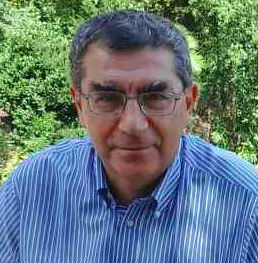 Vincenzo Canale合作论文数Dipartimento di Fisica, Università degli Studi di Napoli Federico II194
 Emmanouil Dris合作论文数Department of Physics, School of Applied Mathematical and Physical Sciences, National Technical University of Athens189R. Leitner合作论文数NC, Nuclear Centre of MFF, Charles University, Areal MFF, V Holesovickach 2, 180 00, Praha 8, Czech Republic189B. Åsman合作论文数188t moa合作论文数188Klaus Moenig合作论文数188
 André Sopczak合作论文数Institute of Experimental and Applied Physics, Czech Technical University in Prague185j masik合作论文数183
 Sylvie Braibant合作论文数Department of Physics and Astronomy "Augusto Righi", University of Bologna;Department of Physics, European Organization for Nuclear Research181
 Sigve Haug合作论文数Data Science Lab, Universität Bern180W. Liebig合作论文数179
 Besson Nathalie合作论文数CEA179
 Václav Vrba合作论文数Faculty of Nuclear Sciences and Physical Engineering, Czech Technical University in Prague178
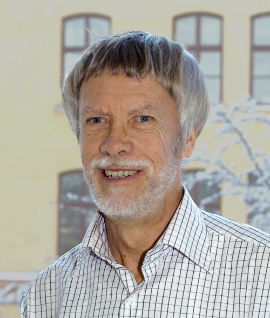 Erik Johansson合作论文数Department of Physics, Stockholm University176
 Marco Battaglia合作论文数Division of Physical & Biological Sciences, University of California, Santa Cruz;Santa Cruz Institute for Particle Physics, University of California, Santa Cruz;Department of Physics, University of California, Santa Cruz174J. Salt合作论文数173I. R. Boyko合作论文数172
 Antonio Passeri合作论文数INFN168
 Tim Adye合作论文数Particle Physics Department, Rutherford Appleton Laboratory166
 Antonio Ferrer合作论文数Centro Mixto, Instituto de Física Corpuscular;Universitat de València165




