The decay K → π0eν has been studied using in-flight decays detected with the ”ISTRA+” spectrometer operating in the 25-GeV negative secondary beam of the U-70 PS. About 550K events were collected for the analysis. The λ+ parameter of the vector form-factor has been measured: λ+ = 0.0286 ± 0.0008(stat) ± 0.0006(syst). The limits on the possible tensor and scalar couplings have been obtained: fT/f+(0) = 0.021 −0.075(stat)± 0.026(syst); fS/f+(0) = 0.002 +0.020 −0.022(stat)± 0.003(syst)
Data taken by the DELPHI experiment at centre-of-mass energies of 183 GeV and 189 GeV with a total integrated luminosity of 212 pb^{-1} have been used to search for the supersymmetric partners of the electrons, muons, and taus in the context of the Minimal Supersymmetric Standard Model (MSSM). The decay topologies searched for were the direct decay ({\tilde \ell} -> \ell {\tilde \chi_1^0}), producing acoplanar lepton pairs plus missing energy, and the cascade decay ({\tilde \ell} -> \ell {\tilde \chi_2^0} > \ell \gamma {\tilde \chi_1^0}), producing acoplanar lepton and photon pairs plus missing energy. The observed number of events is in agreement with Standard Model predictions. The 95% CL excluded mass limits for selectrons, smuons and staus are m_{\tilde {e}} \leq 87 GeV/c^2, m_{\tilde {\mu}} \leq 80 GeV/c^2 and m_{\tilde {\tau}} \leq 75 GeV/c^2, respectively, for values of \mu=-200 GeV/c^2 and tan(beta)=1.5.
DELPHI results are presented on the inclusive production of the neutral mesons , f0(980), f2(1270), K 0 2 (1430) and f 0 2(1525) in hadronic Z 0 decays. They are based on about 2 million multihadronic events collected in 1994 and 1995, using the particle identi cation capabilities of the DELPHI Ring Imaging Cherenkov detectors and measured ionization losses in the Time Projection Chamber. The total production rates per hadronic Z decay have been determined to be: 1:19 0:10 for ; 0:164 0:021 for f0(980); 0:214 0:038 for f2(1270); 0:073 0:023 for K 0 2 (1430); and 0:012 0:006 for f 0 2(1525). The total production rates for all mesons and di erential cross-sections for the , f0(980) and f2(1270) are compared with the results of other LEP experiments and with models. (Accepted by Physics Letters B)
We study twoand three-particle correlations as a function of invariant mass. Using data on n +p and K +p collisions at 250 GeV/c, we compare correlation functions and normalised factorial cumulants for various charge combinations. Strong positive correlations are ob served only at small invariant masses. The normalised cumulants for “exotic” [(-----), ( + + ) ] and “non exotic” pairs (H— ) and triplets decrease in power like fashion with increasing invariant mass. The mass dependence is not incompatible with the power-law be haviour as expected in a Dual Mueller-Regge framework. Comparison with FRITIOF reveals strong disagree ments, which are due to too large production rates of resonances, such as p° and /ƒ, and the absence of a BoseEinstein low-mass enhancement in JETSET.
A measurement of the strange quark forwardbackward asymmetry at the Z ~ peak was performed using 718,000 multihadronic Z ~ decays collected by the DELPHI detector at LEP in 1992. The s q u a r k was tagged by the presence of high momentum charged kaons identified by the Ring Imaging Cherenkov detector and by A~ decaying into pro-. The s q u a r k purity obtained was estimated for the two hadrons to be 43%. The average s q u a r k asymmetry was found to be 0.131 4, 0.035 (star.) 4. 0.013 (s~ls~.). The forward-backward asymmetry was measured for unresolved d and s quarks, tagged by the detection of a high energy neutron or neutral kaon in the Hadron Calorimeter. The combined d and s q u a r k purity was 69% and their asymmetry was found to be 0.112 40.031 (star.) 40.054 (syst.).
An analysis of inclusive production of K ~ and the meson resonances K*+(892), p~ f0(975) and f2(1270) in hadronic decays of the Z ~ is presented, based on about 973,000 multihadronic events collected by the DELPHI detector at LEP during 1991 and 1992. Overall multiplicities have been determined as 1.962 -40.060 K ~ mesons, 0.712 • 0.067 K*• and 1.21 + 0.15 p~ per hadronic Z ~ decay. The average multiplicities of f0(975) for scaled momentum, xp = P/Pb~a,~, in the range 0.05 _< xp _<0.6 and of f2(1270) for 0.05 _< zp _<1.0 are 0.098 + 0.016 and 0.170 • 0.043 respectively. The fo(975) and p~ zp-spectra have similar shapes. The fz(1270)/p~ ratio increases with zp. The average multiplicities and the differential cross sections are compared with the JETSET Parton Shower model. The model with default parameters fails to reproduce the experimental K ~ momentum spectrum at low momentum, describes the K*• and p~ zp-spectrum shapes, but significantly overestimates their production rates.
Disclaimer/Complaints regulations If you believe that digital publication of certain material infringes any of your rights or (privacy) interests, please let the Library know, stating your reasons. In case of a legitimate complaint, the Library will make the material inaccessible and/or remove it from the website. Please Ask the Library: http://uba.uva.nl/en/contact, or a letter to: Library of the University of Amsterdam, Secretariat, Singel 425, 1012 WP Amsterdam, The Netherlands. You will be contacted as soon as possible.
P. Abreu t, W. Adam g, T. Adye ak, E. Agasi ad, I. Ajinenko aq, R. Aleksan am, G.D. Alekseev n, A. Algeri m, p. Allport u, S. Almehed w, S.J. Alvsvaag d, U. Amaldi g, A. Andreazza aa, P. Antilogus x, W-D. Apel o, R.J. Apsimon ak, y . Arnoud am, B. ~,sman as J-E. Augustin r, A. Augustinus ad, p. Baillon g, P. Bambade r, F. Barao t, R. Barate e, G. Barbiellini au, D.Y. Bardin n, G.J. Barker ah, A. Baroncelli ao, O. Barring g, J.A. Barrio Y, W. Bartl ay, M.J. Bates ak, M. Battaglia m, M. Baubillier v, K-H. Becks ha, M. Begalli aj, p. Beilliere f, Yu. Belokopytov aq, p. Beltran i, A.C. Benvenuti e, M. Berggren r, D. Bertrand b, F. Bianchi at, M. Bigi at, M.S. Bilenky n, P. Billoir v, J. Bjarne w, D. Bloch h, J. Blocki az, S. Blyth ah, V. Bocci ae, P.N. Bogolubov n, T. Bolognese am, M. Bonesini aa, W. Bonivento aa, P.S.L. Booth u, G. Borisov aq, H. Bornerg, C. Bosio ao, B. Bostjancic ar, S. Bosworth ah, O. Botner av, B. Bouquet r, C. Bourdarios r, T.J.V. Bowcock u, M. Bozzo k, S. Braibant b, p. Branchini ao, K.D. Brand ai, R.A. Brenner g, H. Briand v, C. Bricman b, L. Brillault v, R.C.A. Brown g, P. Bruckman P, J-M. Brunet f, A. Budziak P, L. Bugge af, T. Buran af, H. Burmeister g, A. Buys g, J.A.M.A. Buytaert g, M. Caccia aa, M. Calvi aa, A.J. Camacho Rozas ap, R. Campion u, T. Camporesi g, V. Canale ae, K. Cankocak as, F. Cao b, F. Carena g, L. Carroll u, C. Caso k, M.V. Castillo Gimenez aw, A. Cattai g, F.R. Cavallo e, L. Cerrito ae V. Chabaud g, A. Chan a, M. Chapkin aq, Ph. Charpentier g, J. Chauveau v, p. Checchia ai, G.A. Chelkov n, L. Chevalier am, P. Chliapnikov aq, V. Chorowicz v, J.T.M. Chrin aw, V. Cindro ar, p. Collins an, J.L. Contreras r, R. Contri k, E. Cortina aw, G. Cosme r, F. Couchot r, H.B. Crawley a, D. Crennell ak, G. Crosetti k, J. Cuevas Maestro ag, S. Czellar m, E. Dahl-Jensen ab, j. Dahm ha, B. Dalmagne r, M. Dam af, G. Damgaard ah, E. Daubie h, A. Daum o, P.D. Daunceyg, M. Davenport g, J. Davies u, W. Da Silva v, C. Defoix f, P. Delpierre z, N. Demaria at, A. De Angelis g, H. De Boeck b, W. De Boer °, S. De Brabandere h, C. De Clercq b, M.D.M. De Fez Laso aw, C. De La Vaissiere v, B. De Lotto au, A. De Min aa, H. Dijkstrag, L. Di Ciaccio ae , F. Djama h, J. Dolbeau f, M. Donszelmann g, K. Doroba az, M. Dracos ~, J. Drees ba, M. Dris ae, y . Dufour g, F. Dupont i, D. Edsall a, L-O. Eek a~, P.A.-M. Eerola g, R. Ehret °, T. Ekelof av, G. Ekspong as, A. Elliot Peisert g, M. Elsing ba, j_p. Engel h, N. Ershaidat ~, M. Espirito Santo t, D. Fassouliotis ae, M. Feindt g, A. Ferrer aw, T.A. Filippas ae, A. Firestone a, H. Foeth 8, E. Fokitis ae, F. Fontanelli k, K.A.J. Forbes u, J-L. Fousset z, S. Francon x, B. Franek ak, p. Frenkiel f, D.C. Fries o, A.G. Frodesen d, R. Fruhwirth ay, F. Fulda-Quenzer r, H. Furstenau o, j. Fuster 8, D. Gamba at, M. Gandelman q, C. Garcia aw, j. Garcia ap, C. Gaspar g, U. Gasparini ai, Ph. Gavillet g, E.N. Gazis ae, j_p. Gerber h, p. Giacomelli g, D. Gillespie g, R. Gokieli az, B. Golob ar, V.M. Golovatyuk n, j . j . Gomez Y Cadenas g, G. Gopal ak, L. Gorn a, M. Gorski az, V. Gracco k, A. Grant g, F. Grard b, E. Graziani ao, G. Grosdidier r, E. Gross 8, B. Grossetete v, p. Gunnarsson as, J. Guy ak, U. Haedinger °, F. Hahn ha, M. Hahn as, S. Hahn ba, S. Haider ad, Z. Hajduk p, A. Hakansson w, A. Hallgren av, K. Hamacher ha, G. Hamel De Monchenault am, W. Hao ad, F.J. Harris an, V. Hedberg w T. Henkes 8, R. Henriques t, j . j . Hernandez aw, j.A. Hernando aw, P. Herquet b, H. Herr g, T.L. Hessing u, I. Hietanen m, C.O. Higgins u, E. Higon aw, H.J. Hilke g,
Higgs bosons predicted by the fermiophobic scenario within Two Higgs Doublets Models were searched for in the data collected by the DELPHI detector at centre-of-mass energies between 189 GeV and 202 GeV, corresponding to a total integrated luminosity of 380 pb^-1. No signal was found and confidence limits were derived in the framework of possible extensions of the Standard Model Higgs sector.
Measurements of on-shell ZZ production are described, using data collected by DELPHI in 1997 and 1998, at centre-of-mass energies roots = 182.6 GeV and 188.6 GeV, respectively. Results obtained in each of the final states q (q) over barq (q) over bar, mu (+)mu (-) q (q) over bar e(+)e(-)q (q) over bar, nu<()over bar>q (q) over bar, l(+)l(-)l(+)l(-), and nu<()over bar>l(+)l(-) are presented. The measured cross-sections for on-shell ZZ production via the tree-level doubly-resonant graphs (NC02) are: sigma (NC02) (182.6 GeV) = 0.38 +/- 0.18 (stat) +/- 0.04 (syst) pb, sigma (NC02) (188.6 GeV) = 0.60+/-0.13 (stat) +/- 0.07 (syst) pb. They are consistent with the Standard Model expectations of 0.25 and 0.65 pb at each energy. (C) 2001 Published by Elsevier Science B.V.
The cross sections for the production of single charged and neutral intermediate vector bosons were measured using integrated luminosities of 52 pb(-1) and 154 pb(-1) collected by the experiment at centre-of-mass energies of 182.6 GeV and 188.6 GeV, respectively. The cross sections for the reactions were determined in limited kinematic regions. The results found are in agreement with the Standard Model predictions for these channels. (C) 2001 Published by Elsevier Science B.V.
Searches for pair production of gauginos and squarks in e(+)e(-) collisions at a centre-of-mass energy of 189 GeV have been performed on data corresponding to an integrated luminosity of 158 pb(-1) collected by the DELPHI detector at LEP. The data were analyzed under the assumption of non-conservation of R-parity through a single dominant (U) over bar(D) over bar(D) over bar coupling between squarks and quarks. Typical final states contain between 4 and 10 jets with or without additional leptons. No excess of data above Standard Model expectations was observed. The results were used to constrain domains of the MSSM parameter space and derive limits on the masses of supersymmetric particles. The following mass limits at 95% CL were obtained from these searches: neutralino mass: m(<()over tilde>1)(0) greater than or equal to 32 GeV; chargino mass: m(<()over tilde>1)(+) greater than or equal to 94 GeV; stop and sboctom mass (indirect decay) with DeltaM > 5 GeV: m((t) over tilde1) greater than or equal to 74 GeV for Phi (mix) = 0 rad, m((t) over tilde1) greater than or equal to 59 GeV for Phi (mix) = 0.98 rad, m((b) over tilde1) greater than or equal to 72 GeV for Phi (mix) = 0 rad. The angle phi (mix) is the mixing angle between left and right handed quarks. (C) 2001 Elsevier Science B.V. All rights reserved.
. Searches for pair production of supersymmetric particles in ee collisions at centre-of-mass energy of 183 GeV have been performed on DELPHI data under the assumption that R-parity is not conserved. Only one R-parity violating coupling of type, which couples the sleptons to the leptons ( term), is considered to be dominant at a time. Since in models with R-parity violation any supersymmetric particle can be the lightest one, searches for charginos, neutralinos, sleptons and squarks have been performed both for direct R-parity violating decays and for indirect cascade decays. Morever, it is assumed that the strength of the R-parity violating couplings is such that the lifetimes can be neglected. The present study of supersymmetric particle pair production is used to exclude domains of the Minimal Supersymmetric Standard Model parameter space previously explored under the assumption of R-parity conservation.
An update of the searches for charginos and gravitinos is presented, based on a data sample corresponding to the 158 pb −1 recorded by the DELPHI detector in 1998, at a centre-of-mass energy of 189 GeV. No evidence for a signal was found. The lower mass limits are 4-5 GeV/c 2 higher than those obtained at a centre-of-mass energy of 183 GeV. The (µ,M 2) MSSM domain excluded by combining the chargino searches with neutralino searches at the Z resonance implies a limit on the mass of the lightest neutralino which, for a heavy sneutrino, is constrained to be above 31.0 GeV/c 2 for tan β ≥ 1.
The longitudinal polarization of the Lambda(b) baryon is measured at the LEP e(+)e(-) collider by DELPHI. It is determined from the charged lepton and neutrino energy spectra in 249 +/- 19 Lambda(b) semileptonic decays reconstructed in approximate to 3.5 million hadronic Z(0) decays using Lambda(0)-lepton correlations. The measured polarization is: P-Lambda b = -0.49(-0.30)(+0.32)(stat.) +/- 0.17(syst.). (C) Elsevier Science B.V. All rights reserved.
Searches for charginos, neutralinos and sleptons at LEP2 centre-of-mass energies from 130 GeV to 189 GeV have been used to set lower limits on the mass of the Lightest Supersymmetric Particle and other supersymmetric particles within the MSSM framework. R-parity conservation has been assumed. The lightest neutralino was found to be heavier than 32.3 GeV/c independent of the m0 value. The lightest chargino, the second-to-lightest neutralino, the next-toheaviest neutralino, the heaviest neutralino, the sneutrino and the right-handed selectron were found to be heavier than 62.4 GeV/c, 62.4 GeV/c, 99.9 GeV/c, 116.0 GeV/c, 61.0 GeV/c, and 87.0 GeV/c, respectively. These limits do not depend on m0 or M2 and are valid for 1 ≤ tanβ ≤ 40, in the μ region where the lightest neutralino is the LSP. If the sneutrino Is heavier than the chargino the lightest neutralino has to be heavier than 32.4 GeV/c. The effects of mixings in the third family of sfermions on these limits are discussed. The confidence level of all limits given is 95%. (Accepted by Physics Letters B)
 gd alekseev合作论文数174
 Ugo Amaldi合作论文数TUM, Munich171
 Pierre Antilogus合作论文数IN2P3-CNRS, Université Claude Bernard de Lyon170P Chliapnikov合作论文数169
 Phil Allport合作论文数School of Physics and Astronomy, University of Birmingham167S. Almehed合作论文数164
 Tim Adye合作论文数Particle Physics Department, Rutherford Appleton Laboratory163W.-D. Apel合作论文数163J.-E. Augustin合作论文数163P. Bambade合作论文数159
 Attilio Andreazza合作论文数Dipartimento di Fisica, Università degli studi di Milano;Laboratorio di Trattamento Numerico dei Dati Sperimentali, Università degli studi di Milano;Istituto Nazionale di Fisica Nucleare158Carlo Caso合作论文数Dipartimento di Fisica, University of Genoa;INFN-Genoa157R. Contri合作论文数156
 Marta Calvi合作论文数Department of Physics "Giuseppe Occhialini", University of Milano-Bicocca;Istituto Nazionale di Fisica Nucleare156F. Barao合作论文数155
 Clara Matteuzzi合作论文数Istituto Nazionale di Fisica Nucleare;University of Milan155
 Emmanuel Fokitis合作论文数155
 Flavio Fontanelli合作论文数Dipartimento di Fisica, Università degli Studi di Genova154R. Keranen合作论文数154D. Yu. Bardin合作论文数Laboratory of Theoretical Physics, Joint Institute for Nuclear Research154
 Tord Ekelof合作论文数Department of Physics and Astronomy, Uppsala University154
 Clara Gaspar合作论文数EP Department, CERN154A. Ouraou合作论文数153k h becks合作论文数153L. Bugge合作论文数153B. Jean-Marie合作论文数153Ba Khomenko合作论文数153
 Pierre Delpierre合作论文数imXPAD153
 Tiziano Camporesi合作论文数CERN153G. Cosme合作论文数153
 Stavros Katsanevas合作论文数Physics Laboratory, University of Athens153R. Gokieli合作论文数Inst. Nuclear Studies and University of Warsaw Ul. Hoza 69 PL-00681 Warsaw Poland153
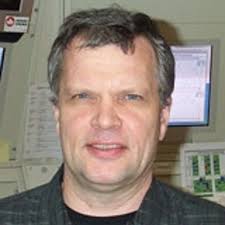 Risto Orava合作论文数University of Helsinki;Helsinki Institute of Physics153S Czellar合作论文数152E. Higon合作论文数152K. Hultqvist合作论文数152
 Heimo Saarikko合作论文数Department of Physics, Faculty of Science, University of Helsinki152M Baubillier合作论文数152
 Dimitris Fassouliotis合作论文数Department of Physics, National and Kapodistrian University of Athens152B. Åsman合作论文数152p juillot合作论文数152p herquet合作论文数152B. Bouquet合作论文数152M. Bonesini合作论文数152M. Feindt合作论文数152jp engel合作论文数152
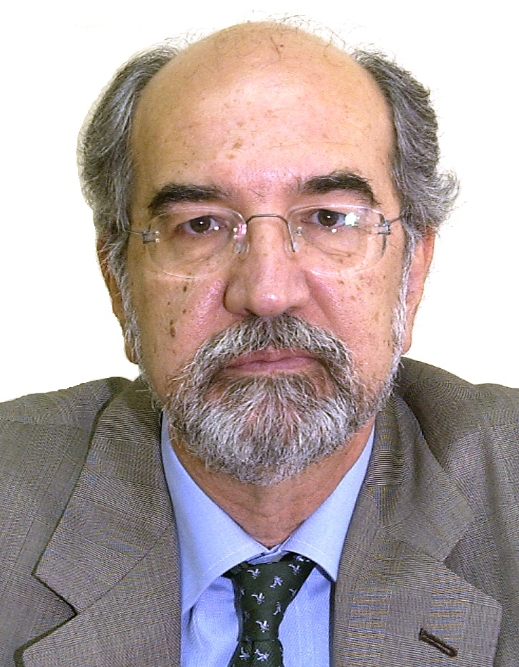 Evangelos N. Gazis合作论文数Department of Physics, School of Applied Mathematical & Physical Sciences, National Technical University of Athens152
 Markus Elsing合作论文数Experimental Physics Department, European Organization for Nuclear Research152
 Juan Fuster合作论文数Institute of Corpuscular Physics152




