We provide an overview of the status of Monte-Carlo event generators for high-energy particle physics. Guided by the experimental needs and requirements, we highlight areas of active development, and opportunities for future improvements. Particular emphasis is given to physics models and algorithms that are employed across a variety of experiments. These common themes in event generator development lead to a more comprehensive understanding of physics at the highest energies and intensities, and allow models to be tested against a wealth of data that have been accumulated over the past decades. A cohesive approach to event generator development will allow these models to be further improved and systematic uncertainties to be reduced, directly contributing to future experimental success. Event generators are part of a much larger ecosystem of computational tools. They typically involve a number of unknown model parameters that must be tuned to experimental data, while maintaining the integrity of the underlying physics models. Making both these data, and the analyses with which they have been obtained accessible to future users is an essential aspect of open science and data preservation. It ensures the consistency of physics models across a variety of experiments.
Monte Carlo event generators for hard hadronic collisions depend on the evolution of parton showers backwards from a high-scale subprocess to the hadronization scale. The evolution is treated as a branching process with a sequence of resolvable parton emissions. The criterion of resolvability involves cutoffs that determine the no-emission probability (NEP) for a given range of the evolution scale. Existing event generators neglect cutoff-dependent terms in the NEP that, although formally power-suppressed, can have significant phenomenological effects. We compute such terms and study their consequences. One important result is that it is not possible for the backward shower to faithfully reproduce the cutoff-independent parton distribution functions (PDFs) used to generate it. We show that the computed NEP corrections mitigate but do not eliminate this problem. An alternative approach is to use cutoff-dependent PDFs that are consistent with the uncorrected NEP. Then one must apply cutoff-dependent corrections to hard subprocess matrix elements. We compute those corrections to the first nontrivial order for the Drell-Yan process and for Higgs production by gluon fusion.
We propose a method for computing numerically integrals defined via i ϵ deformations acting on single-pole singularities. We achieve this without an explicit analytic contour deformation. Our solution is then used to produce precise Monte Carlo estimates of multi-scale multi-loop integrals directly in Minkowski space. We corroborate the validity of our strategy by presenting several examples ranging from one to three loops. When used in connection with four-dimensional regularization techniques, our treatment can be extended to ultraviolet and infrared divergent integrals.
We discuss how colour flows can be used to simplify the computation of matrix elements, and in the context of parton shower Monte Carlos with accuracy beyond leading-colour. We show that, by systematically employing them, the results for tree-level matrix elements and their soft limits can be given in a closed form that does not require any colour algebra. The colour flows that we define are a natural generalization of those exploited by existing Monte Carlos; we construct their representations in terms of different but conceptually equivalent quantities, namely colour loops and dipole graphs, and examine how these objects may help to extend the accuracy of Monte Carlos through the inclusion of subleading-colour effects. We show how the results that we obtain can be used, with trivial modifications, in the context of QCD+QED simulations, since we are able to put the gluon and photon soft-radiation patterns on the same footing. We also comment on some peculiar properties of gluon-only colour flows, and their relationships with established results in the mathematics of permutations.
A bstract We compute the decay spectrum for dark matter (DM) with masses above the scale of electroweak symmetry breaking, all the way to the Planck scale. For an arbitrary hard process involving a decay to the unbroken standard model, we determine the prompt distribution of stable states including photons, neutrinos, positrons, and antiprotons. These spectra are a crucial ingredient in the search for DM via indirect detection at the highest energies as being probed in current and upcoming experiments including IceCube, HAWC, CTA, and LHAASO. Our approach improves considerably on existing methods, for instance, we include all relevant electroweak interactions.
James Stirlingu0027s wide-ranging contributions to the development and application of quantum chromodynamics were central in verifying QCD as the correct theory of strong interactions, and in computing...
Monte Carlo event generators (MCEGs) are the indispensable workhorses of particle physics, bridging the gap between theoretical ideas and first-principles calculations on the one hand, and the complex detector signatures and data of the experimental community on the other hand. All collider physics experiments are dependent on simulated events by MCEG codes such as Herwig, Pythia, Sherpa, POWHEG, and MG5_aMC@NLO to design and tune their detectors and analysis strategies. The development of MCEGs is overwhelmingly driven by a vibrant community of academics at European Universities, who also train the next generations of particle phenomenologists. The new challenges posed by possible future collider-based experiments and the fact that the first analyses at Run II of the LHC are now frequently limited by theory uncertainties urge the community to invest into further theoretical and technical improvements of these essential tools. In this short contribution to the European Strategy Update, we briefly review the state of the art, and the further developments that will be needed to meet the challenges of the next generation.
James Stirling's wide-ranging contributions to the development and application of quantum chromodynamics were central in verifying QCD as the correct theory of strong interactions, and in computing precise predictions for all types of collider processes. He published more than 300 papers on a vast range of phenomenological topics, including some of the most highly cited of all time in particle physics. His research, always full of insight, focused on the confrontation of theoretical predictions with experimental results. Amongst many key contributions, he developed the helicity amplitude method and used it to show that the CERN ‘monojet’ events, thought to be a possible signal of new physics, were due to vector boson plus jet production. The method has since facilitated the calculation of many other important processes. At Durham he formed a famous long-standing collaboration that set the standard for determining the quark and gluon distributions in the proton. Besides his intellectual brilliance, his personal qualities of humility, modesty, diligence and fairness made him an outstanding scientific leader and administrator. He played a major role in the foundation of the Institute for Particle Physics Phenomenology in Durham and served as its first Director. In 2005 he was appointed Pro-Vice Chancellor for Research at Durham. He moved to the Cavendish Laboratory in Cambridge in 2008, becoming Head of the Department of Physics in 2011. Then in 2013 he was appointed to the newly created position of Provost, the chief academic officer, at Imperial College, London, from which he retired in August 2018.
We update the earlier work of refs. [1, 2] on parton distribution functions in the full Standard Model to include gauge boson polarization, non-zero input electroweak boson PDFs and next-to-leading-order resummation of large logarithms.
We compute the leading-order evolution of parton fragmentation functions for all the Standard Model fermions and bosons up to energies far above the electroweak scale, where electroweak symmetry is restored. We discuss the difference between doublelogarithmic and leading-logarithmic resummation, and show how the latter can be implemented through a scale choice in the SU(2) coupling. We present results for a wide range of partonic center-of-mass energies, including the polarization of fermion and vector boson fragmentation functions induced by electroweak evolution.
Recently, the CMS collaboration has reported their search for electroweak instanton-like processes with anomalous B + L violation assuming multi-fermion but zero-boson final states. On the other hand, many theoretical studies suggest that anomalous B + L processes may have an observably large production rate only if their final state contains a large number of electroweak gauge bosons. In this paper, we review the state-of-the-art of the predictions of electroweak instanton-induced processes and compare collider signatures of zero- and multi-boson events of anomalous B + L violation at the LHC. An upper limit on the cross-section for the multi-boson process is derived by recasting the CMS analysis.
Abstract We present a resummation of those double-logarithmically enhanced electroweak correction that arise in pp colliders because protons are not SU(2) singlets, by solving DGLAP equations in the full Standard Model. We then show how to match these results with those of fixed-order electroweak calculations. At a 100 TeV pp collider, contributions beyond order α are ∼ 10% at partonic center-of-mass energies of a few TeV. These are mainly due to initial states with massive vector bosons.
We compute the leading-order evolution of parton distribution functions for all the Standard Model fermions and bosons up to energy scales far above the electroweak scale, where electroweak symmetry is restored. Our results include the 52 PDFs of the unpolarized proton, evolving according to the SU(3), SU(2), U(1), mixed SU(2)×U(1) and Yukawa interactions. We illustrate the numerical effects on parton distributions at large energies, and show that this can lead to important corrections to parton luminosities at a future 100 TeV collider.
We study the impact of including quark- and gluon-initiated jet discrimination in the search for strongly interacting supersymmetric particles at the LHC. Taking the example of gluino pair production, considerable improvement is observed in the LHC search reach on including the jet substructure observables to the standard kinematic variables within a multivariate analysis. In particular, quark and gluon jet separation has higher impact in the region of intermediate mass-gap between the gluino and the lightest neutralino, as the difference between the signal and the standard model background kinematic distributions is reduced in this region. We also compare the predictions from different Monte Carlo event generators to estimate the uncertainty originating from the modelling of the parton shower and hadronization processes.
We show that in studies of light quark- and gluon-initiated jet discrimination, it is important to include the information on softer reconstructed jets (associated jets) around a primary hard jet. This is particularly relevant while adopting a small radius parameter for reconstructing hadronic jets. The probability of having an associated jet as a function of the primary jet transverse momentum ($p_T$) and radius, the minimum associated jet $p_T$ and the association radius is computed upto next-to-double logarithmic accuracy (NDLA), and the predictions are compared with results from Herwig++, Pythia6 and Pythia8 Monte Carlos (MC). We demonstrate the improvement in quark-gluon discrimination on using the associated jet rate variable with the help of a multivariate analysis. The associated jet rates are found to be only mildly sensitive to the choice of parton shower and hadronization algorithms, as well as to the effects of initial state radiation and underlying event. In addition, the number of $k_T$ subjets of an anti-$k_T$ jet is found to be an observable that leads to a rather uniform prediction across different MC's, broadly being in agreement with predictions in NDLA, as compared to the often used number of charged tracks observable.
We compute the resummed hadronic transverse energy (E_T) distribution due to initial-state QCD radiation in vector boson and Higgs boson production at hadron colliders. The resummed exponent, parton distributions and coefficient functions are treated consistently to next-to-leading order. The results are matched to fixed-order calculations at large E_T and compared with parton-shower Monte Carlo predictions at Tevatron and LHC energies.
We derive generating functions, valid to next-to-double logarithmic accuracy, for QCD jet rates according to the inclusive forms of the k t , Cambridge/Aachen and anti-k t algorithms, which are equivalent at this level of accuracy. We compare the analytical results with jet rates and average jet multiplicities from the SHERPA event generator, and study the transition between Poisson-like and staircase-like behaviour of jet ratios.
Contributors: S. Alioli, B. Alvarez-Gonzalez, D. Amidei, T. Andeen, A. Arce, B. Auerbach, A. Avetisyan, 8 M. Backovic, Y. Bai, M. Begel, S. Berge, C. Bernard, C. Bernius, S. Bhattacharya, K. Black, A. Blondel, 9 K. Bloom, T. Bose, J. Boudreau, J. Brau, G. Brooijmans, E. Brost, R. Calkins, D. Chakraborty, 10 T. Childress, G. Choudalakis, V. Coco, J.S. Conway, C. Degrande, A. Delannoy, F. Deliot, L. Dell’Asta, 11 E. Drueke, B. Dutta, A. Effron, K. Ellis, J. Erdmann, J. Evans, C. Feng, E. Feng, A. Ferroglia, K. Finelli, 12 W. Flanagan, I. Fleck, A. Freitas, F. Garberson, R. Gonzalez Suarez, M. Graesser, N. Graf, Z. Greenwood, 13 C. Group, A. Gurrola, G. Hammad, T. Han, Z. Han, U. Heintz, S. Hoeche, T. Horiguchi, A. Ismail, 14 P. Janot, W. Johns, J. Joshi, A. Juste, T. Kamon, C. Kao, Y. Kats, A. Katz, M. Kaur, R. Kehoe, 15 W. Keung, S. Khalil, A. Khanov, N. Kidonakis, C. Kilic, N. Kolev, A. Kotwal, J. Kraus, D. Krohn, 16 M. Kruse, S. Lee, E. Luiggi, S. Mantry, A. Melo, D. Miller, G. Moortgat-Pick, M. Narain, N. Odell, 17 Y. Oksuzian, M. Oreglia, A. Penin, Y. Peters, C. Pollard, S. Poss, J. Proudfoot, S. Rappoccio, S. Redford, 18 M. Reece, F. Rizatdinova, P. Roloff, R. Ruiz, M. Saleem, B. Schoenrock, C. Schwanenberger, T. Schwarz, 19 K. Seidel, E. Shabalina, P. Sheldon, F. Simon, K. Sinha, P. Skands, P. Skubik, G. Sterman, D. Stolarski, 20 J. Strube, J. Stupak, S. Su, M. Tesar, S. Thomas, E. Thompson, P. Tipton, E. Varnes, N. Vignaroli, 21 J. Virzi, M. Vogel, D. Walker, K. Wang, B. Webber, J.D. Wells, S. Westhoff, D. Whiteson, M. Williams, 22 S. Wu, U. Yang, H. Yokoya, H. Yoo, H. Zhang, N. Zhou, H. Zhu, J. Zupan. 23
We point out that QCD coherence effects can help to identify the colour structure of possible new physics contributions to the anomalously large forward-backward asymmetry in top quark pair production. New physics models that yield the same inclusive asymmetry make different predictions for its dependence on the transverse momentum of the pair, if they have different colour structures. From both a fixed-order effective field theory approach and Monte Carlo studies of specific models, we find that an s-channel octet structure is preferred.
The leading-order accurate description of t (t) over bar production, as usually employed in standard Monte Carlo event generators, gives no rise to the generation of a forward-backward asymmetry, A(FB). Yet, non-negligible - differential as well as inclusive - asymmetries may be produced if coherent parton showering is used in the hadroproduction of top quark pairs. In this contribution we summarize the outcome of our study [1] of this effect. We present a short comparison of different parton shower implementations and briefly comment on the phenomenology of the colour coherence effect at the Tevatron.
 Michael Seymour合作论文数Theoretical Physics Group, University of Manchester23Giuseppe Marchesini合作论文数Istituto Nazionale di Fisica Nucleare19Peter Richardson合作论文数16Stefano Frixione合作论文数14
 Richard Keith Ellis合作论文数Centre for Particle Theory, University of Durham;Department of Physics, University of Durham12
 Ben Allanach合作论文数Department of Applied Mathematics and Theoretical Physics, Faculty of Mathematics, University of Cambridge12Yu. L. Dokshitzer合作论文数12S. Catani合作论文数11
 Paolo Nason合作论文数Department of Physics "Giuseppe Occhialini", University of Milano-Bicocca11Stefan Gieseke合作论文数11Kosuke Odagiri合作论文数11
 Torbjorn Sjostrand合作论文数Department of Astronomy and Theoretical Physics, University of Lund11I.G. Knowles合作论文数8M. A. Parker合作论文数8w j stirling合作论文数7
 Frank Krauss合作论文数Institute for Data Science;Institute for Particle Physics Phenomenology, University of Durham;Department of Physics, University of Durham7
 Andreas Papaefstathiou合作论文数Cavendish Laboratory;University of Cambridge;Cavendish Laboratory, University of Cambridge7
 Leif Lönnblad合作论文数Department of Astronomy and Theoretical Physics, Faculty of Science, Lund University7
 Jenni Smillie合作论文数School of Physics and Astronomy, The University of Edinburgh6Mrinal Dasgupta合作论文数Department of Physics and Astronomy, School of Natural Sciences, Faculty of Science and Engineering, The University of Manchester6
 Peter Zeiler Skands合作论文数School of Physics and Astronomys, Monash University6
 Günther Dissertori合作论文数ETH Zurich6
 Ben Gripaios合作论文数Department of Physics, University of Cambridge6C.P. Fong合作论文数5g turnock合作论文数5
 Stephen Mrenna合作论文数Fermi National Accelerator Laboratory5Stefano Catani合作论文数Dipartimento di Fisica, Universita di Pisa5
 Valery Khoze合作论文数Department of Physics, University of Durham;Institute for Particle Physics Phenomenology, University of Durham5
 Christian Bauer合作论文数Physics Division, Lawrence Berkeley National Laboratory5
 Michelangelo Mangano合作论文数Department of Theoretical Physics, European Organization for Nuclear Research5
 Gavin Salam合作论文数Clarendon Laboratory, Rudolf Peierls Centre for Theoretical Physics, University of Oxford;Department of Physics, University of Oxford5Gennaro Corcella合作论文数5
 Stefano Moretti合作论文数School of Physics and Astronomy, University of Southampton5
 Christopher Lester合作论文数The Cavendish Laboratory, Department of Physics, University of Cambridge5Kazuki Sakurai合作论文数5
 Georg Weiglein合作论文数Theory Group, Deutsches Elektronen-Synchrotron;Durham University4
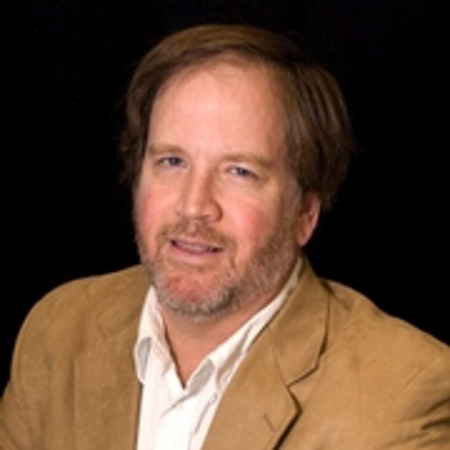 Joey W Huston合作论文数Department of Physics & Astronomy, College of Natural Science, Michigan State University4
 William James Stirling合作论文数Imperial College London4Carlo Ewerz合作论文数4Fabian Stoeckli合作论文数4David Grellscheid合作论文数4
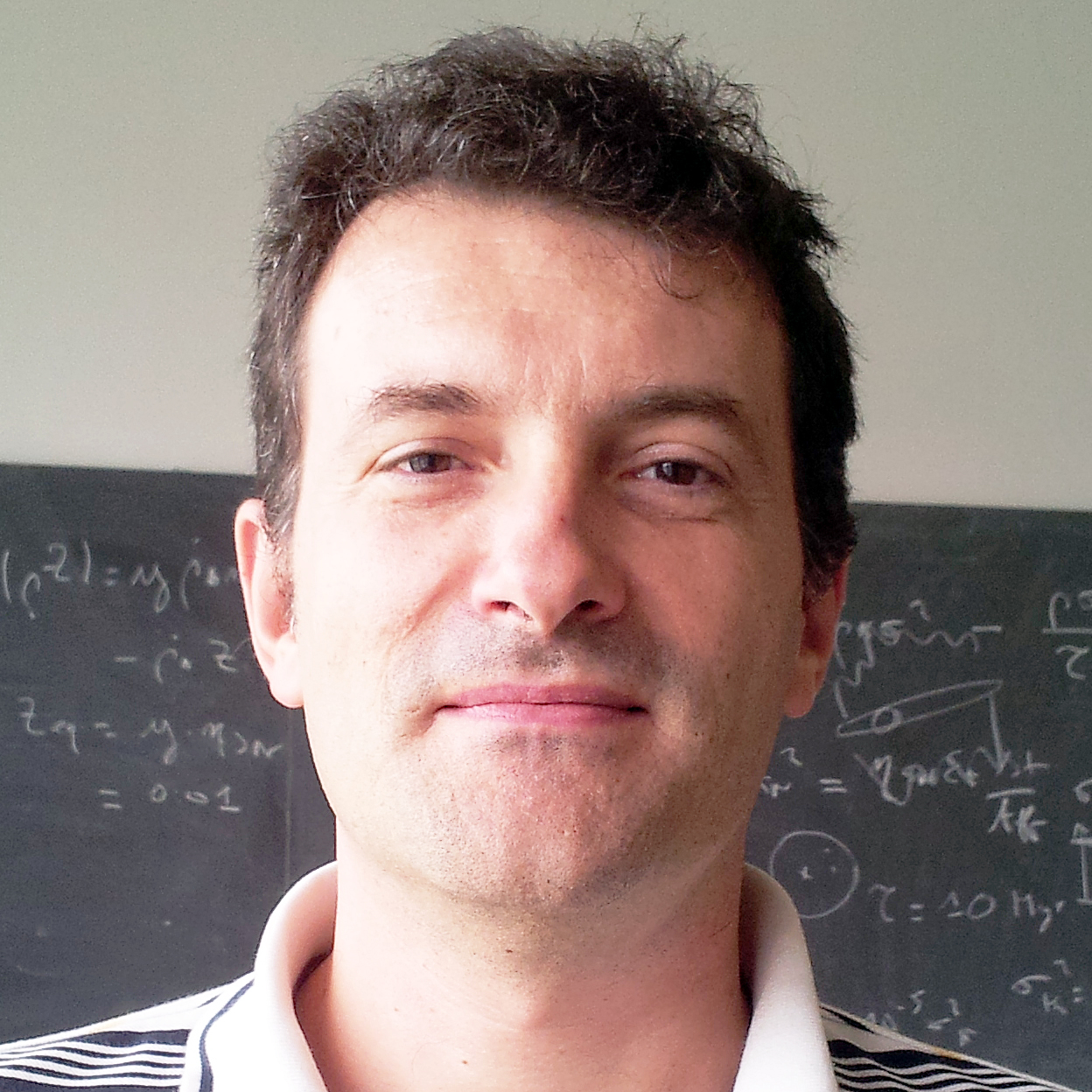 Massimiliano Grazzini合作论文数Department of Physics, University of Zurich/Physik-Institut-Group of Massimiliano Grazzini, University of Zurich4
 Mihoko Nojiri (野尻美保子)合作论文数KEK Theory Center, Tokyo University;IPMU, Tokyo University;High Energy Accelerator Research Organization;Institute of Particle and Nuclear Studies, Tokyo University4E. Richter-Was合作论文数3E. Laenen合作论文数3
 Steffen Schumann合作论文数3
 Daniel Wicke合作论文数Ritzenhoefer & Company3Philip Stephens合作论文数Verily Life Sci3F. Paige合作论文数3




