A 208-mm inner diameter, 62-mm-tall, wind-and-react Nb3 Sn prototype magnet was tested to demonstrate its suitability for use in a compact superconducting cyclotron. The magnet and its 270 kg iron return yoke were cooled together by conduction using a 2-stage Gifford-McMahon cycle refrigerator. This paper presents thermal, electrical and electromagnetic data collected during the tests. Although the radiation shield for the assembly cooled to 47 K within one day, a total of nine days were needed to cool the magnet assembly to below 4 K, at an ultimate heat load of 0.2 W. The dominant heat load at each stage of the cold head was due to thermal conduction along the current leads. The coil was charged without quench to 211 A, generating a pole tip magnetic induction of 3 T. The test demonstrates the technical feasibility to design, manufacture and operate compact superconducting cyclotron magnets at currents in excess of 200 A. The results are being used to improve the design for future high-field, conduction-cooled superconducting cyclotrons.
The Working Group on Planetary System Nomenclature (WG-PSN) develops, maintains and publishes guidelines for naming natural satellites of planets and surface features on all solar system bodies except Earth. When required the WG approves lists of new nomenclature, with accompanying explanatory notes, based on the established guidelines. Approved names are immediately added into the Gazetteer of Planetary Nomenclature. Objections based on significant, substantive problems may be submitted within a 3-months period, and will be ruled on by Division III.
The meeting was attended by six from the WG (K. Aksnes, J. Blunck, G. Consolmagno, B. Marsden, R. Schulz, V. Shevchenko) and two from the Task Groups (D. Morrison, J. Watanabe). Also the incoming WG members E. Bowell and R. Courtin, as well as some guests, attended.
The meeting was attended by six from the WG (K. Aksnes, J. Blunck, G. Consolmagno, B. Marsden, R. Schulz, V. Shevchenko) and two from the Task Groups (D. Morrison, J. Watanabe). Also the incoming WG members E. Bowell and R. Courtin, as well as some guests, attended.
The MECO detector magnet produces magnetic fields decreasing from 5 T to 1 T over a curvilinear volume with an axial length of about 26 m using a set of 96 NbTi solenoid coils distributed in 4 cryostats operating at about 4.5 K. At the high field end of the magnet, the solenoids have an inner radius of 0.88 m, and radial builds up to 0.125 m. In these relatively large radial build coils, quenches initiating at the high field region at the inner radius result in warm temperatures at the inner radial region while the outer radial region can remain substantially cooler, even after 60-70 s after most of the current has decayed from the quench-protective dump. Axial and radial tensions can develop in the turn-to-turn insulation from these temperature gradients. This paper discusses the quench modeling process, including the 3-D quench code that provides element temperature vs. time data to ANSYS for analysis of the coil stress. The paper evaluates methods of managing insulation surface-normal tensile stress, including use of copper sheets in single and multiple coils to distribute the transient energy by eddy currents and thermal conduction, which helps minimize temperature gradients in the winding pack. Hard-way winding with ID and OD copper sheets in multiple coils gives the best performance based on both finite element analysis and temperature contour plots
Because of safety concerns on ozone accumulation in liquid nitrogen vessels under high nuclear radiation, the cooling of thermal radiation shield and heat conduction interception of supporting struts in three magnets of MECO will adopt cold helium gas as cooling medium instead of liquid nitrogen. This work is to investigate the feasibility of producing high mass flow at low temperature for the thermal shields and heat interception cooling by modifying the so called “standard machine” that is available in helium refrigerator market. This report discusses the solutions on issues such as (1) technology feasibility of commercial helium refrigerators with large mass flow output at low intermediate temperature; (2) the cooling scheme for thermal radiation shield; (3) heat interception design for heavy supporting struts.
MECO, the muon-to-electron conversion experiment, requires a total of 96 superconducting solenoids designed for construction by industry and assembly into 4 separate cryostats following completion of final design. The magnet system has a 12 times 26 m installation footprint. The objective of the tolerances and uncertainties sensitivity studies was to demonstrate the feasibility of building a MECO magnet system around the conceptual design that meets the performance requirements in the presence of expected material property variances, realistic manufacturing tolerances, and manufacturing and design uncertainties. The study also presents a method for minimizing manufacturing costs by setting adequate tolerances and using the most appropriate manufacturing and assembly procedures. Monte-Carlo magnetic modeling was used to introduce field errors from various possible deviations of the structure from the nominal design, and correlate them with the field performance. The conclusion from the study is that the design is robust. Field requirements are met in the presence of material property uncertainties and modest machining and assembly tolerances. This implies that the project may be able to accept field quality risk and ask the fabricator to accept only the responsibility for placing the coils with correct turn counts in their warm positions at reasonable tolerances
We report the first near-infrared (NIR) imaging of a circumstellar annular disk around the young (similar to 8 Myr), Vega-like star HR 4796A. NICMOS coronagraph observations at 1.1 and 1.6 mu m reveal a ringlike symmetrical structure that peaks in reflected intensity 1." 05 +/- 0." 02 (similar to 70 AU) from the central AO V star. The ring geometry, with an inclination of 73.degrees 1 +/- 1.degrees 2 and a major axis position angle of 26.degrees 8 +/- 0.degrees 6, is in good agreement with recent 12.5 and 20.8 mu m observations of a truncated disk. The ring is resolved with a characteristic width of less than 0." 26 (17 AU) and appears abruptly truncated at both the inner and outer edges. The region of the disk-plane inward of similar to 60 AU appears to be relatively free of scattering material. The integrated flux density of the part of the disk that is visible (greater than 0." 65 from the star) is found to be 7.6 +/- 0.5 and 7.4 +/- 1.2 mJy at 1.1 and 1.6 mu m, respectively. Correcting for the unseen area of the ring yields total flux densities of 12.8 +/- 1.0 and 12.5 +/- 2.0 mJy, respectively (Vega magnitudes equal to 12.92 +/- 0.08 and 12.35 +/- 0.18). The NIR luminosity ratio is evaluated from these results and ground-based photometry of the star. At these wavelengths, L-disk(lambda)/L-*(lambda) is equal to 1.4 +/- 0.2 x 10(-3) and 2.4 +/- 0.5 x 10(-3), giving reasonable agreement between the stellar flux scattered in the NIR and that which is absorbed in the visible and reradiated in the thermal infrared. The somewhat red reflectance of the disk at these wavelengths implies a mean particle size in excess of several microns, which is larger than typical interstellar grains. The confinement of material to a relatively narrow annular zone implies dynamical constraints on the disk particles by one or more as yet unseen bodies.
Although all four of the gas-giant planets in the Solar System have ring systems, only Neptune exhibits ‘ring arcs’—stable clumps of dust that are discontinuous from each other 1 . Two basic mechanisms for confining the dust to these arcs have been proposed. The first 2 relies on orbital resonances with two shepherding satellites, while the second 3 invokes a single satellite (later suggested to be Galatea 4 ) to produce the observed ring arc structures. Here we report observations of the ring arcs and Galatea, which show that there isa mismatch between the locations of the arcs and the site of Galatea's co-rotation inclined resonance. This result calls into question Galatea's sole role in confining the arcs.
Observations of the minute disks of Uranus and Neptune from the surface of the earth present a major challenge to any observatory site and require the most advanced techniques in optical imaging instrumentation. Less than 4 arcsec across, the disk of Uranus would fit within the Great Red Spot of Jupiter in the focal plane of a terrestrial telescope; the smaller disk of Neptune, less than 2.5 arcsec in diameter, is scarcely more than half again that of Ganymede, the largest of the Galilean satellites. At present, both planets are situated at far southerly declinations, making them even more difficult objects for Northern Hemisphere observatories.
Multispectral images of Io acquired with the Voyager 1 narrow‐angle camera agree with Earth‐based spectrophotometry to better than 10%. Although the surface materials have general spectral properties similar to various allotropes of sulfur, their ultraviolet (UV) reflectances are much higher. It is likely that varying amounts of SO 2 frost mixed with or absorbed on sulfur‐rich materials raises the UV reflectance. The possible association with large amounts of SO 2 with low temperature forms of sulfur in the white patches on Io is consistent with Io surface models in which SO 2 and S exist in thermally stable stratified zones.
 Eric Becklin合作论文数Physics & Astronomy Department, College of Physical Sciences, University of California, Los Angeles4
 Richard J. Terrile合作论文数4
 Harold Reitsema合作论文数Southwest Research Institute4Rita M. Schulz合作论文数3
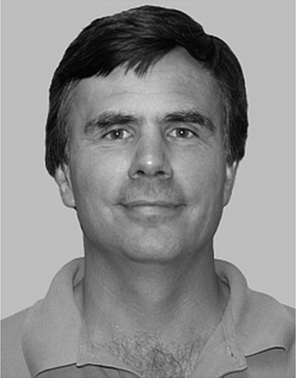 Mark Robinson合作论文数Department of Geological Sciences, Northwestern University3
 Tobias C. Owen合作论文数Institute for Astronomy, University of Hawaii3
 Kaare Aksnes合作论文数3Brian G. Marsden合作论文数3George A. Burba合作论文数3Guy J Consolmagno合作论文数3
 Glenn H Schneider合作论文数Department of Astronomy, The University of Arizona;Steward Observatory, The University of Arizona3Mikhail Ya. Marov合作论文数3Alexi Radovinsky合作论文数2j w fountain合作论文数2
 Joseph Veverka合作论文数Department of Astronomy, The College of Arts & Sciences, Cornell University2
 Dean C. Hines合作论文数Space Science Institute2
 Iwan P Williams合作论文数2Audouin Dollfus合作论文数2Patrick J. Lowrance合作论文数2E. Reese合作论文数2
 Peter Titus合作论文数2
 Marcia J. Rieke合作论文数Department of Astronomy and Steward Observatory, University of Arizona2
 David Koerner合作论文数Department of Physics and Astronomy;Northern Arizona University;Department of Physics and Astronomy, Northern Arizona University2Timothy A. Antaya合作论文数2J. Ellen Blue合作论文数2
 Philip C. Michael合作论文数Plasma Science & Fusion Center, Massachusetts Institute of Technology2R Meier合作论文数1Lx Jia合作论文数1
 Alexey Radovinsky合作论文数1stephen m larson合作论文数1Jennifer S. Blue合作论文数1L. Soderblom合作论文数1Hm Tang合作论文数1Ri Thompson合作论文数1Klaus Biemann合作论文数1V.V. Shevchenko合作论文数1C. Sagan合作论文数1HongPeng Du合作论文数1Gd Vaucouleurs合作论文数1
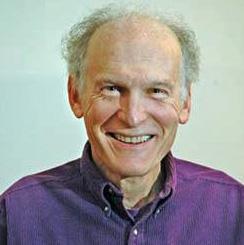 Benjamin Zuckerman合作论文数Division of Astronomy and Astrophysics, University of California, Los Angeles1S Miyamoto合作论文数1
 Steven Larson合作论文数Sloan Kettering Institute, Memorial Sloan Kettering Cancer Center;Department of Medicine, Memorial Sloan Kettering Cancer Center;Weill Cornell Medical College, Cornell University1David Morrison合作论文数1Li Wang (王莉)合作论文数Shanghai Institute of Applied Physics, Chinese Academy of Sciences1
 Klaus Keil合作论文数School of Ocean and Earth Science and Technology, University of Hawai'i at Manoa1Roland Meier合作论文数1
 Rodger I. Thompson合作论文数Astronomy & Steward Observatory, University of Arizona1




