We present a general and intuitive ambiguity model for intersections, junctions and other structures in binary edge images. The model is combined with edge tracing, where edges are ordered sequences of connected pixels. The objective is to provide a versatile preprocessing method for tasks such as figure-ground segmentation, object recognition, topological analysis, etc. By using only a small set of straightforward principles, the results are intuitive to describe. This helps to implement subsequent processing steps, such as resolving ambiguous edge connections at junctions. By using an augmented edge map, neighboring edges can be directly accessed using quick local search operations. The edge tracing uses recursion, which leads to compact programming code. We explain our algorithm using pseudocode, compare it with related methods, and show how simple modular postprocessing steps can be used to optimize the results. The complete algorithm, including all data structures, requires less than 50 lines of pseudocode. We also provide a C++ implementation of our method.
Curvature scale-space (CSS) analysis is an important technique for contour-based object recognition in digital images. To compute the CSS for a given contour, it is systematically convolved (smoothed) with Gaussians with increasing standard deviation. The convolutions are computationally expensive, especially for large and high resolution contours, but can be approximated using box filtering (also known as mean and average filtering). Together with running sums, the convolutions can be accelerated by 2–3 magnitudes without significant loss of precision. Nonetheless, box filtering has not been systematically investigated in connection with CSS computation. In this work, we present a theoretical and experimental analysis of different box-filtering techniques in this context and conclude which is the most efficient implementation. Based on this, the CSS of a contour can be computed in real time with high precision.
The agent’s ability to locate itself in an unfamiliar environment is essential for a reliable navigation. To address this challenge, place recognition methods are widely adopted. A common trend among most of these methods is that they are either tailored to work in specific environments or need prior training overhead [11]. Whereas, others demand extreme computational resources, such as CNN [8]. In this paper, we study the existing GSOM-based place recognition framework [12] and investigate the question of translating the system to other feature spaces, such as HOG, for low-cost place recognition. The experiments performed on four challenging sequences demonstrate the algorithm’s ability to learn the representation of the new feature space without parameter tuning, provided the scaling factor along each dimension of the descriptor is taken into account. This highlights the feature-agnostic characteristic of the algorithm. We further observed that despite the low dimensionality of the HOG descriptor, the algorithm shows comparable place recognition results to the gist features, while offering threefold speed-ups in execution time.
The estimation of optical flow in cases of illumination change, sparsely-textured regions or fast moving objects is a challenging problem. In this paper, we analyze the use of a texture constancy constraint based on local descriptors (i.e., HOG) integrated with the monocular epipolar geometry to estimate robustly optical flow. The framework is implemented in differential data fidelities using a total variation model in a multi-resolution scheme. Besides, we propose an effective method to refine the fundamental matrix along with the estimation of the optical flow. Experimental results based on the challenging KITTI dataset show that the integration of texture constancy constraint with the monocular epipolar line constraint and the enhancement of the fundamental matrix significantly increases the accuracy of the estimated optical flow. Furthermore, a comparison with existing state-of-the-art approaches shows better performance for the proposed approach.
Artificial visual attention has been an active research area for over two decades. Especially, the concept of saliency has been implemented in many different ways. Early approaches aimed at closely modeling saliency processing with concepts from biological attention to provide (at least in the long run) general-purpose attention for technical systems. More recent approaches have departed from this agenda, turning to more specific attention-guided tasks, most notably the accurate extraction of salient objects, for which large-scale ground truth datasets make it possible to quantify progress. While the first type of models is troubled by weak performance in these specific tasks, the second type, as we show with a new benchmark, has lost the ability to predict saliency in the original sense, which may be an important factor for future general-purpose attention systems. Here, we describe a new approach using growing neural gas to obtain pre-attentional structures for a scene at an early processing stage. On this basis, traditional saliency concepts can be applied while at the same time they can be linked to mechanisms that make models successful in salient object detection. The model shows high performance at predicting traditional saliency and makes substantial progress toward salient object detection, although it cannot reach the top-level performance of some specialized methods. We discuss the important implications of our findings.
Optical flow is a key problem in computer vision with tremendous potential applications in many fields, such as action recognition, autonomous navigation and manipulation. In this paper, we propose a dense optical flow estimation approach for objects of interest. In order to improve the accuracy of the optical flow estimation, the intensity and depth data from the RGB-D sensor are used for doing object segmentation. Afterwards, a homography based method assuming the surface to be planar is applied to obtain dense optical flow for each segment. Several experiments have been performed to evaluate the proposed method. The results demonstrate the validity of our approach.
In this paper, a questionnaire-based survey on the use of online videos by undergraduate engineering students for study-related purposes is presented. Over the last few years, a large number of instructional videos has been uploaded to websites such as YouTube. Due to the widespread distribution of high-speed internet connections and (mobile) devices, such as smartphones or laptops, which are nowadays routinely used by students, online videos are also frequently used in higher education. While much research on this subject focuses on Massive Open Online Courses (MOOCs) or flipped classroom approaches, this survey examines use of videos for self-study, complementary to traditional face-to-face courses. Furthermore, we analyze the acceptance of a characteristic video production style, which uses specific 3D animations to clarify complex connections between technical and mathematical aspects. The results indicate extensive use of short videos which address subjects that are particularly difficult for the students. This survey can help educators to develop an impression of current video use by undergraduate engineering students. In this paper, a questionnaire-based survey on the use of online videos by undergraduate engineering students for study-related purposes is presented. Especially over the last few years, a large number of instructional videos has been uploaded to websites such as YouTube. Due to the widespread distribution of high-speed internet connections and (mobile) devices, such as smartphones or laptops, which are nowadays routinely used by students, online videos are also frequently used in higher education. While much research on this subject focuses on Massive Open Online Courses (MOOCs) or flipped classroom approaches, this survey examines usage behavior concerning the apparently much more common use of videos for self-study, complementary to traditional face-to-face courses. Furthermore, we analyze the acceptance of a characteristic video production style using specific 3D animations to clarify complex connections between technical and mathematical aspects. The results indicate that short videos addressing subjects that are particularly difficult for the students are extensively used. Additionally, this survey can help educators to develop a realistic understanding of current video use by undergraduate engineering students.
In this work, an innovative approach for the design and structuring of teaching videos systematically using 3D animations is presented. The approach focuses on the quantitative description of electromagnetic fields and the mathematical methods and competencies required for this purpose, exemplarily with regard to an undergraduate electrical engineering course during the initial phase of corresponding degree programs. An essential part of this course is the spatial and time-dependent description of electromagnetic fields. For this purpose, students have to work with multiple integrals in 3D space and in different coordinate systems. Such subjects are typically covered only later in mathematics courses and without a technical context, therefore leading to major difficulties for many students. The videos presented in this work are intended to support students and lecturers to work with these subjects in an instructive fashion. The 3D animations allow for effectively clarifying complex connections between technical and mathematical aspects. The videos and their specific design are discussed with regard to didactic and technical considerations. Additionally, their integration with existing interventions for the course is described.
There exists ample research exploiting cognitive processes for robot localization and mapping, for instance RatSLAM [10]. In this regard, tasks such as visual perception and recognition, which are primarily governed by visual and perirhinal cortices, receive a little attention. To bridge this gap, we present a novel bio-inspired place recognition front-end for the RatSLAM system. Our algorithm uses Gist features to obtain the perceptual structure of the scenes and employs a modified growing self-organizing map (GSOM) to model the behavior of the cells found in perirhinal cortex, called recency and familiarity neurons [6]. This enables an online learning and recognition of the places without acquiring apriori knowledge of the environment. The experiments carried out on the standard St. Lucia dataset demonstrate that on average our approach achieves almost 10% improvement (in F1-Score); it is able to correctly flag the visited and unvisited places even for noisy and blurred visual inputs. The results show that the proposed method reaches fast convergence and utilizes a smaller number of cells (consumes less physical memory) to represent the traversed path compared to the RatSLAM approach.
Perception is the main key in enabling robots to react to and interact with their environment. Particularly, for multi-floor operations, the robot must robustly detect and localize stairs to allow for safe climbing. In this paper, we develop a graph-based stairway detection method for point cloud data, that can detect a large variety of stairways. Our approach first segments planar regions and extracts the stair tread- and stair riser-shaped segments. With these segments, a dynamic graph model is initialized that is used to detect stairs including the railing system in the surroundings. We show that our system can accurately detect and localize different stairways from a variety of different positions, including descending stairs. Our system's accuracy is higher than those of most state-of-the-art stairway detection methods even in case of sparse point cloud data.
In engineering education, it is beneficial for students to acquire practical experiences with real-world relevance. Although solving engineering problems requires the comprehension of the mathematical backgrounds, many practice-oriented teaching approaches concentrate on the practical engineering part, but neglect the underlying theory. This work combines enhanced theoretical learning with practical experiences through interactive multimedia applications in the context of robotics. It consists of a blended learning scenario which offers at least a threefold benefit: It supports teaching of theoretical and methodological aspects. Required background knowledge in mathematics and physics is directly available. And acquired knowledge can be brought to life by programming tasks and visualizations. Interactive 3D visualizations and web applications illustrate complex technical facts and Matlab or Octave code, respectively, can be executed online for computations and simulations. All offers are accessible 24/7 via web browser without any dependency on additional software. Beside for integration in classroom teaching, the platform can be individually used by students for targeted learning and filling of knowledge gaps. As e-learning platforms are highly accepted by students and have a positive influence on the students’ performance, we expect to enhance our teaching with the new platform providing practical and theoretical offers tightly linked together.
The initial phase of undergraduate engineering degree programmes often comprises courses requiring mathematical expertise which in some cases clearly exceeds school mathematics, but will be imparted only later in mathematics courses. In this article, an approach addressing this challenge by way of example within a fundamentals of electrical engineering course is presented. The concept focuses on gaining specific mathematical knowledge and competencies in the technical context of this course. For this purpose, a complementary blended learning scenario centring around a web-based learning platform and involving an adaptation of the course was developed. The concept particularly considers the heterogeneity of today's student groups and is discussed with regard to related approaches, didactical considerations, and technical implementation. For the interventions, the results of a questionnaire-based evaluation proving students' acceptance and positive influence on examination performance are presented.
This paper addresses a new obstacle avoidance method for mobile robots moving in dense and complex environments. Our approach, named Smooth Closest Gap (SCG) Navigation, builds on the concept of Closest Gap (CG) as a strategy to detect free openings surrounding the robot and select the most promising one to drive through. Obstacle avoidance is performed based on the configuration of obstacles between the current robot location and the selected gap, where all obstacle points are considered to compute the avoidance maneuver and simultaneously drive the robot towards the gap. Moreover, the free area available to maneuver along the desired heading is taken into account. In turn, unnecessary deflections towards free spaces are avoided, the smoothness of the robot's trajectory is improved, and a greater reliability is achieved. The power of the proposed method is demonstrated by experimental results.
Visual attention models are typically based on the concept of saliency, a conspicuity measure which considers features such as color, intensity or orientation. Much current research aims at modeling top-down interactions, which highly influence human attentional behavior. Typically, these are in the form of targets to be searched for or general characteristics (gist) of a scene. In humans, it has been shown that objects that afford actions, for example, graspable objects, strongly attract attention. Here, we integrate an artificial attention framework with a measure of affordances estimated from a sparse 3D scene representation. This work contributes further evidence for human attention being biased toward objects of high affordance, which for the first time is measured in an objective way. Furthermore, it demonstrates that artificial attention systems benefit from affordance estimation for predicting human attention. For technical systems, considering affordances provides mid-level influences that are not too specific or too general, but can guide attention toward potential action targets with respect to a system’s physical capabilities. Finally, the change-detection task we employ for model comparison constitutes a new method to evaluate artificial systems with respect to early human vision in natural scene perception.
In this paper, fast techniques are proposed to achieve real time and robust monocular visual odometry. We apply an iterative 5-point method to estimate instantaneous camera motion parameters in the context of a RANSAC algorithm to cope with outliers efficiently. In our method, landmarks are localized in space using a probabilistic triangulation method utilized to enhance the estimation of the last camera pose. The enhancement is performed by multiple observations of landmarks and minimization of a cost function consisting of epipolar geometry constraints for far landmarks and projective constraints for close landmarks. The performance of the proposed method is demonstrated through application to the challenging KITTI visual odometry dataset.
Affordances, as for example grasping possibilities, are known to play a role in the guidance of human attention but have not been considered in artificial attention systems so far. Extending our earlier work, we investigate the combination of affordance estimation and visual saliency in an artificial visual attention model. Different models based on saliency, affordance estimation, or their combination are suggested and evaluated via their predictions for a change detection task with human observers.
In this paper, we investigate the second order statistics of essential matrix elements. Using the Taylor expansion for a rotation matrix up to second order terms and considering relatively high uncertainties for the rotation angles and translation parameters, a covariance matrix is obtained which includes the second order statistics of essential matrix elements. The covariance matrix is utilized along with the coplanarity equations and acts as a regularization term. Using the regularization term brings considerable improvements in the recovery of camera motion which will be proven based on simulation and different real image sequences.
Mobile robots have to deal with an enormous amount of visual data containing static and dynamic stimuli. Depending on the task, only small portions of a scene are relevant. Artificial attention systems filter information at early stages. Among the various methods proposed to implement such systems, the region-based approach has proven to be robust and especially suited for integrating top-down influences. This concept was recently transferred to the spatiotemporal domain to obtain motion saliency. A full-featured integration of the spatial and spatiotemporal systems is presented here. We propose a biologically inspired two-stream system, which allows to use different spatial and temporal resolutions and to pick off spatiotemporal saliency at early stages. We compare the output to classic models and demonstrate the flexibility of the integrated approach in different experiments. These include online processing of continuous input, a task similar to thumbnail extraction and a top-down task of selecting specific moving and non-moving objects.
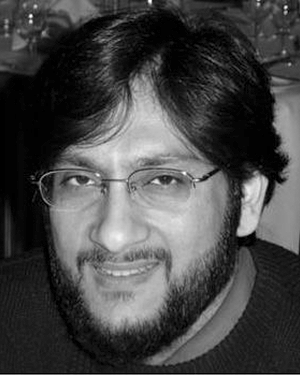 Muhammad Zaheer Aziz合作论文数13
 Andreas Baudry合作论文数8Michael Bungenstock合作论文数8Markus Hennig合作论文数6Georg Hartmann合作论文数6M. Salah Shafik合作论文数6Mohammad Hossein Mirabdollah合作论文数6
 Jan Tunnermann合作论文数Paderborn University5Amin Massad合作论文数5Dirk Fischer合作论文数4Gerriet Backer合作论文数Univ. of Hamburg, Hamburg, Germany
BA¤rbel Mertsching Univ. of Hamburg, Hamburg, Germany
Maik Bollmann PPDC Packet switching systems, Hildesheim, Germany4
Jan Tunnermann合作论文数Paderborn University5Amin Massad合作论文数5Dirk Fischer合作论文数4Gerriet Backer合作论文数Univ. of Hamburg, Hamburg, Germany
BA¤rbel Mertsching Univ. of Hamburg, Hamburg, Germany
Maik Bollmann PPDC Packet switching systems, Hildesheim, Germany4 Maik Bollmann合作论文数4
 Kazmi, S.M.A.M.合作论文数3Aziz, M.Z.合作论文数3Steffen Schmalz合作论文数3Marcus Hund合作论文数3G. Hartmann合作论文数2Daniel Nickchen合作论文数Univ Paderborn, GET Lab, Paderborn, Germany2Kleinmann, L.合作论文数2Babos, M.合作论文数2Muhannad Mujahed合作论文数2
 Matthias Brucke合作论文数2
 Wolfgang Nebel合作论文数Department für Informatik, Carl von Ossietzky, Universitat Oldenburg2Tobias Kotthäuser合作论文数2
 Roland Brockers合作论文数Jet Propulsion Laboratory, California Institute of Technology2Gudrun Oevel合作论文数Department of Mathematics, University of Paderborn2
 Ulrich Bueker合作论文数University of Paderborn;Department of Electrical Engineering2Ralf Stemmer合作论文数2
 Kazunori Ohno (大野和則)合作论文数Human-Robot informatics Laboratory, Tohoku University1Nikolaus Voß合作论文数1Alexander Schwarz合作论文数1Miguel Angel Garcia合作论文数1Satoshi Tadokoro合作论文数1JV Bitterling合作论文数1axel hoppenbrock合作论文数1Shotaro Kojima合作论文数1
 Thomas Westfechtel合作论文数Graduate School of Information Sciences, Tohoku University1
 Ibrahim Elhenawy合作论文数Fac. of CS & IS, Zagazig Univ.;c;Fac. of CS & IS, Zagazig Univ.1Ali, S.I.合作论文数1
 Wail Mustafa合作论文数1
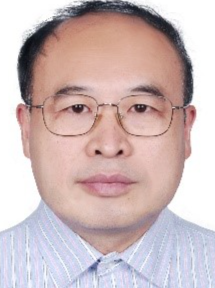 Haiwen Yuan (袁海文)合作论文数School of Automation Science and Electrical Engineering, Beihang University1Lutz Priese合作论文数1
 Jianxun Lv (吕建勋)合作论文数School of Automation Science and Electrical Engineering, Beihang University1Drue, S.合作论文数1
 Sang Hyun Kim合作论文数School of Medicine, Kyungpook National University1Martin Hansen合作论文数1P. Subashini合作论文数1
 Norbert Kruger合作论文数University of Southern Denmark1M. Shafik合作论文数1




