The Space Weather Around Young Suns (SWAYS) program was introduced in I. Davis et al. as a multiwavelength monitoring program for studying the activity and particle environments of nearby, young solar-type stars. The SWAYS program currently includes the Owens Valley Radio Observatory Long Wavelength Array (OVRO-LWA) operating between 13 and 87 MHz to search for stellar equivalents of solar type II and III bursts, which are associated with bulk plasma motion in the corona and interplanetary medium. These observations are accompanied by simultaneous photometric data from the high-precision optical instrument Flarescope to identify associated flare events. These two instruments have collectively acquired nearly 900 hr of data with approximate to 70% overlap between 2023 November through 2024 June, dedicated to six stars. Here, we present the results of this first season of the SWAYS observing campaign, which include a superflare from the star EK Draconis with no accompanying low-frequency particle flux signal. The novelty of the coordination at these specific parts of the spectrum allow us to uniquely evaluate the conditions that may have inhibited a radio detection. We find that the exceptionally hot, dense coronae of incredibly active stars may not be conducive to the development of the instabilities required for type II and III bursts, or else inspire new expectations for when we should expect to observe a signal relative to the time of the flare. This may represent the plasma-density complement to the magnetospheric limitations to observing space-weather signatures at low frequencies.
Low-frequency radio emission in the form of type II and III bursts is a direct indicator of plasma motion in the solar corona and interplanetary medium. However, detecting equivalent events on solar analogs requires thousands of observing hours and complementary multiwavelength observations to constrain the origin of the radio emission. To address this, we have begun the Study of Space Weather Around Young Suns (SWAYS), a multiwavelength program for monitoring space weather around young, solar-type stars. This program currently focuses on five solar-type stars spanning 100–800 Myr in age. It includes a dedicated observing scheme from the recently upgraded Owens Valley Radio Observatory (OVRO) Long Wavelength Array (LWA) operating at 13–86 MHz to search for stellar analogs of solar type II and III bursts. We have built the optical photometry instrument Flarescope to operate simultaneously with OVRO-LWA observations to investigate whether radio bursts are accompanied by magnetic reconnection events. We analyze the performance based on a 1 hr observation of π ^1 UMa, which shows that Flarescope can reach submillimagnitude precision through nondifferential photometry on π ^1 UMa in 60 s integration times when diffusing the light with engineered diffusers. A small field of OVRO-LWA cross-correlated data centered on π ^1 UMa reaches a noise level of 740 mJy at 10 s integration time, consistent with confusion noise. With this precision, we should be able to detect large optical flares and related radio bursts that may indicate accompanying coronal mass ejections and energetic particle events. In this paper, we present the design, framework, and performance of the SWAYS program.
The Laser Interferometer Space Antenna (LISA) mission is being developed by ESA with NASA participation. As it has recently passed the Mission Adoption milestone, models of the instruments and noise performance are becoming more detailed, and likewise prototype data analyses must as well. Assumptions such as Gaussianity, stationarity, and data continuity are unrealistic, and must be replaced with physically motivated data simulations, and data analysis methods adapted to accommodate such likely imperfections. To this end, the LISA Data Challenges have produced datasets featuring time-varying and unequal constellation armlength, and measurement artifacts including data interruptions and instrumental transients. In this work, we assess the impact of these data artifacts on the inference of Galactic Binary and Massive Black Hole properties. Our analysis shows that the treatment of noise transients and gaps is necessary for effective parameter estimation, as they substantially corrupt the analysis if unmitigated. We find that straightforward mitigation techniques can significantly if imperfectly suppress artifacts. For the Galactic Binaries, mitigation of glitches was essentially total, while mitigations of the data gaps increased parameter uncertainty by approximately 10%. For the Massive Black Hole binaries the particularly pernicious glitches resulted in a 30% uncertainty increase after mitigations, while the data gaps can increase parameter uncertainty by up to several times. Critically, this underlines the importance of early detection of transient gravitational waves to ensure they are protected from planned data interruptions.
We present the successful recovery of common envelope ejection efficiency assumed in a simulated population of double white dwarf binaries like those which may be observed by the future LISA mission. We simulate the formation of double white dwarf binaries by using the COSMIC population synthesis code to sample binary formation conditions such as initial mass function, metallicity of star formation, initial orbital period, and initial eccentricity. These binaries are placed in the m12i synthetic Milky-Way-like galaxy, and their signal-to-noise ratio for the LISA instrument is estimated, considering a galactic gravitational wave foreground informed by the population. Through the use of Fisher estimates, we construct a likelihood function for the measurement error of the LISA-bright DWD binaries (> 20 SNR, fGW > 5mHz), in their gravitational wave frequency (fGW) and chirp mass. By repeating this process for different assumptions of the common envelope ejection efficiency, we apply Bayesian hierarchical inference to find the best match to an injected astrophysical assumption for a fiducial population model. We conclude that the impact of common envelope ejection efficiency on the mass transfer processes involved in double white dwarf formation may be statistically relevant in the future observed LISA population, and that constraints on binary formation may be found by comparing simulated populations to a future observed population.
ABSTRACT We explore the eccentricity measurement threshold of Laser Interferometer Space Antenna (LISA) for gravitational waves radiated by massive black hole binaries (MBHBs) with redshifted BH masses Mz in the range 104.5–107.5 M⊙ at redshift z = 1. The eccentricity can be an important tracer of the environment where MBHBs evolve to reach the merger phase. To consider LISA’s motion and apply the time delay interferometry, we employ the lisabeta software and produce year-long eccentric waveforms using the inspiral-only post-Newtonian model taylorf2ecc. We study the minimum measurable eccentricity (emin, defined one year before the merger) analytically by computing matches and Fisher matrices, and numerically via Bayesian inference by varying both intrinsic and extrinsic parameters. We find that emin strongly depends on Mz and weakly on mass ratio and extrinsic parameters. Match-based signal-to-noise ratio criterion suggest that LISA will be able to detect emin ∼ 10−2.5 for lighter systems (Mz ≲ 105.5 M⊙) and ∼10−1.5 for heavier MBHBs with a 90 per cent confidence. Bayesian inference with Fisher initialization and a zero noise realization pushes this limit to emin ∼ 10−2.75 for lower-mass binaries, assuming a <50 per cent relative error. Bayesian inference can recover injected eccentricities of 0.1 and 10−2.75 for a 105 M⊙ system with an ∼10−2 per cent and an ∼10 per cent relative errors, respectively. Stringent Bayesian odds criterion ($\ln {\mathcal {B}}\gt 8$) provides nearly the same inference. Both analytical and numerical methodologies provide almost consistent results for our systems of interest. LISA will launch in a decade, making this study valuable and timely for unlocking the mysteries of the MBHB evolution.
The Transiting Exoplanet Survey Satellite (TESS) mission measured light from stars in ∼85% of the sky throughout its 2 yr primary mission, resulting in millions of TESS 30-minute-cadence light curves to analyze in the search for transiting exoplanets. To search this vast data set, we aim to provide an approach that is computationally efficient, produces accurate predictions, and minimizes the required human search effort. We present a convolutional neural network that we train to identify short-period variables. To make a prediction for a given light curve, our network requires no prior target parameters identified using other methods. Our network performs inference on a TESS 30-minute-cadence light curve in ∼5 ms on a single GPU, enabling large-scale archival searches. We present a collection of 14,156 short-period variables identified by our network. The majority of our identified variables fall into two prominent populations, one of close-orbit main-sequence binaries and another of δ Scuti stars. Our neural network model and related code are additionally provided as open-source code for public use and extension.
Raw space-based gravitational-wave data like LISA's phase measurements are dominated by laser frequency noise. The standard technique to make this data usable for science is time-delay interferometry (TDI), which cancels laser noise terms by forming suitable combinations of delayed measurements. We recently introduced the basic concepts of an alternative approach which, unlike TDI, does not rely on independent knowledge of temporal correlations in the dominant noise. Instead, our automated Principal Component Interferometry (aPCI) processing only assumes that one can produce some linear combinations of the temporally nearby regularly spaced phase measurements, which cancel the laser noise. Then we let the data reveal those combinations. Our previous work relies on the simplifying additional assumption that the filters which lead to the laser-noise-free data streams are time-independent. In LISA, however, these filters will vary as the constellation armlengths evolve. Here, we discuss a generalization of the basic aPCI concept compatible with data dominated by a still unmodeled but slowly varying noise covariance. Despite its independence on any model, aPCI successfully mitigates laser frequency noise below the other noises' level, and its sensitivity to gravitational waves is the same as the state-of-the-art second-generation TDI, up to a 2\% error.
The Lunar Flashlight cubesat mission was designed and flown to collect new data on the abundance and distribution of water ice frost in lunar permanently shadowed regions (PSRs) using active laser spectroscopy. Key advantages of active spectroscopy are that it can collect surface reflectance data in locations and conditions where passive spectroscopy cannot operate, specifically nightside locations where no indirect lighting is available, and in the deepest parts of PSRs where indirect lighting may be too faint for passive spectroscopy. Lunar Flashlight launched in 2022 but because of a propulsion system failure, did not make it to the Moon to conduct its science investigation. However, Lunar Flashlight proved to be an extremely successful technology demonstration mission, meeting or exceeding all its technology-focused mission goals, including demonstrating its instrument functionality. This paper describes the extensive ground and test campaigns to characterize the Lunar Flashlight laser reflectometer instrument and its planned utility for science observations, along with recommendations for future instrument design, development, verification, and use.
The future space-based gravitational wave observatory LISA will consist of a constellation of three spacecraft in a triangular constellation, connected by laser interferometers with 2.5 million-kilometer arms. Among other challenges, the success of the mission strongly depends on the quality of the cancellation of laser frequency noise, whose power lies eight orders of magnitude above the gravitational signal. The standard technique to perform noise removal is time-delay interferometry (TDI). TDI constructs linear combinations of delayed phasemeter measurements tailored to cancel laser noise terms. Previous work has demonstrated the relationship between TDI and principal component analysis (PCA). We build on this idea to develop an extension of TDI based on a model likelihood that directly depends on the phasemeter measurements. Assuming stationary Gaussian noise, we decompose the measurement covariance using PCA in the frequency domain. We obtain a comprehensive and compact framework that we call PCI for "principal component interferometry," and show that it provides an optimal description of the LISA data analysis problem.
With a laser interferometric gravitational-wave detector in separate free flying spacecraft, the only way to achieve detection is to mitigate the dominant noise arising from the frequency fluctuations of the lasers via postprocessing. The noise can be effectively filtered out on the ground through a specific technique called time-delay interferometry (TDI), which relies on the measurements of time delays between spacecraft and careful modeling of how laser noise enters the interferometric data. Recently, this technique has been recast into a matrix-based formalism by several authors, offering a different perspective on TDI, particularly by relating it to principal component analysis (PCA). In this work, we demonstrate that we can cancel laser frequency noise by directly applying PCA to a set of shifted data samples, without any prior knowledge of the relationship between single-link measurements and noise, nor time delays. We show that this fully data-driven algorithm achieves a gravitational-wave sensitivity similar to classic TDI.
Since the very beginning of astronomy the location of objects on the sky has been a fundamental observational quantity that has been taken for granted. While precise two dimensional positional information is easy to obtain for observations in the electromagnetic spectrum, the positional accuracy of current and near future gravitational wave detectors is limited to between tens and hundreds of square degrees, which makes it extremely challenging to identify the host galaxies of gravitational wave events or to detect any electromagnetic counterparts. Gravitational wave observations provide information on source properties that is complementary to the information in any associated electromagnetic emission. Observing systems with multiple messengers thus has scientific potential much greater than the sum of its parts. A gravitational wave detector with higher angular resolution would significantly increase the prospects for finding the hosts of gravitational wave sources and triggering a multi-messenger follow-up campaign. An observatory with arcminute precision or better could be realised within the Voyage 2050 programme by creating a large baseline interferometer array in space and would have transformative scientific potential. Precise positional information of standard sirens would enable precision measurements of cosmological parameters and offer new insights on structure formation; a high angular resolution gravitational wave observatory would allow the detection of a stochastic background and resolution of the anisotropies within it; it would also allow the study of accretion processes around black holes; and it would have tremendous potential for tests of modified gravity and the discovery of physics beyond the Standard Model.
The space-based gravitational wave detector LISA will observe mergers of massive black hole binary systems (MBHBs) to cosmological distances, as well as inspiralling stellar-origin (or stellar-mass) binaries (SBHBs) years before they enter the LIGO/Virgo band. Much remains to be explored for the parameter recovery of both classes of systems. Previous MBHB analyses relied on inspiral-only signals and/or a simplified Fisher matrix analysis, while SBHBs have not yet been extensively analyzed with Bayesian methods. We accelerate likelihood computations by (i) using a Fourier-domain response of the LISA instrument, (ii) using a reduced-order model for non-spinning waveforms that include a merger-ringdown and higher harmonics, (iii) setting the noise realization to zero and computing overlaps in the amplitude/phase representation. We present the first simulations of Bayesian inference for the parameters of massive black hole systems including consistently the merger and ringdown of the signal, as well as higher harmonics. We clarify the roles of LISA response time and frequency dependencies in breaking degeneracies and illustrate how degeneracy breaking unfolds over time. We also find that restricting the merger-dominated signal to its dominant harmonic can make the extrinsic likelihood very degenerate. Including higher harmonics proves to be crucial to break degeneracies and considerably improves the localization of the source, with a surviving bimodality in the sky position. We also present simulations of Bayesian inference for the extrinsic parameters of SBHBs, and show that although unimodal, their posterior distributions can have non-Gaussian features.
Comparable-mass black-hole mergers generically result in moderate to highly spinning holes, whose spacetime curvature will significantly affect nearby matter in observable ways. We investigate how the moderate spin of a postmerger Kerr black hole immersed in a plasma with initially uniform density and uniform magnetic field affects potentially observable accretion rates and energy fluxes. Varying the initial specific internal energy of the plasma over two decades, we find very little change in steady-state mass accretion rate or Poynting luminosity, except at the lowest internal energies, where fluxes do not exhibit steady-state behavior during the simulation timescale. Fixing the internal energy and varying the initial fixed magnetic-field amplitude and orientation, we find that the steady-state Poynting luminosity depends strongly on the initial field angle with respect to the black hole spin axis, while the matter accretion rate is more stable until the field angle exceeds similar to 45 degrees. The protojet formed along the black hole spin axis conforms to a thin, elongated cylinder near the hole, while aligning with the asymptotic magnetic field at large distances.
The Wide-field Infrared Transient Explorer (WINTER) is a 1x1 degree infrared survey telescope under development at MIT and Caltech, and slated for commissioning at Palomar Observatory in 2021. WINTER is a seeing-limited infrared time-domain survey and has two main science goals: (1) the discovery of IR kilonovae and r-process materials from binary neutron star mergers and (2) the study of general IR transients, including supernovae, tidal disruption events, and transiting exoplanets around low mass stars. We plan to meet these science goals with technologies that are relatively new to astrophysical research: hybridized InGaAs sensors as an alternative to traditional, but expensive, HgCdTe arrays and an IR-optimized 1-meter COTS telescope. To mitigate risk, optimize development efforts, and ensure that WINTER meets its science objectives, we use model-based systems engineering (MBSE) techniques commonly featured in aerospace engineering projects. Even as ground-based instrumentation projects grow in complexity, they do not often have the budget for a full-time systems engineer. We present one example of systems engineering for the ground-based WINTER project, featuring software tools that allow students or staff to learn the fundamentals of MBSE and capture the results in a formalized software interface. We focus on the top-level science requirements with a detailed example of how the goal of detecting kilonovae flows down to WINTER's optical design. In particular, we discuss new methods for tolerance simulations, eliminating stray light, and maximizing image quality of a fly's-eye design that slices the telescope's focus onto 6 non-buttable, IR detectors. We also include a discussion of safety constraints for a robotic telescope.
The Zwicky Transient Facility (ZTF) Observing System (OS) is the data collector for the ZTF project to study astrophysical phenomena in the time domain. ZTF OS is based upon the 48-inch aperture Schmidt-type design Samuel Oschin Telescope at the Palomar Observatory in Southern California. It incorporates new telescope aspheric corrector optics, dome and telescope drives, a large-format exposure shutter, a flat-field illumination system, a robotic bandpass filter exchanger, and the key element: a new 47-square-degree, 600 megapixel cryogenic CCD mosaic science camera, along with supporting equipment. The OS collects and delivers digitized survey data to the ZTF Data System (DS). Here, we describe the ZTF OS design, optical implementation, delivered image quality, detector performance, and robotic survey efficiency.
We consider the observation of stellar-mass black holes binaries with the Laser Interferometer Space Antenna (LISA). Preliminary results based on Fisher information matrix analyses have suggested that gravitational waves from those sources could be very sensitive to possible deviations from the theory of general relativity and from the strong equivalence principle during the low-frequency binary inspiral. We perform a full Markov Chain Monte Carlo Bayesian analysis to quantify the sensitivity of these signals to two phenomenological modifications of general relativity, namely a putative gravitational dipole emission and a non-zero mass for the graviton, properly accounting for the detector's response. Moreover, we consider a scenario where those sources could be observed also with Earth-based detectors, which should measure the coalescence time with precision better than $1 \ {\rm ms}$. This constraint on the coalescence time further improves the bounds that we can set on those phenomenological deviations from general relativity. We show that tests of dipole radiation and the graviton's mass should improve respectively by seven and half an order(s) of magnitude over current bounds. Finally, we discuss under which conditions one may claim the detection of a modification to general relativity.
Stellar-mass black hole binaries (SBHBs), like those currently being detected with the ground-based gravitational-wave (GW) observatories LIGO and Virgo, are also an anticipated GW source for LISA. LISA will observe them during the early inspiral stage of evolution; some of them will chirp through the LISA band and reappear some time later in the band of $3^{rd}$ generation ground-based detectors. SBHBs could serve as laboratories for testing the theory of General Relativity and inferring the astrophysical properties of the underlying population. In this study, we assess LISA's ability to infer the parameters of those systems, a crucial first step in understanding and interpreting the observation of those binaries and their use in fundamental physics and astrophysics. We simulate LISA observations for several fiducial sources and perform a full Bayesian analysis. We demonstrate and explain degeneracies in the parameters of some systems. We show that the redshifted chirp mass and the sky location are always very well determined, with typical errors below $10^{-4}$ (fractional) and $0.4 \ {\rm deg^2}$. The luminosity distance to the source is typically measured within $40-60\%$, resulting in a measurement of the chirp mass in the source frame of $\mathcal{O}(1 \%)$. The error on the time to coalescence improves from $\mathcal{O}(1 \ {\rm day})$ to $\mathcal{O}(30 \ {\rm s})$ as we observe the systems closer to their merger. We introduce an augmented Fisher-matrix analysis which gives reliable predictions for the intrinsic parameters compared to the full Bayesian analysis. Finally, we show that combining the use of the long-wavelength approximation for the LISA instrumental response together with the introduction of a degradation function at high frequencies yields reliable results for the posterior distribution when used self-consistently, but not in the analysis of real LISA data.
PALM-3000 (P3K), the second-generation adaptive optics (AO) instrument for the 5.1 meter Hale telescope at Palomar Observatory, was released as a facility class instrument in October 2011 and has since been used on-sky for over 600 nights as a workhorse science instrument and testbed for coronagraph and detector development. In late 2019 P3K underwent a significant upgrade to its wavefront sensor (WFS) arm and real-time control (RTC) system to reinforce its position as a state-of-the-art AO facility and extend its faint-end capability for high-resolution imaging and precision radial velocity follow-up of Kepler and TESS targets. The main features of this upgrade include an EM-CCD WFS camera capable of 3.5 kHz framerates, and an advanced Digital Signal Processor (DSP) based RTC system to replace the aging GPU based system. Similar to the pre-upgrade system, the Shack-Hartmann wavefront sensor supports multiple pupil sampling modes using a motorized lenslet stage. The default sampling mode with 64 x 64 subapertures has been re-commissioned on-sky in late 2019, with a successful return to science observations in November 2019. In 64x mode the upgraded system is already achieving K-band Strehl ratios up to 85% on-sky and can lock on natural guide stars as faint as mV=16. A 16 x 16 subaperture mode is scheduled for on-sky commissioning in Fall 2020 and will extend the system's faint limit even further. Here we present the design and on-sky re-commissioning results of the upgraded system, dubbed P3K-II.
The Wide-Field Infrared Transient Explorer (WINTER) is a new infrared time-domain survey instrument which will be deployed on a dedicated 1 meter robotic telescope at the Palomar Observatory. WINTER will perform a seeing-limited time domain survey of the infrared (IR) sky, with a particular emphasis on identifying r -process material in binary neutron star (BNS) merger remnants detected by LIGO. We describe the scientific goals and survey design of the WINTER instrument. With a dedicated trigger and the ability to map the full LIGO O4 positional error contour in the IR to a distance of 190 Mpc within four hours, WINTER will be a powerful kilonova discovery engine and tool for multi-messenger astrophysics investigations. In addition to follow-up observations of merging binaries, WINTER will facilitate a wide range of time-domain astronomical observations, all the while building up a deep coadded image of the static infrared sky suitable for survey science. WINTER's custom camera features six commercial large-format Indium Gallium Arsenide (InGaAs) sensors and a tiled optical system which covers a <1-square-degree field of view with 90% fill factor. The instrument observes in Y, J and a short-H (Hs) band tuned to the long-wave cutoff of the InGaAs sensors, covering a wavelength range from 0.9 – 1.7 microns. We present the design of the WINTER instrument and current progress towards final integration at the Palomar Observatory and commissioning planned for mid-2021.
The first terrestrial gravitational wave interferometers have dramatically underscored the scientific value of observing the Universe through an entirely different window, and of folding this new channel of information with traditional astronomical data for a multimessenger view. The Laser Interferometer Space Antenna (LISA) will broaden the reach of gravitational wave astronomy by conducting the first survey of the millihertz gravitational wave sky, detecting tens of thousands of individual astrophysical sources ranging from white-dwarf binaries in our own galaxy to mergers of massive black holes at redshifts extending beyond the epoch of reionization. These observations will inform - and transform - our understanding of the end state of stellar evolution, massive black hole birth, and the co-evolution of galaxies and black holes through cosmic time. LISA also has the potential to detect gravitational wave emission from elusive astrophysical sources such as intermediate-mass black holes as well as exotic cosmological sources such as inflationary fields and cosmic string cusps.
 Bernard Kelly合作论文数University of Manchester58Joan Centrella合作论文数47
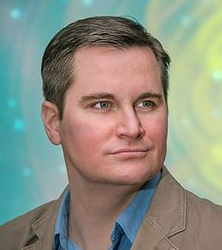 Sean McWilliams合作论文数Center for Gravitational Waves and Cosmology, Department of Physics and Astronomy, Eberly College of Arts & Sciences, West Virginia University41James R. Van Meter合作论文数Gravitational Astrophysics Laboratory;NASA Goddard Space Flight Center;Gravitational Astrophysics Laboratory, NASA Goddard Space Flight Center36
 William Darian Boggs合作论文数24
 Shane L. Larson合作论文数Northwestern University;Clarkson University18
 Neil Cornish合作论文数Department of Physics, College of Letters and Science, Montana State University;eXTreme Gravity Institute, Montana State University16
 Michele Vallisneri合作论文数Department of Physics, ETH Zurich16Dae-Il Choi合作论文数Gravitational Astrophysics Laboratory;NASA Goddard Space Flight Center;Gravitational Astrophysics Laboratory, NASA Goddard Space Flight Center16
 James Ira Thorpe合作论文数15Michael Koppitz合作论文数Max-Planck-Institut fur Gravitationsphysik15
 Curt Cutler合作论文数Jet Propulsion Laboratory, California Institute of Technology14
 Carlos O. Lousto合作论文数Center for Computational Relativity and Gravitation, College of Science, Rochester Institute of Technology14
 Jeremy Schnittman合作论文数Department of Physics;Massachusetts Institute of Technology;Department of Physics, Massachusetts Institute of Technology13
 Stanislav Babak合作论文数Astroparticule et Cosmologie13
 Jacob Slutsky合作论文数NASA Goddard Space Flight Center12
 Keith Arnaud合作论文数Department of Astronomy, University of Maryland;Goddard Space Flight Center, National Aeronautics and Space Administration12
 Manuela Campanelli合作论文数School of Mathematical Sciences, College of Science, Rochester Institute of Technology12
 Alberto Vecchio合作论文数School of Physics and Astronomy, University of Birmingham11
 Alessandra Buonanno合作论文数Max Planck Institute for Gravitational Physics;Department of Physics, University of Maryland, College Park;Humboldt University;Potsdam University10
 Éric Plagnol合作论文数Laboratoire Astroparticule et Cosmologie10james r vanmeter合作论文数9
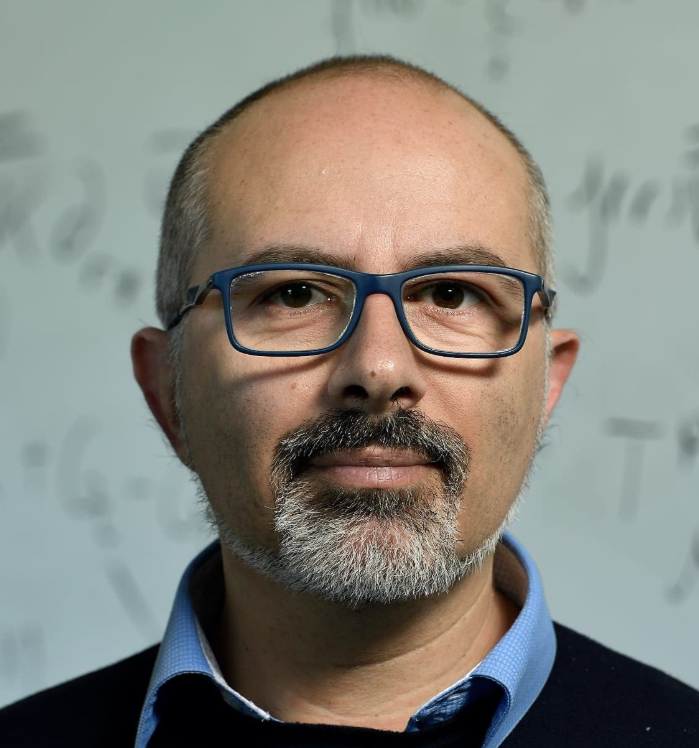 Emanuele Berti合作论文数William H. Miller III Department of Physics & Astronomy, Krieger School of Arts & Sciences, Johns Hopkins University9
 John K. Ziemer合作论文数Jet Propulsion Laboratory;California Institute of Technology;Jet Propulsion Laboratory, California Institute of Technology9
 John W Conklin合作论文数Department of Mechanical and Aerospace Engineering, University of Florida9
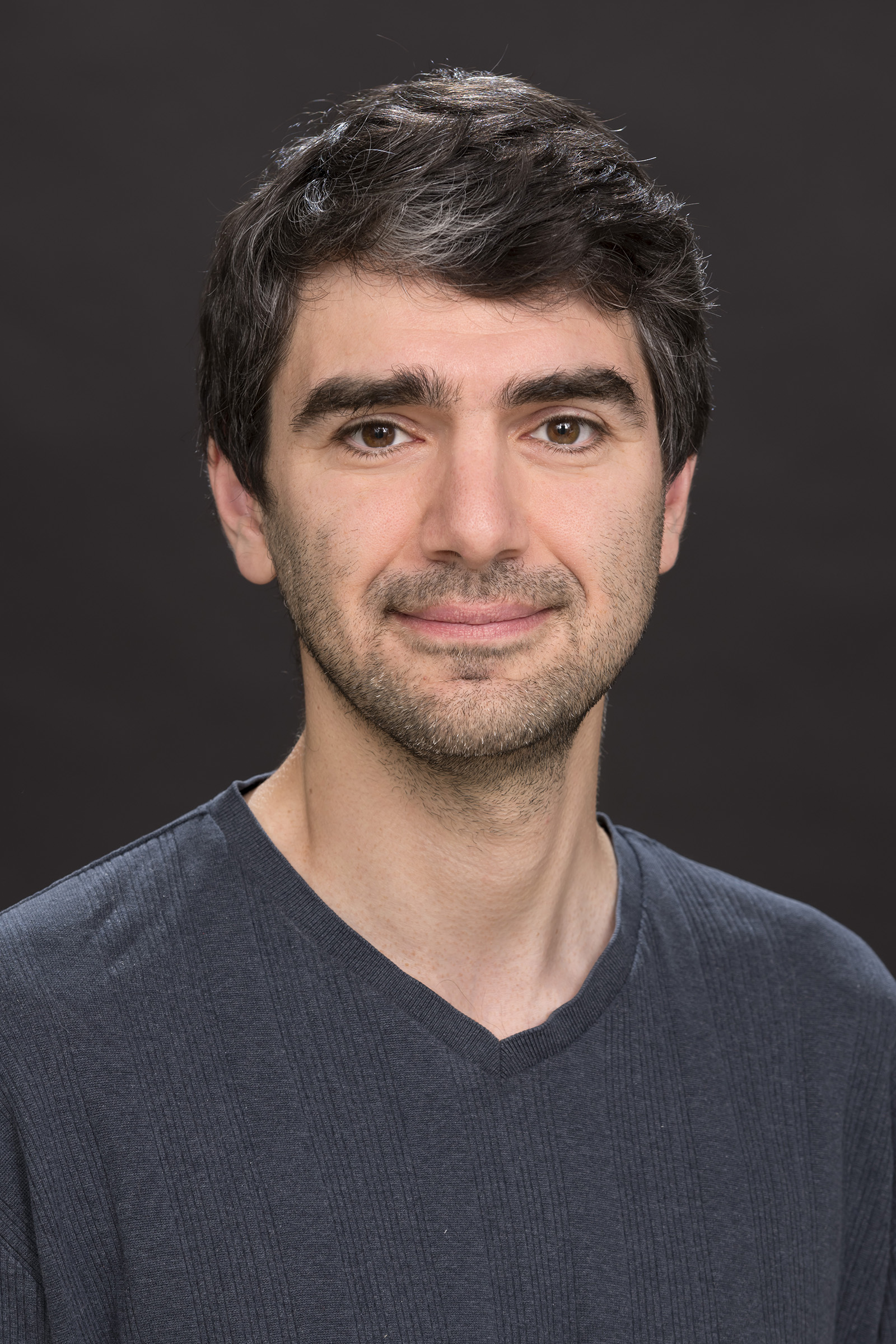 Ilya Mandel合作论文数School of Physics and Astronomy, Monash University9
 Guido Mueller合作论文数Department of Physics, College of Liberal Arts and Sciences, University of Florida9
 Jordan Camp合作论文数Astrophysics Science Division, Goddard Space Flight Center, NASA9Ira Thorpe合作论文数8
 Tyson Littenberg合作论文数NASA Marshall Space Flight Center8
 Peter James Wass合作论文数Department of Mechanical and Aerospace Engineering, Herbert Wertheim College of Engineering, University of Florida8
 Kelly Holley-Bockelmann合作论文数Department of Physics and Astronomy, Vanderbilt University8
 Deirdre M Shoemaker合作论文数Department of Physics, College of Natural Sciences, University of Texas at Austin7
 Bruno Giacomazzo合作论文数7
 Quentin Baghi合作论文数IRFU, Univ Paris Saclay7
 John T. Whelan合作论文数Center for Computational Relativity and Gravitation, College of Science, Rochester Institute of Technology;School of Mathematical Sciences, College of Science, Rochester Institute of Technology7
 B. S. Sathyaprakash合作论文数Department of Physics, Eberly College of Science, Pennsylvania State University;Department of Astronomy and Astrophysics, Eberly College of Science, Pennsylvania State University7
 Cole Miller合作论文数Department of Astronomy, University of Maryland7
 Edward K. Porter合作论文数Astroparticule et Cosmologie Laboratory;CNRS6gerard auger合作论文数6
 Andrzej Królak合作论文数Foundation for Development of Polish Mathematics6Natalia Korsakova合作论文数University of Glasgow6
 John Veitch合作论文数Institute for Gravitational Research, School of Physics and Astronomy, University of Glasgow6
 Joey Shapiro Key合作论文数Department of Physics;Montana State University;Department of Physics, Montana State University6Jeff Crowder合作论文数6
 Yosef Zlochower合作论文数School of Physics and Astronomy, College of Science, Rochester Institute of Technology;Center for Computational Relativity and Gravitation, Rochester Institute of Technology6
 Sylvain Marsat合作论文数Faculté de Sciences;Economiques et Gestion;Centre de Recherche en Sciences;Faculté de Sciences|Economiques et Gestion|Centre de Recherche en Sciences6Matthew Benacquista合作论文数6
 Pablo Laguna合作论文数Department of Physics, The University of Texas at Austin;Oden Institute, The University of Texas at Austin;School of Physics, College of Sciences, Georgia Institute of Technology6




