The Guaymas Basin in the Gulf of California is characterized by active seafloor spreading, hydrothermal activity, and organic matter accumulation on the seafloor due to high sedimentation rates. In the hydrothermal sediments of Guaymas Basin, microbial community compositions and coexistence patterns change across steep gradients of temperature, potential carbon sources, and electron acceptors. Nonmetric multidimensional scaling and guanine-cytosine percentage analyses reveal that the bacterial and archaeal communities adjust compositionally to their local temperature regime. Functional inference using PICRUSt shows that microbial communities consistently maintain their predicted biogeochemical functions in different sediments. Phylogenetic profiling shows that microbial communities retain distinct sulfate-reducing, methane-oxidizing, or heterotrophic lineages within specific temperature windows. The preservation of similar biogeochemical functions across microbial lineages with different temperature adaptations stabilizes the hydrothermal microbial community in a highly dynamic environment. IMPORTANCE Hydrothermal vent sites have been widely studied to investigate novel bacteria and archaea that are adapted to these extreme environments. However, community-level analyses of hydrothermal microbial ecosystems look beyond the presence and activity of particular types of microbes and examine to what extent the entire community of bacteria and archaea is adapted to hydrothermal conditions; these include elevated temperatures, hydrothermally generated carbon sources, and inorganic electron donors and acceptors that are characteristic for hydrothermal environments. In our case study of bacterial and archaeal communities in hydrothermal sediments of Guaymas Basin, we found that sequence-inferred microbial function was maintained in differently structured bacterial and archaeal communities across different samples and thermal regimes. The resulting preservation of biogeochemical functions across thermal gradients is an important factor in explaining the consistency of the microbial core community in the dynamic sedimentary environment of Guaymas Basin.
Until recently, the cellular envelopes of bacteria were regarded as static and rigid relative to those of eukaryotes. While investigating peptidoglycan synthesis in populations of giant sulfur bacteria, Candidatus Thiomargarita spp., we observed internal vesicle-like features (VLFs). VLFs, as imaged following the active incorporation of D-amino acids, appear to begin as invaginations and delaminations of the cellular envelope. Staining with wheat germ agglutinin confirmed the presence of peptidoglycan in VLFs, while polymyxin B revealed that the outer membrane is present in some VLFs. Transmission electron microscopy revealed a complex network of interconnected VLFs. Genomes of Ca . Thiomargarita nelsonii lack a canonical divisome, while possessing homologs to genes such as actin, membrane scaffolding proteins, and dynamins that are associated with phagocytosis in eukaryotes. The physiological role of VLFs remains unclear, but the presence of sulfur globules in some suggests compartmentalization of metabolism and energy production. This is the first report of peptidoglycan and outer membrane bound intracellular vesicles within prokaryotic cells. These findings transform the canonical view of the inflexible bacterial cell envelope and further narrow the divide between prokaryotes and eukaryotes. ### Competing Interest Statement The authors have declared no competing interest.
Cold seeps and hydrothermal vents are seafloor habitats fueled by subsurface energy sources. Both habitat types coexist in Guaymas Basin in the Gulf of California, providing an opportunity to compare microbial communities with distinct physiologies adapted to different thermal regimes. Hydrothermally active sites in the southern Guaymas Basin axial valley, and cold seep sites at Octopus Mound, a carbonate mound with abundant methanotrophic cold seep fauna at the Central Seep location on the northern off-axis flanking regions, show consistent geochemical and microbial differences between hot, temperate, cold seep, and background sites. The changing microbial actors include autotrophic and heterotrophic bacterial and archaeal lineages that catalyze sulfur, nitrogen, and methane cycling, organic matter degradation, and hydrocarbon oxidation. Thermal, biogeochemical, and microbiological characteristics of the sampling locations indicate that sediment thermal regime and seep-derived or hydrothermal energy sources structure the microbial communities at the sediment surface.
Temperature and bioavailable energy control the distribution of life on Earth, and interact with each other due to the dependency of biological energy requirements on temperature. Here we analyze how temperature-energy interactions structure sediment microbial communities in two hydrothermally active areas of Guaymas Basin. Sites from one area experience advective input of thermogenically produced electron donors by seepage from deeper layers, whereas sites from the other area are diffusion-dominated and electron donor-depleted. In both locations, Archaea dominate at temperatures >45 °C and Bacteria at temperatures <10 °C. Yet, at the phylum level and below, there are clear differences. Hot seep sites have high proportions of typical hydrothermal vent and hot spring taxa. By contrast, high-temperature sites without seepage harbor mainly novel taxa belonging to phyla that are widespread in cold subseafloor sediment. Our results suggest that in hydrothermal sediments temperature determines domain-level dominance, whereas temperature-energy interactions structure microbial communities at the phylum-level and below.
We studied the growth of giant filamentous sulfur oxidizing bacteria of the family Beggiatoaceae collected from a hydrothermal seep area in the Guaymas Basin. We measured the incorporation of 14C-bicarbonate tracer into individual filaments using a microimager that allows quantitative determination of the distribution of radioisotopes with 20 µm resolution. Filaments incorporated label along their entire length; thus growth occurred uniformly throughout these whole filaments and not only at their tips. Uptake of 14C-bicarbonate was strongly stimulated by reducing the pH from 8.2, the value near the sediment surface, to 7.05, as found within 1–2 mm below the surface; the presence of oxygen or sulfide had no effect. Thus, Beggiatoaceae strongly prefer assimilation of CO2 over other DIC species. In consequence, migration of these motile filaments into deeper sediments, where sharply decreasing pH increases the availability of CO2, will favor cell growth. Genomic evidence was found for periplasmic carbonic anhydrases, indicative of the carbon concentration mechanism.
Orange filamentous Beggiatoaceae form massive microbial mats on hydrothermal sediments in Guaymas Basin; these bacteria are considered to oxidize sulfide with nitrate and nitrite as electron acceptors. From a previously analyzed genome of an orange Beggiatoaceae filament, three candidate genes for enzymes with nitrite-reducing function - an orange octaheme cytochrome, a nirS nitrite reductase, and a nitrite/tetrathionate-reducing octaheme cytochrome - were cloned and expressed in Escherichia coli. The expressed and purified orange cytochrome showed reduced nitrite-reducing activity compared to the multifunctional native protein obtained from microbial mats. The nirS gene product showed in vitro but no in-gel nitrite-reducing activity; and the nitrite/tetrathionate-reducing octaheme cytochrome was capable of reducing both nitrite and tetrathionate in vitro. Phylogenetic analysis shows that the orange Beggiatoaceae nirS, in contrast to the other candidate nitrite reductases, does not form monophyletic lineages with its counterparts in other large sulfur-oxidizing bacteria, and most likely represents a recent acquisition by lateral gene transfer. The nitrite/tetrathionate-reducing enzyme of the orange Beggiatoaceae is related to nitrite- and tetrathionate reductases harbored predominantly by Gammaproteobacteria, including obligate endosymbionts of hydrothermal vent tubeworms. Thus, the orange Guaymas Basin Beggiatoaceae have a repertoire of at least three different functional enzymes for nitrite reduction. By demonstrating the unusual diversity of enzymes with a potential role in nitrite reduction, we show that bacteria in highly dynamic, sulfide-rich hydrothermal vent habitats adapt to these conditions that usually prohibit nitrate and nitrite reduction. In the case of the orange Guaymas Beggiatoaceae, classical denitrification appears to be replaced by different multifunctional enzymes for nitrite and tetrathionate reduction; the resulting ecophysiological flexibility provides a new key to the dominance of these Beggiatoaceae in hydrothermal hot spots.
Whether large sulfur bacteria of the family Beggiatoaceae reduce NO 3 − to N 2 via denitrification or to NH 4 + via DNRA has been debated in the literature for more than 25 years. We resolve this debate by showing that certain members of the Beggiatoaceae use both metabolic pathways. This is important for the ecological role of these bacteria, as N 2 production removes bioavailable nitrogen from the ecosystem, whereas NH 4 + production retains it. For this reason, the topic of environmental controls on the competition for NO 3 − between N 2 -producing and NH 4 + -producing bacteria is of great scientific interest. Recent experiments on the competition between these two types of microorganisms have demonstrated that the balance between electron donor and electron acceptor availability strongly influences the end product of NO 3 − reduction. Our results suggest that this is also the case at the even more fundamental level of enzyme system regulation within a single organism.
The hydrothermal sediments of Guaymas Basin, an active spreading center in the Gulf of California (Mexico), are rich in porewater methane, short-chain alkanes, sulfate and sulfide, and provide a model system to explore habitat preferences of microorganisms, including sulfate-dependent, methane- and short chain alkane-oxidizing microbial communities. In this study, sediments (above 60˚C) covered with sulfur-oxidizing microbial mats surrounding a hydrothermal mound (termed Mat Mound) were characterized by porewater geochemistry of methane, C2-C6 short-chain alkanes, sulfate, sulfide, sulfate reduction rate measurements, in-situ temperature gradients, bacterial and archaeal 16S rRNA gene clone libraries and V6 tag pyrosequencing. The most abundantly detected groups in the Mat mound sediments include anaerobic methane-oxidizing archaea of the ANME-1 lineage and its sister clade ANME-1Guaymas, the uncultured bacterial groups SEEP-SRB2 within the Deltaproteobacteria and the separately branching HotSeep-1 Group; these uncultured bacteria are candidates for sulfate-reducing alkane oxidation and for sulfate-reducing syntrophy with ANME archaea. The archaeal dataset indicates distinct habitat preferences for ANME-1, ANME-1-Guaymas and ANME-2 archaea in Guaymas Basin hydrothermal sediments. The bacterial groups SEEP-SRB2 and HotSeep-1 co-occur with ANME-1 and ANME-1Guaymas in hydrothermally active sediments underneath microbial mats in Guaymas Basin. We propose the working hypothesis that this mixed bacterial and archaeal community catalyzes the oxidation of both methane and short-chain alkanes, and constitutes a microbial community signature that is characteristic for hydrothermal and/or cold seep sediments containing both substrates.
Deep-sea hypersaline anoxic basins and other hypersaline environments contain abundant and diverse microbial life that has adapted to these extreme conditions. The bacterial Candidate Division KB1 represents one of several uncultured groups that have been consistently observed in hypersaline microbial diversity studies. Here we report the phylogeography of KB1, its phylogenetic relationships to Candidate Division OP1 Bacteria, and its potential metabolic and osmotic stress adaptations based on a partial single cell amplified genome of KB1 from Orca Basin, the largest hypersaline seafloor brine basin in the Gulf of Mexico. Our results are consistent with the hypothesis - previously developed based on (14)C incorporation experiments with mixed-species enrichments from Mediterranean seafloor brines - that KB1 has adapted its proteins to elevated intracellular salinity, but at the same time KB1 apparently imports glycine betaine; this compatible solute is potentially not limited to osmoregulation but could also serve as a carbon and energy source.
For multidomain proteins, evolutionary changes may occur at the domain as well as the whole-protein level. An example is presented here, with suggestions for how such complicated relationships might be visualized. Earlier analysis of the Candidatus Maribeggiatoa str. Orange Guaymas (BOGUAY; Gammaproteobacteria) single-filament draft genome found evidence of gene exchange with the phylogenetically distant Cyanobacteria, particularly for sensory and signal transduction proteins. Because these are modular proteins, known to undergo frequent duplication, domain swapping, and horizontal gene transfer, a single domain was chosen for analysis. Recognition (REC) domains are short (~125 amino acids) and well conserved, simplifying sequence alignments and phylogenetic calculations. Over 100 of these were identified in the BOGUAY genome and found to have a wide range of inferred phylogenetic relationships. Two sets were chosen here for detailed study. One set of four BOGUAY ORFs has closest relatives among other Beggiatoaceae and Cyanobacteria. A second set of four has REC domains with more mixed affiliations, including other Beggiatoaceae, several sulfate-reducing Deltaproteobacteria and Firmicutes, magnetotactic Nitrospirae, one Shewanella and one Ferrimonas strain (both Gammaproteobacteria), and numerous Vibrio vulnificus and V. navarrensis strains (also Gammaproteobacteria). For an overview of the possible origins of the whole proteins and the surrounding genomic regions, color-coded BLASTP results were produced and displayed against cartoons showing protein domain structure of predicted genes. This is suggested as a visualization method for investigation of possible horizontally transferred regions, giving more detail than scans of DNA composition and codon usage but much faster than carrying out full phylogenetic analyses for multiple proteins. As expected, most of the predicted sensor histidine kinases investigated have two or more segments with distinct BLASTP affiliations. For the first set of BOGUAY ORFs, the flanking regions were also examined, and the results suggest they are embedded in genomic stretches with complex histories. An automated method of creating such visualizations could be generally useful; a wish list for its features is given.
A major fraction of the petroleum hydrocarbons discharged during the 2010 Macondo oil spill became associated with and sank to the seafloor as marine snow flocs. This sedimentation pulse induced the development of distinct bacterial communities. Between May 2010 and July 2011, full-length 16S rRNA gene clone libraries demonstrated bacterial community succession in oil-polluted sediment samples near the wellhead area. Libraries from early May 2010, before the sedimentation event, served as the baseline control. Freshly deposited oil-derived marine snow was collected on the surface of sediment cores in September 2010, and was characterized by abundantly detected members of the marine Roseobacter cluster within the Alphaproteobacteria. Samples collected in mid-October 2010 closest to the wellhead contained members of the sulfate-reducing, anaerobic bacterial families Desulfobacteraceae and Desulfobulbaceae within the Deltaproteobacteria, suggesting that the oil-derived sedimentation pulse triggered bacterial oxygen consumption and created patchy anaerobic microniches that favored sulfate-reducing bacteria. Phylotypes of the polycyclic aromatic hydrocarbon-degrading genus Cycloclasticus, previously found both in surface oil slicks and the deep hydrocarbon plume, were also found in oil-derived marine snow flocs sedimenting on the seafloor in September 2010, and in surficial sediments collected in October and November 2010, but not in any of the control samples. Due to the relative recalcitrance and stability of polycyclic aromatic compounds, Cycloclasticus represents the most persistent microbial marker of seafloor hydrocarbon deposition that we could identify in this dataset. The bacterial imprint of the DWH oil spill had diminished in late November 2010, when the bacterial communities in oil-impacted sediment samples collected near the Macondo wellhead began to resemble their pre-spill counterparts and spatial controls. Samples collected in summer of 2011 did not show a consistent bacterial community signature, suggesting that the bacterial community was no longer shaped by the DWH fallout of oil-derived marine snow, but instead by location-specific and seasonal factors.
The hydrothermal mats, mounds, and chimneys of the southern Guaymas Basin are the surface expression of complex subsurface hydrothermal circulation patterns. In this overview, we document the most frequently visited features of this hydrothermal area with photographs, temperature measurements, and selected geochemical data; many of these distinct habitats await characterization of their microbial communities and activities. Microprofiler deployments on microbial mats and hydrothermal sediments show their steep geochemical and thermal gradients at millimeter-scale vertical resolution. Mapping these hydrothermal features and sampling locations within the southern Guaymas Basin suggest linkages to underlying shallow sills and heat flow gradients. Recognizing the inherent spatial limitations of much current Guaymas Basin sampling calls for comprehensive surveys of the wider spreading region.
Pe.tro.to' ga . Gr. and L. fem. n. petra rock, stone; L. fem. n. toga Roman outer garment; M.L. fem. n. Petrotoga the stone outer garment. Thermotogae / Thermotogae / Thermotogales / Thermotogaceae / Petrotoga Rods 1–50 × 0.5–1.5 μm surrounded by an outer sheath‐like structure which is clearly visible under phase microscopy . The cells frequently appear singly, in pairs, or in chains within the sheath. They are Gram‐negative fermentative bacteria and strictly anaerobic . The cultures remain viable for up to six months when stored at 4°C, even after the medium becomes oxidized. Colonies are circular, convex, with entire margins and whitish in color. Cells are sensitive to rifampicin. Growth occurs at pH 5.5–9.0 with an optimum of 6.5–7.0 and at 0.5–10.0 % NaCl with an optimum of around 2.0–4.0%. No growth occurs at 0.05% and 12.5% NaCl. They are moderately thermophilic , with growth occurring at 35–65°C (optimum around 55–60°C). Endospores are not formed. Yeast extract is required for growth in culture. The cells are able to reduce S 0 to hydrogen sulfide . The mol % G + C of the DNA is : 32.0–34.2. Type species : Petrotoga miotherma Davey, Wood, Key, Nakamura and Stahl 1993b, 864 (Effective publication: Davey, Wood, Key, Nakamura and Stahl 1993a, 199.)
The genome sequences of several giant marine sulfur-oxidizing bacteria present evidence of a possible post-transcriptional regulatory network that may have been transmitted to or from two distantly related bacteria lineages. The draft genome of a Cand. "Maribeggiatoa" filament from the Guaymas Basin (Gulf of California, Mexico) seafloor contains 169 sets of TAACTGA direct repeats and one indirect repeat, with two to six copies per set. Related heptamers are rarely or never found as direct repeats. TAACTGA direct repeats are also found in some other Beggiatoaceae, Thiocystis violascens, a range of Cyanobacteria, and five Bacteroidetes. This phylogenetic distribution suggests they may have been transmitted horizontally, but no mechanism is evident. There is no correlation between total TAACTGA occurrences and repeats per genome. In most species the repeat units are relatively short, but longer arrays of up to 43 copies are found in several Bacteroidetes and Cyanobacteria. The majority of TAACTGA repeats in the Cand. "Maribeggiatoa" Orange Guaymas (BOGUAY) genome are within several nucleotides upstream of a putative start codon, suggesting they may be binding sites for a post-transcriptional regulator. Candidates include members of the ribosomal protein S1, Csp (cold shock protein), and Csr (carbon storage regulator) families. No pattern was evident in the predicted functions of the open reading frames (ORFs) downstream of repeats, but some encode presumably essential products such as ribosomal proteins. Among these is an ORF encoding a possible alternate or modified RNA polymerase beta prime subunit, predicted to have the expected subunit interaction domains but lacking most catalytic residues. A similar ORF was found in the Thioploca ingrica draft genome, but in no others. In both species they are immediately upstream of putative sensor kinase genes with nearly identical domain structures. In the marine Beggiatoaceae, a role for the TAACTGA repeats in translational regulation is suggested. More speculatively, the putative alternate RNA polymerase subunit could be a negative transcriptional regulator.
Environmental MicrobiologyVolume 16, Issue 8 p. 2353-2356 Highlight Click-chemistry tagging of proteins in living cells: new possibilities for microbial (meta) proteomics Barbara J. MacGregor, Corresponding Author Barbara J. MacGregor Department of Marine Sciences, University of North Carolina, Chapel Hill, NC, 27599 USAFor correspondence. E-mail bmacgreg@unc.edu; Tel. +1 (919) 260 6038; Fax +1 (919) 962 1254.Search for more papers by this author Barbara J. MacGregor, Corresponding Author Barbara J. MacGregor Department of Marine Sciences, University of North Carolina, Chapel Hill, NC, 27599 USAFor correspondence. E-mail bmacgreg@unc.edu; Tel. +1 (919) 260 6038; Fax +1 (919) 962 1254.Search for more papers by this author First published: 15 July 2014 https://doi.org/10.1111/1462-2920.12540Read the full textAboutPDF ToolsRequest permissionExport citationAdd to favoritesTrack citation ShareShare Give accessShare full text accessShare full-text accessPlease review our Terms and Conditions of Use and check box below to share full-text version of article.I have read and accept the Wiley Online Library Terms and Conditions of UseShareable LinkUse the link below to share a full-text version of this article with your friends and colleagues. Learn more.Copy URL Share a linkShare onFacebookTwitterLinkedInRedditWechat Volume16, Issue8August 2014Pages 2353-2356 RelatedInformation
Abstract : Our overall goals were to identify RDX-degrading bacteria in plant rhizospheres, discover the factors that control their abundance and diversity, and develop probes that can be used in the field to detect them. We suggest that important controlling variables in determining RDX persistence in soil are carbon and nitrogen availability. This implies that soil bacteria do not effectively degrade energetic materials in situ unless they are associated with a carbon-rich environment that selects for populations active in either direct or cometabolic degradation of RDX. Further, we expected that activity of RDX-degrading bacteria would be favored by specific carbon sources in the root exudate spectrum, allowing the rhizosphere to be manipulated to enhance populations of RDX-degrading bacteria.
We compared the function and composition of free-living and particle-associated microbial communities at an inshore site in coastal North Carolina and across a depth profile on the Blake Ridge (offshore). Hydrolysis rates of six different polysaccharide substrates were compared for particle-associated (>3 μm) and free-living (<3 to 0.2 μm) microbial communities. The 16S rRNA- and rDNA-based clone libraries were produced from the same filters used to measure hydrolysis rates. Particle-associated and free-living communities resembled one another; they also showed similar enzymatic hydrolysis rates and substrate preferences. All six polysaccharides were hydrolyzed inshore. Offshore, only a subset was hydrolyzed in surface water and at depths of 146 and 505 m; just three polysaccharides were hydrolyzed at 505 m. The spectrum of bacterial taxa changed more subtly between inshore and offshore surface waters, but changed greatly with depth offshore. None of the OTUs occurred at all sites: 27 out of the 28 major OTUs defined in this study were found either exclusively in a surface or in a mid-depth/bottom water sample. This distinction was evident with both 16S rRNA and rDNA analyses. At the offshore site, despite the low community overlap, bacterial communities maintained a degree of functional redundancy on the whole bacterial community level with respect to hydrolysis of high-molecular-weight substrates.
 David A. Stahl合作论文数Microbial Ecology Lab, Department of Civil and Environmental Engineering, College of Engineering, University of Washington;Department of Microbiology, University of Washington18
 Andreas Teske合作论文数Department of Earth, Marine and Environmental Sciences, College of Art And Sciences, University of North Carolina at Chapel Hill18
 Duane P Moser合作论文数Center for Great Lakes Studies;University of Wisconsin—Milwaukee;Center for Great Lakes Studies, University of Wisconsin—Milwaukee9
 Ken Nealson合作论文数Impossible Mining8
 Jennifer F. Biddle合作论文数School of Marine Science and Policy, College of Earth, Ocean and Environment, University of Delaware6
 Rudolf Amann合作论文数Department of Molecular Ecology, Max Planck Institute for Marine Microbiology;University of Bremen6
 Howard Mendlovitz合作论文数5
 Timothy J. Donohue合作论文数Department of Bacteriology, College of Agricultural and Life Sciences, University of Wisconsin-Madison5
 Luke J. McKay合作论文数5
 Karen Lloyd合作论文数Department of Microbiology, University of Tennessee4
 Dirk De Beer合作论文数Microsensor Group, Max Planck Insttute for Marine Microbiology4Daniel B. Albert合作论文数4Daniel Hoer合作论文数3
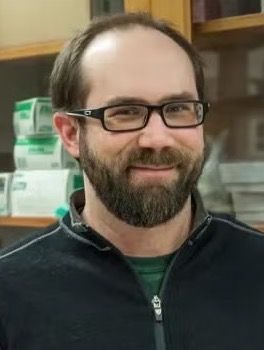 Brett Baker合作论文数Department of Marine Science, College of Natural Sciences, University of Texas at Austin3
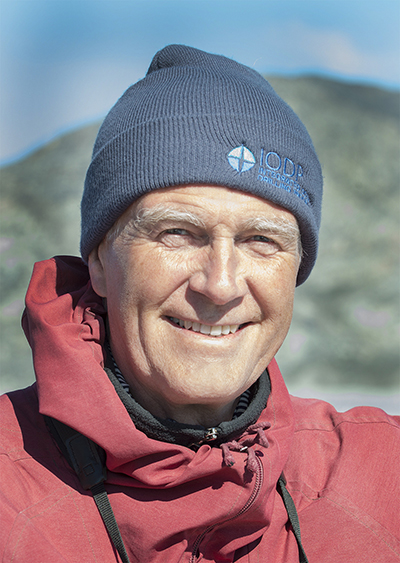 Bo Barker Jørgensen合作论文数Department of Biology, Aarhus University3
 Elizabeth W. Alm合作论文数Biology Department, Central Michigan University3
 H. T. S. Boschker合作论文数3
 Marcel Kuypers合作论文数Department of Biogeochemistry, Max Planck Institute for Marine Microbiology3David J. Hollander合作论文数College of Marine Science, University of South Florida3
 Kai Uwe Hinrichs合作论文数Department of Geosciences, University of Bremen3
 Samantha (Mandy) Joye合作论文数Department of Marine Sciences, Franklin College of Arts and Sciences, University of Georgia3Richard Sharp合作论文数2JP BRANDNER合作论文数2
 Brian Boston合作论文数Lamont Doherty Geol Observ, Columbia Univ2
 Niculina Musat合作论文数UFZ Helmholtz Ctr Environm Res, Dept Isotope Biogeochem, Permoserstr 15, D-04318 Leipzig, Germany2
 Mark Lever合作论文数The University of Texas at Austin;Center for Geomicrobiology, Aarhus University2Flood Beverly E合作论文数2
 Davey Mary E合作论文数Department of Oral Biology, University of Florida2
 S. Emil Ruff合作论文数HGF MPG Group for Deep Sea Ecology and Technology, Max Planck Institute for Marine Microbiology;Department of Molecular Ecology, Max Planck Institute for Marine Microbiology;Max Planck Institute for Marine Microbiology, Max Planck Institute for Marine Microbiology2Miyatake Tetsuro合作论文数2
 David C. White合作论文数Center for Environmental Biotechnology Medical Center2
 Erko Stackebrandt合作论文数Leibniz-Institut DSMZ-Deutsche Sammlung von Mikroorganismen und Zellkulturen GmbH2
 Michael Wagner合作论文数Division of Microbial Ecology, Centre for Microbiology and Environmental Systems Science, University of Vienna;Aalborg University2
 Ann G. Matthysse合作论文数Department of Biology, College of Arts and Sciences, The University of North Carolina at Chapel Hill2
 Garrett Ito合作论文数Department of Geology and Geophysics, University of Hawai'i at Mānoa2
 Donna J. Shillington合作论文数National Oceanography Centre, Southampton, UK2
 Robert A. Dunn合作论文数University of Florida Entomology-Nematology Department, IFAS2
 Paul Wessel合作论文数Department of Earth Sciences, School of Ocean and Earth Science and Technology, University of Hawai'i at Manoa2
 Benjamin A. S. Van Mooy合作论文数Department of Marine Chemistry and Geochemistry, Woods Hole Oceanographic Institution2Anna-Louise Reysenbach合作论文数Department of Biology;Portland State University2
 Charles A Schutte合作论文数Department of Marine Sciences, University of Georgia2Milton J. Allison合作论文数2
 Jake Bailey合作论文数Department of Earth & Environmental Sciences, College of Science and Engineering, University of Minnesota2
 Julius Lipp合作论文数MARUM Center for Marine Environmental Sciences, University of Bremen;LCMS laboratory in Organic Geochemistry group, University of Bremen2A. B. Watts合作论文数1
 Antje Boetius合作论文数Max Planck Institute for Marine Microbiology;Alfred Wegener Institute, Helmholtz Centre for Polar and Marine Research;MARUM Cluster of Excellence, University of Bremen1J Burghardt合作论文数1janice e flory合作论文数1K. Lochte合作论文数1




