Exploiting an advanced computing platform consisting of several clusters distributed across the second-largest country in the world is challenging. Each cluster may run a different operating system, use a different generation of CPU, GPU, or network fabric, or be managed by a different team of system administrators. Presenting a unified software environment can tremendously facilitate the task of supporting researchers, but is challenging to implement. This is nevertheless what Compute Canada set out to do in 2016, in the midst of deploying a new generation of large clusters. We had to find software solutions to solve the challenges involved to achieve this goal. Distribution, portability and performance were three important technical criteria for us. We also had to consider the practicality of each approach for our users, and reproducibility of software installations performed by staff located at various sites across Canada. In this paper, we present the solution that we created, which has allowed Compute Canada to serve the needs of over 10,000 researchers across the country. This solution is used on over 20 different clusters with heterogeneous configurations, on processor architectures ranging from AMD's 2010 Magny-Cours to Intel's 2017 Skylake SP, with or without GPUs, with InfiniBand, Ethernet or OmniPath as the network fabric, and with Slurm or Torque/Moab as the scheduler. This stack provides a unified software environment to users, providing over 600 different scientific applications that are available in over 4,000 different combinations of version, compiler and CPU architecture.
One of the classic problems in nonlinear dynamics involves the analysis of periodic forcing of limit cycle oscillators. Studies by Arnol'd and others show the existence of stable phase locking in various frequency ratios between the stimulus and the oscillator. The zones in frequency-amplitude parameter space with stable phase locking are called Arnol'd tongues. In addition, experimental and theoretical work shows the possibility of a range of other nonlinear phenomena including period doubling bifurcations, multistability, and chaos. In the following, we investigate the dynamics of a model with a stable limit cycle subjected to periodic pulsatile stimuli as the amplitude and frequency of the stimulus and the relaxation rate back to the limit cycle are varied. In this model, in the limit of infinitely fast relaxation to the limit cycle, at a critical stimulus amplitude there is a topological change of the phase resetting curve from a circle map with degree 1 to degree 0. In the two-dimensional stimulation period stimulation amplitude parameter space, at this critical stimulus amplitude there are singular points in the bifurcation diagram where saddle-node bifurcation boundaries meet period-doubling bifurcation boundaries. For finite relaxation rates to the limit cycle, these singular points unfold to a structure in which a Neimark Sacker bifurcation curve connects saddle-node and period-doubling bifurcation boundaries. Numerical continuation provides the essential tool to investigate these bifurcations. We expect similar features to occur in other oscillators subjected to periodic pulsatile stimuli.
The theory of dynamical systems studies the behavior of solutions of systems, like nonlinear ordinary differential equations (ODEs), depending upon parameters. Using qualitative methods of bifurcation theory, the behavior of the system is characterized for various parameter combinations. In particular, the catalog of system behaviors showing qualitative differences can be identified, together with the regions in parameter space where the different behaviors occur. Bifurcations delimit such regions. Symbolic and analytical approaches are in general infeasible, but numerical bifurcation analysis is a powerful tool that aids in the understanding of a nonlinear system. When computing power became widely available, algorithms for this type of analysis matured and the first codes were developed. With the development of suitable algorithms, the advancement in the qualitative theory has found its way into several software projects evolving over time. The availability of software packages allows scientists to study and adjust their models and to draw conclusions about their dynamics.
Bifurcation structures for nonlinear dynamical systems in a space of two parameters often display geometric shapes resembling shrimps. For one-dimensional maps with two parameters and multiple extrema, the underlying structure of the shrimps can be elucidated by computing the locus of superstable cycles which form a "skeleton" that supports the shrimps. Here we use continuation methods to identify and compute structures in two-dimensional maps that play the same role as the skeleton in one-dimensional maps. This facilitates determining the complex geometries for situations in which there is multistability, and for which the regions of parameter space supporting stable orbits get vanishingly small.
We demonstrate the remarkable effectiveness of boundary value formulations coupled to numerical continuation for the computation of stable and unstable manifolds in systems of ordinary differential equations. Specifically, we consider the circular restricted three-body problem (CR3BP), which models the motion of a satellite in an Earth–Moon-like system. The CR3BP has many well-known families of periodic orbits, such as the planar Lyapunov orbits and the non-planar vertical and halo orbits. We compute the unstable manifolds of selected vertical and halo orbits, which in several cases leads to the detection of heteroclinic connections from such a periodic orbit to invariant tori. Subsequent continuation of these connecting orbits with a suitable end point condition and allowing the energy level to vary leads to the further detection of apparent homoclinic connections from the base periodic orbit to itself, or the detection of heteroclinic connections from the base periodic orbit to other periodic orbits. Some of these connecting orbits are of potential interest in space mission design.
We introduce a simple two-dimensional model that extends the Poincaré oscillator so that the attracting limit cycle undergoes a saddle node bifurcation on an invariant circle (SNIC) for certain parameter values. Arbitrarily close to this bifurcation, the phase-resetting curve (PRC) continuously depends on parameters, where its shape can be not only primarily positive or primarily negative but also nearly sinusoidal. This example system shows that one must be careful inferring anything about the bifurcation structure of the oscillator from the shape of its PRC.
Pacemakers in excitable media generate waves that propagate outward from the pacemaker. Such waves of excitation are well known in biological and chemical systems such as nerves, the heart, and the Belousov–Zhabotinsky reaction. Stimuli delivered at a distant site from the pacemaker can reset the pacemaker, leading to a change in the timing of the pacemaker. The relation between stimulus timing and resultant resetting of the pacemaker is captured by phase resetting curves. The continuity of resetting curves has been investigated in both experiments and numerical models. We present theoretical results discussing conditions for continuity of resetting curves as the amplitude and phase of the stimulus varies. We also use continuation and shooting methods to analyze the continuity of resetting curves in simple mathematical models of cardiac and neural activity. Under continuous changes of stimulus parameters, resetting curves will be continuous unless a stimulus leads to dynamics that fall outside the basin of attraction of the pacemaker-driven excitable medium.
We consider a new mathematical model of a CO2 laser with a fast saturable absorber. The system exhibits isolas of periodic solutions, along with their bifurcations, as the main parameter, the incoherent pump of the laser, is changed. The characteristic feature of these lasers is their spiking behavior; the spikes, passive Q-switching pulses, correspond to stable periodic solutions on the isolas. We also study the changes in the solution structure as a second parameter varies, namely, the one that is responsible for the extent of nonlinear losses. In particular, we determine what happens to the isolas and to the stability properties of the periodic solutions along them.
In this paper, we describe a numerical continuation method that enables harmonic analysis of nonlinear periodic oscillators. This method is formulated as a boundary value problem that can be readily implemented by resorting to a standard continuation package — without modification — such as AUTO, which we used. Our technique works for any kind of oscillator, including electronic, mechanical and biochemical systems. We provide two case studies. The first study concerns itself with the autonomous electronic oscillator known as the Colpitts oscillator, and the second one with a nonlinear damped oscillator, a nonautonomous mechanical oscillator. As shown in the case studies, the proposed technique can aid both the analysis and the design of the oscillators, by following curves for which a certain constraint, related to harmonic analysis, is fulfilled.
The dynamics occurring near a heteroclinic cycle between a hyperbolic equilibrium and a hyperbolic periodic orbit is analyzed. The case of interest is when the equilibrium has a one-dimensional unstable manifold and a two-dimensional stable manifold while the stable and unstable manifolds of the periodic orbit are both two-dimensional. A codimension-two heteroclinic cycle occurs when there are two codimension-one heteroclinic connections, with the connection from the periodic orbit to the equilibrium corresponding to a tangency between the two relevant manifolds. The results are restricted to $\mathbb{R}^3$, the lowest possible dimension in which such a heteroclinic cycle can occur, but are expected to be applicable to systems of higher dimensions as well. A geometric analysis is used to partially unfold the dynamics near such a heteroclinic cycle by constructing a leading-order expression for the Poincaré map in a full neighborhood of the cycle in both phase and parameter space. Curves of orbits homoclinic to the equilibrium are located in a generic parameter plane, as are curves of homoclinic tangencies to the periodic orbit. Moreover, it is shown how curves of folds of periodic orbits, which have different asymptotics near the homoclinic bifurcation of the equilibrium and the homoclinic bifurcation of the periodic orbit, are glued together near the codimension-two point. A simple global assumption is made about the existence of a pair of codimension-two heteroclinic cycles corresponding to a first and last tangency of the stable manifold of the equilibrium and the unstable manifold of the periodic orbit. Under this assumption, it is shown how the locus of homoclinic orbits to the equilibrium should oscillate in the parameter space, a phenomenon known as homoclinic snaking. Finally, we present several numerical examples of systems that arise in applications, which corroborate and illustrate our theory.
This paper considers a hierarchy of mathematical models of excitable media in one spatial dimension, specifically the FitzHugh–Nagumo equation and several models of the dynamics of intracellular calcium. A common feature of the models is that they support solitary traveling pulse solutions which lie on a characteristic C-shaped curve of wave speed versus parameter. This C lies to the left of a U-shaped locus of Hopf bifurcations that corresponds to the onset of small-amplitude linear waves. The central question addressed is how the Hopf and solitary wave (homoclinic orbit in a moving frame) bifurcation curves interact in these "CU systems." A variety of possible codimension-two mechanisms is reviewed through which such Hopf and homoclinic bifurcation curves can interact. These include Shil'nikov–Hopf bifurcations and the local birth of homoclinic chaos from a saddle-node/Hopf (Gavrilov–Guckenheimer) point. Alternatively, there may be barriers in phase space that prevent the homoclinic curve from reaching the Hopf bifurcation. For example, the homoclinic orbit may bump into another equilibrium at a so-called T-point, or it may terminate by forming a heteroclinic cycle with a periodic orbit. This paper presents the results of detailed numerical continuation results on different CU systems, thereby illustrating various mechanisms by which Hopf and homoclinic curves interact in CU systems. Owing to a separation of time scales in these systems, considerable care has to be taken with the numerics in order to reveal the true nature of the bifurcation curves observed.
The saddle-node Hopf bifurcation (SNH) is a generic codimension-two bifurcation of equilibria of vector fields in dimension at least three. It has been identified as an organizing centre in numerous vector field models arising in applications. We consider here the case that there is a global reinjection mechanism, because the centre manifold of the zero eigenvalue returns to a neighbourhood of the equilibrium. Such a SNH bifurcation with global reinjection occurs naturally in applications, most notably in models of semiconductor lasers.
A simultaneous saddle-node and Hopf bifurcation is a basic codimension-two local bifurcation of vector fields with a phase space of dimension at least three. Its local unfoldings are now well known and it has been found as an organizing centre of the dynamics in many vector fields arising in applications. Here we study this very bifurcation but in the presence of a reinjection mechanism that causes trajectories to return to the relevant local neighbourhood in phase space. This happens in applications, for example, in a semiconductor laser subject to optical injection.We propose and study a Z(2)-symmetric planar vector field with an additional 2pi periodicity as a global model for the planar vector field reduction near a saddle-node Hopf (SNH) bifurcation with global reinjection. The phase space of this model vector field is a half-cylinder and the SNH bifurcation reduces to a saddle-node pitchfork (SNP) bifurcation with global reinjection.Two-parameter unfoldings are presented for the different cases of the SNP bifurcation in the presence of global reinjection. New phenomena that we find are periodic, homoclinic and families of heteroclinic orbits that wind around the cylinder. The topological unfoldings are developed hand-in-hand with careful numerical investigations of these global bifurcations. We demonstrate how our results can be applied to a planar model of a semiconductor laser with optical injection. This is followed by a discussion of how to interpret the presented unfoldings in terms of the full three-dimensional dynamics near a SNH bifurcation with global reinjection.
We present a numerical method for branch switching between homoclinic orbits to equilibria of ODEs computed via numerical continuation. Starting from a 1-homoclinic orbit our method allows us to find and follow an N-homoclinic orbit, for any N>1 (if it exists nearby). This scheme is based on Lin's method and it is robust and reliable. The method is implemented in AUTO/HOMCONT. A system of ordinary differential equations introduced by Sandstede featuring inclination and orbit flip bifurcations and homoclinic-doubling cascades, is used as a test bed for the algorithm. It is also successfully applied to reliably find multihump traveling wave solutions in the FitzHugh–Nagumo nerve-axon equations and in a fourth-order Hamiltonian system arising as a model for water waves.
Resonant homoclinic flip bifurcations are codimension-three phenomena that act as organizing centres for codimension-two inclination flip, orbit flip and eigenvalue-resonance bifurcations of homoclinic orbits to a real saddle. In a recent paper by Homburg and Krauskopf unfoldings for several cases of resonant homoclinic flip bifurcations were proposed as bifurcation diagrams on a sphere around the central singularity.This paper presents a comprehensive numerical investigation into these unfoldings in a specific three-dimensional vector field, which was constructed by Sandstede to explicitly contain inclination flip and bi bit flip bifurcations. For both orbit and inclination flips, different cases can be classified according to the eigenvalues of the saddle point. All possible cases are treated including complicated ones involving homoclinic-doubling cascades and chaos. In each case, by choosing a sufficiently small sphere around the codimension-three point in parameter space, the conjectured unfoldings are largely confirmed. However, for larger spheres interesting new codimension-three bifurcations occur, leading to a more complicated bifurcation structure. The results suggest an important trade-off between finding bifurcation curves numerically and introducing new bifurcations by enlarging the sphere too much.
Equadiff 99, pp. 55-57 (2000) No AccessResonant homoclinic flip bifurcations: a numerical investigationBernd Krauskopf, Bart E. Oldeman, and Alan R. ChampneysBernd KrauskopfEngineering Mathematics, University of Bristol, Bristol BS8 1TR, UK, Bart E. OldemanEngineering Mathematics, University of Bristol, Bristol BS8 1TR, UK, and Alan R. ChampneysEngineering Mathematics, University of Bristol, Bristol BS8 1TR, UKhttps://doi.org/10.1142/9789812792617_0010Cited by:0 PreviousNext AboutSectionsPDF/EPUB ToolsAdd to favoritesDownload CitationsTrack CitationsRecommend to Library ShareShare onFacebookTwitterLinked InRedditEmail Abstract: We report on a numerical study of codimension-three resonant inclination flip homoclinic orbits. Two cases of unfoldings are presented: one with a single homoclinic doubling, and the other containing a homoclinic-doubling cascade. Our results confirm the unfoldings given in Ref. [3]. FiguresReferencesRelatedDetails Equadiff 99Metrics History PDF download
This paper studies a natural mechanism, called a homoclinic-doubling cascade, for the disappearance of period-doubling cascades in vector fields. Simply put, an entire period-doubling cascade collides with a saddle-type equilibrium. Homoclinic-doubling cascades are known to have self-similar structure. In contrast to the well-known Feigenbaum constant, the scaling constants for homoclinic-doubling depend on the eigenvalues of the saddle equilibrium. Specifically, we present here for the first time a detailed study of homoclinic-doubling cascades in a smooth vector field, namely a three-dimensional polynomial model proposed by Sandstede. A numerical algorithm is presented for computing homoclinic-doubling cascades in general vector fields, which makes use of the program AUTO/HomCont. This allows us to compute two types of homoclinic-doubling cascades, one where the primary homoclinic orbit undergoes an inclination flip bifurcation and one where it undergoes an orbit flip bifurcation. Our results bring out the scaling constants in good agreement with analytical estimates obtained from one-dimensional maps.
 Alan Champneys合作论文数School of Engineering Mathematics and Technology, University of Bristol8
 Bernd Krauskopf合作论文数Department of Mathematics, Faculty of Science, University of Auckland7
 Leon Glass合作论文数Department of Physiology, School of Biomedical Sciences, McGill University4
 Eusebius J. Doedel合作论文数Concordia University3wilson lc facanha合作论文数2
 Edgar Knobloch合作论文数Department of Physics, University of California, Berkeley2Vivien Kirk合作论文数Department of Mathematics, Faculty of Science, The University of Auckland2James Sneyd合作论文数2
 Fabio Dercole合作论文数Polytechnic University of Milan,Department of Electronics, Information and Bioengineering2Alexandra T. Lemus合作论文数1a r humphries合作论文数1Ryan Taylor合作论文数1
 Yuri A. Kuznetsov合作论文数Department of Applied Mathematics, Faculty of Electrical Engineering, Mathematics and Computer Science, University of Twente;Department of Mathematics, Utrecht University1
 Renato Calleja合作论文数1Langfield Peter合作论文数Department of Mathematics, The University of Auckland1
 Björn Sandstede合作论文数Division of Applied Mathematics, Brown University;Institute for Computational and Experimental Research in Mathematics, Brown University1
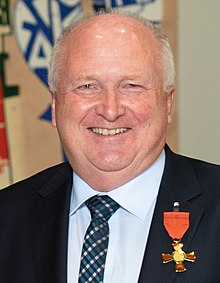 Marston Donald Edward Conder合作论文数Department of Mathematics, Faculty of Science, University of Auckland1
 Marco Storace合作论文数Department of Naval, Electrical, Electronic and Telecommunications Engineering, University of Genoa1
 Daniele Linaro合作论文数Department of Biophysical and Electronic Engineering, University of Genoa1Thomas F. Fairgrieve合作论文数1
 Jiling Cao合作论文数Department of Mathematics, The University of Auckland1Bartlomiej Borek合作论文数1
 Michael H. Meylan合作论文数1
 Federico Bizzarri合作论文数Polytechnic University of Milan,Department of Electronics, Information and Bioengineering1
 Sina Greenwood合作论文数Department of Mathematics, Faculty of Science, The University of Auckland1Primo Potočnik合作论文数Institute of Mathematics Physics and Mechanics1
 G. Bard Ermentrout合作论文数Department of Mathematics, The Dietrich School of Arts and Sciences, University of Pittsburgh1
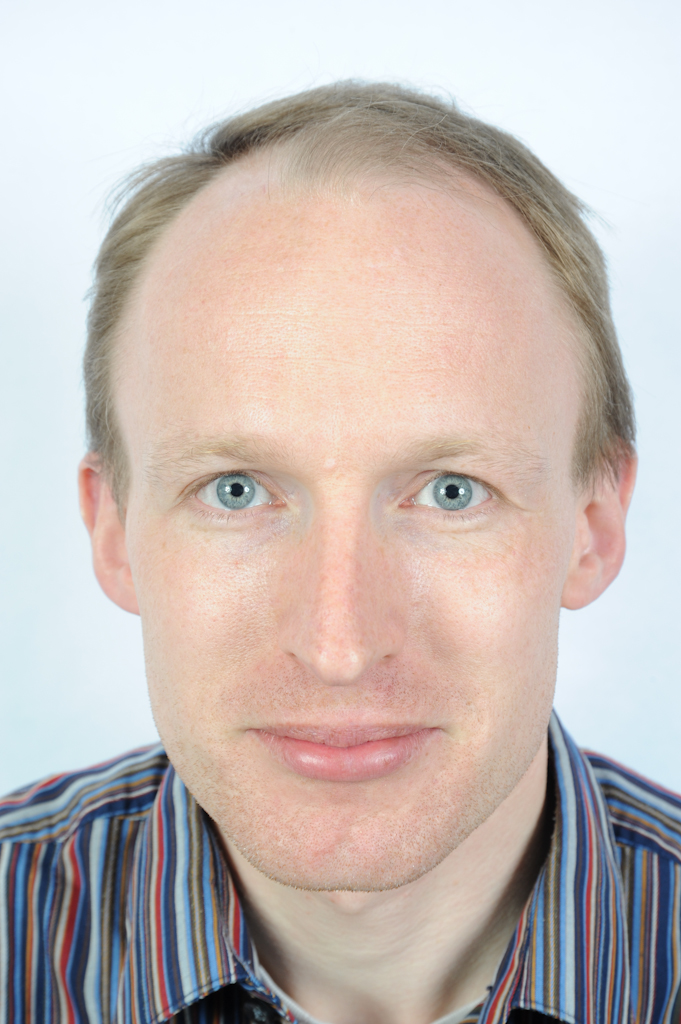 Hil Meijer合作论文数Department of Applied Mathematics, University of Twente;Department of Mathematics, University of Twente;Faculty of Electrical Engineering, Mathematics and Computer Science, University of Twente;TechMed Centre, University of Twente1Carlos L. Pando L合作论文数1
 Jens D.M. Rademacher合作论文数1
 Jozef Širáň合作论文数Department of Mathematics1Eamonn O'Brien合作论文数1
 Warren Moors合作论文数Department of Mathematics, Faculty of Science, The University of Auckland1




