This paper tries to reconcile the clash between argumentation theory and formal logic regarding circular arguments, which are regarded as the fallacy of begging the question by the former, and a benign and useful inference pattern by the latter. This paper provides a formal system which can represent circular arguments found in the literature. The formal system makes it possible to distinguish two ways in which arguments can be circular. The first type of circularity, which is vicious, is when an argument is based on an inference step which is (indirectly) supported by that inference step itself. The second kind of circularity, which is benign, occurs when one of the premises is the same proposition as the conclusion. The first type of circularity implies the second type of circularity, but not the other way round. This distinction is in line with other approaches to circular arguments. Analyzing selected examples from the literature shows the value of the formal system.
The knower paradox states that the statement ‘We know that this statement is false’ leads to inconsistency. This article presents a fresh look at this paradox and some well-known solutions from the literature. Paul Égré discusses three possible solutions that modal provability logic provides for the paradox by surveying and comparing three different provability interpretations of modality, originally described by Skyrms, Anderson, and Solovay. In this article, some background is explained to clarify Égré’s solutions, all three of which hinge on intricacies of provability logic and its arithmetical interpretations. To check whether Égré’s solutions are satisfactory, we use the criteria for solutions to paradoxes defined by Susan Haack and we propose some refinements of them. This article aims to describe to what extent the knower paradox can be solved using provability logic and to what extent the solutions proposed in the literature satisfy Haack’s criteria. Finally, the article offers some reflections on the relation between knowledge, proof, and provability, as inspired by the knower paradox and its solutions.
Recently, several logics modelling evidence have been proposed in the literature. These logics often also feature beliefs. We call the process or function that maps evidence to beliefs consolidation. In this paper, we use a four-valued modal logic of evidence as a basis. In the models for this logic, agents are represented by nodes, peer connections by edges and the private evidence that each agent has by a four-valued valuation. From this basis, we propose methods of consolidating the beliefs of the agents, taking into account both their private evidence as well as their peers' opinions. To this end, beliefs are computed iteratively. The final consolidated beliefs are the ones in the point of stabilization of the model. However, it turns out that some consolidation policies will not stabilize for certain models. Finding the conditions for stabilization is one of the main problems studied here, along with other properties of such consolidations. Our main contributions are twofold: we offer a new dynamic perspective on the process of forming evidence-based beliefs, in the context of evidence logics, and we set up and address some mathematically challenging problems, which are related to graph theory and practical subject areas such as belief/opinion diffusion and contagion in multi-agent networks.
We present a method that generates two-sided sequent calculi for four-valued logics like first degree entailment ( FDE ). (We say that a logic is FDE-like if it has finitely many operators of finite arity, including negation, and if all of its operators are truth-functional over the four truth-values ‘none’, ‘false’, ‘true’, and ‘both’, where ‘true’ and ‘both’ are designated.) First, we show that for every n -ary operator ⋆ every truth table entry f ⋆ ( x 1 ,…, x n ) = y can be characterized in terms of a pair of sequent rules. Secondly, we use these sequent rules to build sequent calculi and prove their completeness. With the help of two simplification procedures we then show that the 2 ⋅ 4 n sequent rules that characterize an n -ary operator can be systematically reduced to at most four sequent rules. Thirdly, we use our method to investigate the proof-theoretical consequences of including intuitive truth-functional implications in FDE -like logics.
Obligations can be affected by knowledge. Several approaches exist to formalize knowledge-based obligations, but no formalism has been developed yet to capture the dynamic interaction between knowledge and obligations. We introduce the dynamic extension of an existing logic for knowledge-based obligations here. We motivate the logic by analyzing several scenarios and by showing how it can capture in an original manner several fundamental deontic notions such as absolute, prima facie and all-things-considered obligations. Finally, in the dynamic epistemic logic tradition, we provide reduction axioms for the dynamic operator of the new logic.
This paper introduces the notion of `commonly knowing whether', a non-standard version of standard common knowledge which is defined on the basis of `knowing whether', instead of standard `knowing that'. After giving five possible definitions of this notion, we explore the logical relations among them in the single-agent and multi-agent cases. We propose a sound and complete axiomatization. We investigate one of the five definitions in terms of expressivity via a strategy of modal comparison games.
In this contribution we present arbitrary arrow update model logic (AAUML). This is a dynamic epistemic logic or update logic. In update logics, static/basic modalities are interpreted on a given relational model whereas dynamic/update modalities induce transformations (updates) of relational models. In AAUML the update modalities formalize the execution of arrow update models, and there is also a modality for quantification over arrow update models. Arrow update models are an alternative to the well-known action models. We provide an axiomatization of AAUML. The axiomatization is a rewrite system allowing to eliminate arrow update modalities from any given formula, while preserving truth. Thus, AAUML is decidable and equally expressive as the base multi-agent modal logic. Our main result is to establish arrow update synthesis: if there is an arrow update model after which φ, we can construct (synthesize) that model from φ. We also point out some pregnant differences in update expressivity between arrow update logics, action model logics, and refinement modal logic.
The knower paradox states that the statement `We know that this statement is false' leads to inconsistency. This article presents a fresh look at this paradox and some well-known solutions from the literature. Paul Egre discusses three possible solutions that modal provability logic provides for the paradox by surveying and comparing three different provability interpretations of modality, including one by Solovay. To check whether this solution is satisfactory, we use the criteria for solutions to paradoxes defined by Susan Haack. This extended abstract aims to describe to what extent the knower paradox can be solved using provability logic and to what extent a solution proposed in the literature satisfies Haack's criteria. Finally, the extended offers some reflections on the relation between knowledge, proof, and provability, as inspired by the knower paradox.
In this paper, we introduce a probabilistic dynamic epistemic logical framework that can be applied for reasoning and verifying conformant probabilistic plans in a single agent setting. In conformant probabilistic planning (CPP), we are looking for a linear plan such that the probability of achieving the goal after executing the plan is no less than a given threshold probability δ. Our logical framework can trace the change of the belief state of the agent during the execution of the plan and verify the conformant plans. Moreover, with this logic, we can enrich the CPP framework by formulating the goal as a formula in our language with action modalities and probabilistic beliefs. As for the main technical results, we provide a complete axiomatization of the logic and show the decidability of its validity problem.
The knower paradox states that the statement `We know that this statement is false' leads to inconsistency. This article presents a fresh look at this paradox and some well-known solutions from the literature. Paul Egre discusses three possible solutions that modal provability logic provides for the paradox by surveying and comparing three different provability interpretations of modality, including one by Solovay. To check whether this solution is satisfactory, we use the criteria for solutions to paradoxes defined by Susan Haack. This extended abstract aims to describe to what extent the knower paradox can be solved using provability logic and to what extent a solution proposed in the literature satisfies Haack's criteria. Finally, the extended offers some reflections on the relation between knowledge, proof, and provability, as inspired by the knower paradox.
We present four logic puzzles and after that their solutions. Joseph Yeo designed 'Cheryl's Birthday'. Mike Hartley came up with a novel solution for 'One Hundred Prisoners and a Light Bulb'. Jonathan Welton designed 'A Blind Guess' and 'Abby's Birthday'. Hans van Ditmarsch and Barteld Kooi authored the puzzlebook 'One Hundred Prisoners and a Light Bulb' that contains other knowledge puzzles, and that can also be found on the webpage http://personal.us.es/hvd/lightbulb.html dedicated to the book.
In modal logic, when adding a syntactic property to an axiomatisation, this property will semantically become true in all models, in all situations, under all circumstances. For instance, adding a property like Kap→ Kbp (agent b knows at least what agent a knows) to an axiomatisation of some epistemic logic has as an effect that such a property becomes globally true, i.e., it will hold in all states, at all time points (in a temporal setting), after every action (in a dynamic setting) and after any communication (in an update setting), and every agent will know that it holds, it will even be common knowledge. We propose a way to express that a property like the above only needs to hold locally: it may hold in the actual state, but not in all states, and not all agents may know that it holds. We can achieve this by adding relational atoms to the language that represent (implicitly) quantification over all formulas, as in ∀p(Kap → Kbp). We show how this can be done for a rich class of modal logics and a variety of syntactic properties.
In this paper we introduce arbitrary arrow update logic (AAUL). The logic AAUL takes arrow update logic, a dynamic epistemic logic where the accessibility relations of agents are updated rather than the set of possible worlds, and adds a quantifier over such arrow updates.
Current dynamic epistemic logics often become cumbersome and opaque when common knowledge is added for groups of agents. We propose new versions that extend the underlying static epistemic languages in such a way that completeness proofs for the full dynamic systems can be obtained by perspicuous reduction axioms.
Abstract In this paper it is shown that the Verification Thesis (all truths are knowable) is only susceptible to Fitch’s Paradox if one conflates the de re and de dicto interpretation of knowability. A formalisation shows that if one treats knowability as a complex second-order predicate, then the paradox falls apart.
This chapter provides an introduction to some basic concepts of epistemic logic, basic formal languages, their semantics, and proof systems. It also contains an overview of the handbook, and a brief history of epistemic logic and pointers to the literature.
 Hans P. Van Ditmarsch合作论文数Department of Artificial Intelligence, Open University of the Netherlands36
 Wiebe Van Der Hoek合作论文数Department of Computer Science, University of Liverpool27
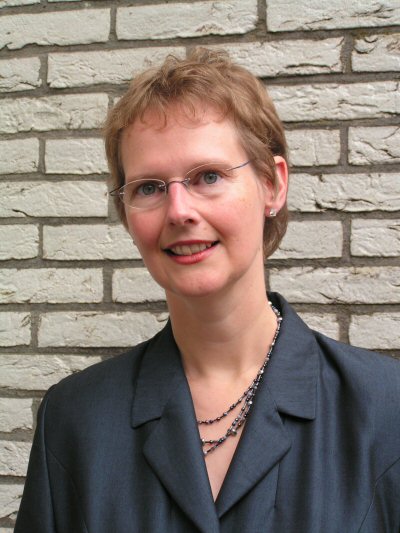 Rineke Verbrugge合作论文数University of Groningen;Artificial Intelligence11
 Allard Tamminga合作论文数8
 Johan Van Benthem (约翰•范•本特姆)合作论文数Department of Philosophy, School of Humanities and Sciences, Stanford University;University of Amsterdam;Department of Philosophy, Tsinghua University4
 Gerard R. Renardel de Lavalette合作论文数Department of Mathematics;Computing Science;University of Groningen;Department of Mathematics, University of Groningen4Petar Iliev合作论文数Sofia University, univ-sofia3Xingchi Su合作论文数2
 Tim French合作论文数Univ Western Australia, Sch Comp Sci & Software Engn, Perth, WA, Australia2
 Lorenz Demey合作论文数2
 Davide Grossi合作论文数Faculty of Science and Engineering, University of Groningen;The Hybrid Intelligence Centre;Institute for Logic, Language and Computation, University of Amsterdam;Faculteit der Rechtsgeleerdheid, Universiteit van Amsterdam2
 Joseph Y. Halpern合作论文数Computer Science Department, Cornell University2
 Bryan Renne合作论文数University of Amsterdam2
 Louwe B. Kuijer合作论文数Department of Computer Science, University of Liverpool;School of Computer Science and Informatics, University of Liverpool;Faculty of Science and Engineering, University of Liverpool2S. Mogck合作论文数1te groningen合作论文数1
 Jie Fan (范杰)合作论文数School of Humanities, University of Cinese Academy of Sciences;Institute of Philosophy, Chinese Academy of Sciences1
 Joshua Sack合作论文数university of amsterdam1Yuri David Santos合作论文数University of São Paulo Brazil1
 Joseph Boon Wooi Yeo合作论文数National Institute of Education, Nanyang Technological University1
 Yanjing Wang (王彦晶)合作论文数Department of Philosophy, Peking University;Center for Logic, Language, and Cognition, Peking University1
 Jeff T. M. DeHosson合作论文数Department of Applied Physics, Faculty of Science and Engineering, University of Groningen1
 Yanjun Li (李延军)合作论文数College of Philosophy, Nankai University1
 Jan Van Eijck合作论文数CWI1
 Eric Pacuit合作论文数Department of Philosophy, College of Arts and Humanities, University of Maryland1
 Rajeev Gore合作论文数School of Computing, Australian National University1
 Agi Kurucz合作论文数Department of Informatics, Faculty of Natural, Mathematical & Engineering Sciences, King's College London1
 Jelle Gerbrandy合作论文数1
 D. J Eijck合作论文数Computational Linguistics ;CWI;Uil-OTS (Utrecht University)1
 P. (Pinar) Yolum Birbil合作论文数Utrecht University1
 Casper J. Albers合作论文数Open University1Willem Schaafsma合作论文数1
 Liz Sonenberg合作论文数School of Computing and Information Systems, University of Melbourne1




