The interfacial area transport of vertical, upward, steam-water two-phase flows in a vertical annular channel has been investigated. The inner and outer diameters of the annular channel were 19.1 and 38.1mm, respectively. The test section had a 2845mm heated section followed by a 1632mm unheated section. Fifty seven experimental conditions were selected, which cover bubbly, cap-slug, and churn-turbulent flows. Each one of flow conditions was obtained by achieving different inlet sub-cooling temperatures, liquid velocities, wall heat flux or system pressures. The local flow parameters, such as void fraction, interfacial area concentration, and bubble interface velocity, were measured at different radial positions for the five axial locations. The radial and axial evolutions of local flow structure were interpreted based on presence of wall superheat, wall nucleation, bulk condensation and evaporation, bubble sizes, coalescence and break-up mechanisms. The measured data can be used for both the assessment of the bubble coalescence/breakup models and the development of closure models for computational fluid dynamics.
There are very few established correlations to predict the interfacial area concentration beyond the bubbly flow regime in cap-slug and churn-turbulent flow regimes. Present study shows a systematic approach to estimate the interfacial area concentration in bubbly, cap-slug and churn-turbulent flow regimes. Ishii and Mishima’s (1980) formulation and the two group approach for categorizing bubbles (Group-1: spherical or distorted bubble, Group-2: cap bubble) are used to estimate the interfacial area concentration. The key parameters in this framework are the estimation of Group-1 bubble size and the amount of void in the liquid slug, which is a function of Group-1 void fraction. Hibiki and Ishii’s (2002) correlation is utilized to predict the size of the Group-1 bubbles. A correlation is developed to estimate the Group-1 void fraction. The developed model for the estimation of interfacial area concentration is compared with the three existing datasets. These are data for air–water flow taken in annular geometry and round tube and also for air–NaOH solution taken in round tube. The estimation accuracies for these data sets are ±36.4%, ±26.5% and ±37.4%, respectively. These datasets cover a wide range of flow regimes and different physical properties.
In pipes with very large diameters, slug bubbles cannot exist. For this reason, the characteristics of two-phase flow in large pipes are much different than those in small pipes. Knowledge of these characteristics is essential for the prediction of the flow in new nuclear reactor designs which include a large chimney to promote natural circulation. Two of the key parameters in the prediction of the flow are the void fraction and flow regime. Void fraction measurements were made in a vertical tube with diameter of 0.15 m and length of 4.4 m. Superficial gas and liquid velocities ranged from 0.1 to 5.1 m/s and from 0.01 to 2.0 m/s, respectively. The measured void fractions ranged from 0.02 to 0.83. Electrical impedance void meters at four axial locations were used to measure the void fraction. This data was verified through comparison with previous data sets and models. The temporal variation in the void fraction signal was used to characterize the flow regime through use of the Cumulative Probability Density Function (CPDF). The CPDF of the signal was used with a Kohonen Self-Organized Map (SOM) to classify the flow regimes at each measurement port. The three flow regimes used were termed bubbly, cap-bubbly, and churn flow. The resulting flow regime maps matched well with the maps developed previously through other methods. Further, the flow regime maps matched well with the criteria which were proposed based on Mishima and Ishii's (1984) criteria.
The flow structure of gas–liquid two-phase flow in vertical annulus channel has been investigated. The inner and outer diameters of the annular channel were 19.1 and 38.1mm, respectively. The total height of the test section was 4.37m. Nineteen inlet flow conditions were selected, which cover bubbly, cap-slug, and churn-turbulent flows. The local flow parameters, such as void fraction, interfacial area concentration (IAC), and bubble interface velocity, were measured at nine radial positions within the gap of the annulus at z/Dh=230 of the test section. The flow regimes of the flow conditions, which were based on visual observations, were compared with several flow regime maps. In addition, the local measurements were used to calculate distribution parameter, C0 in drift-flux model, and area-averaged IAC. A new correlation of C0 was proposed based on the experimentally obtained C0 values. This correlation was tested in the drift-flux model successfully along with Ishii's drift velocity correlations. The area-averaged IAC values were compared with the most widely used models. The advantages and drawbacks of these models were highlighted.
An experimental study on the interfacial area transport (IAT) of vertical, upward, air–water two-phase flows in an annulus channel has been conducted. The inner and outer diameters of the annular channel were 19.1mm and 38.1mm, respectively. Nineteen inlet flow conditions were selected, which cover bubbly, cap–slug, and churn–turbulent flows. The local flow parameters, such as void fraction, interfacial area concentration (IAC), and bubble interface velocity, were measured at nine radial positions for the three axial locations (z/DH=52, 149 and 230). The radial and axial evolutions of local flow structure were interpreted in terms of bubble coalescence and breakup. The measured data can be used for the development of the bubble coalescence/breakup models for the IAT model and some closure models for computational fluid dynamics.
Measurements of two-phase flow parameters such as void-fraction, bubble velocities, and interfacial area density have been performed in an upwards air–water flow at atmospheric pressure by means of a four-tip needle-probe and a wire-mesh sensor. For the first time, a direct comparison between the two measuring techniques has been carried out. Both techniques are based on the measurement of the fluid conductivity. For void-fraction and velocity measurements, similarity exists between the two methodologies for signal analysis. A significantly different approach is followed, instead, for the estimation of the interfacial area concentration: while the evaluation based on the needle-probe signal is carried out by using projections of the gas–liquid interface velocity, the evaluation based on the wire-mesh signals consist in a full reconstruction of the bubbles interfaces. The comparison between the two techniques shows a good agreement.
An experimental study of heat transfer into a thin liquidfilm on a rotating heated disk is described. Deionized water was introduced at the center of a heated, horizontal disk with a constant film thickness and uniform radial velocity. Radial distribution of the disk surface temperatures was measured using a thermocouple/slip ring arrangement. Experiments were performed for a range of liquid flow rates between 3.0 lpm and 15.0 lpm. The angular speed of the disk was varied from 0 rpm to 500 rpm. The local heat transfer coefficient was determined based on the heat flux supplied to the disk and the temperature difference between the measured disk surface temperature and the liquid entrance temperature onto the disk. The local heat transfer coefficient was seen to increase with increasing flow rate as well as increasing angular velocity of the disk. Effect of rotation on heat transfer was largest for the lower liquid flow rates with the effect gradually decreasing with increasing liquid flow rates. Semi-empirical correlations are presented in this study for the local and average Nusselt numbers.
Local characteristics of the liquid phase in upward and downward air–water two-phase flows were experimentally investigated in a 50.8-mm inner-diameter round pipe. An integral laser Doppler anemometry (LDA) system was used to measure the axial liquid velocity and its fluctuations. No effect of the flow direction on the liquid velocity radial profile was observed in single-phase liquid benchmark experiments. Local multi-sensor conductivity probes were used to measure the radial profiles of the bubble velocity and the void fraction. The measurement results in the upward and downward two-phase flows are compared and discussed. The results in the downward flow demonstrated that the presence of the bubbles tended to flatten the liquid velocity radial profile, and the maximum liquid velocity could occur off the pipe centerline, in particular at relatively low flow rates. However, the maximum liquid velocity always occurred at the pipe center in the upward flow. Also, noticeable turbulence enhancement due to the bubbles in the two-phase flows was observed in the current experimental flow conditions. Furthermore, the distribution parameter and the void-weighted area-averaged drift velocity were obtained based on the definitions.
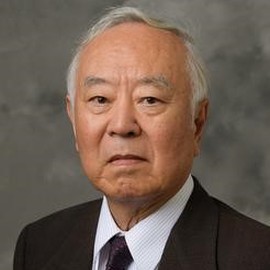 Mamoru Ishii合作论文数Thermal-Hydraulics and Reactor Safety Laboratory, Purdue University;School of Nuclear Engineering, Purdue University7
 Takashi Hibiki合作论文数Department of Mechanical Engineering, College of Engineering, City University of Hong Kong;School of Nuclear Engineering, Purdue University5
 Sidharth Paranjape合作论文数School of Nuclear Engineering, Purdue University3
 A. Dixit合作论文数3j e julia合作论文数2
 Jae-Jun Jeong合作论文数Department of Nuclear Engineering, Korea Advanced Institute of Science and Technology2s w chen合作论文数1
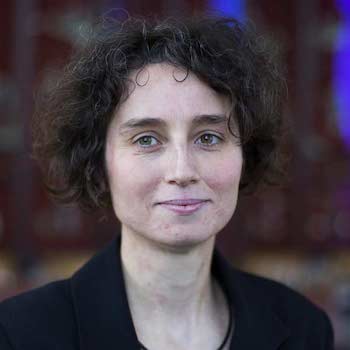 Annalisa Manera合作论文数Nuclear Engineering and Radiological Sciences, College of Engineering, University of Michigan-Ann Arbor1
 Xiaodong Sun合作论文数Nuclear Engineering and Radiological Sciences, College of Engineering, University of Michigan-Ann Arbor1
 Caleb Brooks合作论文数Department of Nuclear, Plasma & Radiological Engineering, The Grainger College of Engineering, University of Illinois at Urbana-Champaign1
 Seung-Jin Kim合作论文数School of Electrical Engineering and Computer Science, Kyungpook National University1
 Amir Faghri合作论文数School of Mechanical, Aerospace, and Manufacturing Engineering, College of Engineering, University of Connecticut1Pravin Sawant合作论文数1Dong-Jin Euh合作论文数1
 Joshua Paul Schlegel合作论文数School of Nuclear Engineering, Purdue University1
 Horst Michael Prasser合作论文数Department of Mechanical and Process Engineering, ETH Zürich1
 Baki M. Cetegen合作论文数Department of Mechanical Engineering, University of Connecticut/Institute of Materials Science, University of Connecticut1




