An important and difficult task in code-switched speech recognition is to recognize the language, as lots of words in two languages can sound similar, especially in some accents. We focus on improving performance of end-to-end Automatic Speech Recognition models by conditioning transformer layers on language ID of words and character in the output in an per layer supervised manner. To this end, we propose two methods of introducing language specific parameters and explainability in the multi-head attention mechanism, and implement a Temporal Loss that helps maintain continuity in input alignment. Despite being unable to reduce WER significantly, our method shows promise in predicting the correct language from just spoken data. We introduce regularization in the language prediction by dropping LID in the sequence, which helps align long repeated output sequences.
Building Automatic Speech Recognition (ASR) systems for code-switched speech has recently gained renewed attention due to the widespread use of speech technologies in multilingual communities worldwide. End-to-end ASR systems are a natural modeling choice due to their ease of use and superior performance in monolingual settings. However, it is well known that end-to-end systems require large amounts of labeled speech. In this work, we investigate improving code-switched ASR in low resource settings via data augmentation using code-switched text-to-speech (TTS) synthesis. We propose two targeted techniques to effectively leverage TTS speech samples: 1) Mixup, an existing technique to create new training samples via linear interpolation of existing samples, applied to TTS and real speech samples, and 2) a new loss function, used in conjunction with TTS samples, to encourage code-switched predictions. We report significant improvements in ASR performance achieving absolute word error rate (WER) reductions of up to 5%, and measurable improvement in code switching using our proposed techniques on a Hindi-English code-switched ASR task.
Recently, there has been significant progress made in Automatic Speech Recognition (ASR) of code-switched speech, leading to gains in accuracy on code-switched datasets in many language pairs. Code-switched speech co-occurs with monolingual speech in one or both languages being mixed. In this work, we show that fine-tuning ASR models on code-switched speech harms performance on monolingual speech. We point out the need to optimize models for code-switching while also ensuring that monolingual performance is not sacrificed. Monolingual models may be trained on thousands of hours of speech which may not be available for re-training a new model. We propose using the Learning Without Forgetting (LWF) framework for code-switched ASR when we only have access to a monolingual model and do not have the data it was trained on. We show that it is possible to train models using this framework that perform well on both code-switched and monolingual test sets. In cases where we have access to monolingual training data as well, we propose regularization strategies for fine-tuning models for code-switching without sacrificing monolingual accuracy. We report improvements in Word Error Rate (WER) in monolingual and code-switched test sets compared to baselines that use pooled data and simple fine-tuning.
Recognizing code-switched speech is challenging for Automatic Speech Recognition (ASR) for a variety of reasons, including the lack of code-switched training data. Recently, we showed that monolingual ASR systems fine-tuned on code-switched data deteriorate in performance on monolingual speech recognition, which is not desirable as ASR systems deployed in multilingual scenarios should recognize both monolingual and code-switched speech with high accuracy. Our experiments indicated that this loss in performance could be mitigated by using certain strategies for fine-tuning and regularization, leading to improvements in both monolingual and code-switched ASR. In this work, we present further improvements over our previous work by using domain adversarial learning to train task agnostic models. We evaluate the classification accuracy of an adversarial discriminator and show that it can learn shared layer parameters that are task agnostic. We train end-to-end ASR systems starting with a pooled model that uses monolingual and code-switched data along with the adversarial discriminator. Our proposed technique leads to reductions in Word Error Rates (WER) in monolingual and code-switched test sets across three language pairs.
Voice-based technologies are essential to cater to the hundreds of millions of new smartphone users. However, most of the languages spoken by these new users have little to no labelled speech data. Unfortunately, collecting labelled speech data in any language is an expensive and resource-intensive task. Moreover, existing platforms typically collect speech data only from urban speakers familiar with digital technology whose dialects are often very different from low-income users. In this paper, we explore the possibility of collecting labelled speech data directly from low-income workers. In addition to providing diversity to the speech dataset, we believe this approach can also provide valuable supplemental earning opportunities to these communities. To this end, we conducted a study where we collected labelled speech data in the Marathi language from three different user groups: low-income rural users, low-income urban users, and university students. Overall, we collected 109 hours of data from 36 participants. Our results show that the data collected from low-income participants is of comparable quality to the data collected from university students (who are typically employed to do this work) and that crowdsourcing speech data from low-income rural and urban workers is a viable method of gathering speech data.
One of the main challenges in building code-mixed ASR systems is the lack of annotated speech data. Often, however, monolingual speech corpora are available in abundance for the languages in the code-mixed speech. In this paper, we explore different techniques that use monolingual speech to create synthetic code-mixed speech and examine their effect on training models for code-mixed ASR. We assume access to a small amount of real code-mixed text, from which we extract probability distributions that govern the transition of phones across languages at code-switch boundaries and the span lengths corresponding to a particular language. We extract segments from monolingual data and concatenate them to form code-mixed utterances such that these probability distributions are preserved. Using this synthetic speech, we show significant improvements in Hindi-English code-mixed ASR performance compared to using synthetic speech naively constructed from complete utterances in different languages. We also present language modelling experiments that use synthetically constructed code-mixed text and discuss their benefits.
End-to-end (E2E) models have been explored for large speech corpora and have been found to match or outperform traditional pipeline-based systems in some languages. However, most prior work on end-to-end models use speech corpora exceeding hundreds or thousands of hours. In this study, we explore end-to-end models for code-switched Hindi-English language with less than 50 hours of data. We utilize two specific measures to improve network performance in the low-resource setting, namely multi-task learning (MTL) and balancing the corpus to deal with the inherent class imbalance problem i.e. the skewed frequency distribution over graphemes. We compare the results of the proposed approaches with traditional, cascaded ASR systems. While the lack of data adversely affects the performance of end-to-end models, we see promising improvements with MTL and balancing the corpus.
In this paper, we discuss the benefits of using articulatory and stacked bottleneck features (SBF) for low resource speech recognition. Articulatory features (AF) which capture the underlying attributes of speech production are found to be robust to channel and speaker variations. However, building an efficient articulatory classifier to extract AF requires an enormous amount of data. In low resource acoustic modeling, we propose to train the bidirectional long short-term memory (BLSTM) articulatory classifier by pooling data from the available low resource Indian languages, namely, Gujarati, Tamil, and Telugu. This is done in the context of Microsoft Indian Language challenge. Similarly, we train a multilingual bottleneck feature extractor and an SBF extractor using the pooled data. To bias, the SBF network towards the target language, a second network in the stacked architecture was trained using the target language alone. The performance of ASR system trained with stand-alone AF is observed to be at par with the multilingual bottleneck features. When the AF and the biased SBF are appended, they are found to outperform the conventional filterbank features in the multilingual deep neural network (DNN) framework and the high-resolution Mel frequency cepstral coefficient (MFCC) features in the time-delayed neural network(TDNN) framework.
With recent advancements in deep neural networks (DNN), there has been a significant improvement in the performance of speech recognizers. However such robust systems are mainly limited to popular languages like English, French etc. To build a robust speech recognizer in any language, large amount of transcribed speech data is required. In many of the under resourced languages like Indian and African languages, data sparsity is a critical problem in building good speech recognizers. Throughout this work, we use the term high-resource language to refer to a language having abundant resources in terms of transcribed training data and low-resource language to the one with limited training data. In this work we have tried to leverage the resources form high-resource languages to build better acoustic model for lowresource languages. We proposed three approaches to overcome the data sparsity in acoustic modeling. In the first approach, speech data was pooled from high-resource language to train acoustic model for the low-resource language. Secondly, the cross-lingual approaches of borrowing the model parameters from a well-trained model were used. In the third case, pseudo articulatory features were obtained from articulatory classifiers trained in high-resource languages.
Deep neural networks (DNN) require large amount of training data to build robust acoustic models for speech recognition tasks. Our work is intended in improving the low-resource language acoustic model to reach a performance comparable to that of a high-resource scenario with the help of data/model parameters from other high-resource languages. we explore transfer learning and distillation methods, where a complex high resource model guides or supervises the training of low resource model. The techniques include (i) multi-lingual framework of borrowing data from high-resource language while training the low-resource acoustic model. The KL divergence based constraints are added to make the model biased towards low-resource language, (ii) distilling knowledge from the complex high-resource model to improve the low-resource acoustic model. The experiments were performed on three Indian languages namely Hindi, Tamil and Kannada. All the techniques gave improved performance and the multi-lingual framework with KL divergence regularization giving the best results. In all the three languages a performance close to or better than highresource scenario was obtained.
Using articulatory features for speech recognition improves the performance of low-resource languages. One way to obtain articulatory features is by using an articulatory classifier (pseudoarticulatory features). The performance of the articulatory features depends on the efficacy of this classifier. But, training such a robust classifier for a low-resource language is constrained due to the limited amount of training data. We can overcome this by training the articulatory classifier using a high resource language. This classifier can then be used to generate articulatory features for the low-resource language. However, this technique fails when high and low-resource languages have mismatches in their environmental conditions. In this paper, we address both the aforementioned problems by jointly estimating the articulatory features and low-resource acoustic model. The experiments were performed on two low-resource Indian languages namely, Hindi and Tamil. English was used as the high-resource language. A relative improvement of 23% and 10% were obtained for Hindi and Tamil, respectively.
Generalized distillation framework has been shown to be effective in speech enhancement in the past. We extend this idea to speaker normalization without any explicit adaptation data in this paper. In the generalized distillation framework, we assume the presence of some "privileged" information to guide the training process in addition to the training data. In the proposed approach, the privileged information is obtained from a "teacher" model, trained on speaker-normalized FMLLR features. The "student" model is trained on un-normalized filterbank features and uses teacher's supervision for cross-entropy training. The proposed distillation method does not need first pass decode information during testing and imposes no constraints on the duration of the test data for computing speaker-specific transforms unlike in FMLLR or i-vector. Experiments done on Switchboard and AMI corpus show that the generalized distillation framework shows improvement over un-normalized features with or without i-vectors.
Phone-cluster adaptive training (Phone-CAT) is a subspace based acoustic modeling technique inspired from cluster adaptive training (CAT) and subspace Gaussian mixture model (SGMM). This paper explores three extensions, viz., increasing phonetic subspace dimension, including sub-states and speaker subspace, to the basic Phone-CAT model to improve its recognition performance. The latter two extensions are similar in implementation as that of SGMM as both acoustic models share a similar subspace framework. But, since the phonetic subspace dimension of Phone-CAT is constrained to be equal to the number of monophones, the first extension is not straightforward to implement. We propose a Two-stage Phone-CAT model where we increase the phonetic subspace dimension to that of the number of monophone states. This model will still be able to retain the center phone capturing property of the state-specific vectors in basic Phone-CAT. Experiments done on 33-hour train subset of Switchboard database shows improvements in recognition performance of basic Phone-CAT model with the inclusion of the proposed extensions.
Recent studies have shown that in the case of under-resourced languages, use of articulatory features (AF) emerging from an articulatory model results in improved automatic speech recognition (ASR) compared to conventional mel frequency cepstral coefficient (MFCC) features. Articulatory features are more robust to noise and pronunciation variability compared to conventional acoustic features. To extract articulatory features, one method is to take conventional acoustic features like MFCC and build an articulatory classifier that would output articulatory features (known as pseudo-AF). However, these classifiers require a mapping from phone to different articulatory labels (AL) (e.g., place of articulation and manner of articulation), which is not readily available for many of the under-resourced languages. In this article, we have proposed an automated technique to generate phone-to-articulatory label (phone-to-AL) mapping for a new target language based on the knowledge of phone-to-AL mapping of a well-resourced language. The proposed mapping technique is based on the center-phone capturing property of interpolation vectors emerging from the recently proposed phone cluster adaptive training (Phone-CAT) method. Phone-CAT is an acoustic modeling technique that belongs to the broad category of canonical state models (CSM) that includes subspace Gaussian mixture model (SGMM). In Phone-CAT, the interpolation vector belonging to a particular context-dependent state has maximum weight for the center-phone in case of monophone clusters or by the AL of the center-phone in case of AL clusters. These relationships from the various context-dependent states are used to generate a phone-to-AL mapping. The Phone-CAT technique makes use of all the speech data belonging to a particular context-dependent state. Therefore, multiple segments of speech are used to generate the mapping, which makes it more robust to noise and other variations. In this study, we have obtained a phone-to-AL mapping for three under-resourced Indian languages namely Assamese, Hindi and Tamil based on the phone-to-AL mapping available for English. With the generated mappings, articulatory features are extracted for these languages using varying amounts of data in order to build an articulatory classifier. Experiments were also performed in a cross-lingual scenario assuming a small training data set (approximate to 2 h) from each of the Indian languages with articulatory classifiers built using a lot of training data (approximate to 22 h) from other languages including English (Switchboard task). Interestingly, cross-lingual performance is comparable to that of an articulatory classifier built with large amounts of native training data. Using articulatory features, more than 30% relative improvement was observed over the conventional MFCC features for all the three languages in a DNN framework. (C) 2016 Elsevier B.V. All rights reserved.
Articulatory features provide robustness to speaker and environment variability by incorporating speech production knowledge. Pseudo articulatory features are a way of extracting articulatory features using articulatory classifiers trained from speech data. One of the major problems faced in building articulatory classifiers is the requirement of speech data aligned in terms of articulatory feature values at frame level. Manually aligning data at frame level is a tedious task and alignments obtained from the phone alignments using phone-to-articulatory feature mapping are prone to errors. In this paper, a technique using connectionist temporal classification (CTC) criterion to train an articulatory classifier using bidirectional long short-term memory (BLSTM) recurrent neural network (RNN) is proposed. The CTC criterion eliminates the need for forced frame level alignments. Articulatory classifiers were also built using different neural network architectures like deep neural networks (DNN), convolutional neural network (CNN) and BLSTM with frame level alignments and were compared to the proposed approach of using CTC. Among the different architectures, articulatory features extracted using articulatory classifiers built with BLSTM gave better recognition performance. Further, the proposed approach of BLSTM with CTC gave the best overall performance on both SVitchboard (6 hours) and Switchboard 33 hours data set.
In this paper, we propose two techniques to improve the acoustic model of a low-resource language by: (i) Pooling data from closely related languages using a phoneme mapping algorithm to build acoustic models like subspace Gaussian mixture model (SGMM), phone cluster adaptive training (Phone-CAT), deep neural network (DNN) and convolutional neural network (CNN). Using the low-resource language data, we then adapt the afore mentioned models towards that language. (ii) Using models built from high-resource languages, we first borrow subspace model parameters from SGMM/Phone-CAT; or hidden layers from DNN/CNN. The language specific parameters are then estimated using the low resource language data. The experiments were performed on four Indian languages namely Assamese, Bengali, Hindi and Tamil. Relative improvements of 10 to 30% were obtained over corresponding monolingual models in each case.
In this paper, we propose the use of deep neural networks (DNN) as a regression model to estimate feature-space maximum likelihood linear regression (FMLLR) features from unnormalized features. During training, the pair of unnormalized features as input and corresponding FMLLR features as target are provided and the network is optimized to reduce the mean-square error between output and target FMLLR features. During test, the unnormalized features are passed through this DNN feature extractor to obtain FMLLR-like features without any supervision or first pass decode. Further, the FMLLR-like features are generated frame-by-frame, requiring no explicit adaptation data to extract the features unlike in FMLLR or i-vector. Our proposed approach is therefore suitable for scenarios where there is little adaptation data. The proposed approach provides sizable improvements over basis-FMLLR and conventional FMLLR when normalization is done at utterance level on TIMIT and Switchboard-33hour data sets.
In this paper, we investigate methods to improve the recognition performance of low-resource languages with limited training data by borrowing subspace parameters from a high-resource language in subspace Gaussian mixture model (SGMM) framework. As a first step, only the state-specific vectors are updated using low-resource language, while retaining all the globally shared parameters from the high-resource language. This approach gave improvements only in some cases. However, when both state-specific and weight projection vectors are re-estimated with low-resource language, we get consistent improvement in performance over conventional monolingual SGMM of the low-resource language. Further, we conducted experiments to investigate the effect of different shared parameters on the acoustic model built using the proposed method. Experiments were done on the Tamil, Hindi and Bengali corpus of MANDI database. Relative improvement of 16.17% for Tamil, 13.74% for Hindi and 12.5% for Bengali, over respective monolingual SGMM were obtained.
Cross-lingual acoustic modeling using Subspace Gaussian Mixture Model for low-resource languages of Indian origin is investigated. Building acoustic model for a low-resource language with limited vocabulary by leveraging resources from another language with comparatively larger resources was focused upon. Experiments were done on Bengali and Tamil corpus from MANDI database, with Tamil having greater resources than Bengali. We observed that the word accuracy of cross-lingual acoustic model of Bengali was approximately 2.5% above it's CDHMM model and gave equivalent performance as it's monolingual SGMM model.
One of the major problems in acoustic modeling for a low-resource language is data sparsity. In recent years, cross-lingual acoustic modeling techniques have been employed to overcome this problem. In this paper we propose multiple cross-lingual techniques to address the problem of data insufficiency. The first method, which we call as the cross-lingual phone-CAT, uses the principles of phone-cluster adaptive training (phone-CAT), where the parameters of context-dependent states are obtained by linear interpolation of monophone cluster models. The second method uses the interpolation vectors of phone-CAT, which is known to capture the phonetic context information, to map phonemes between two languages. Finally, the data-driven phoneme-mapping technique is incorporated into the cross-lingual phone-CAT, to obtain what we call as the phoneme-mapped cross-lingual phone-CAT. The proposed techniques are employed in acoustic modeling of three Indian languages namely Bengali, Hindi and Tamil. The phoneme-mapped cross-lingual phone-CAT gave relative improvements of 15.14% for Bengali, 16.4% for Hindi and 11.3% for Tamil over the conventional cross-lingual subspace Gaussian mixture model (SGMM) in low-resource scenario.
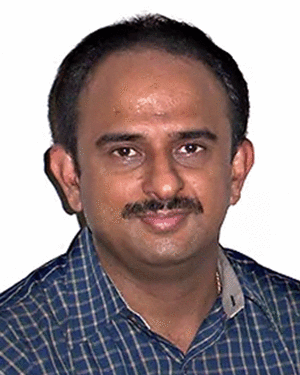 Srinivasan Umesh合作论文数Department of Electrical Engineering;Indian Institute of Technology Kanpur;Department of Electrical Engineering, Indian Institute of Technology Kanpur12
 Neethu Mariam Joy合作论文数Dept. of Electr. Eng., Indian Inst. of Technol. Madras;c;Dept. of Electr. Eng., Indian Inst. of Technol. Madras9
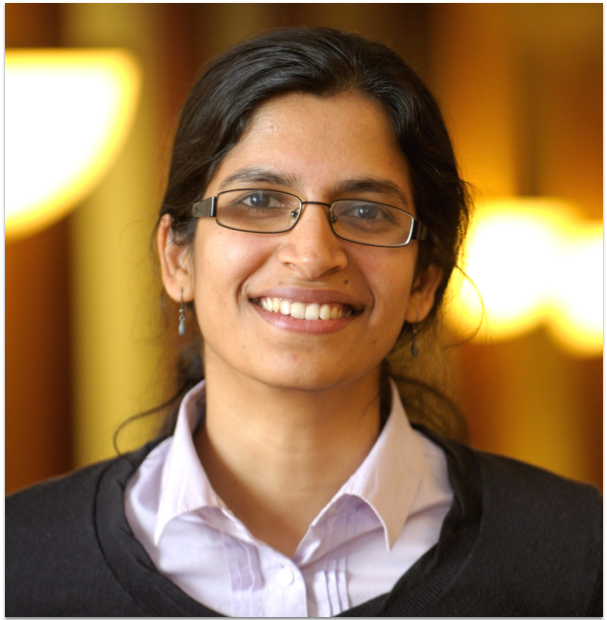 Preethi Jyothi合作论文数Department of Computer Science and Engineering, Indian Institute of Technology Bombay5
 K Navneeth合作论文数4
 Sunayana Sitaram合作论文数Microsoft Research India4
 Karan Taneja合作论文数College of Computing, Georgia Institute of Technology2Tejaswi Seeram合作论文数2Gurunath Reddy M.合作论文数Indian Inst Technol Kharagpur2
 Sanket Shah合作论文数Harvard University2
 Yash Sharma合作论文数Department of Information Communication Technology, ABV Indian Institute of Information Technology and Management2
 Vikas Joshi合作论文数IBM India Research Labs2
 Pratik Joshi合作论文数Google DeepMind1Rupesh R. Mehta合作论文数1Danish Goel合作论文数1
 Kalika Bali合作论文数Microsoft Research Laboratory India Private Limited1
 Manu Chopra合作论文数Karya Inc1
 Satarupa Guha合作论文数Microsoft India R&D1
 Rini A. Sharon合作论文数Indian Inst Technol Madras, Chennai, Tamil Nadu, India1Sandeep Kothinti合作论文数Johns Hopkins Univ, Dept Elect & Comp Engn, Baltimore, MD 21218 USA1Nithya Ravi合作论文数1
 Brij Mohan Lal Srivastava合作论文数1
 Vishwas M Shetty合作论文数Indian Institute of Technology Madras1
 Murali Karthick Baskar合作论文数Brno University of Technology1
 Anusha Prakash合作论文数Dept. of Appl. Mech., Indian Inst. of Technol. Madras;c;Dept. of Appl. Mech., Indian Inst. of Technol. Madras1
 Siddarth Divya合作论文数Harvard-Westlake School1
 Monojit Choudhury合作论文数Mohamed bin Zayed University of Artificial Intelligence1
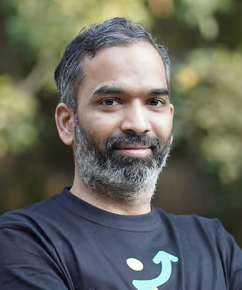 Vivek Seshadri合作论文数Karya Inc1




