Abdel-Azeem A.M., Abo Nouh F.A., Abu-Elsaoud A.M. & Balbool B.A. (2024) Plant-growth-promoting endophytic fungi of some wild plants from harsh habitats in Egypt. - Sydowia 77: 193-209. Fungal endophytes act as an immune system to the host plants, allowing them to tolerate biotic and abiotic stresses and promote plant growth. Fungal endophytes might be helpful for agricultural and horticultural applications. Fungal taxa that are recovered from wild plants growing in harsh environments, viz. North Sinai, is a sustainable source of novel bioactive metabolites. We isolated twenty-six endophytic fungal taxa from 6 wild plants (Cakile maritima, Datura metel, Hyoscyamus muticus, Artemisia monosperma, Zygophyllum album and Bassia indica). In the presented study we examined the frequent taxa for abiotic stress tolerance, e.g., salt and drought, the ability of plant growth promoting (PGP) traits production, e.g., Indole Acetic Acid (IAA), phosphate solubilization, ammonia production, and 1-aminocyclopropane-1-carboxylate deaminase (ACC), and the production of extracellular enzymes e.g., amylase, pectinase, chitinase, protease, cellulase, lipase, and urease. Most isolates showed variability in abiotic stress tolerance, production of plant growth promoting, and secretion of extracellular hydrolytic enzymes. Three isolates in this study showed the highest values in stress tolerance and plant growth promotion: Trichoderma atroviride (PP055997.1), Fusarium acutatum (PP038127.1), and Aspergillus terreus (PP038155.1). They were able to produce all the tested extracellular enzymes. According to the current in vitro research, studying fungal endophytes is a valuable strategy for creating systems that could shield various crop species that are vulnerable to drought and salt stress.
Fungi constitute one of the most pivotal components of our planet's ecosystems, playing multifaceted roles crucial to the environment, industries, agriculture, and beyond.Despite their profound significance, mycological research in Egypt has, to some extent, been overlooked.Over an extended period, crucial information concerning scientific activity and publication rates has been lacking.It is imperative to integrate advancements in statistical analysis with scientific research to discern future research directions and potential limitations.This review undertakes a comprehensive bibliometric analysis of mycological research trends in Egypt.Our study employs innovative bibliometric tools, such as bibliometrix and VOSviewer, to analyze data extracted from three databases (Scopus, Web of Science, & CABI).The study highlights the peak publishing periods, with the highest rates observed between 2012-2022 for Web of Science and 2013-2021 for Scopus & CABI.Consequently, the review enables the identification of knowledge gaps and monitoring the dynamics of research activity, fostering the growth of mycological research, and contributing to the conservation of fungi in Egypt.
Endobiotic fungi are considered as a reservoir of numerous active metabolites. Asparaginase is used as an antileukemic drug specially to treat acute lymphoblastic leukaemia. The presented study aims to optimize the media conditions, purify, characterize, and test the antileukemic activity of the asparaginase induced from Lasiodiplodia theobromae. The culture medium was optimized using an experiment designed by The Taguchi model with an activity ranging from 10 to 175 IU/mL. Asparaginase was induced with an activity of 315 IU/mL. Asparaginase was purified with a specific activity of 468.03 U/mg and total activity of 84.4 IU/mL. The purified asparaginase showed an approximate size of 70 kDa. The purified asparaginase showed an optimum temperature of 37 °C and an optimum pH of 6. SDS reduced the activity of asparaginase to 0.65 U/mL while the used ionic surfactants enhanced the enzyme activity up to 151.92 IU/mL. The purified asparaginase showed a Km of 9.37 µM and Vmax of 127.00 µM/mL/min. The purified asparaginase showed an IC50 of 35.2 ± 0.7 IU/mL with leukemic M-NFS-60 cell lines and CC50 of 79.4 ± 1.9 IU/mL with the normal WI-38 cell line. The presented study suggests the use of endophytic fungi as a sustainable source for metabolites such as asparaginase, provides an opportunity to develop a facile, eco-friendly, cost-effective, and rapid synthesis of antileukemic drugs, which have the potential to be used as alternative and reliable sources for potent anticancer agents.
When Gustav Kunze introduced genus Chaetomium, as a new genus to the science, in Mykologische Hefte (Leipzig) in 1817, the new taxon attracted the interest of the researchers in every place in the world. Genus Chaetomium is a very diverse taxon colonizing various substrates rich in cellulose such as soils, textiles, plant tissues, agricultural wastes, and seeds. The genus Chaetomium is considered one of the largest genera in saprobic ascomycetes, which belongs to order Sordariales and family Chaetomiaceae. Until now more than 500 compounds with a wide range of bioactive effects have been isolated from Chaetomium spp., but compared with its richness of species, more bioactive secondary metabolites might be found in this member of fungi. Therefore, together with its ubiquitous nature, these species have great significant impacts on ecosystems, agriculture, food production, biotechnology, and human and animal health. The goal of this chapter is to shed the light on the biodiversity of Chaetomium in different ecological habitats with its application in different industrial fields.
Enzymes are the catalysts of chemical reactions; they are responsible for many biotechnological applications and industries. Fungi are considered as a reservoir for various chemical compounds, which are involved in many industrial, pharmaceutical, agricultural, and medical applications. Fungi are considered from the few eukaryotic organisms that can grow over a high-temperature range and they could be classified into thermophilic and thermotolerant taxa. Fungal species showed the ability to produce several thermotolerant enzymes such as xylanase, laccase, proteases, and phytases. All fungal thermotolerant enzymes have been involved in industrial applications such as textile production, bakery production, fermentation processes, and other pharmaceutical applications. The current chapter will focus on the biodiversity of thermophilic fungi and the various applications it is involved in.
Genus Aspergillus has been considered one of the most important general fungi, since its discovery in 1729 by Pier Antonio Micheli; genus Aspergillus comprises a group of more than 340 species distributed in different habitats and environments. Most of the Aspergillus are terricolous, which play an important role in the decomposition of organic matter; also they are considered as plant pathogens and human pathogens. Regardless of the pathogenic role of Aspergillus species it shows an important role in the pharmaceutical, agricultural, food, and medical industries. Due to the high biodiversity and importance of genus Aspergillus it would have a great significant effect on the ecosystem; several trials have been carried out to study the taxonomy and importance of genus Aspergillus. This chapter draws an image about the biodiversity of genus Aspergillus in different habitats, plants, and human pathogens and industrial applications.
In 2019, the world suffered from the emergence of COVID-19 infection, one of the most difficult pandemics in recent history. Millions of confirmed deaths from this pandemic have been reported worldwide. This disaster was caused by SARS-CoV-2, which is the last discovered member of the family of Coronaviridae. Various studies have shown that natural compounds have effective antiviral properties against coronaviruses by inhibiting multiple viral targets, including spike proteins and viral enzymes. This review presents the classification and a detailed explanation of the SARS-CoV-2 molecular characteristics and structure–function relationships. We present all currently available crystal structures of different SARS-CoV-2 proteins and emphasized on the crystal structure of different virus proteins and the binding modes of their ligands. This review also discusses the various therapeutic approaches for COVID-19 treatment and available vaccinations. In addition, we highlight and compare the existing data about natural compounds extracted from algae, fungi, plants, and scorpion venom that were used as antiviral agents against SARS-CoV-2 infection. Moreover, we discuss the repurposing of select approved therapeutic agents that have been used in the treatment of other viruses.
Twenty-five endophytic fungal species were recovered and identified from a twenty-three plant species collected from Saint Katherine Protectorate, South Sinai Egypt, during the period of 2017-2019` with a total count of 4,466 CFU. Alternaria alternata recorded the highest count of 1382 CFU out of 4466 CFU and the highest frequency of occurrence with 22 cases of isolation out of 23 plant species. In relation to host plant, Euphorbia obovata hosted the highest count (366 CFU), while Artemisia herba-alba hosted the highest fungal species richness value with 9 species out of 25. Isolated taxa were screened for L-asparaginase production where 7 strains belonging to 4 different species showed a positive result with an enzymatic activity ranging from 44.5 ± 1.66 to 152.58 ± 0.63 U ml-1. Lasiodiplodia theobromae isolated from Teucrium polium recorded the highest activity with 152.58 U ml-1. The present study suggests that L. theobromae has the potential to be used as an alternative and reliable source of L-asparaginase for potent anticancer agents.
Since Pier Antonio Micheli described and published genus Aspergillus in Nova Plantarum Genera in 1729 the genus attracted an immense interest. The published Egyptian literature on the genus is scattered and fragmentary. By screening the available sources of information since 1921, it was possible to figure out a range of 150 taxa that could be representing genus Aspergillus in Egypt up to the present time. Ten species of Aspergillus were introduced as type materials from Egypt since 1964 till now.Recorded taxa were assigned to 5 subgenera and 25 sections. This article includes Aspergillus species that are known to Egypt, provides a comprehensive checklist of species isolated from Egypt and provisional key to the identification of reported taxa is given. Although the present study will add some new data to our information concerning the Ascomycota of Egypt, this work must be considered as a provisional one always waiting for continuous supplementation.
 Ahmed M. Abdel-Azeem合作论文数6
 Amira Darwish合作论文数Faculty of Industrial and Energy Technology, Borg Al Arab Technological University3
 Hebatallah H. Abo Nahas合作论文数3
 Fatma A. Abo Nouh合作论文数Bot Dept, Suez Canal Univ3
 Abdelghafar M. Abu-Elsaoud合作论文数3
 Akram Hassan合作论文数2
 Nehal Ali合作论文数Dept Engn Phys & Math, Tanta Univ2
 Ahmed H Abdelazeem合作论文数Faculty of Science, Suez Canal University2Mohamed A. Abdel-Azeem合作论文数1
 Alaa A. Osman合作论文数1
 Sara Atef Gezaf合作论文数1
 Mariam Khaled Mousa合作论文数1Amnah Mohammed Alsuhaibani合作论文数College of Education, Princess Nourah bint Abdulrahman University1
 Yousra A. El-Maradny合作论文数Genet Engn & Biotechnol Res Inst, City Sci Res & Technol Applicat SRTA City1
 Donia H Sheir合作论文数Pharmaceut Ind Res Div, Natl Res Ctr1
 Magdalena Piekutowska合作论文数1
 Gniewko Niedbała合作论文数Dept Biosyst Engn, Poznan Univ Life Sci1
 Helmy Yosra A合作论文数Faculty of Veterinary Medicine, Suez Canal University1
 Saied Essa M合作论文数Humboldt-Universität zu Berlin, Suez Canal University1
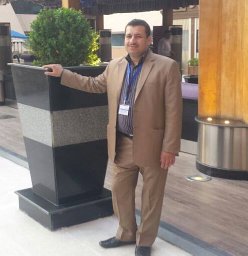 Ahmed A .Atta合作论文数Faculty of Education, Ain Shams University1
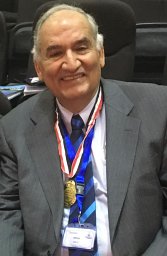 Hani Moubasher合作论文数Faculty of Science, Cairo University1
 Paul Kirk合作论文数MRC Biostatistics Unit, University of Cambridge/Cambridge Institute of Public Health, University of Cambridge1




