There is a 5 W/m 2 (about 0.35 %) difference between current on-orbit Total Solar Irradiance (TSI) measurements. On 18-20 July 2005, a workshop was held at the National Institute of Standards and Technology (NIST) in Gaithersburg, Maryland that focused on understanding possible reasons for this difference, through an examination of the instrument designs, calibration approaches, and appropriate measurement equations. The instruments studied in that workshop included the Active Cavity Radiometer Irradiance Monitor III (ACRIM I1I) on the Active Cavity Radiometer Irradiance Monitor SATellite (ACRIMSAT), the Total Irradiance Monitor (TIM) on the Solar Radiation and Climate Experiment (SORCE), the Variability of solar IRradiance and Gravity Oscillations (VIRGO) on the Solar and Heliospheric Observatory (SOHO), and the Earth Radiation Budget Experiment (ERBE) on the Earth Radiation Budget Satellite (ERBS). Presentations for each instrument included descriptions of its design, its measurement equation and uncertainty budget, and the methods used to assess onorbit degradation. The workshop also included a session on satelliteand ground-based instrument comparisons and a session on laboratory-based comparisons and the application of new laboratory comparison techniques. The workshop has led to investigations of the effects of diffraction and of aperture area measurements on the differences between instruments. In addition, a laboratory-based instrument comparison is proposed that uses optical power measurements (with lasers that underEll the apertures of the TSI instruments), irradiance measurements (with lasers that overfill the apertures of the TSI instrument), and a cryogenic 2005—TSI—Workshop report. doe 1 https://ntrs.nasa.gov/search.jsp?R=20090027895 2019-07-04T09:18:02+00:00Z
In ocean-color remote sensing, approximately 90% of the flux at the sensor originates from atmospheric scattering, with the water-leaving radiance contributing the remaining 10% of the total flux. Consequently, errors in the measured top-of-the atmosphere radiance are magnified a factor of 10 in the determination of water-leaving radiance. Proper characterization of the atmosphere is thus a critical part of the analysis of ocean-color remote sensing data. It has always been necessary to calibrate the ocean-color satellite sensor vicariously, using in situ, ground-based results, independent of the status of the pre-flight radiometric calibration or the utility of on-board calibration strategies. Because the atmosphere contributes significantly to the measured flux at the instrument sensor, both the instrument and the atmospheric correction algorithm are simultaneously calibrated vicariously. The Marine Optical Buoy (MOBY), deployed in support of the Earth Observing System (EOS) since 1996, serves as the primary calibration station for a variety of ocean-color satellite instruments, including the Sea-viewing Wide Field-of-view Sensor (SeaWiFS), the Moderate Resolution Imaging Spectroradiometer (MODIS), the Japanese Ocean Color Temperature Scanner (OCTS) , and the French Polarization and Directionality of the Earth's Reflectances (POLDER). MOBY is located off the coast of Lanai, Hawaii. The site was selected to simplify the application of the atmospheric correction algorithms. Vicarious calibration using MOBY data allows for a thorough comparison and merger of ocean-color data from these multiple sensors.
Recent international comparisons [1,2] and key comparisons have shown that the realization of the International Temperature Scale of 1990 (ITS-90) above the freezing point of silver and its dissemination is more difficult than expected. In many cases, the deviations of the local scale realizations were larger than the combined estimated uncertainties could reasonably justify. On the other hand, it must be considered that the realization of the ITS-90 by radiation thermometry is a complex exercise involving a large number of operations with many influencing parameters. Furthermore, the key comparisons need a unified approach to the treatment of uncertainties. Consequently, a rigorous standard approach for the calculation of uncertainties is necessary. In this paper three different operational schemes have been identified for realizing the ITS-90 by radiation thermometry. For all three schemes an analysis is presented of the baseline parameters underlying the scale realization above the freezing point of silver with respect to their contribution to the uncertainty budget. The paper is a joint effort of the working group on radiation thermometry of the Consultative Committee for Thermometry (CCT) summarizing the knowledge and experience of all experts in this field.
 Howard W. Yoon合作论文数11Keith R. Lykke合作论文数9Charles E. Gibson合作论文数9
 Steven W. Brown合作论文数National Institute of Standards and Technology9Michael Feinholz合作论文数8
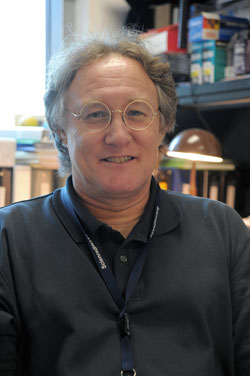 James J. Butler合作论文数NASA Goddard Space Flight Center7Stanford B. Hooker合作论文数Goddard Space Flight Center, National Aeronautics and Space Administration7Stephanie J. Flora合作论文数6James L. Mueller合作论文数6Souaidia, N.合作论文数5
 Dennis K. Clark合作论文数5Mark A. Yarbrough合作论文数4Robert D. Saunders合作论文数4Robert A. Barnes合作论文数4
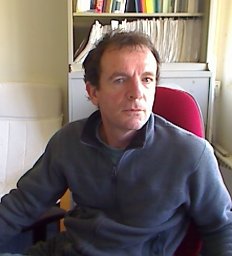 Stéphane Maritorena合作论文数Earth Research Institute, University of California Santa Barbara3
 M. Battuello合作论文数3
 Giulietta Fargion合作论文数3Christophe Pietras合作论文数Science Applications International Corp.3
 Stuart F. Biggar合作论文数JAmes C. Wyant College of Optical Sciences, The University of Arizona3Ping-Shine Shaw合作论文数3Darryl Peters合作论文数2Terrance Houlihan合作论文数2Benjamin K Tsai合作论文数2
 David William Allen合作论文数Department of Chemistry, Sheffield City Polytechnic2
 Joseph P. Rice合作论文数Optical Technology Division|National Institute of Standards and Technology2
 Robert E. Eplee合作论文数2Edward a Early合作论文数2T Ricolfi合作论文数2Elaine Firestone合作论文数2Carl C. Miller合作论文数1Hiroaki SAKATE合作论文数1H Sakate合作论文数1C. L. Cromer合作论文数1M. Matveyev合作论文数1howard w yoon合作论文数1DJ Livigni合作论文数1
 Z. Yuan合作论文数1J Fischer合作论文数1Sakuma, F.合作论文数1Thomas R Scott合作论文数1
 Kenneth J Voss合作论文数Department of Physics, College of Arts and Sciences, University of Miami1
 Charles R. McClain合作论文数NASA Goddard Space Flight Center1
 Eric L. Shirley合作论文数Remote Sensing Group, National Institute of Standards and Technology1
 Philippa Saunders合作论文数Centre for Inflammation Research, Institute for Regeneration and Repair, The University of Edinburgh1
 George P. Eppeldauer合作论文数National Institute of Standards and Technology1
 Robert Frouin合作论文数Scripps Institution of Oceanography, University of California, San Diego1
 Eric W. M. Van der Ham合作论文数1Eueng-Nan Yeh合作论文数1Michael Darzi合作论文数1




