Migrating raptors and black storks (Ciconia nigra) were studied in Dadia National Park, Greece, during spring 2003–2005. Vantage points and transects were used to evaluate magnitude, phenology, local variation and direction. We observed 23 species and 2030 individuals, including 715 common buzzards (Buteo buteo), 547 black storks and 136 short-toed eagles (Circaetus gallicus). Species-specific migration peaks were detected, starting in the second half of March, e.g. common buzzard, short-toed eagle, black stork, and ending early May, e.g. Levant sparrowhawk (Accipiter brevipes), red-footed falcon (Falco vespertinus), honey buzzard (Pernis apivorus). Most raptors were observed in the Evros valley, which may function as a migration corridor. The average direction of passing raptors was north. Species’ proportions and phenology in the study area were similar to those in neighbouring Bosphorus and Marmara Flyways. Further migration monitoring should be established in the area, which will provide important information not least to inform wind farm development location.
The aim of this study was to record the Schirmer tear test I (STT I) measurements in free-living vultures in order to estimate normal values. The Eurasian black vulture (Aegypius monachus), which breeds in the Mediterranean region and Asia, is listed as near threatened; it is also classified as vulnerable at the European level and endangered in Greece. The griffon vulture (Gyps fulvus), once widespread across the continent, has undergone a dramatic decline which has led to its extinction in many regions. Sixty-two animals were examined in total including 54 black vultures and 8 griffon vultures. The birds were classified into five age groups while four age groups were then combined into one large group: free-flying. STT I measurements and complete ophthalmic examinations were performed. Mean STT I value for black vultures was 10.9 +/- 3.3 mm/min (right eye, oculus dexter, OD) and 11.9 +/- 3.3 mm/min (left eye, oculus sinister, OS) and for griffon vultures was 6.4 +/- 1.8 mm/min OD and 6.5 +/- 1.8 mm/min OS. In both eyes, STT I values in black vultures were significantly higher than those recorded in griffon vultures. Intraspecific comparisons yielded a significant difference between eyes of black vultures but not between those of griffon vultures, with OS producing higher STT I readings than did OD. When STT I was compared between OD and OS for each age group separately, a statistically significant difference was detected in the immature and free-flying black vultures. In addition, black vulture hatchlings had a significantly higher tear production than did free-flying juveniles, immatures, subadults, and adults. STT I values in black vultures are similar to those reported in other Accipitriformes but are lower in griffon vultures. This difference is probably related to anatomic, evolutionary, and feeding factors and requires further investigation.
Several recent impact studies reveal that in some localities industrial wind farms are associated with high numbers of bat fatalities. In Europe, most published studies have been conducted in the northwest, while bat diversity generally is much higher in the south of the continent. Here we provide evidence from a post-construction monitoring study conducted in north-eastern Greece between August 2009 and July 2010. Overall, 88 turbines from nine wind farms were intensively searched, and 181 dead and two injured bats were found in their proximity. The most frequently killed species were Nyctalus leisleri (n = 56), Pipistrellus pipistrellus/P. pygmaeus (53), P nathusii (35), Hypsugo savii (23) and N. noctula (10). Fatality rates were high from June to September. Most killed bats were adult males. Observed differences in the temporal pattern of fatalities among species may be associated with differences in their behaviour and distribution. Sex segregation with males at higher elevation, where the wind farms were located, and/or absence of females from such areas during summer may be the reason behind the higher male mortality rates. Bat fatalities were unequally distributed among wind farms and turbines. Four turbines (5%) accounted for 27% and 13 turbines (15%) for 51% of the fatalities. The most frequently killed species exhibited different spatial patterns of fatality, presumably because some turbines were located closer to roosts and/or commuting corridors. Fatalities were positively correlated with tower height but not with rotor size. To reduce bat fatalities, we recommend an increase in the cut-in speed of turbines responsible for fatalities from sunset to sunrise.
Nature conservation should ideally build on the scientific recommendations that are concluded from applied conservation research, as well as on monitoring schemes that evaluate the effectiveness of recommendations. We considered as a case study a system of six protected areas located in the Eastern Rhodopes mountains in the southern part of the European Green Belt (EGB). To investigate nature conservation effectiveness, we reviewed 196 articles from scientific journals and books, eight doctoral and master theses, and 39 scientific reports regarding the Greek (one protected area, 428 km2) and the Bulgarian (five protected areas, 904 km2) part of the study area. We extracted 743 conservation recommendations, and through questionnaires completed by 10 local experts, we found that 74% of the recommendations were familiar for the experts. In the Greek (GR) and the Bulgarian part (BG) only 52% and 16%, respectively, of the recommendations were implemented, and only 15% (GR) and 3.1% (BG) were implemented and evaluated regarding their effectiveness. According to the experts, the main reasons for non-implementation and non-evaluation were absence or incompetence of the responsible authorities. Some recommendations obtained a remarkable low rate of implementation, such as those regarding agriculture and livestock rearing practices (GR: 29%, BG: 16%) or mammal conservation (GR: 0%, BG: 16%). Some other recommendations obtained rather high rates at least for Greece, such as tourism and environmental education (GR: 57%, BG: 42%) and bird conservation (GR: 57%, BG: 11%). We found that researchers and conservation managers at both sides of the Greek-Bulgarian border face similar implementation problems, related often to the lack of political will for nature conservation and establishment of competent authorities. The role of the EGB is crucial in enhancing the established cross-border collaborations between stakeholders involved in nature conservation.
 Kostas Poirazidis合作论文数WWF, Dadia Project Dadia2
 Stefan Schindler合作论文数Department of Conservation Biology, University of Vienna2
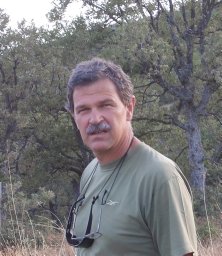 Giorgos Catsadorakis合作论文数WWF-Greece, Evros Project2
 Elzbieta Kret合作论文数2
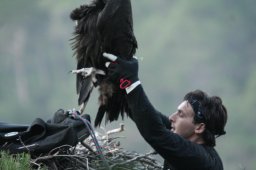 Dimitris Vasilakis合作论文数2chiara scandolara合作论文数1Artemis Kafkaletou Diez合作论文数1Danika Stefania E合作论文数1
 Angelos-Lauris Thomas合作论文数1
 Eleni Papadatou合作论文数1Theodora Skartsi合作论文数1
 Stoyan C. Nikolov合作论文数Central Laboratory of General Ecology;Bulgarian Academy of Sciences;Gagarin Str .;Central Laboratory of General Ecology, Bulgarian Academy of Sciences1
 Ron Ofri合作论文数Koret School of Veterinary Medicine, Hebrew University of Jerusalem1
 Vassiliki I Kati合作论文数Department of Environmental and Natural Resources Management, University of Ioannina1
 Thomas Wrbka合作论文数1Nuno Curado合作论文数1
 Anastasia Komnenou合作论文数1Panagiotis Georgiakakis合作论文数1




