The ICML 2013 Workshop on Challenges in Representation Learning focused on three challenges: the black box learning challenge, the facial expression recognition challenge, and the multimodal learning challenge. We describe the datasets created for these challenges and summarize the results of the competitions. We provide suggestions for organizers of future challenges and some comments on what kind of knowledge can be gained from machine learning competitions.
Microsoft Academic Search is a free search engine specific to scholarly material. It currently covers more than 50 million publications and over 19 million authors across a variety of domains. One of the main challenges in correctly indexing this material is author name ambiguity and the resulting noise in author profiles. KDD Cup 2013 invited participants to tackle this problem in 2 ways: (1) by automatically determining which papers in an author profile are truly written by a given author, and (2) by identifying which author profiles need to be merged because they belong to the same author. This paper presents a brief account of the contest and the lessons learned.
KDD Cup 2013 challenged participants to tackle the problem of author name ambiguity in a digital library of scientific publications. The competition consisted of two tracks, which were based on large-scale datasets from a snapshot of Microsoft Academic Search, taken in January 2013 and including 250K authors and 2.5M papers. Participants were asked to determine which papers in an author profile are truly written by a given author (track 1), as well as to identify duplicate author profiles (track 2). Track 1 and track 2 were launched respectively on April 18 and April 20, 2013, with a common final submission deadline on June 12, 2013. For track 1 a training dataset with correct labels was diclosed at the start of the competition. This track was the most popular one, attracting submissions of 561 different teams. Track 2, which was formulated as an unsupervised learning task, received submissions from 241 participants. This paper presents details about the problem definitions, the datasets, the evaluation metrics and the results.
Predicting future traffic congestion has the potential to decrease travel times by improving GPS navigation and enhancing traffic flows. This paper describes a methodology developed to predict future automated traffic recorder (ATR) readings with current and recent ones from local ATRs. Data was preprocessed by down sampling the simulated ATR signals. Additional training sets were created by resampling the ATR signals at incremental offsets. Regression Random Forests were trained to predict future ATR recordings, and an ensemble of Random Forests created with different preprocessing techniques was formed. This ensemble performed within the top 1% in one track of the 2010 IEEE ICDM Contest: Tom Tom Traffic Prediction for Intelligent GPS Navigation, improving 43.4% on the baseline algorithm.
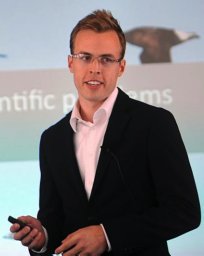 William J. Cukierski合作论文数The Cancer Institute of NJ, Rutgers University3
 Claudia Perlich合作论文数Two Sigma;Stern School of Business, New York University;Sloan School of Management, Massachusetts Institute of Technology;Data & Society Research Institute2
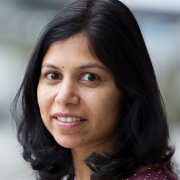 Vani Mandava合作论文数Microsoft Research at Redmond2
 Senjuti Basu Roy合作论文数Department of Computer Science, New Jersey Institute of Technology;Center for Big Data, New Jersey Institute of Technology2
 Brian Dalessandro合作论文数Facebook2
 Martine De Cock合作论文数School of Engineering and Technology, University of Washington Tacoma;Institute of Technology, University of Washington Tacoma2
 Jingjing Xie合作论文数1Dimitrios Athanasakis合作论文数Brave Software Inc.1
 Lukasz Romaszko合作论文数Univ Warsaw, Fac Math Informat & Mech, PL-00325 Warsaw, Poland1
 Dong-Hyun Lee合作论文数Dept Comp Sci & Engn, Sogang Univ1John Park合作论文数1
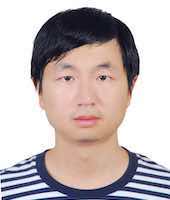 Fangxiang Feng (冯方向)合作论文数School of Artificial Intelligence, Beijing University of Posts and Telecommunications1Thaler David合作论文数1Luc Carrier Pierre合作论文数Université de Montréal1
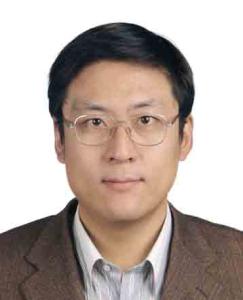 Chuang Zhang (张闯)合作论文数Beijing University of Posts and Telecommunications1
 Bing Xu合作论文数NVIDIA1
 Yoshua Bengio (约书亚·本希奥)合作论文数Departement d'informatique et de Recherche Operationnelle, Faculte des Arts et des Sciences, Universite de Montreal;Mila - Quebec Artificial Intelligence Institute;LawZero1
 John Shawe-Taylor合作论文数Department of Computer Science, University College London;IRCAI1Cristian Grozea合作论文数Fraunhofer Institute FIRST1
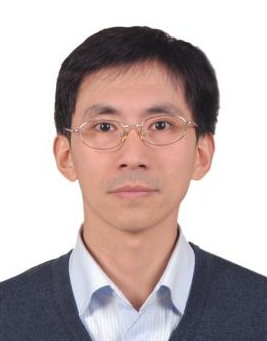 Ruifan Li (李睿凡)合作论文数School of Artificial Intelligence, Beijing University of Posts and Telecommunications1
 Yingbo Zhou合作论文数Salesforce1
 Xiaojie Wang (王小捷)合作论文数School of Artificial Intelligence, Beijing University of Posts and Telecommunications1Chetan Ramaiah合作论文数1
 Charlie Tang合作论文数Department of Computer ScienceUniversity of Toronto;Apple Inc1
 James Bergstra合作论文数Ocado Technology;Kindred.ai1
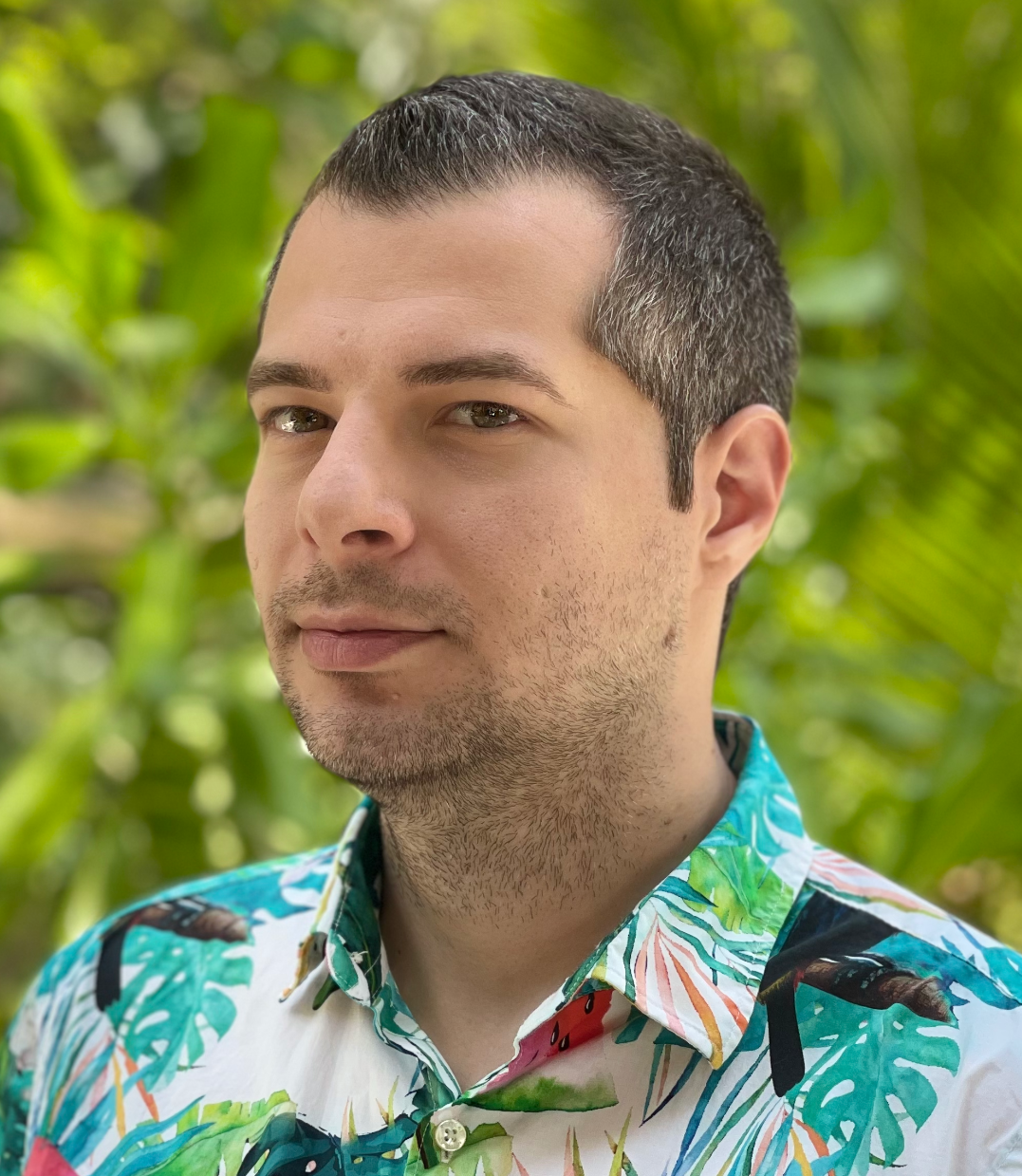 Radu Ionescu合作论文数VeridiumID;SecurifAI;Department of Computer Science, Faculty of Mathematics and Computer Science, University of Bucharest1
 Aaron Courville合作论文数Department of Computer Science and Operations Research, University of Montreal;Mila - Quebec Artificial Intelligence Institute1Maxim Milakov合作论文数1Swapna Savanna合作论文数1
 Mehdi Mirza合作论文数DeepMind1Swapna Savvana合作论文数1
 Marius Popescu合作论文数Department of Computer Science, University of Bucharest1
 Dumitru Erhan合作论文数Google DeepMind1
 Ian Goodfellow合作论文数Stealth Startup1




