PURPOSE To investigate whether a novel electropalatography (EPG) therapy, underpinned by usage-based phonology theory, can improve the accuracy of target speech sounds for school-aged children and adults with persistent speech sound disorder (SSD) secondary to cleft palate +/- lip. METHOD Six consecutively treated participants (7-27 years) with long-standing speech disorders associated with cleft palate enrolled in a multiple baseline (ABA) within-participant case series. The usage-based EPG therapy technique involved high-volume production of words. Speech was assessed on three baselines prior to therapy, during weekly therapy, at completion of therapy, and 3 months post-therapy. Percent correct of target phonemes in untreated words and continuously connected speech were assessed through acoustic phonetic transcription. Intra- and inter-transcriber agreement was determined. RESULT Large to medium treatment effect sizes were shown for all participants following therapy (15-33 sessions). Percentage of targets correct for untreated words improved from near 0% pre-therapy, to near 100% for most target sounds post-therapy. Generalisation of target sounds to spontaneous connected speech occurred for all participants and ranged from 78.95-100% (M = 90.66; SD = 10.14) 3 months post-therapy. CONCLUSION Clinically significant speech change occurred for all participants following therapy. Response to the novel therapeutic technique is encouraging and further research is indicated.
Chapter 25 Government Phonology and Speech Impairment Martin J. Ball, Martin J. BallSearch for more papers by this authorBen Rutter, Ben RutterSearch for more papers by this author Martin J. Ball, Martin J. BallSearch for more papers by this authorBen Rutter, Ben RutterSearch for more papers by this author Book Editor(s):Martin J. Ball, Martin J. BallSearch for more papers by this authorNicole Müller, Nicole MüllerSearch for more papers by this authorElizabeth Spencer, Elizabeth SpencerSearch for more papers by this author First published: 08 January 2024 https://doi.org/10.1002/9781119875949.ch25 AboutPDFPDF ToolsRequest permissionExport citationAdd to favoritesTrack citation ShareShareShare a linkShare onEmailFacebookTwitterLinkedInRedditWechat Abstract Abstract: Government Phonology (Harris, 1990, 1994; Harris & Lindsey, 1995; Kaye et al., 1985, 1990) can be seen to some extent as a development of Dependency Phonology (Anderson & Durand, 1986, 1987; Anderson & Ewen, 1987), with the aim of constraining the generative power of this latter approach. Government Phonology (henceforth GovP) is seen by its proponents to be within the generative tradition (and thus part of "universal grammar"), and it shares with other approaches the insights and developments of feature geometry, autosegmental, and metrical phonology. In particular, we should note that the theory distinguishes a skeletal tier which contains the terminal nodes of syllabic constituents (termed "constituency") from a segmental one (termed "melody"), and that the equivalent of features ("elements") are thought to operate on a set of tiers as well. However, despite these similarities, there are major differences – in particular, as the name suggests, the idea of governing or licensing relations between units. Recent accounts of the theory are available in Scheer and Cyran (2017a, 2017b) and Scheer and Kula (2017). Jaskuła's (2021) study of English loanwords in a variety of Irish also provides a description of the theory. In this chapter, for reasons of space, we will concentrate on pointing out where GovP differs from traditional models of generative phonology, and then turn our attention to how GovP can inform our descriptions of disordered speech. References Anderson , J. , & Durand , J. ( 1986 ). Dependency phonology . In J. Durand (Ed.), Dependency and non-linear phonology (pp. 1 – 54 ). Croom Helm . Google Scholar J. Anderson , & J. Durand (Eds.). ( 1987 ). Explorations in dependency phonology . Foris . 10.1017/CBO9780511753442 Google Scholar Anderson , J. , & Ewen , C. ( 1987 ). Principles of dependency phonology . Cambridge University Press . 10.1017/CBO9780511753442 Google Scholar Archangeli , D. ( 1988 ). Aspects of underspecification theory . Phonology , 5 ( 2 ), 183 – 207 . 10.1017/S0952675700002268 Google Scholar Ball , M. J. ( 1996 ). An examination of the nature of the minimal phonological unit in language acquisition . In B. Bernhardt , J. Gilbert , & D. Ingram (Eds.), Proceedings of the UBC International Conference on Phonological Acquisition (pp. 240 – 253 ). Cascadilla Press . Google Scholar Ball , M. J. ( 1997 ). Monovalent phonologies . In M. J. Ball & R. D. Kent (Eds.), The new phonologies (pp. 127 – 162 ). Singular . Google Scholar Ball , M. J. ( 2002 ). Clinical phonology of vowel disorders . In M. J. Ball & F. E. Gibbon (Eds.), Vowel disorders (pp. 187 – 216 ). Butterworth-Heinemann . Google Scholar M. J. Ball , & F. Gibbon (Eds.). ( 2013 ). Handbook of vowels and vowel disorders . Psychology Press . Google Scholar Ball , M. J. , & Howard , S. ( 2004 ). Is Stridency Deletion really a phonological process? Paper presented at 10th ICPLA Symposium , Lafayette, LA . Google Scholar Ball , M. J. , & Howard , S. J. ( 2017 ). Classifying disordered speech: "Stridency deletion" and phonological processes . Journal of Interactional Research in Communication Disorders , 8 ( 2 ), 147 – 161 . 10.1558/jircd.33440 Google Scholar Ball , M. J. , Müller , N. , & Rutter , B. ( 2009 ). Phonology for communication disorders . Psychology Press . Google Scholar Bauman-Waengler , J. ( 2003 ). Articulatory and phonological impairments: A clinical focus ( 2nd ed.). Allyn and Bacon . Google Scholar Chomsky , N. , & Halle , M. ( 1968 ). The sound pattern of English . MIT Press . Google Scholar Clements , G. ( 1985 ). The geometry of phonological features . Phonology Yearbook , 2 , 225 – 252 . 10.1017/S0952675700000440 Google Scholar Clements , G. ( 1988 ). Towards a substantive theory of feature specification . Proceedings of the North East Linguistics Society , 18 ( 1 ), 79 – 93 . Google Scholar Gierut , J. A. ( 1999 ). Syllable onsets: Clusters and adjuncts in acquisition . Journal of Speech, Language, and Hearing Research , 42 ( 3 ), 708 – 746 . 10.1044/jslhr.4203.708 CASPubMedWeb of Science®Google Scholar Grunwell , P. ( 1986 ). Clinical phonology ( 2nd ed.). Croom Helm . Google Scholar Halle , M. ( 1992 ). Phonological features . In W. Bright (Ed.), International encyclopedia of linguistics (Vol. 3 , pp. 207 – 212 ). Oxford University Press . Google Scholar Harris , J. ( 1990 ). Segmental complexity and phonological government . Phonology , 7 ( 1 ), 255 – 300 . 10.1017/S0952675700001202 Google Scholar Harris , J. ( 1994 ). English sound structure . Blackwell . Google Scholar Harris , J. ( 2005 ). Vowel reduction as information loss . In P. Carr , J. Durand , & C. Ewen (Eds.), Headhood, elements, specification and contrastivity: Phonological papers in honour of John Anderson (pp. 119 – 132 ). Benjamins . 10.1075/cilt.259.10har Google Scholar Harris , J. , & Gussmann , E. ( 2002 ). Codas, constraints, and coda constraints . UCL Working Papers in Linguistics , 14 , 1 – 42 . Web of Science®Google Scholar Harris , J. , & Lindsey , G. ( 1995 ). The elements of phonological representation . In J. Durand & F. Katamba (Eds.), Frontiers of phonology (pp. 34 – 79 ). Longman . Web of Science®Google Scholar Harris , J. , Watson , J. , & Bates , S. ( 1999 ). Prosody and melody in vowel disorder . Journal of Linguistics , 35 ( 3 ), 489 – 525 . 10.1017/S0022226799007902 Web of Science®Google Scholar Harrison , P. ( 1996 ). The acquisition of melodic primes in infancy. Paper presented at the 4th Phonology Meeting , University of Manchester , May. Google Scholar Jakobson , R. , Fant , G. , & Halle , M. ( 1952 ). Preliminaries to speech analysis . MIT Press . Google Scholar Jakobson , R. , & Halle , M. ( 1956 ). Fundamentals of language . Mouton . Google Scholar Jaskuła , K. ( 2021 ). English loanwords in the Irish of Iorras Aithneach – New vowels in a Government and Licensing analysis . Journal of Celtic Linguistics , 22 ( 1 ), 1 – 14 . 10.16922/jcl.22.2 Google Scholar Kaye , J. ( 1990 ). Coda-licensing . Phonology , 7 ( 1 ), 301 – 330 . 10.1017/S0952675700001214 Google Scholar Kaye , J. , Lowenstamm , J. , & Vergnaud , J.-R. ( 1985 ). The internal structure of phonological elements: A theory of charm and government . Phonology Yearbook , 2 , 305 – 325 . 10.1017/S0952675700000476 Google Scholar Kaye , J. , Lowenstamm , J. , & Vergnaud , J.-R. ( 1990 ). Constituent structure and government in phonology . Phonology , 7 ( 1 ), 193 – 232 . 10.1017/S0952675700001184 Google Scholar Kula , N. C. ( 2002 ). The phonology of verbal derivation in Bemba . Netherlands Graduate School of Linguistics . Google Scholar Pathi , S. , & Mondal , P. ( 2021 ). The mental representation of sounds in speech sound disorders . Humanities and Social Sciences Communications , 8 ( 1 ), 1 – 12 . 10.1057/s41599-021-00706-z Google Scholar Prince , T. ( 2023 ). The case of substitutions in adult aphasia and in typical acquisition of French: Revisiting element theory . In F. Breit , B. Botma , M. van't Veer , & M. Oostendorp (Eds.), Primitives of phonological structure (pp. 280-304 ). Oxford University Press . 10.1093/oso/9780198791126.003.0011 Google Scholar Prince , T. , & Ferré , S. ( 2020 ). French (A)typical L1 acquisition: Compensatory strategies in #sC sequences . In E. Babatsouli (Ed.), On under-reported monolingual child phonology (pp. 179 – 200 ). Multilingual Matters . Google Scholar Ritter , N. ( 1996 ). An alternative means of expressing manner. Paper presented at the 4th Phonology Meeting , University of Manchester , May. Google Scholar Roca , I. , & Johnson , W. ( 1999 ). A course in phonology . Blackwell . Google Scholar Sagey , E. ( 1986 ). The representation of features and relations in non-linear phonology . PhD dissertation, MIT . Google Scholar Scheer , T. , & Cyran , E. ( 2017a ). Interfaces in government phonology . In S.J. Hannahs and Anna Bosch (Ed.), The Routledge handbook of phonological theory (pp. 293 – 324 ). Routledge . 10.4324/9781315675428-11 Google Scholar Scheer , T. , & Cyran , E. ( 2017b ). Syllable structure in government phonology . In The Routledge handbook of phonological theory S.J. Hannahs and Anna Bosch (Ed.), (pp. 262 – 292 ). Routledge . 10.4324/9781315675428-10 Google Scholar Scheer , T. , & Kula , N. C. ( 2017 ). Government phonology: Element theory, conceptual issues and introduction . In The Routledge Handbook of Phonological Theory S.J. Hannahs and Anna Bosch (Ed.), (pp. 226 – 261 ). Routledge . 10.4324/9781315675428-9 Google Scholar Steriade , D. ( 1987 ). Redundant values . Chicago Linguistic Society , 23 ( 2 ), 339 – 362 . Google Scholar Trubetzkoy , N. ( 1969 ). Principles of phonology . University of California Press . (Originally published in 1939). Google Scholar van der Hulst , H. ( 1989 ). Atoms of segmental structure: Components, gestures and dependency . Phonology , 6 ( 2 ), 253 – 284 . 10.1017/S0952675700001020 Google Scholar van der Hulst , H. ( 2016 ). Monovalent "features" in phonology . Language and Linguistics Compass , 10 ( 2 ), 83 – 102 . 10.1111/lnc3.12158 Web of Science®Google Scholar van der Hulst , H. ( 2020 ). Principles of radical CV phonology: A theory of segmental and syllabic structure . Edinburgh University Press . Google Scholar The Handbook of Clinical Linguistics, Second Edition, Second Edition ReferencesRelatedInformation
Background: A common concern for persons with dysarthria is a difficulty in being understood. This is captured clinically using assessments of intelligibility. Any attempt to measure intelligibility must be carried out in a way that is sensitive to the phonetic variation that occurs in naturally occurring conversational speech. This article identifies examples of an interactional event known to trigger phonetic variability: discourse repetition. Method: This article is a case study of a 68-year-old male with dysarthria secondary to Parkinson’s disease. The method of analysis is interactional phonetics. Results: Examples of discourse repetition are presented with accompanying interactional and phonetic analysis. The speaker is seen to produce the same linguistic tokens with varying phonetic features. In some cases, this variation means the tokens are realized as markedly different phonetic forms. Discussion: The results highlight how variable a single speaker’s realizations of the same word can be within a single conversation. Given this, it is proposed that intelligibility is best conceptualized as a range rather than as a single, invariant score.
Gradient speech change, where speech sound production develops in a broadly step-wise fashion towards the standard adult form, is a well-recognised phenomenon in children developing typical speech, but is much less studied in speakers with developmental speech sound disorders. Instrumental techniques, such as electropalatography (EPG), may be useful for identifying gradient speech change and may supplement phonetic transcription in important ways. This study investigated whether gradient speech change occurred in six participants with cleft palate +/- lip undergoing intervention within a usage-based phonology framework (2/6 participants with speech distortions; 4/6 with pattern-based speech substitutions; combined total of 25 speech sounds targeted for intervention). Participants received weekly therapy in a hospital setting and were aged 10-27 years. Gradient speech change with target speech sounds was examined using EPG analysis, which was undertaken after every fifth session of therapy. The presence of gradient change was determined by visually examining EPG palatograms and EPG indices for target speech sounds across successive EPG test points. This study found gradient speech change occurred in 22/25 target sounds over the course of intervention. This gradient change occurred for both speech distortions and pattern-based speech substitutions. The remaining 3/25 target sounds showed categorical change. Usage-based phonology was suggested as a theory with potential for explaining gradient speech change, with both typical and atypical speech, and with speech distortions and pattern-based speech substitutions. This finding adds to other research showing that the objective data provided by instrumental techniques, such as EPG, may be a valuable complement to phonetic transcription.
Disability or health-related literature has potential to shape public understanding of disability and can also play an important role in medical curricula. However, there appears to be a gap between a health humanities approach which may embrace fictional accounts and a cultural disability studies approach which is deeply sceptical of fiction written by non-disabled authors. This paper seeks to reconcile these perspectives and presents an analysis of the language used by Jonathan Franzen in his description of Parkinson’s disease in the novelThe Corrections. We use detailed linguistic analysis, specifically stylistics, to identify the techniques Franzen adopts to represent aspects of impairment and disability. We describe four specific linguistic devices used in the novel: reflector mode, iconicity, body part agency and fragmentation. We show how stylistics offers a unique analytical perspective for understanding representations of disability and impairment. However, we emphasise the need to promote critical and even resistant understandings of such representations and we discuss the potential role of patient/service user input to assess fictional accounts.
This chapter explores examples of unusual realizations of targets in disordered speech and thus the need for narrow phonetic transcription. It provides five different cases to illustrate the need for narrow transcription of pulmonic egressive sounds. They are: a severely disfluent client, a child with progressive hearing loss, repair sequences in dysarthric speakers, a child with idiosyncratic velar articulations, and an adult with progressive speech degeneration. These cases were chosen because they illustrate a range of speech cases, both adult and child, both developmental and acquired, and because they allow speech clinician to demonstrate a range of different symbolizations. Generally, non-pulmonic egressive speech has not been given much attention as possible substitutions for pulmonic egressive targets in disordered speech. The chapter reviews small set of studies that have reported on its use in disordered speech, suggesting that, at the very least, speech pathology students do need to be aware of these groups of sounds and that they may occur clinically.
This study examines how a nearly nonverbal, prelingually deaf young man and his speech-language clinician co-construct a conversation using the client's nonconventional contributions. It is shown how conversation is made possible through variations in the sequential placement of a single contribution by the client, a nasal sound construed as serving four distinct conversational functions: as a continuer; as a token of turn-constructional and topical completion; as an incomprehension token and signal for lack of verbal resources; and as a comprehension token. These functions are based on variations the sequential placement of the nasal and the differential treatment it receives by the interlocutors as a consequence. Results indicate that unconventional conversational contributions may be untypical in their form but typical in their function; that they may have subtly different functions when compared to their conventional cognates; or that they may have functions not found in typical talk.
This case study describes a patient with reduced breath support due to multiple sclerosis. Although deficits to the supralaryngeal structures are more commonly associated with a reduction in intelligibility, atypical breathing patterns can severely impact the perceptual coherence of dysarthric speech. This is most likely to manifest in conversational speech as the demands of correctly signalling syntactic, pragmatic and interactional information all rely on control of the breath support system. The study uses the method of interactional phonetics to consider in combination the role of phonetic, linguistic and interactional design in the speaker’s natural conversation. The analysis was carried out by taking into account the sequential order of turns and representative extracts are presented. The patient’s dysarthria has previously been identified as mild but the findings indicate that issues surrounding breath group length, speech rate and phonatory instability all surface in conversational speech. Of particular interest are the introduction of new person referents and their potential to trigger repair sequences. The findings indicate that a mild dysarthria with reduced breath support as a primary symptom can cause considerable problems of understandability in conversational speech. However, attention to the way in which potentially problematic interactional tasks are carried out and the successful use of repair strategies can minimise these issues.
Eight children aged 4;1-8;1 and their primary caregivers participated in a study designed to evaluate their use of the onset cluster /str-/ in both read and conversational speech. The cluster is currently undergoing a reported sound change in many varieties of English, with the initial /s/ being retracted to [ʃ]. The study compared the initial fricative of the cluster in both the children and their mothers. Acoustic analysis was carried out in order to categorize tokens as either [s] or [ʃ] using spectral peak analysis. Results found that children as young as 5;1 were starting to exhibit the usage patterns of their mothers. The distribution of the novel variant suggests that the children may be learning this form via a process of lexical diffusion rather than by rule. Implications for the study of dialect acquisition and phonological acquisition in general are discussed.
This chapter discusses the role of phonological representations in psycholinguistics. We outline some of the ongoing questions relating to the psychological status of phonological representations. We discuss this specifically in relation to speech and language pathology, where phonological representations are often treated as having some psychological reality. We present a brief historical overview of various approaches to phonology dating back to the 1960s from both a theoretical and a psychological perspective. We end with a summary of usage-based phonology where the phonological representation is related, at least, in part to the psychology of language. We suggest that for this reason usage-based phonology may lend itself particularly well to the field of speech and language pathology.
For some speakers of English, realization of the fricative in the consonant cluster /stɹ/may be undergoing a sound change in progress. Previous reports suggest that /s/ is being realized as the postalveolar fricative [ʃ], with the approximant /ɹ/ as a possible trigger. Research in sociolinguistics also indicates that there may be various intermediate stages of the change, falling somewhere between a typical /ʃ/ and /s/. However, information about the precise phonetic characteristics of these novel variants is still sparse, and existing sociolinguistic studies have not compared speakers’ realization of /stɹ/ to their typical /s/ and /ʃ/ productions. This paper uses the acoustic measurement of spectral peak to compare ten English speakers’ productions of the onsets /ʃ/, /ʃɹ/, /stɹ/, and /s/. The findings suggest that the majority of tokens produced by these speakers fall within their normal range for /ʃ/, with only limited evidence of intermediate forms. It is proposed that spectral peak measurement seems to be a stable method for use in future research categorizing variants of /stɹ/. However, this should include comparison to subjects’ normal /ʃ/ productions.
Conversational repair is a commonly studied aspect of both normal and disordered human interaction. It has the potential to reveal a great deal about how speakers deal with problems in naturally occurring talk-in-interaction. However, the extent to which repair has been defined, classified, and then compared to such phenomena as repetitions, slips of the tongue, pauses, and fillers has not always been altogether consistent. This paper discusses the use of the term repair in a variety of disciplines and proposes a taxonomy of repair types. It is suggested that this will facilitate the quantification of repair in corpora of disordered conversation, allowing for comparisons of frequency counts across speakers, disorders, and time points.
This paper presents some findings from a case study of repair sequences in conversations between a dysarthric speaker, Chris, and her interactional partners. It adopts the methodology of interactional phonetics, where turn design, sequence organization, and variation in phonetic parameters are analysed in unison. The analysis focused on the use of segmental and prosodic variation found during attempts by Chris to repair a previously identified trouble source. The results indicate that trouble sources were extremely common in the recorded conversations, but that repair attempts were almost always communicatively successful. Analysis of the fragments revealed that repair sequences are often collaborative achievements, with the participant's conversational partners signalling the specific trouble source within a turn, or providing feedback about repair attempts. It was also observed that successful repair attempts were not always simple repetitions of the trouble source, but varied in other linguistic areas. It is suggested that intelligibility repairs should be studied using both experimental and qualitative methods.
ABSTRACT: This part of the tutorial on advanced phonetic transcription stresses the importance of being able to transcribe non-English prosodic features when assessing clients with articulation and/or phonological disorders of various types. The literature is referred to throughout the article to illustrate examples of the use of these nonEnglish suprasegmental features. Bilingual clients are very likely to use non-English prosody in their own languages and possibly when speaking English as well. The article also describes most of the symbols and diacritics on the Extended International Phonetic Alphabet chart for the transcription of unattested sounds and includes references to the speech pathology literature that illustrate the cases in which the symbols may be needed.
The importance of the use of narrow phonetic transcription in transcribing a variety of speech disorders is emphasized. This point is illustrated with clinical data from the authors' own research. The examples used are the transcription of a severely disfluent client, a child with progressive hearing loss, repair sequences in dysarthric speakers, a child with idiosyncratic velar articulations, and an adult with progressive speech degeneration. The use of the extended International Phonetic Alphabet (IPA) for the transcription of disordered speech and the Voice Quality Symbols (VoQS) system for transcribing voice quality is introduced and illustrated in the examples provided. The need for training in narrow transcription is discussed as part of a combination of impressionistic and instrumental description techniques.
This paper describes the notion of the linguistic profiling of disordered communication, and in particular the profiling of disordered speech. The PACS system is introduced, and applied to the speech of a 7;0 year old boy with highly unintelligible speech. The analysis includes a series of profiling charts that illustrate the client's phonetic and phonological output, and the paper concludes with suggestions for remediation planning that emerge from the profile.
 Martin J. Ball合作论文数School of Speech Therapy, South Glamorgan Institute of Higher Education10
 Tobias Kroll合作论文数4
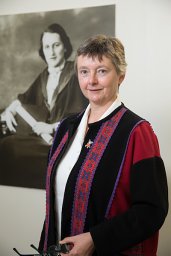 Nicole Müller合作论文数Organisch-Chemisches Institut, Technische Universität München4
 Marie Klopfenstein合作论文数4Kathryn Patrick合作论文数2
 Silke Fricke合作论文数Division of Human Communication Sciences, Health Sciences School, Faculty of Medicine, Dentistry & Health, The University of Sheffield2
 Joanne Cleland合作论文数Department of Speech and Hearing Sciences, Queen Margaret University2Judith Oxley合作论文数1




